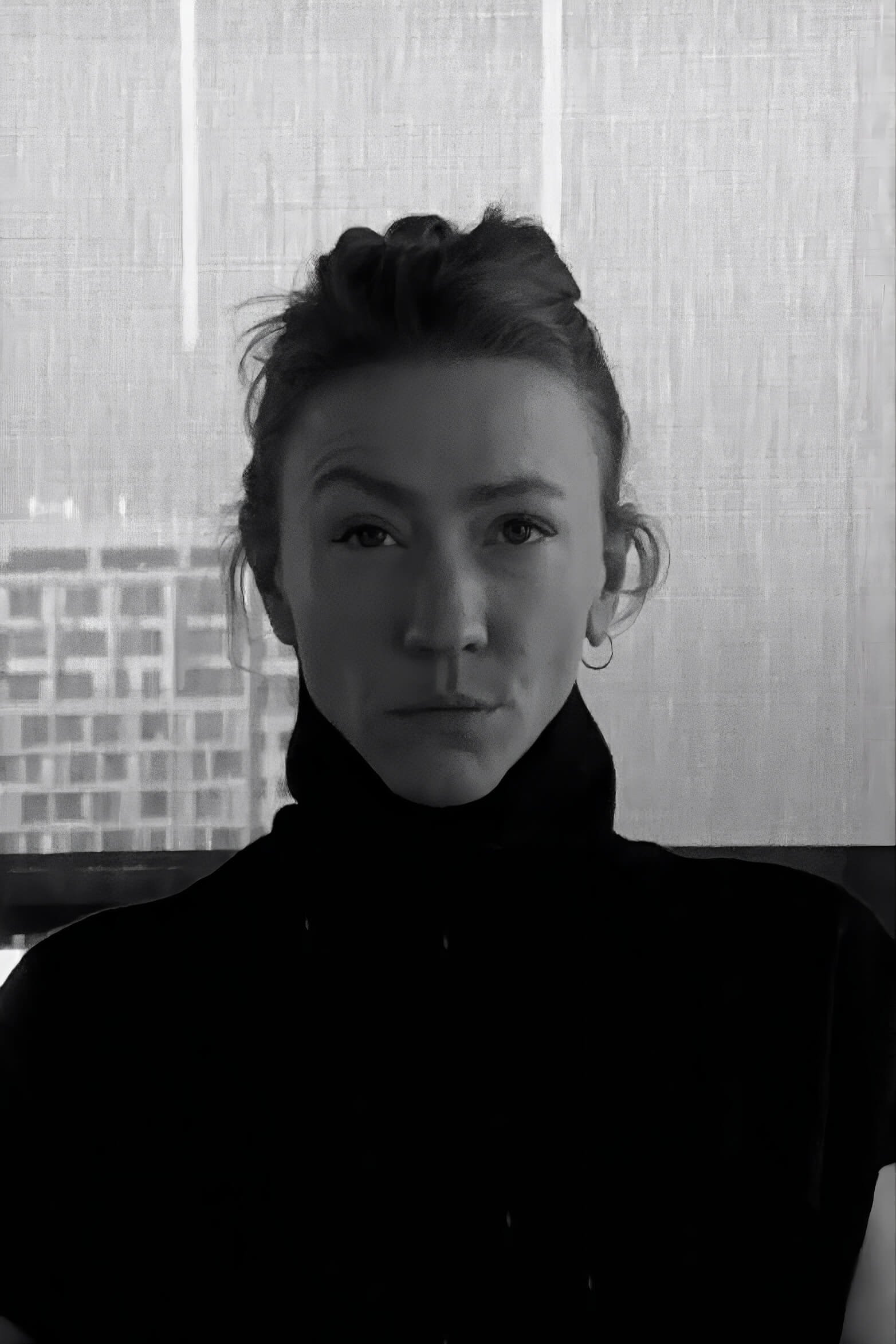
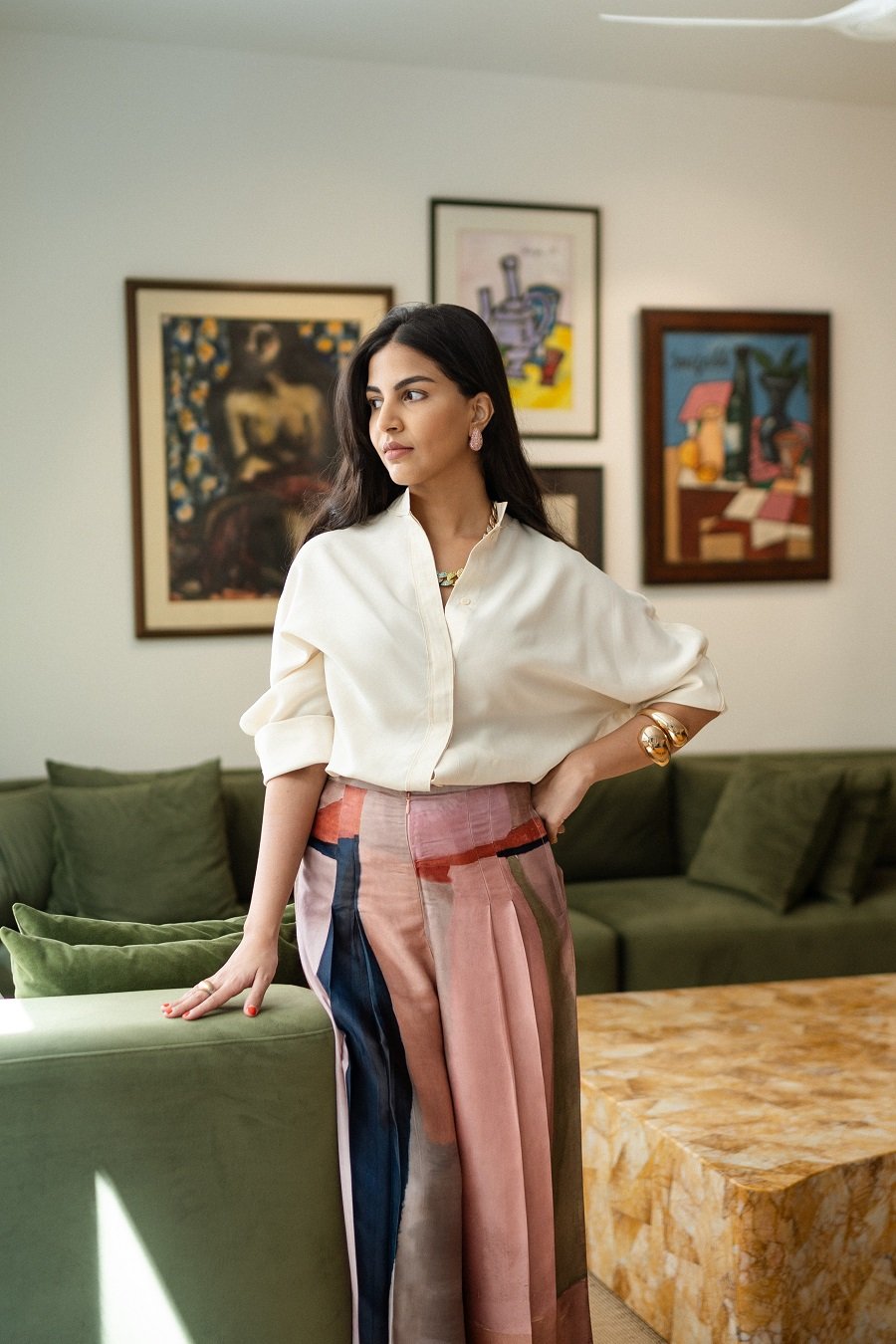
The Capitalyst: You studied Economics in Paris and began your career in finance, working in the stock exchange and asset management before co-founding Loft Art Gallery at the age of 24 alongside your sister Myriem, both of you coming from a financial background but having grown up in a home where your father was a committed art collector. Finance and gallery ownership are both fundamentally about risk, conviction and long-term value. What did your financial training give you as a gallerist that someone who had studied art history might never have had, and where did it completely fail to prepare you?
Yasmine Berrada: There is, I would say, a priori no connection between the world of art and that of finance. In fact, when I left the world of finance for the art world at the end of 2008, it seemed like a complete 180-degree turn.
But in reality, I very quickly realised that my background in finance, and particularly in asset
management, became a real asset in what followed and in the way I approached the role of a gallerist. It influenced the way I developed relationships with clients, tried to understand their needs, knew how to advise them in building their collections, and how to bring them a vision that was, of course, artistic, while never forgetting the patrimonial dimension of the works and the collection they were seeking to build.
With time, I also realised that my case was far from isolated. Several major gallerists began their careers in finance before moving into the art world. So it is not such an exceptional path, but in fact much more common than one might think and it is a transition that generally works quite well.
The Capitalyst: You opened Loft Art Gallery in 2009 with a solo show of Chaïbia Talal, one of the most celebrated Moroccan artists of the twentieth century, organised a few years after her death. You had around 600 people on opening day, and Mohamed Melehi, who would go on to become one of the most significant relationships of your gallery’s life, was in the room. What does it tell you about founding a gallery that your very first exhibition produced one of its most consequential long-term relationships, and how much of what followed was strategy and how much was instinct?
Yasmine Berrada: Thank you very much for this question. It is both very interesting and very relevant, and it also forces me to question myself about this inaugural exhibition, which truly gave direction to the gallery. It was a very strong starting point that very quickly set the tone for what would follow.
I think the one thing that was non-negotiable for me when opening the gallery was the desire to do something meaningful very early on an exhibition that truly made an impact from the outset.
We were fortunate to have the opportunity to meet Talal and his son, and to work hand in hand with them to present Chaïbia’s work exactly five years after her passing, with absolutely exceptional and previously unseen works available for sale. I think it was a masterstroke, although we did not fully realise it at the time. Looking back, it remains one of the most significant exhibitions in the gallery’s history, even eighteen years later.
Opening with that exhibition allowed us to attract a very large number of people and gain strong visibility very quickly. But above all, it allowed us to meet the artist Melehi at that moment.
That evening, through what was almost a casual exchange, something decisive for the future took place. Very quickly, he told us: “We are going to do beautiful things together.” It is a phrase I often quote.
In reality, he was a man with tremendous intuition. And I think this is where, despite all the work, methodology and rational thinking that one can put into what one does and it is necessary to do so, life also does the rest.
That evening, I think my energy, intention and intuition met those of Melehi. Very humbly, in any case, something immediately connected between us. We instantly clicked, and that marked the beginning of the story that everyone knows today.
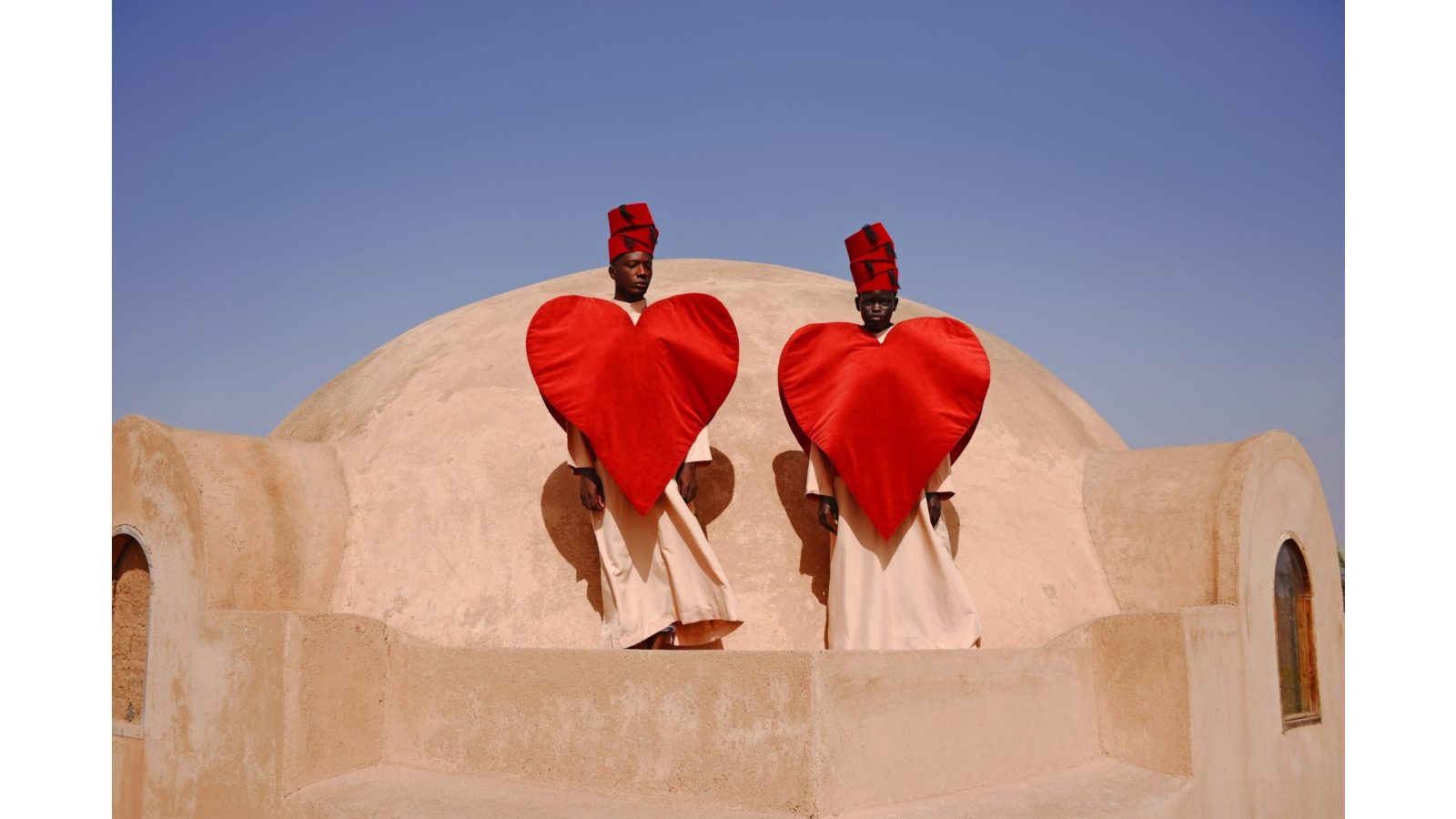
The Capitalyst: You worked closely with Mohamed Melehi for around ten years, during which he worked exclusively with Loft Art Gallery, travelling together to Paris to visit the Centre Pompidou and building a relationship you described as deeply personal as well as professional. That collaboration culminated in Loft Art Gallery becoming the first Moroccan gallery to exhibit at Art Basel Paris in October 2024, where you presented seven of his works including three never previously shown. What does it mean to carry an artist’s legacy beyond their lifetime, and what responsibility comes with being the person who decides how the world encounters that work now?
Yasmine Berrada: We are in fact not the people who decide how Mohamed Melehi’s work in encountered by the world.
I think that very often we understand things retrospectively. When we look back, we become aware of the path that was taken, of the story that gradually formed. But in the moment, we simply live things as they come. And in the art world, these are above all stories of encounters, deeply human stories.
Before even being a talented artist, Mohamed Melehi was an exceptional human, with immense intuition and sensitivity. He was also a friend, almost a kind of mentor for the gallery. We worked very closely together, and I think that closeness allowed us to achieve beautiful things together because there was a shared vision, a shared desire, but above all mutual trust. That trust gave us wings and pushed us to build even more.
There was first that major milestone with the acquisition by the Centre Pompidou, led notably by Michel Gauthier. Then there were many important moments and exhibitions in different parts of the world.
Unfortunately, Melehi passed away. And the Art Basel exhibition in 2024 represented, for us, a way of paying tribute to him after his death. We had wanted to respect a certain amount of time before beginning to exhibit his work again. We first presented it through a retrospective solo exhibition at the gallery, and then through the Art Basel presentation, which became a real consecration, particularly in terms of media attention, with absolutely exceptional coverage.
It showed that this great artist continues to radiate, even after his passing, and that his work still deeply resonates with people around the world. His aura is still there, and that is perhaps the most moving thing.
Today there is an estate, his children and family are managing his legacy, and I think they have many beautiful projects ahead for Melehi’s work. All of this will continue to grow over time, slowly but surely. But one thing is certain: Mohamed Melehi’s work has not finished surprising us.
The Capitalyst: The gallery participates in international fairs across London, Paris, Miami, New York and Dubai, collaborates with institutions including the Centre Pompidou, Tate Modern, the Giverny Museum and the Haus der Kunst in Munich, and in 2024 expanded with a permanent second space in Marrakech. You have built all of this from Casablanca, not from London or Paris or New York. Has operating from Morocco ever been treated by the international art world as a limitation, and how have you turned that particular expectation against itself?
Yasmine Berrada: As I have often said, when we opened the gallery in Casablanca eighteen years ago, we were operating within a fairly local market, with collectors mainly buying Moroccan art and galleries mostly exhibiting Moroccan artists.
The work that has been done over the years has allowed for a real opening of the Moroccan art scene internationally. It enabled artists to turn towards other markets, but also encouraged foreign collectors to take an interest in Morocco.
Today, thanks to the work we have carried out, we like to say that we are above all an international gallery based in Morocco, with spaces in Casablanca and, more recently, a new space in Marrakech, which has received a very strong response and significant international visibility. Marrakech today is truly a global city. Our gallery there therefore also acts as a window onto the outside world and crystallises this international effort that has been taking place for several years.
Of course, being based in Morocco is not the easiest path. The efforts required to be seen and gain visibility are inevitably greater than if we were based in Paris or London. But we have taken on many challenges and broken down many barriers.
I will be honest: some barriers still remain today, and some doors are still closed. But I genuinely believe we are on a very strong path, and that these barriers will eventually fall thanks to the work being done, the quality of the artists, and also Morocco’s geopolitical position, which continues to strengthen.
The first official Moroccan participation at the Venice Biennale, at the Arsenale, with our artist Amina Agueznay represented under the curatorship of Meriem Berrada, and which received tremendous acclaim, is a very powerful example of this. It proves that Morocco and Moroccan art are today defending themselves extremely well on the international stage.
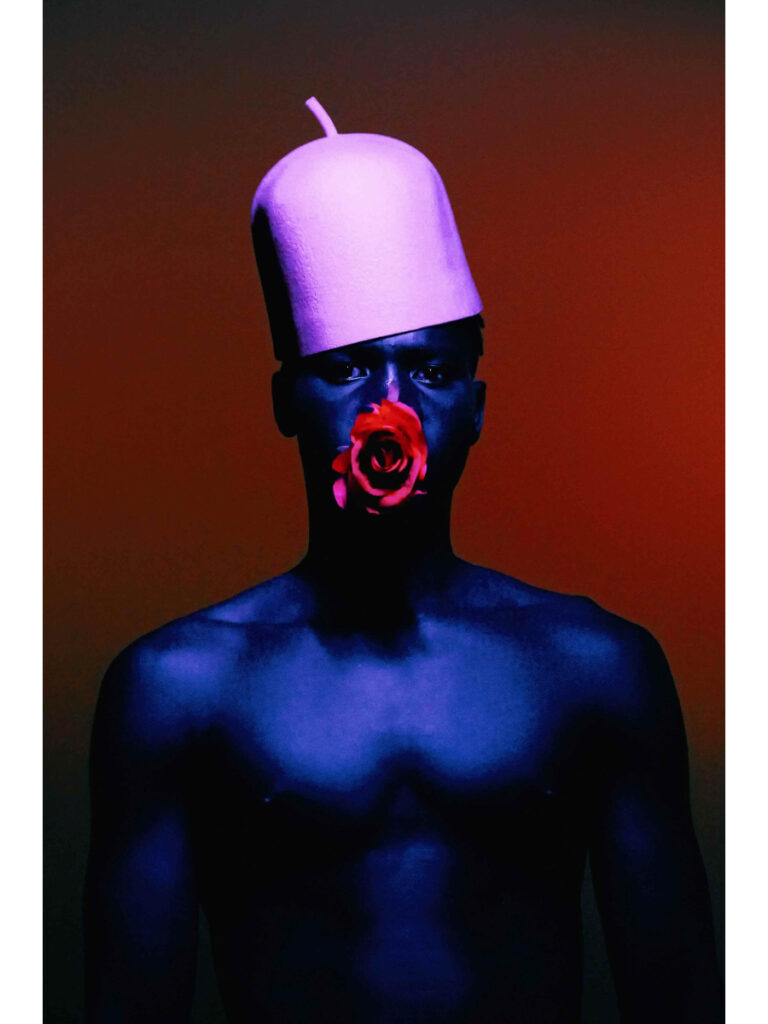
The Capitalyst: You have said that entering the art market at 24 as a young Moroccan woman meant being met with significant resistance, not just because of your age but because you were women, and that each hurdle you overcame felt like a mini-victory you dedicated to your detractors. The art world’s culture toward women in positions of institutional authority is changing but slowly. What has that specific dimension of the work cost you that is rarely acknowledged, and has the resistance you face now changed in character or only in the language it uses?
Yasmine Berrada: Yes, it is true that arriving on the art market at twenty-four years old, as a young woman coming from the world of finance and therefore without any real initial connection to the art world, meant that my associate and I were met with a certain resistance.
And I often say this: in the end, that is probably what gave us the desire to fight. It is also what pushed us to doubt, to ask ourselves the right questions, to reinvent ourselves, to push our limits, and to constantly seek a form of excellence while gradually finding our place.
It has now been eighteen years that we have been fighting. As you said, we have broken down a number of barriers. Today, I think I am in a different place: I want to live my profession with more serenity, more freedom, and above all with the pleasure of fully enjoying it. Today I allow myself that freedom.
The Capitalyst: Loft Art Gallery opened during a global financial crisis in 2009, survived the complete shutdown of the international fair circuit during the pandemic, and built a publishing arm, Loft Edition, producing books and catalogues on Moroccan art history alongside the commercial gallery programme. Most galleries at your scale do not sustain a publishing operation. What made you decide that research and documentation was not a distraction from the business but actually inseparable from it?
Yasmine Berrada: In reality, publishing catalogues very quickly became something essential for us, something that accompanied our exhibitions. Exhibitions and installations disappear over time, but what remains is the editorial support, which stays as a lasting trace of the exhibition.
But there was more than that. The book Zoom sur les années 60 came from a real desire, and even a necessity, to gather testimonies from the artists who were still alive at the time about this Casablanca School period. We wanted to collect a precious testimony of what they had lived through, through the lens of their human experience of that era. Being able to gather their words was a real privilege.
The idea came out of a brainstorming session with young students around what felt relevant to highlight at that particular moment. It may seem obvious today, but at the time the Casablanca School was not “fashionable” in the way it is now.
I think this project became an enormous turning point for the gallery. But above all, the Zoom exhibition, the book, and the research carried out at the time, notably with Morad Montazami and with the support of Michel Gauthier from the Centre Pompidou, helped bring renewed visibility to this movement.
At that moment there was a real awareness of the importance of this movement and of the artists of that period, both for their pictorial language and for their engagement with cultural history and the construction of a Moroccan modernity.
The Capitalyst: Your roster moves between Moroccan modernists like Farid Belkahia and Melehi, mid-career artists like Mous Lamrabat and Amina Agueznay, and emerging voices you are showing internationally for the first time. Managing those three very different relationships, the estate and legacy relationship, the established artist relationship and the debut relationship, requires completely different skills for each. Which of those three is the most difficult, and what has surprised you most about what each one actually demands?
Yasmine Berrada: This is perhaps exactly where my experience in asset management comes into play. It is precisely at this point that certain mechanisms linked to portfolio management, analysis and strategic thinking naturally guide me and reinforce my instinct in the way I navigate different situations.
How do you build the value of a young artist? How do you support an artist in mid-career? And how do you create long-term support for major artists? These are questions that all require different approaches.
I think there is a great deal of instinct involved. At the end of the day, it remains above all about managing human relationships, and every artist has their own personality, rhythm and needs. You do not work with everyone in the same way, and that requires a great deal of intuition.
This balance is probably what every gallery is trying to achieve. It is a difficult balance, sometimes a risky one, but I deeply believe that one cannot exist without the other. The two dimensions feed one another, they are communicating vessels.
We must foreground the human adventure, take risks, and accept moving towards projects that are not necessarily immediately profitable. And once again, that comes back to this long-term vision that likely comes from my background in finance, but also from passion and deep commitment.
We are willing to take risks. And generally, when things are done with heart, instinct, and the right people, they eventually bear fruit in the long term. So you are right: it is a balance that must constantly be found, and sometimes these are risky bets. But the role of a gallerist is also, at certain moments, to know how to close your eyes and dive in.
The Capitalyst: The African contemporary art market is experiencing a global visibility it has not previously had, with major Western institutions acquiring work and international fairs dedicating more floor space to the continent. You were working in this space long before it became fashionable. What does it feel like to watch something you built in relative obscurity become a crowded room, and what concerns you about how the international art world is now paying attention to African art?
Yasmine Berrada: Africa is an ancient continent with an exceptional cultural richness, with bridges between different cultures, forms of knowledge, ideas and a deeply layered history that has so much to tell.
So I think it was completely logical, as a Moroccan gallery and considering Morocco’s geopolitical position within Africa, to become interested very early on in this continent. It happened very intuitively and naturally: becoming interested in this absolutely remarkable and immensely rich artistic scene.
I also think this relates to the idea of taking risks and having a form of foresight. But it is easy to say that in retrospect. At the moment when you decide to make those choices, you do it above all out of genuine conviction, sincerity and commitment. And ultimately, that is always what matters most.
The Capitalyst: You have said that you want Loft Art Gallery to serve as an artistic bridge between Morocco, the Arab world, Africa and the rest of the world, and that art offers hope and beauty when we need it most. That is a genuine and generous statement of purpose. But bridges are difficult to maintain and expensive to build. Looking at the next decade, what is the one thing you have not yet built that would make that bridge structurally complete, and what is the single biggest obstacle still standing between where Loft Art Gallery is now and what you actually want it to become?
Yasmine Berrada: I think one of our greatest challenges today is continuing to do what we do within a fairly unstable and uncertain economic context: continuing to take risks, to make bold proposals, and to preserve this freedom that is essential to us.
We want to continue creating resonances between artists from different horizons, of course within Morocco, Africa and the Arab world, a position we are determined to strengthen. But we also want to look towards other territories, particularly Asia, which is still a market we do not truly know yet.
We have already exhibited many times in Europe, the United States and the Middle East, but we have not yet explored Asia. The idea would therefore be to go even further and discover what that market could bring us in terms of resonance, dialogue and artistic correspondences.
Latin America is also a territory that interests us greatly, and one where we believe we can find strong correspondences and many beautiful stories to tell.