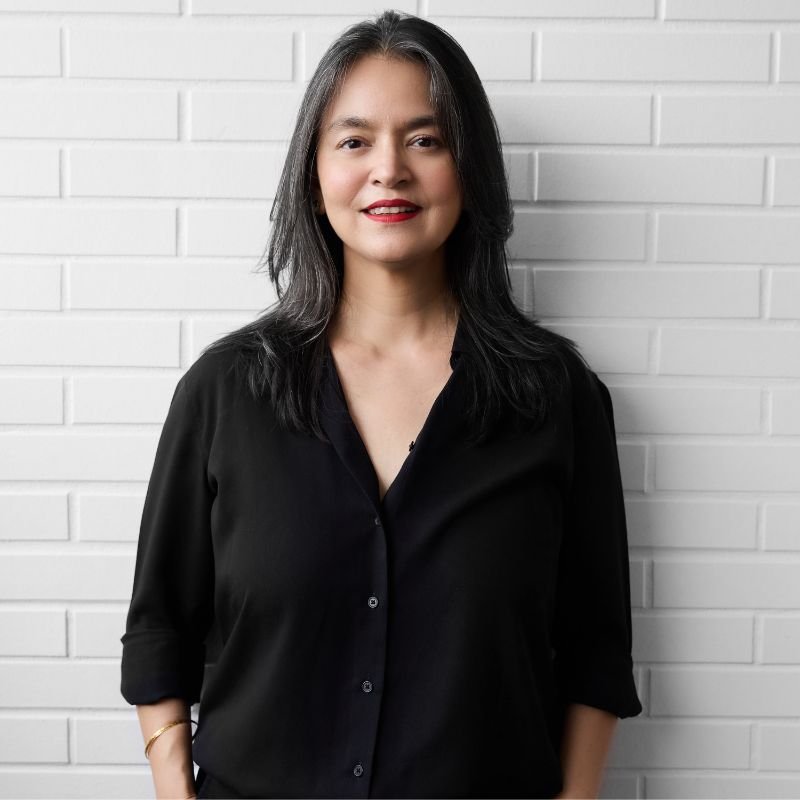
The Capitalyst: You were born in Casablanca in 1991 and have described using drawing and colour from a very young age as a way to express yourself and break free from the conformism of the society you grew up in. What were you drawing against exactly, and what did colour give you that words could not?
Radia: I think I was mostly drawing against a form of conformity. The kind that pushes everyone to be alike and can limit originality and critical thinking. As a child, there’s often this desire to be like others, to fit in and feel a sense of belonging. Drawing, for me, was a space where I could be free, without having to conform. Playing with colors has always felt very natural to me, almost instinctive. I’ve always done it without really thinking about it. In the end, it was simply a way of expressing my sensitivity.
The Capitalyst: You trained as an architect at the Académie Charpentier and then at the École Spéciale d’Architecture in Paris. Most people who go through that kind of training end up inside it for life. What was it that architecture could not give you, and at what point did you feel the painting taking over?
Radia: Architecture taught me a lot, but I think what I was missing was a certain kind of freedom, and above all, the same intensity of passion. At some point, I felt the need for something more instinctive, more open. Painting gradually took over when I realized it allowed me to express myself more freely, without limits. It wasn’t a sudden decision, but rather a natural shift. I simply felt more alive and more connected to what I was doing.
The Capitalyst: It was your time in New York that made you fully realise the importance of your interest in contemporary art, and a 2026 interview confirms that your practice was truly affirmed during the confinement period of the pandemic. Two very different cities, two very different kinds of solitude. What did each of those experiences unlock in you that the other could not?
Radia: New York was a moment of opening for me. Being in such an intense city, surrounded by contemporary art, made me fully aware of what truly drew me in. It was a kind of constant, almost external stimulation. In contrast, during the lockdown, everything became more internal. That period of confinement was very intense, and art became a real escape for me, almost like a window. It was the only way for me to feel free, to keep expressing myself and to keep something flowing within me. These are two very different kinds of solitude: one nourished by the outside world, the other turned inward. But each, in its own way, allowed me to move forward and better understand my practice.
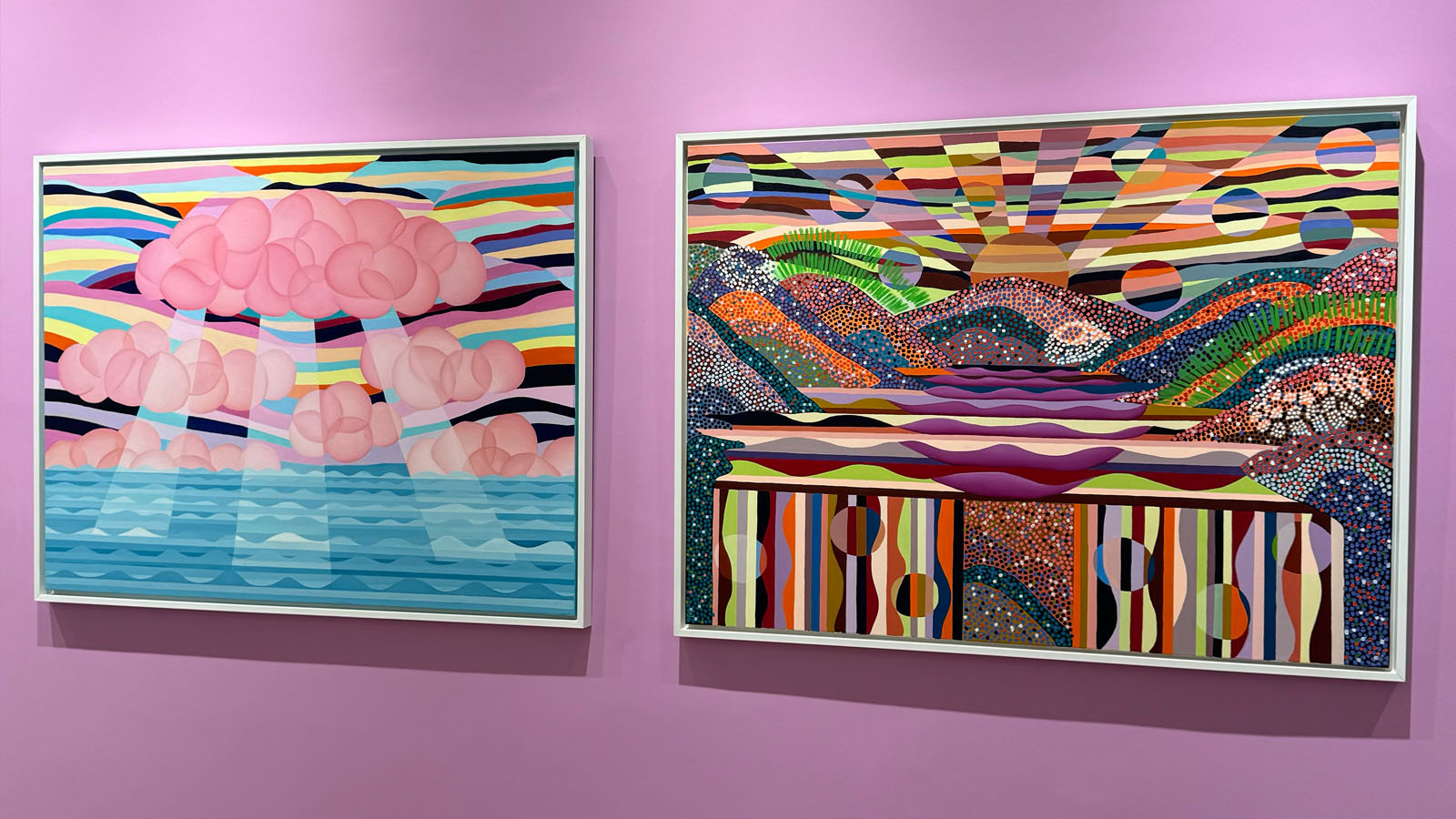
The Capitalyst: You describe your painting as a spiritual journey toward the awakening of consciousness through form, colour and matter, and you use both oils and acrylics to create abstract and immersive compositions. When you are working on a canvas, how do you know the difference between a colour choice that is decorative and one that is doing genuine emotional or spiritual work?
Radia: Color, for me, is very spontaneous. I never start with a defined palette — each canvas is a surprise, everything happens directly on it. I don’t really think about the difference. I feel it. At some point, the color just feels right — and that’s when it goes beyond the decorative
The Capitalyst: You are represented by Loft Art Gallery in Casablanca, which showed your work at The Armory Show in New York in September 2025, marking the first time a Moroccan gallery ever exhibited at that fair. What does it mean to have your work in a room like that as part of a historic first, and does that institutional framing change how you think about who your work is speaking to?
Radia: It’s something quite powerful. Seeing my work presented in that kind of context, as part of a historic first, gives a different dimension to what I do. There is a sense of recognition, but also a form of responsibility. That said, it doesn’t fundamentally change the way I work. I don’t really think about a specific audience. My practice remains quite instinctive and personal. If something resonates with someone, it happens naturally, regardless of the context in which the work is shown.
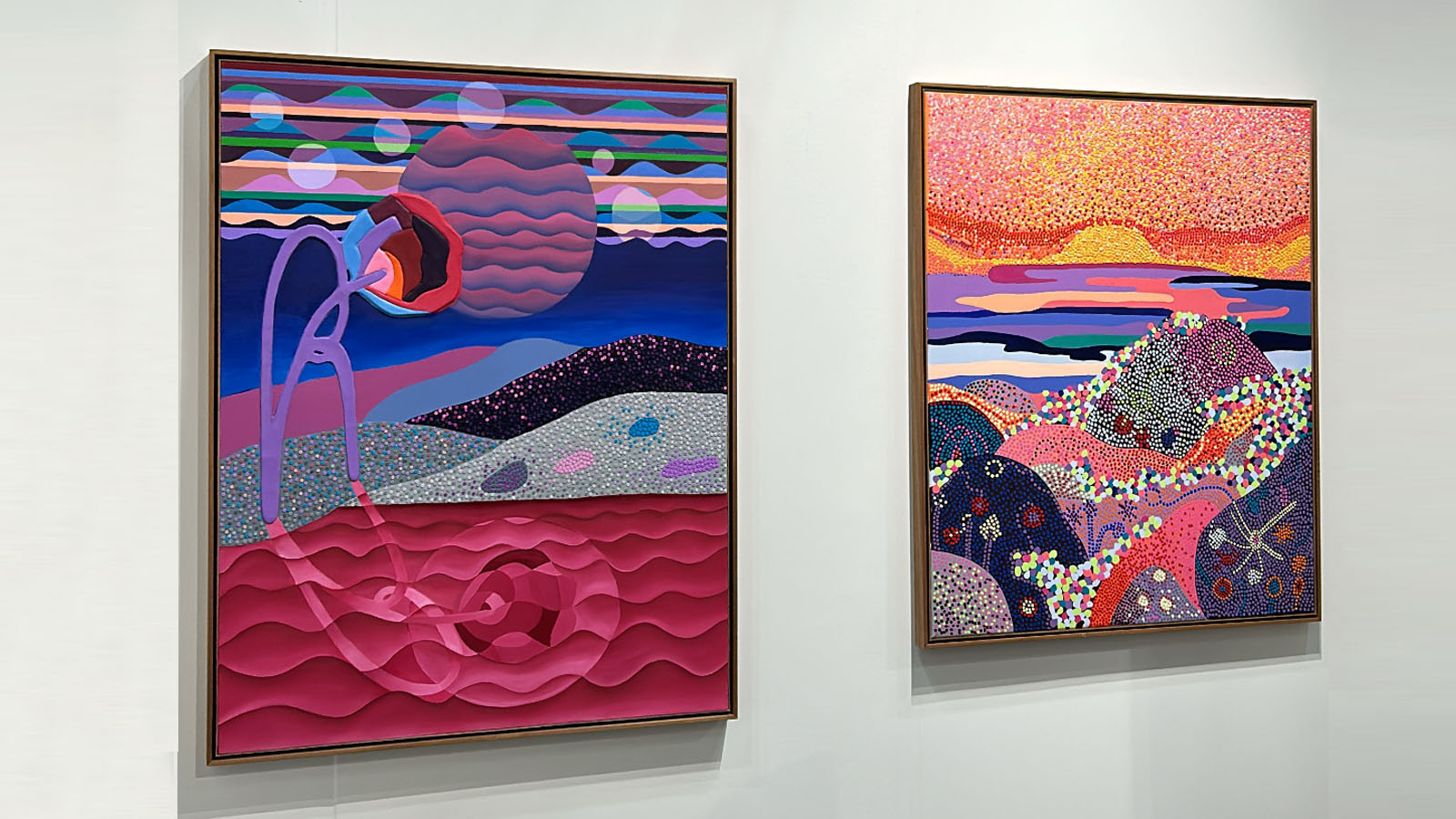
The Capitalyst: Your practice explicitly engages with nature, love and meditation as sources of energy. Those are not neutral words in the context of contemporary art, which can sometimes be suspicious of beauty or optimism. Do you think painting that seeks to generate serenity is making an argument, and if so, what argument is it making?
Radia: I don’t necessarily try to make a statement in a conscious way, but I think creating spaces of serenity is already a response in itself. In a world that often feels fast, noisy, or tense, offering something quieter and more sensitive becomes a gesture on its own. For me, it’s not about naïve optimism, but rather about reconnection — to oneself, to emotions, to something more essential. If my work carries a message, it might simply be this: to slow down, to feel, and to make space for a certain kind of softness.
The Capitalyst: The Moroccan contemporary art scene is rapidly evolving, with institutions, galleries and a new generation of artists gaining serious international visibility. As someone who lives and works in Morocco, what do you think the scene still needs that it does not yet have, and where do you see the gaps between what is happening locally and how Moroccan art is being received abroad?
Radia: The Moroccan art scene is evolving very quickly, and there is a real energy, which is very stimulating. There is more and more visibility and opportunity, but I think there is still a need for stronger structures to support artists over the long term and to encourage more experimental practices. Abroad, there is still sometimes a somewhat limited view of Moroccan art, while in reality the scene is very diverse and constantly evolving. This gap is gradually narrowing, but there is still work to be done for this complexity to be fully understood and represented.
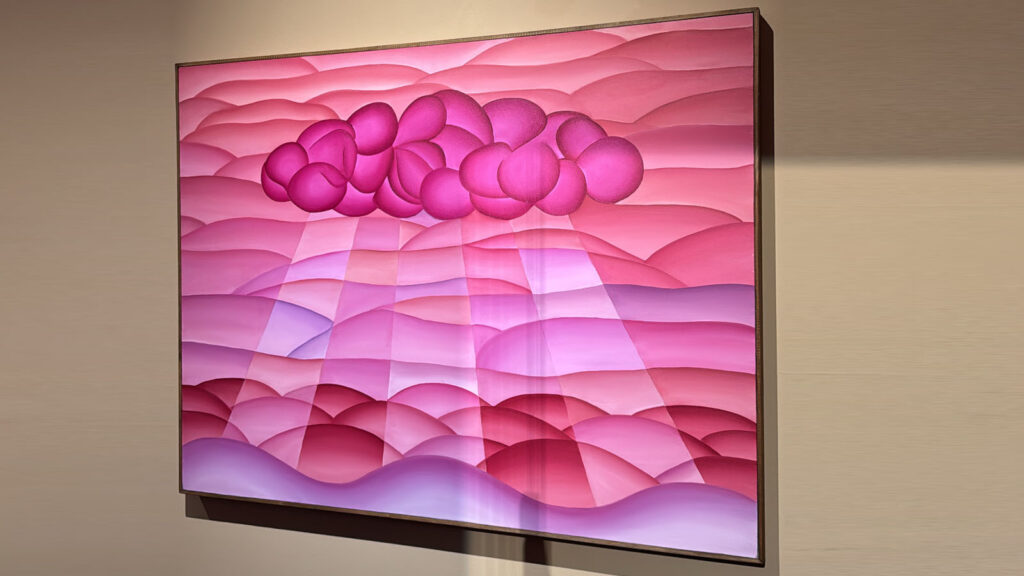
The Capitalyst: Your architectural training and your painting practice both involve an intense relationship with space, proportion and the way materials behave. Do you think that training left a permanent mark on how you compose a canvas, and is there anything you learned inside that discipline that you are still working out through paint?
Radia: Yes, of course, my architectural training has influenced my painting. It gave me a strong foundation: I learned drawing in a more advanced way, different techniques, and developed an attention to form and balance. These are elements that continue to inform my work today. But today, I feel much freer in painting. It allows me to explore different subjects and themes more openly. Whereas architecture can be more complex in its process, painting offers me a more direct and open space for expression.
The Capitalyst: You have said that your paintings seek to release an enchanting serenity, a source of energy that reveals the importance of nature, love and meditation in a vibrant, optimistic and hopeful atmosphere. In a world and an art market that often rewards urgency and darkness, what keeps you faithful to that vision of what a painting can be?
Radia: I think it is, above all, something very instinctive. I’m not trying to go against anything or respond to expectations. I simply stay true to what feels right to me, to what I need to express. There is indeed a lot of tension, and at times darkness, in the world, but I don’t believe that is the only reality. What interests me is precisely not reducing it to a single register. There are also spaces of calm, softness, and light that are just as real. My painting perhaps comes from that — a need to restore a sense of balance, to remind us that these dimensions exist too, and that they deserve to be fully felt.