The Capitalyst: You describe the right words as “good medicine” that can trigger self-reflection. How do you distinguish, in your own mind, between a therapeutic intervention and an artistic provocation?
Johan Deckmann: For me, the difference is less about language and more about responsibility. In therapy, the words are there to serve the person in front of me – they need to be timed, contained, and held with care. In art, the words are allowed to be indifferent. They don’t adjust themselves to protect you. In art, words can afford to be a little more ruthless. So I distinguish by context rather than intention.
The Capitalyst: You source vintage books from second-hand shops, each with its own history. When you find a book, do you ever feel the “weight” of its previous owner, and how does that physical history influence the new title you choose to paint on it?
Johan Deckmann: I wouldn’t say I feel the previous owner as a person, but I definitely feel the object as something that has already lived a life without me. The scratches, the fading, the slight resistance in the cover – it all suggests that this book has already been handled, ignored, loved, or abandoned. That matters. I’m not trying to collaborate with the past, but I’m also not pretending it isn’t there. My role is closer to an interruption than a continuation. The title is entirely my work, independent of the book’s previous content. I would rather say that my work adds new life to the object. Sometimes it’s only after I’ve done the work that I realize my title somehow resembles the original content.
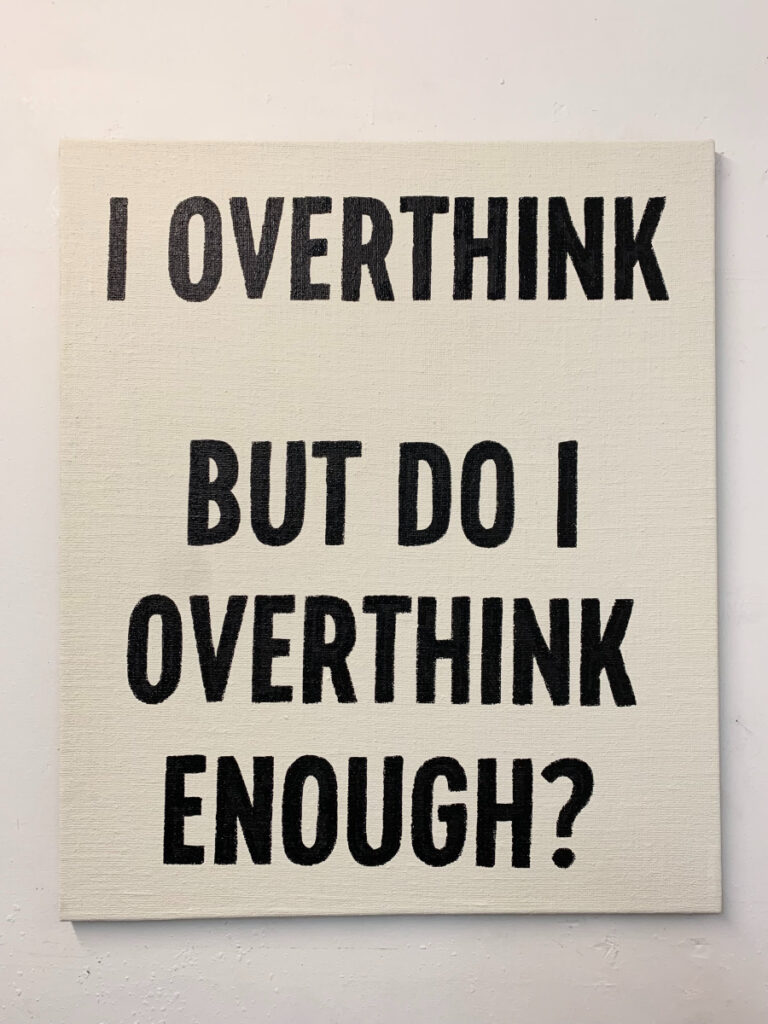
The Capitalyst: Your typography is inspired by a 1950s poster belonging to your grandfather. In an era of flashy digital art, why is it important for your work to remain so physically grounded and “low-tech”?
Johan Deckmann: My choice isn’t nostalgic. It’s closer to a search for an almost dogmatic minimalism. I’m interested in stripping things down to a point where nothing can hide and nothing can be added without a consequence. In that space, the written word becomes very exposed. Each hand-written letter carries its own weight, it’s own relevance to the meaning of the title. It’s no longer just language – it’s a physical presence. In a digital world that can easily impress, I’m more interested in reduction. Not to make it simple, but to make it undeniable.
The Capitalyst: You have compared your writing process to music composition, leaving out the unnecessary notes. How do you edit a complex psychological concept down to just five or six words without losing the “truth”?
Johan Deckmann: My process is mostly subtraction disguised as writing. I try to remove everything that isn’t essential. What’s left is often slightly uncomfortable, sometimes even a little unfair – but closer to how we actually experience things internally. Psychologically, we rarely think in full explanations. We think in fragments, contradictions, half-truths. I try to preserve that. The goal is not to explain the idea, but to make the reader recognize it.
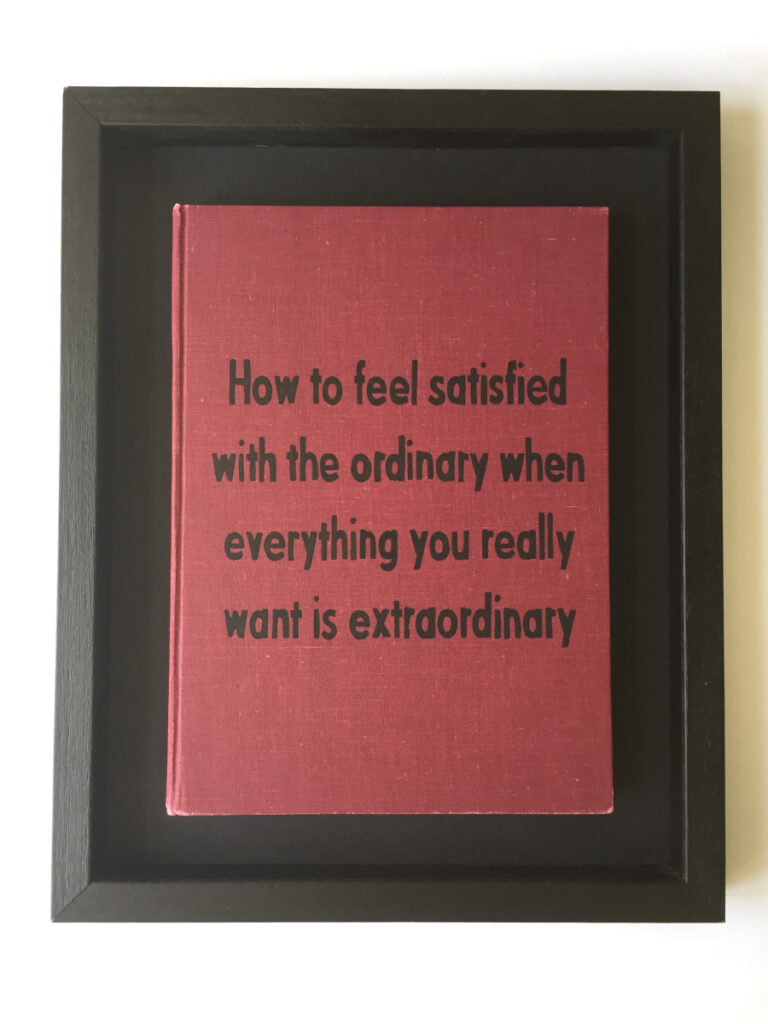
The Capitalyst: Your work is often described as a satire of self-help culture with titles like “1001 reasons to stay in bed” or “How to solve problems by escaping into your own little world.” But your pieces are also genuinely therapeutic. Does that put you in an uncomfortable position of being both the critic and the thing you are critiquing?
Johan Deckmann: It may look like I’m in that position, but I don’t experience the work as criticism. I’m not pointing at anyone. I’m exposing myself along with everyone else. If I were standing outside of self-help culture, judging it from a distance, it would become too easy – almost moralistic. So the work isn’t saying, “Look at them.” It’s saying, “Look at us – including me.” That shared exposure matters, because it creates the possibility of a shared recognition. And from that recognition comes at least a small chance of real change.
The Capitalyst: Your medium is, by design, minimal: a single phrase. But you are also trained to listen for everything that goes unsaid in a room. Is there something essential about the human experience that you have repeatedly tried and failed to compress into a book title? Something the format simply cannot hold?
Johan Deckmann: Yes, there are things the format can’t hold. Not because they are too complex, but because they require time, presence, or another person. A single phrase can point very precisely, but it can’t listen back. It can’t adjust. What I often miss is the space where something unfolds slowly – where contradictions are allowed to remain unresolved and where meaning changes as you stay with it. But perhaps that unfolding still happens in another way – over time, as you live with the work. As it hangs on your wall, or as you return to it in a gallery, you change. And as you change, the meaning of the work changes with you.
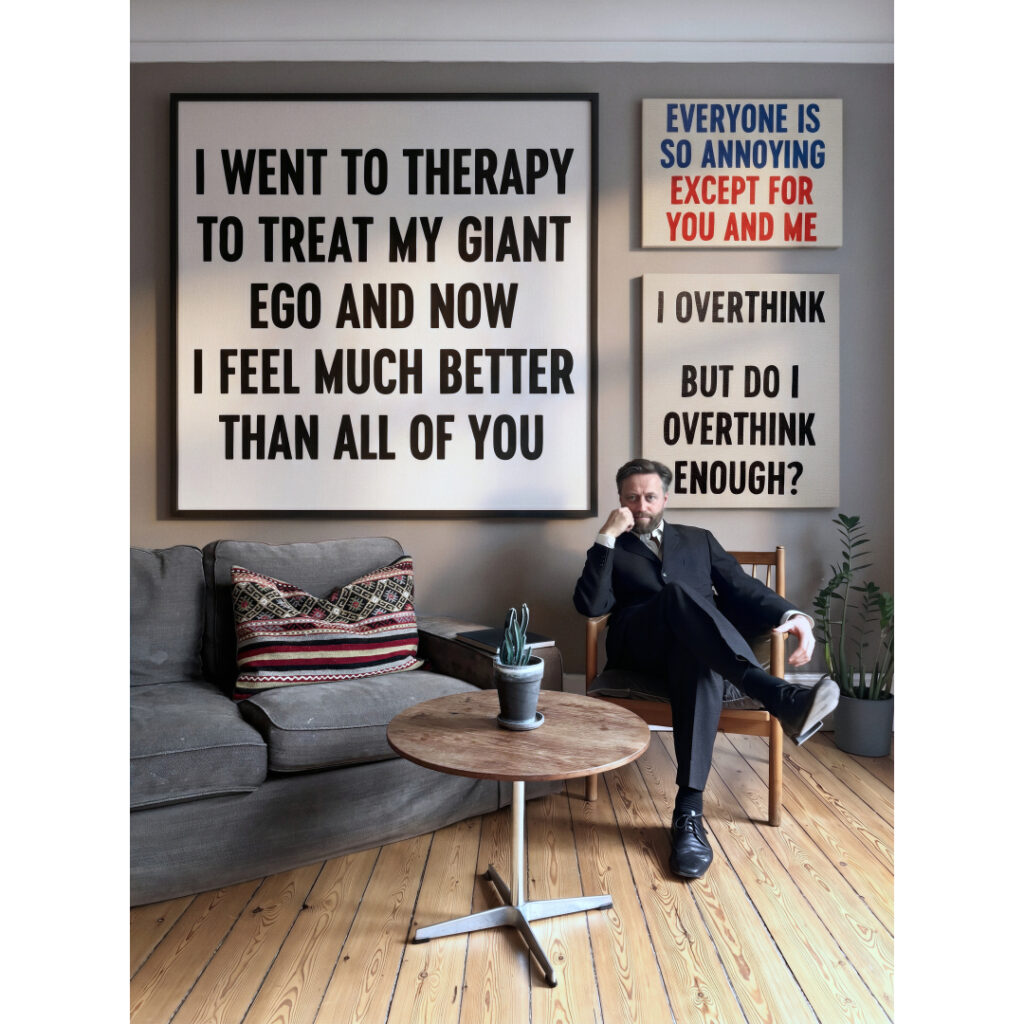
The Capitalyst: You are a psychotherapist, an artist, an author, a father, a partner. Most people struggle to sustain even one of those fully. How do you move between them, and who are you when none of those roles are asking anything of you?
Johan Deckmann: I don’t experience it so much as balancing roles, but as moving between different levels of attention. They’re not separate identities as much as different ways of being present. The same sensitivity runs through all of them. Therapy requires a very focused, outward attention. Fatherhood and partnership are more relational and fluid. The work, on the other hand, happens in a quieter space where I’m not required in the same way. When none of those roles are asking anything of me, I experience moments of stillness and reset, perhaps while walking through my beautiful city, listening to music. But that quiet space is also something I can access even while I’m in those other contexts. That’s why I’m able to write my work wherever I am. In that space, I feel a deep gratitude for life – something I love to observe, translate into art, and be part of.
The Capitalyst: If you were to create a book title specifically for the year 2026, reflecting our current obsession with AI, digital speed, and global uncertainty, what would it say?
Johan Deckmann: If I were to make a title for 2026, it would probably reflect how we’re trying to optimize everything – our time, our attention, even our emotions – while quietly worrying about what’s left of us underneath all that efficiency. So something like:
HOW TO STAY HUMAN WITHOUT LOGGING OUT
It holds a small contradiction. We don’t actually want to log out – we just want to feel real while staying connected. The humor, if there is any, is that we’re trying to solve very old existential questions with very new tools. Maybe the real shift is accepting that we still can’t solve these old problems – much like the uncomfortable truths we sometimes encounter in therapy. That’s where art becomes essential.