The Capitalyst: You were born in 1980, trained as a textile engineer and for roughly ten years ran the family textile factory in Iran before expanding operations into Afghanistan, where you started a new factory to help locals build manufacturing independence and reduce their need for imports. That is an unusual first chapter for someone who would eventually walk hundreds of kilometres across multiple continents as a peace ambassador. What was the moment inside the business world that made you understand you were meant to be somewhere else entirely?
Reza Abedini Sohi: I had been aware of these ideas for many years, but I had never found the right opportunity to bring business and social responsibility together. Afghanistan gave me that opportunity. It was a unique combination of entrepreneurship, social responsibility, and travel to a country that was both fascinating and full of challenges. Afghanistan needed support, and I felt that I was in a position to contribute in a meaningful way. For me, it was more than starting a factory or expanding a business. It was the first time I experienced how work could serve a broader human purpose. Looking back, that chapter showed me that business can be a platform not only for economic growth, but also for responsibility, solidarity, and positive change.
The Capitalyst: You left a successful professional life to pursue what you have described as the culture of peace, a phrase that sounds simple but carries enormous weight. Most people who feel that pull find a way to channel it into their existing life without dismantling it. You chose to dismantle it completely. What did you know about yourself that made the partial version impossible?
Reza Abedini Sohi: I believe that sometimes doors open in life that reveal your path and your responsibility. The important thing is to recognize those opportunities, to look at them carefully, and to have the courage to step through them. You must be willing to let go in order to discover other worlds and other possibilities. At the same time, I knew that if I wanted to make a lasting and meaningful contribution to my country and to humanity, I would have to dedicate my full attention and energy to it. Everything I believed in was ready for a new beginning. I was ready to start a new path and build it from the ground up—a path that might leave my footsteps in this world a little longer after I am gone.
The Capitalyst: Your first long journeys took you across four countries in South America covering approximately 500 kilometres over three months, followed by roughly three to four months walking through eight countries in Africa, where you covered around 600 kilometres. Walking is one of the oldest forms of bearing witness. What does covering distance on foot rather than by vehicle or plane change about how you understand a place and its people, and was there a specific encounter on one of those walks that permanently changed the direction of Yekihastim?
Reza Abedini Sohi: Walking brought me face to face with the raw reality of people, cultures, and life itself. It gave me the opportunity to observe, to learn, to understand, and through that understanding, to develop a deeper sense of respect. For me, these are both the practical and spiritual steps of a traveler in search of meaning.
When you travel on foot, you learn how to let go. You learn how to become nobody. At first, you arrive as a stranger. Then, gradually, you become one of them. Eventually, the boundary between you and the other begins to disappear. That realization became the foundation of my campaign and its message: “We are different, but we do not have differences. We are one.” A campaign that later grew into an NGO and a civil society organization.
I wanted it to outlive me and to help ensure that the fragile seedling of humanity would not be allowed to wither away. One of the most remarkable journeys of my life was walking the sacred route of El Camino de Santiago. It was far more than a spiritual path; it became a doorway to discovering myself.
The Capitalyst: It was your walk through Africa that caught the attention of the United Nations headquarters in Iran. You were invited to hold an exhibition on peace on International Peace Day, and that exhibition became the actual starting point for Yekihastim as a formal organisation. Looking back, was there a version of this work that could have existed without that UN encounter, or do you think you needed that institutional recognition to believe the movement was real?
Reza Abedini Sohi: I believe that when a responsibility is placed on your shoulders, everything you need to fulfil it eventually appears along the way. This was my destiny, and I do not think anyone—or anything—could have changed it. Without question, the support and recognition of social activists and institutions can be valuable and deeply appreciated. But their absence is never a sufficient reason to abandon our responsibilities or walk away from what we believe we are meant to do. Beliefs are formed in the mind and soul of a person, and the world around us is built in accordance with those beliefs. In the end, every meaningful movement begins with an idea that someone chooses to live by.
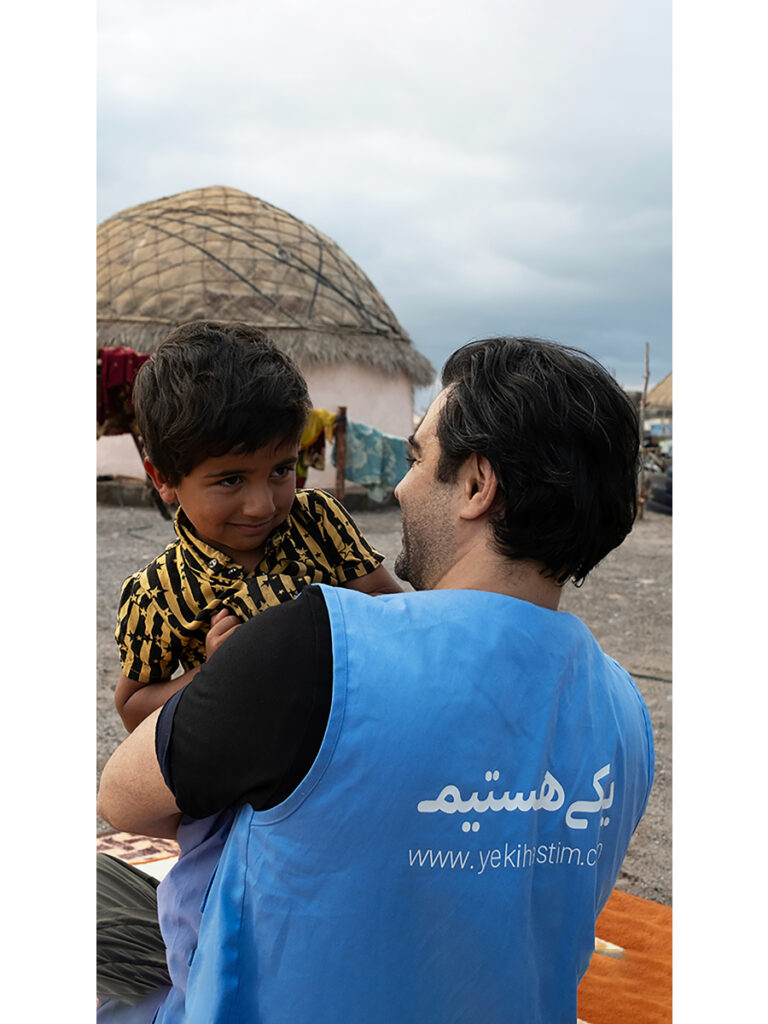
The Capitalyst: The movement began as Children of Peace, with children at its centre as both the builders and the inheritors of the world’s future, as you have put it, before expanding into the broader Yekihastim framework with its motto: we are different but we don’t have differences, we are one. Why children specifically as the starting point, and do you think adults are capable of being changed by the kind of work you do, or is the real leverage always with the generation that has not yet learned to separate?
Reza Abedini Sohi: I believe that children are the primary agents of future change. However, adults are the ones who shape the environment in which children grow. If we want to create lasting and meaningful change, we must pay attention to both.
Children develop first within their families and then within society. If those foundations are not healthy and supportive, focusing exclusively on children will not produce sustainable results. History is a continuous cycle shaped by all members of society. We cannot ignore any group or leave anyone behind. At the same time, we must understand priorities and sequence when it comes to implementation. Children may be at the center of our vision, but meaningful transformation requires the participation of the entire community.
The Capitalyst: Yekihastim grew from a deeply personal campaign into a formal NGO endorsed by the United Nations’ Iran headquarters, financially supported by major Iranian corporations including Eghtesad Novin Bank and Pars Online, and visible enough that Samsung Iran chose you as one of the torchbearers at the 2018 Winter Olympics in Pyeongchang, South Korea. That arc from solo walking to Olympic torch is extraordinary. At what point did you feel the movement had taken on a life beyond your own individual effort, and did that feel like liberation or loss of control?
Reza Abedini Sohi: When you take responsibility for an organization, the word “I” gradually loses its meaning. A civil society organization belongs to the community and to the people it serves; it does not truly belong to any one individual.
Although the weight of that responsibility can sometimes make you dream of freedom, the reality is different. An organization is like a child you have brought into the world. You constantly watch its growth, hope for its flourishing, and worry about the challenges it may face. Because of that, there is never complete separation or release.
For me, the moment Yekihastim became larger than myself was also the moment I understood that it no longer belonged to me. It had become part of the lives, hopes, and efforts of many people. That is not a loss of control. It is simply the natural path of any living movement that wishes to endure.
The Capitalyst: You are also known as an actor and performer. Acting and social activism are both forms of inhabiting perspectives that are not your own, of building empathy through presence. How does your experience as a performer inform how you communicate the mission of Yekihastim, and is there something the camera teaches you about holding an audience’s attention that the long walk does not?
Reza Abedini Sohi: The truth is that I became involved with Clowns Without Borders and had the privilege of working with the German team to perform for children living through crisis and hardship. It was both an honor and an extraordinary experience. Being a clown was perhaps one of the most difficult and challenging things I have ever done. It taught me that it is okay to make mistakes, to laugh, and to keep going. It taught me humility in a way few other experiences could.
The people I met through Clowns Without Borders were among the most remarkable human beings I have ever known. I learned many valuable lessons from our team leader, Suzy, lessons that I still carry with me today and will never forget. As a performer, I learned that genuine human connection does not begin with words; it begins with presence, empathy, and the ability to meet people where they are. That lesson has influenced the way I communicate the mission of Yekihastim ever since.
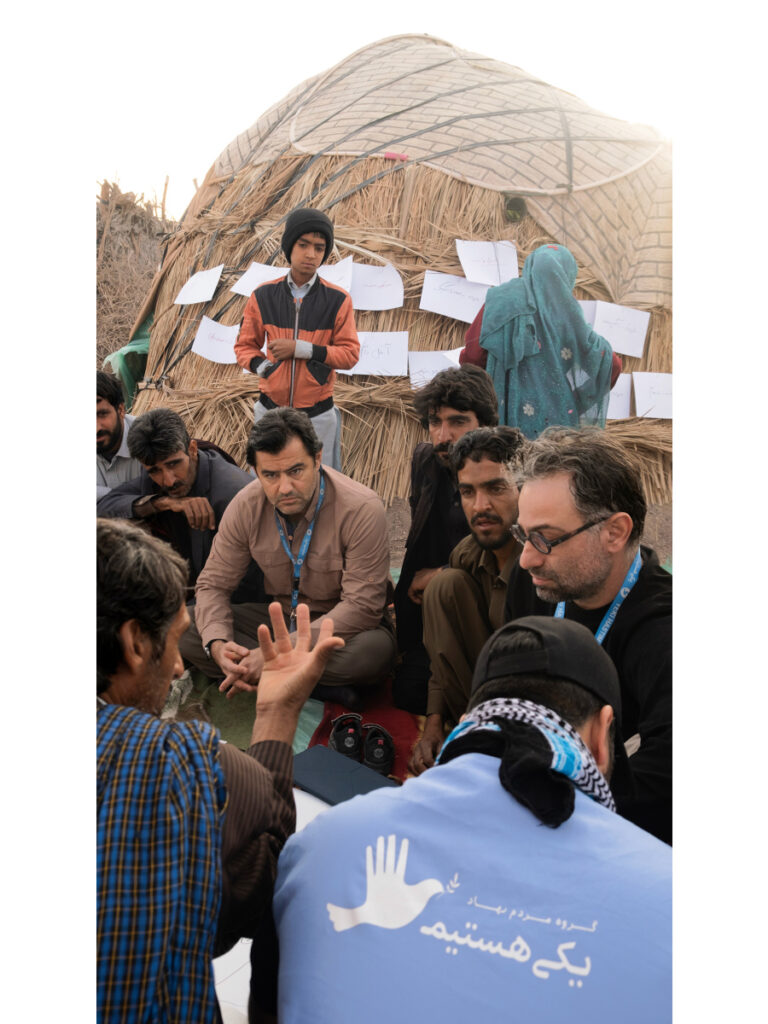
The Capitalyst: You and your team have been actively working in Jazmourian in southern Kerman province on community development, charitable and public welfare activities at the local level. That is very specific, very rooted work in one of Iran’s most remote and ecologically fragile regions, far from the international visibility of the Olympic torch or the UN endorsement. What does working at that local scale teach you about what large-scale peace movements consistently get wrong?
Reza Abedini Sohi: One of the most important lessons we have learned is that real and lasting impact does not happen in the short term. Not every good deed is met with immediate appreciation or visible results. You have to live alongside a community with patience and respect until people accept you, trust you, and choose to walk with you. In my experience, that is the most important step in community development.
What matters is not solving problems for people, but discovering problems with them and designing solutions together. We learned that we cannot approach communities from a paternalistic, top-down perspective. That is why we use participatory approaches such as PRA (Participatory Rural Appraisal). People must become part of the process, not merely recipients of its outcomes.
We also learned the importance of focus. Traveling from one place to another, building something, and moving on can be appealing, but it often prevents projects from becoming truly local and sustainable. Without local ownership, even the best intentions can lose their effectiveness.
Real and sustainable development is built through patience, respect, attentive listening, and long-term commitment. It is far more complex than what people usually see in media stories or photographs, and it often involves challenges and hardships that remain invisible to the outside world.
The Capitalyst: The corporate sponsorships that fund Yekihastim‘s work, from banks to technology companies to electronics giants, represent a genuine tension in social movement building. You have navigated that tension successfully enough to sustain the organisation over many years. How do you maintain the integrity of a message about human unity and equality when the financial architecture of the work depends on institutional relationships with commercial interests?
Reza Abedini Sohi: Maintaining these relationships was one of the greatest challenges we faced, and reaching a sustainable balance took many years. From the beginning, we worked hard to promote a culture of social responsibility and to remind companies that Corporate Social Responsibility (CSR) is not an act of charity, nor a tool for increasing sales. It is an inherent responsibility of every organization toward the society in which it operates.
At the same time, because I am a business owner and manufacturer myself, I understood the realities and pressures that companies face. For that reason, we tried to create a model in which social impact and business value could coexist. Through meaningful storytelling and responsible communication, we sought to help companies strengthen their relationship with their audiences while remaining committed to genuine social impact.
By protecting the dignity of those we serve, remaining faithful to our principles, and investing in strong public engagement, we worked to complete the triangle between businesses, NGOs, and communities in need. Our goal was to transform that triangle into a living circle—one in which all participants benefit from one another, work together, and ultimately recognize their shared humanity.
For me, the integrity of the mission has always depended on one principle: human dignity must never be compromised. As long as that principle remains at the center, partnerships can become a force for positive and lasting change.
The Capitalyst: After years of walking across continents, founding and sustaining an NGO, working with the UN, carrying an Olympic torch and building community programmes in remote Iran, what is the thing Yekihastim has not yet done that you feel most urgently needs to happen, and what does the next chapter of this work look like to you?
Reza Abedini Sohi: Given the mission of our organization and the difficult economic and social realities facing Iran today, I believe we urgently need a stronger presence and a stronger voice within international institutions and global civil society.
More than ever, we feel the need to remove the barriers that separate people from one another. We want to make our voice louder—not for ourselves, but for the values we believe in. We want to speak about humanity, dignity, compassion, and our shared responsibility toward one another.
The next chapter of Yekihastim is not simply about expanding projects or reaching more communities. It is about building deeper human connections across borders and creating opportunities for people to see one another beyond nationality, politics, religion, or geography.
We come from a country that has experienced profound hardships and challenges, yet it is precisely from such places that some of the strongest calls for humanity can emerge. I believe our responsibility is to carry that message further, to build new partnerships, and to ensure that the voices of ordinary people are heard on a larger global stage.
The work is far from finished. In many ways, I believe it is only the beginning.