The Capitalyst: You were born in Tehran in 1986, and your path to pastry started in a wonderfully specific place: dreaming as a child of becoming an artist like Van Gogh, reading Like Water for Chocolate at 15, watching Road to Avonlea, and then falling completely under the spell of Harry Potter, imagining a shop in Diagon Alley with wooden shelves of pastries, vanilla and coffee scents, and butterflies on the glass roof. Most pastry chefs describe a grandmother’s kitchen as their origin story. Yours sounds like it came from books and film just as much. How did those fictional worlds eventually translate into the very real discipline of professional pastry?
Shahrzad Shokouhivand: I am thoroughly blessed to live my childhood dream, albeit it is not “they lived happily ever after”. It is all happening in a very tough real-world business environment, infused with a high dose of roller coaster drama due to all the situation surrounding businesses and lives in Iran. I always imagined myself a mother who bakes at home kitchen for her children, nevertheless now, I miss mixing cake batters, as I am entirely consumed by all the other aspects of the business.
The Capitalyst: You studied Hotel Management at Islamic Azad University, worked in hotels, helped manage a family sports business, and baked pastries and cookies at home to sell at private events, long before any of it had a name or a storefront. That is a long runway of working quietly toward something before making it official. What was the moment you knew the home baking was no longer a hobby on the side of your life but the actual centre of it?
Shahrzad Shokouhivand: My mother was a professional swimming coach and referee who was constantly consumed by her profession. I was dreaming to become a professional like her, with social presence, yet an artist who spends more time with family. Later when Nava, my daughter, was born I realized that what I wanted was more than baking for the family and motherhood, I wanted a much larger family whom I may bake and cook for; to make it possible for them to experience tastes and services they may not otherwise than travelling abroad. I wanted to transform and present what mothers prepared for dishes and desserts to a high-end “boutique” format.
The Capitalyst: In 2017 you went to Paris for three months to study at Le Cordon Bleu, and on returning to Tehran in December 2018 you opened Femme Chic, transforming a space that had been a beloved luxury handbag boutique for more than 60 years, carefully renovating it to stay loyal to its original Art Deco design and façade. Taking over a space with that much local history and memory attached to it is its own kind of responsibility. What did you feel you owed to what the building had been before you could claim it as something new?
Shahrzad Shokouhivand: The Enghelab (Shahreza) street, where Femmechic is located, is having a very important role in modern Tehran, and Iran. Throughout past 100 years, a dynamic of cultural spaces, from schools and universities to theatres and music halls, restaurants and eateries to pastry and coffee shops, mostly influenced by French culture were formed around it. I believe that staying loyal to authenticity, preserving it, and retelling genuine stories from the past is something that our time deeply needs. Femmechic occupies a building that already carried stories of its own – stories of women loving French culture and dreamed of Chanel-inspired handbags. Even the name reflected the history and deserved to be preserved. To me, demolishing and building again is not an act of artistry. The real art lies in preserving something and finding a new way to tell its story.
The Capitalyst: You have built your name on blending French pastry technique with distinctly Iranian ingredients, pistachio, saffron and sumac woven into classical French forms. That fusion sounds elegant in a sentence but is genuinely difficult to execute well, since either side can easily overwhelm or flatten the other. How do you decide when a French technique is strong enough to carry an Iranian flavour, and has a combination ever failed badly enough to teach you something important?
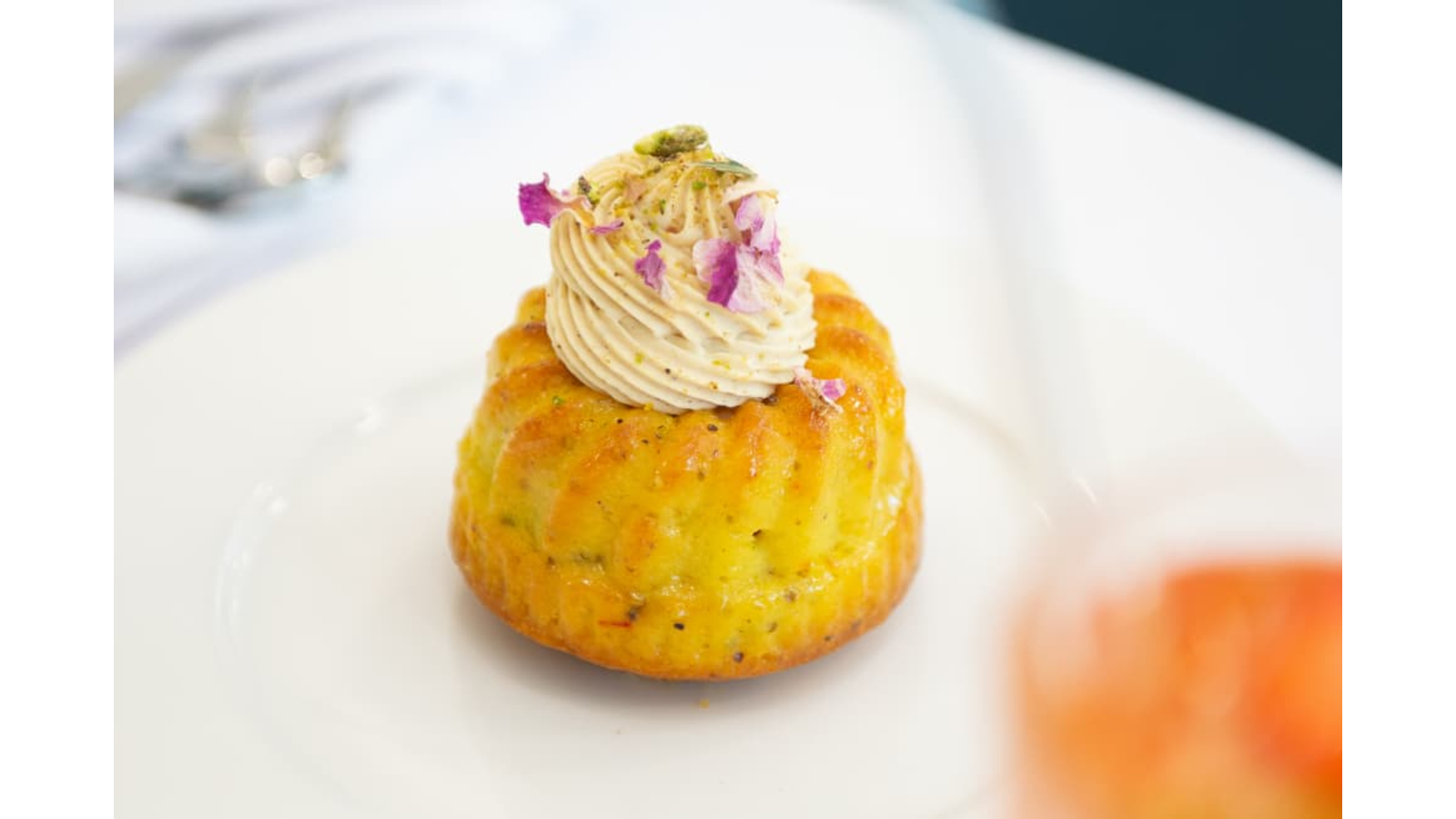
Shahrzad Shokouhivand: To me, French pastry technique is a foundational and mother technique, one that can inspire the creation of many international desserts and pastries. It is an exceedingly potent format and so far, it has never disappointed me. I have never tried to make French pastries Iranian, or Iranian pastries French. Instead, I have tried to stay faithful to the essence of each dessert while transforming the way it is presented. For example, my “Baba Tabrizi” has nothing to do with the French “Baba au Rhum” as a recipe, it is completely inspired by traditional Tabrizi Khagineh (Gheyghanakh). The only thing they share is being soaked in syrup; the form and presentation simply echo the idea of a baba cake; the naming also comes from the fact that our, mine and Babak’s, dads (Babas) are both from Tabriz. Or my “Bal Gheymaq” Éclair, it is unquestionably an éclair, but one that carries a nostalgic and authentic Iranian flavour, a mixture of clotted cream (Sarsheer) and honey from Azerbaijan. And the “Qazvin Baklava” Opera keeps the layered structure of an Opera cake while embracing the aromas, colors, and flavours of traditional Iranian baklava, a layered dessert.
That said, I agree with you, this kind of approach can easily become kitsch and sometimes lead to disappointing results. I have seen that happen in the work of some of my colleagues, and perhaps that is why I have always tried not to alter the essence of what already exists. Instead, I try to preserve the original textures, aromas, and flavours while presenting them in a new form, creating something familiar yet unexpected. Ultimately, what moves people is not novelty alone; it is the feeling of being taken back to their childhood, to something familiar.
The Capitalyst: Your business now employs around 70 people, the majority of them women, and you have said it is only by working here, inside Iran, that real change happens for women, even though you and your husband Babak once seriously considered the path so many of your friends took and left the country entirely. Staying is its own kind of daily decision, made over and over rather than once. What does a hard day inside that decision actually look like, and what keeps bringing you back to yes?
Shahrzad Shokouhivand: Iran is my country. Like many people of my generation, I have lived through difficult realities in this country from the moment I was born into adulthood, experiences that may be difficult to even imagine in this century and era. From compulsory hijab to being forbidden from singing, dancing, or even riding a motorcycle as a woman. There is no doubt that many of the laws here are difficult and unfair towards women.
But leaving and abandoning my homeland has never truly felt like the answer for me. I have always found myself caught between two difficult questions: am I selfish enough to choose my own life and move somewhere with more freedom and peace? Or am I too attached, too afraid, to leave behind my family, the people I know, and the country that is familiar to me? I have always chosen the second path, as I believe Iran needs people who think. Iran needs art. I believe the Iran of today has been built by people who create, through its culinary culture in cafés and restaurants, through its culture and literature in cinemas and theatres, through the brushes of painters, through its architecture and craftsmanship in its markets and historic places, and …. If those things disappear, Iran no longer remains Iran.
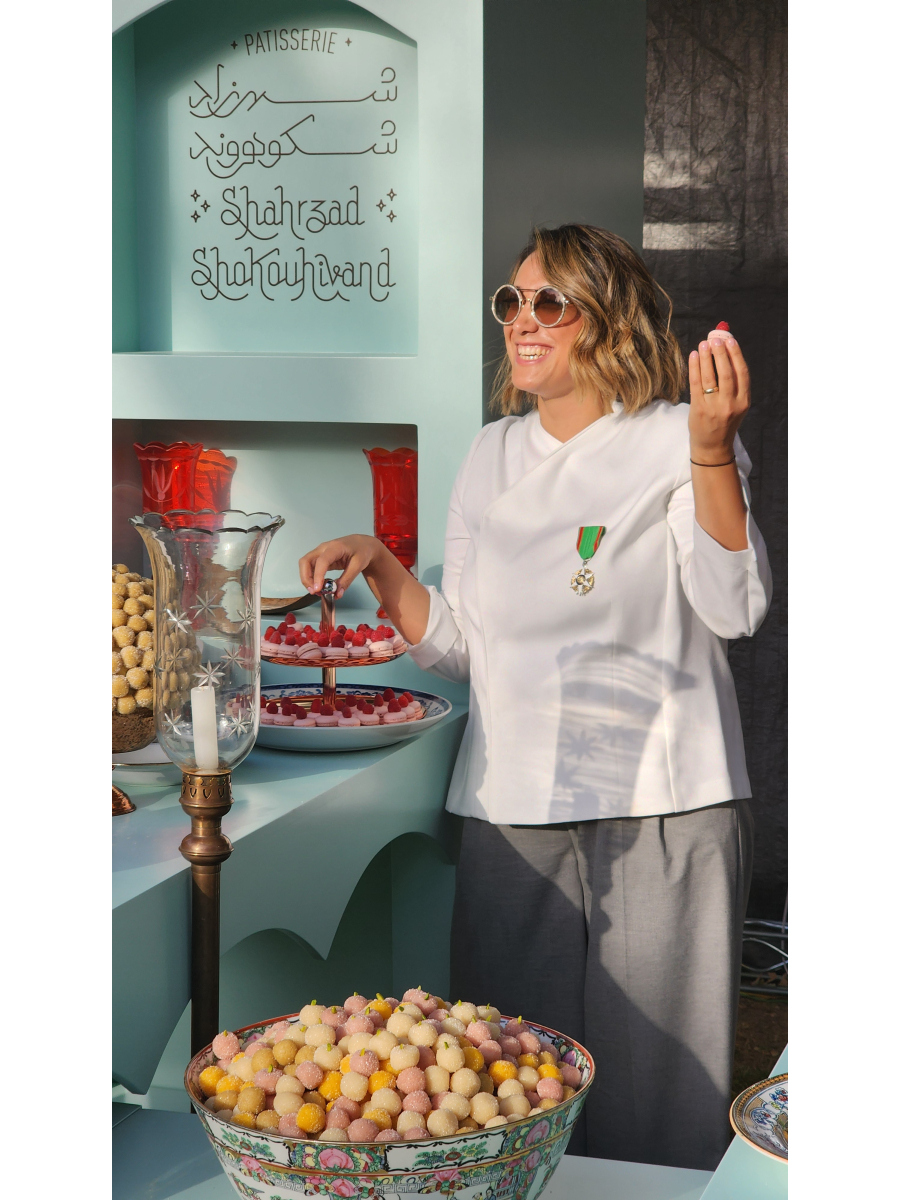
The Capitalyst: In 2023 you became the first Iranian woman, and the first woman in the Middle East, to receive the Chevalier de l’Ordre du Mérite Agricole from the French Ministry of Agriculture, a recognition that sits at a strange intersection of French institutional honour and Iranian entrepreneurial reality. What did receiving that award from outside Iran feel like, set against the day-to-day difficulty of actually running the business inside it?
Shahrzad Shokouhivand: It felt like a child receiving a vanilla ice cream in a very hot summer day as a reward for doing something well. It felt like a gentle gesture of affection, the feeling of being seen and appreciated. It was recognition that came not from my own country, but from another government and country. That made it both beautiful and a little bittersweet. I would have loved for my work to be recognised first as an Iranian, as an Iranian woman working in Iran. Nonetheless, perhaps that was an unrealistic expectation. At the same time, being seen by a country and a culture that I have always drawn inspiration from became an encouraging reward, one that gave me motivation to keep going.
The Capitalyst: You have spoken about your commitment to providing education and employment opportunities specifically to women, while also welcoming talented and enthusiastic men into that environment. Building a workplace around that kind of intentional balance is harder than simply hiring whoever applies. What have you had to build deliberately into how Femme Chic operates, in terms of training, culture or daily structure, to make that commitment real rather than just a stated value?
Shahrzad Shokouhivand: I am an entrepreneur, a pastry chef, and a mother — and I do not see a difference between women and men. It is true that in my country there are many inequalities between women and men, but I have always tried to challenge taboos. To create that balance in my work, I did not rely on slogans, I acted on it. Although, naturally, because I am a woman, more women are drawn to joining and working alongside me, the presence of men alongside women has always been necessary and essential for achieving success and creating something sustainable. Personally, I see myself as a more complete and better person alongside my husband, Babak, and I believe his presence in my work has contributed greatly to both success and balance. Just like yin and yang, we complement one another.
The Capitalyst: Five years after opening, your business remained profitable even as you were forced to reduce margins because of extremely high inflation in Iran. Running any business through that level of economic instability requires a completely different kind of resilience than running one in a stable economy. What is the hardest financial decision you have had to make as an entrepreneur that had nothing to do with pastry at all, and how did you make it without losing the thing that makes the business worth running?
Shahrzad Shokouhivand: Last year, I made some very difficult decisions. Or rather, we made difficult decisions, decisions that created immense pressure not only on us, but also on our team. One of the hardest was closing my pastry atelier, Shahrzad Shokouhivand Atelier, in northern Tehran after the landlords raised the rent to an unjustifiable level. That decision caused significant losses for the team. It happened during a year marked by two wars and at the same time as my second pregnancy. Perhaps the strangest decision I made during that period was choosing to build the Femmechic courtyard instead of continuing the Atelier in Elahieh. I did not want to lose my team, and staying in the Atelier had become impossible with that level of rent. Restoring and rebuilding the backyard of Femmechic, while trying to keep a large part of the team together during wartime conditions and a severe economic slowdown, brought heavy financial losses. At certain points, it even caused delays in meeting our payment commitments to our team and suppliers. More than the financial damage, that deeply affected me emotionally and mentally. But I have never regretted that decision. Today, I am grateful that the backyard of Femmechic has become a place where I can once again welcome and host people. I am proud that through persistence and fighting for the survival of this business, I was able to attract an investor and open a new branch again in northern Tehran.
The Capitalyst: You use no artificial colours or flavours, lean on classic technique over moulds, and say you are inspired by nature, holding closely to Voltaire’s idea that originality is nothing but judicious imitation. That is a fairly bold philosophical anchor for a pastry business. What do you think you have judiciously imitated most successfully in building Femme Chic, and is there a part of the business, or the craft itself, where you feel you have finally moved past imitation into something that is entirely your own?
Shahrzad Shokouhivand: I believe my work carries my own personal signature, and I have never tried to create emotions through flavours or shapes by relying on artificial colors or artificial forms. For instance, I would never use blue colouring simply to suggest the flavour of blueberry, or use silicone moulds to imitate the shape of a flavour, such as making a dessert in a strawberry-shaped mould just to communicate strawberry. I believe authenticity comes from within. Maintaining the balance between being authentic and becoming kitsch or cliché is not easy. I think that, up to now, I have reached that point by sacrificing many things: including profit, choosing not to follow trends or produce second-hand copies of ideas that might have brought more commercial success to the business but would have taken me further away from my purpose. I do anything I can to preserve this, personal signature, in my work. I believe, so far, I have succeeded in doing that.