The Capitalyst: You grew up between New Delhi and Mumbai with stints in Montreal and New York, the son of two of India’s most celebrated journalists: your father Vir Sanghvi, the country’s defining food critic and now Chairman of Culinary Culture, and your mother Malavika Sanghvi, columnist and author. That is an extraordinary editorial household to grow up inside. Most children of famous parents either run toward what their parents do or deliberately away from it. You ran toward it but into a very different corner of it. What was the specific thing about food and hospitality that felt like yours rather than your father’s?
Raaj Sanghvi: I grew up in a household where conversation revolved around ideas, art, politics and food. Dinner was rarely just dinner. It was often a debate, an interview or a story in progress. So, in that sense, I never really chose food. It was simply part of the environment I grew up in.
When I moved back to India from New York over a decade ago, I realised I was unusually interested in not just the act of eating, but the ecosystem around food. India was in the middle of an exciting culinary transformation. A new generation of chefs was emerging, restaurants were becoming cultural institutions in their own right and for the first time people were beginning to talk seriously about Indian food in a way that had previously been reserved for fashion, art or cinema.
I found myself drawn to the people behind it all. I loved talking to chefs, understanding how restaurants were built, why certain concepts succeeded while others failed and how food could shape culture. I often feel my father’s generation helped create the conversation around food in India. My generation has the opportunity to build some of the infrastructure around it.
The Capitalyst: Before founding your own ventures you worked at Vanity Fair in New York, then at the LVMH group in Mumbai and at Red Chillies Entertainment in Mumbai, three organisations with almost nothing in common except a high standard of taste and a very specific relationship to luxury and culture. What did each of those experiences give you that the others could not, and was there a moment at any of those three places when you knew it was time to build something yourself?
Raaj Sanghvi: When I look back, each taught me something completely different. Vanity Fair taught me storytelling. It showed me the power of narrative. LVMH taught me luxury and that true luxury is not about price, but about consistency, craftsmanship and attention to detail. Red Chilies taught me scale and how powerful intellectual property can become when it captures people’s imagination. Looking back, Culinary Culture sits at the intersection of all three. We tell stories, we operate in the luxury space and we build platforms, experiences and intellectual property around food and hospitality.
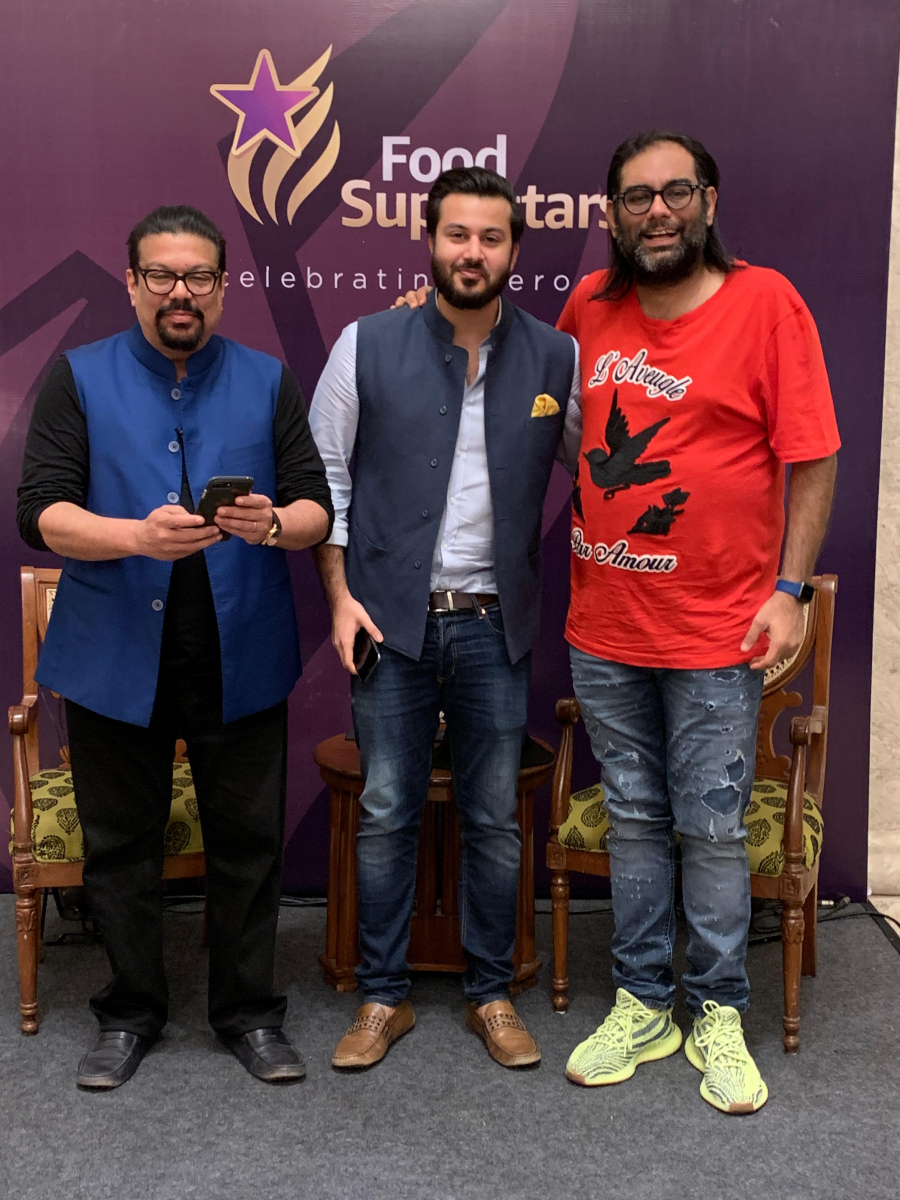
The Capitalyst: You co-founded Caviar Noir with your McGill University roommate Rishabh Joshi, a music producer and serial entrepreneur, with the ambition of challenging the status quo in nightlife and lifestyle through one-of-a-kind experiences. A food-focused Indian entrepreneur starting a luxury experience brand in Montreal is a very particular set of decisions. What was the insight behind Caviar Noir, and what did building something in Canada teach you about the Indian luxury market that you could not have learned from inside it?
Raaj Sanghvi: Caviar Noir was conceived while my co-founder Rishabh and I were studying at McGill University in Montreal. What fascinated us was the shift we were seeing among younger affluent consumers. Ownership was becoming less important than access. People increasingly valued unique experiences, interesting people and stories they could tell afterwards more than another luxury product sitting on a shelf.
Building the business in Canada taught me something that has stayed with me ever since. People behave surprisingly similarly across markets. Whether you are in Montreal, Mumbai, London or Dubai, people are ultimately looking for connection, discovery and a sense of belonging. What changes is the cultural context, not the underlying human behaviour.
The Capitalyst: Sanguine is a boutique luxury consultancy that is deliberately selective about who it works with, bespoke in every engagement and built on the idea that luxury is as much about relationships as it is about product. You have worked with restaurants from the Asia’s 50 Best list including Ministry of Crab and Nihonbashi alongside international luxury brands. What is the thing a luxury consultancy can do for a restaurant or a brand that its own team, however talented, structurally cannot see about itself?
Raaj Sanghvi: Distance. Most brands are simply too close to themselves. They understand what they are trying to communicate, but not necessarily how the market perceives them. Particularly in luxury, small details matter. Sometimes the difference between a good brand and a great brand is not the product itself but the story or, positioning. An external perspective can often identify opportunities and blind spots that are difficult to see from the inside.
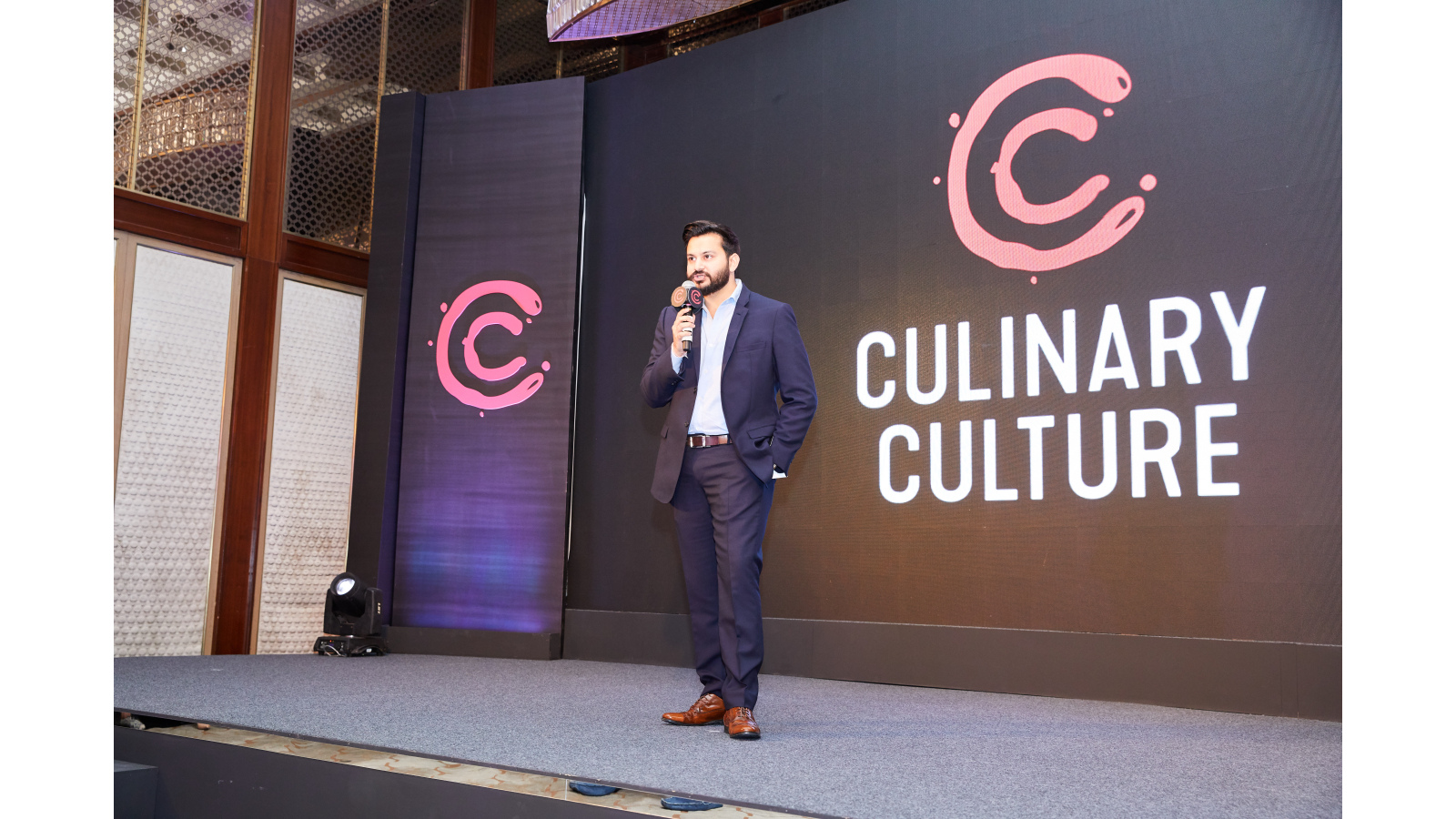
The Capitalyst: Culinary Culture was launched in March 2020 alongside your father Vir Sanghvi as Chairman and Sameer Sain of the Everstone Group, with Chef Gaggan Anand as mentor, modelled along the lines of the Michelin Guide with the ambition of being India’s most definitive and independent voice in food. You joined as CEO and have since built it into a platform with India’s first and only annual star rating system for restaurants, India’s first street food awards and India’s first awards for food delivery. What was missing in how India’s food culture was being recognised and documented that you felt compelled to build institutional infrastructure around?
Raaj Sanghvi: India has never lacked culinary talent. We have extraordinary chefs, remarkable restaurants and one of the richest food cultures on earth. What we lacked were institutions. If you look at every mature culinary market, there are organisations that document excellence, create standards, recognise achievement and help tell that country’s story to the world. India, despite its culinary depth, had surprisingly little of that institutional infrastructure.
When we launched Culinary Culture, the ambition was never simply to create another media company or awards platform. It was to help build an ecosystem. That is why we created Ultimate Restaurant Ratings, India’s first and only independent pan-India star rating system. It is why we invest in original content, thought leadership and documenting the people shaping Indian hospitality. And it is why we spend so much time creating culinary exchanges that connect India with the rest of the world.
One of the things I am proudest of is helping bring some of the world’s greatest chefs to India. For years, many of these chefs would happily cook in Singapore, Hong Kong, Bangkok or Dubai but ignore India. Through Culinary Culture, we have now hosted chefs representing more than 200 Michelin stars, including Alain Ducasse, Heston Blumenthal, Massimo Bottura, Mauro Colagreco and Virgilio Martínez. Ultimately, Culinary Culture exists because India deserves institutions that can celebrate its chefs, rigorously evaluate its restaurants and help tell its culinary story to the world.
The Capitalyst: Your father Vir Sanghvi has spent decades arguing that Indian food deserves to be taken as seriously as French or Italian cuisine on the global stage. You are now building the institutional infrastructure around that argument through ratings, awards and culinary exchanges that take Indian chefs to some of the world’s best restaurants abroad for the first time. What do you think still needs to happen for the global culinary establishment to genuinely recalibrate its relationship to Indian food, and is India’s own food culture partly responsible for the gap?
Raaj Sanghvi: Actually, I think the global culinary establishment has already begun to recalibrate its relationship with Indian food. If you look at the world’s leading food cities today, Indian restaurants are no longer operating on the fringes of the conversation. They are increasingly at its center. Take New York, where Semma was named the city’s No. 1 restaurant by The New York Times. On any given night, the queue outside is filled not with Indians, but with New Yorkers who simply want to eat at one of the city’s best restaurants. Or take Himanshu Saini’s Trèsind Studio in Dubai, which last year became the first Indian restaurant in history to receive three Michelin stars. In the history of the Michelin Guide, no Indian restaurant had ever received its highest honour. Moments like these are not symbolic. They are evidence of a broader shift in perception.
The reality is that people now travel for Indian food. They travel to eat at Indian restaurants. They follow Indian chefs. That was not true twenty years ago, and arguably not even ten years ago. What used to frustrate me personally was the tendency to describe Indian food as if it were a single cuisine. Nobody talks about French or Chinese food as one thing. Yet for decades, Indian food was reduced to a handful of dishes that barely scratched the surface of what the country actually eats. Fortunately, that is changing too. The conversation today is no longer limited to butter chicken and naan. There is growing curiosity around regional Indian cuisines, whether it is the food of Kerala, Kashmir, Nagaland, Goa or Bengal. The world is beginning to understand that India’s greatest culinary strength is not a single dish or restaurant, but its extraordinary diversity.
The Capitalyst: You contribute to Business Standard, Business Today, Vogue India and The Nod Mag, maintaining a journalistic voice alongside your entrepreneurial identity. Most entrepreneurs find that writing and building pull in opposite directions, that criticism requires a distance from the commercial world that running businesses makes hard to maintain. How do you hold those two modes together, and has writing ever cost you a commercial relationship or a commercial relationship ever cost you an honest piece of writing?
Raaj Sanghvi: I suppose you can blame it on my parents, but I have always enjoyed writing about the things that fascinate me and I am passionate about. I don’t really see writing and entrepreneurship as competing activities. In many ways, they strengthen each other. I have never softened an opinion because of a commercial relationship, nor would I want to. Credibility is difficult to build and very easy to lose.
The Capitalyst: Upper Crust Magazine described you in 2018 as the one to watch out for in the media space. That description came before Culinary Culture launched, before the Ultimate Restaurant Ratings held its second edition at ITC Gardenia Bengaluru in March 2025, and before many of the platforms you have since built existed. Looking at where you are now versus where you were when that description was written, what has taken longer than you expected and what has moved faster than you thought possible?
Raaj Sanghvi: When Upper Crust wrote that, I suspect they were largely betting on my genetics rather than any actual track record. Building trust takes time. Whenever you create something new, credibility is earned slowly. Institutions are not built overnight. They are built through consistency over many years. Looking back, I am actually happy with the pace of things, because trust is something you earn.
What has moved faster than I expected is the willingness of the industry to rally around a common platform. When we launched Culinary Culture, there was no guarantee that chefs, restaurateurs and hospitality leaders would embrace the idea. But I think there was a genuine appetite for an organisation focused on celebrating excellence, rewarding merit and helping tell India’s culinary story to the world. The biggest lesson has been that meaningful things usually take longer to build than you expect, but once they begin to gain momentum, they can grow faster than you ever imagined.
The Capitalyst: You have built three distinct ventures simultaneously: Culinary Culture Co., Sanguine and Caviar Noir, each operating in a different register of the food and luxury space. Most entrepreneurs find that running more than one thing at once means none of them get everything they need. How do you manage that division of attention, and looking at where each of those three ventures is right now, which one has the most unfinished business and what does the next chapter of that particular story look like?
Raaj Sanghvi: I actually think everything I have built is connected by the same core interests: food, hospitality, luxury and culture. I believe every experience is an opportunity to learn and grow. The conversations, relationships and insights from one venture often benefit the others, so there is far more overlap than people might imagine.
That said, Culinary Culture undoubtedly has the most unfinished business because its ambitions are the largest. When we started, the goal was never simply to create another media company, awards platform or events business. The goal was to help build some of the institutional infrastructure that India’s hospitality industry lacked.
We are still only at the beginning of that journey. The next chapter for Culinary Culture is about scale and impact. It is about strengthening our platforms, expanding our content and continuing to create opportunities that connect India to the world.