The Capitalyst: You were born in London and grew up in Chandigarh, completed your schooling at St Stephen’s School in Sector 45, topped with a gold medal in French Honours from GCG (Punjab University), then a Masters in Corporate Communications from NEOMA Business School in France from 2004 to 2006, before joining the Embassy of France in India and then BNP Paribas. Finally, you went back to studying in 2025 to HEC Paris. That is a biography built almost entirely around one language and one cultural relationship, long before it became a profession. What was it about French specifically, in a city like Chandigarh in the 1990s, that made you choose it so completely?
Payal S. Kanwar: I wish I could give you a story about ambition or foresight. What there was, was genuine enjoyment of the language first and then of everything it opened onto. It probably helped that I grew up against a backdrop of French influence without even realising it- Chandigarh was designed by the Franco-Swiss architect Le Corbusier, so a certain French sensibility was built into the city itself, long before I ever picked up the language.
What actually held me is harder to explain, because it really was an accident. I’d just moved to Chandigarh from the UK, and French was offered to me as a subject in school- that’s it, that’s the whole origin story. I took to it immediately, went on to pursue it in college and at the Alliance Française, where I completely immersed myself in the cultural activities there. It became almost second nature.
I should say, though, that French wasn’t the only thing shaping me. I grew up in a big family, and I’ve always been a people person. I knew early on that I wanted to work with people, in some kind of public-facing role. For a long time I assumed that would mean communications or journalism; those were the career paths I actually pictured for myself. So my first proper job, as a translator with Handicap International before I went to NEOMA for my master’s, already had both threads in it: language and people. Even if I didn’t notice it at the time.
I never predicted I’d end up working at an embassy and eventually at a bilateral chamber. Those specific stops weren’t the plan. But I did know even then, that moving countries and cultures, and picking up languages along the way, had made me adaptable in a way that would take me somewhere. I suppose I’d hoped, without quite admitting it, to end up working somewhere at the intersection of it all.
Somewhere between the conjugations and everything else, French stopped being homework and became a key. The first time I was hired because I spoke French, I understood it wasn’t a hobby: it was a passport. That’s what a language does: it bridges gaps and tells people you’re meeting them halfway, in their language. That’s what opens doors, in business and everywhere else. Finally, I had my full-circle moment last year, when I stepped back into a classroom after twenty years to pursue an executive program at HEC Paris.
The Capitalyst: You joined IFCCI in 2011 as Regional Director and became Director General in 2016, leading a pan-India team of 40 across a chamber of nearly 800 Indian and French member companies, part of a global network of 126 French chambers in 96 countries. That institution sits at the intersection of diplomacy, trade policy, industry lobbying and cultural exchange simultaneously. Most organisations choose one of those roles. IFCCI has to be all four. How do you hold those four mandates together when they pull in different directions, and which one demands the most from you personally?
Payal S. Kanwar: They do pull in different directions, largely because each runs on its own timeline. But I’d start by being clear about where we sit, because IFCCI is not doing all four on its own. We’re not at the centre of any of them, but rather part of a larger ecosystem with a clear role.
France works in India through a whole team of institutions, with the French Embassy leading, alongside the trade, economic and cultural services and others. Diplomacy and the government-to-government relationship are the French Embassy’s to steer. IFCCI’s work is to support that effort and to carry one part of it well. We’re involved at different levels in all four mandates, but our focus is clearer: driving stronger trade, economic relations, business partnerships and investments between India and France, and advocating for the industries we represent with the Indian government.
Our role is essentially to be a bridge, and it’s one that has grown and diversified a great deal over the years. Our network today is more than 800 Indian and French companies. We help them find their footing and their partners, help them establish their business in both countries, find talent and give them the information and connections that let important decisions get made. We share industry knowledge through seminars and conferences, connect the dots between people and businesses who ought to be talking to one another, and represent French industry’s interests with government authorities.
If you ask what demands the most of me personally, it’s keeping the momentum of these conversations going, working shoulder to shoulder with the other institutions, and building and holding the trust that lets everything else function. In a relationship moving as fast as India and France’s, arguably at its strongest right now, the quiet, steady work of keeping everyone talking and moving in the same direction is, to my mind, the most important part of my job.
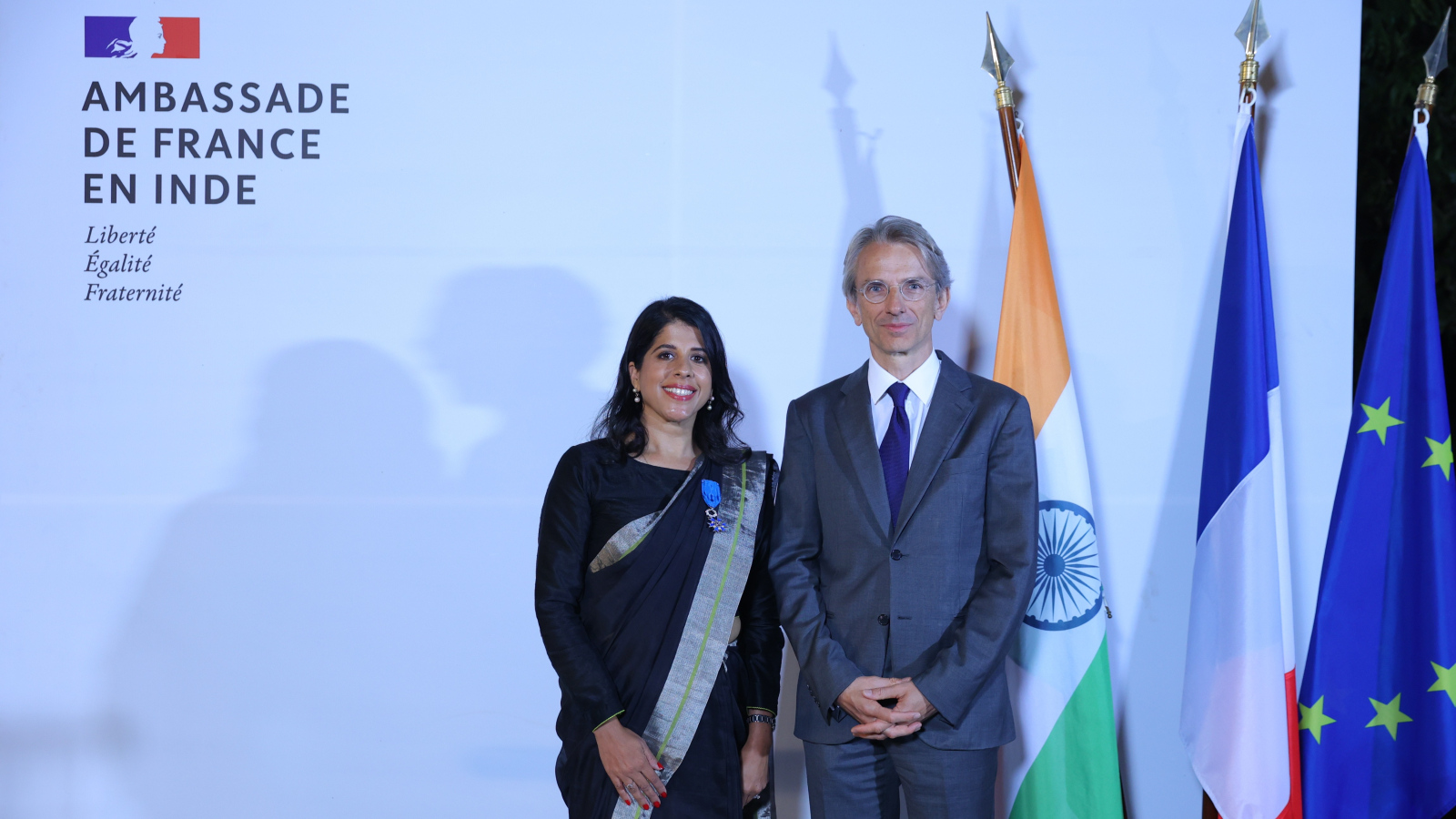
The Capitalyst: In 2022 Former French Ambassador Emmanuel Lenain conferred on you the Chevalier de l’Ordre National du Mérite at the Residence of France in New Delhi, citing you as a key actor of La Team France in India and one of the most active and passionate leaders of France’s bilateral chamber network worldwide. That is an extraordinary personal recognition from the President of the French Republic. What did receiving that honour mean against the backdrop of having built your entire career in service of a relationship between two countries rather than one, and does it ever create a tension about where your deepest professional loyalty actually lies?
Payal S. Kanwar: Being conferred the Chevalier de l’Ordre National du Mérite was a proud and deeply personal moment for me, one I’ll always hold close. Honestly, I felt completely humbled. It made me look back over the whole journey, and my first thought was of my team in India, the people who show up every day with real passion to build these ties between our two countries. A good part of that medal belongs to them.
There’s a personal side to it too, one I don’t often talk about. There’s a saying that it takes a village to get women to the top, and I believe that completely. None of this happens without a strong support system: my partner, my family, my children, the people who carry the weight at home so I can carry it at work. Those roles are demanding in ways that aren’t always visible, and this recognition is for them as much as for me.
As for where my loyalties lie, I’ve never felt a tension there. My professional life has been spent entirely at the meeting point of the two countries, building the bridge between them and helping each side see the value in the other. That work has never been about choosing sides, it only succeeds when both countries do well together. So a recognition from France doesn’t pull me in any direction. If anything, it confirms the direction I’ve always faced.
The Capitalyst: India and France signed the Horizon 2047 Roadmap in July 2023 during PM Modi’s Bastille Day visit to Paris, committing both countries to deeper cooperation across three pillars — security and sovereignty, the planet, and the people — covering defence, space, nuclear energy, climate, digital and people-to-people ties. In February 2026, President Macron’s visit to India elevated the relationship to a Special Global Strategic Partnership. Yet the actual business relationship remains disproportionately weighted toward luxury, cosmetics, aeronautics and wine. Where is the gap between the ambition of these frameworks and the reality of what French companies are actually doing in India, and what is IFCCI doing to close it?
Payal S. Kanwar: I’d gently challenge the premise here. Luxury, cosmetics, aeronautics and wine are what tend to be visible, the names one recognises, but they are not where the weight of French investment sits. There are more than 700 French companies in India today running over a thousand establishments and employing around 450,000 people, with a combined turnover of around €15.2 billion. Nearly all of France’s CAC 40 groups are present.
French companies are building India’s aircraft and its aerospace supply chain, its metros and urban mobility systems; they are in automotive and precision engineering, in energy both renewable and nuclear, in agri and food, in heavy machinery, in electrical and electronics, in pharmaceuticals and financial services. Some of the most consequential work is the least visible of all: the capability and R&D centres where hundreds of thousands of Indian engineers now drive innovation for French firms worldwide. So the gap you describe is to my mind, largely one of perception.
That perception is changing fast and I feel it firsthand. I was in France very recently, and what struck me was how much India ran through every conversation, not as a market to sell into but as a partner to build with. The appetite among French businesses, from the largest groups to mid-sized firms, is more genuine and more concrete than at any point I can remember.
I see this as real momentum, sustained by IFCCI’s efforts and that of the collective Team France in India. We released our first India–France Economic Report this February, built on a survey of more than 300 French investors, precisely to replace impressions with evidence. The Indo-French Innovation Portal was recently launched to connect the two innovation ecosystems directly. And all of it sits within the India–France Year of Innovation that is being celebrated throughout 2026.
The recently concluded India–EU Free Trade Agreement adds real weight to that direction, promising wider market access and deeper supply-chain integration, once ratified and implemented. So, when I look ahead, I see reality catching up with ambition across sectors, and faster than the old clichés suggest.
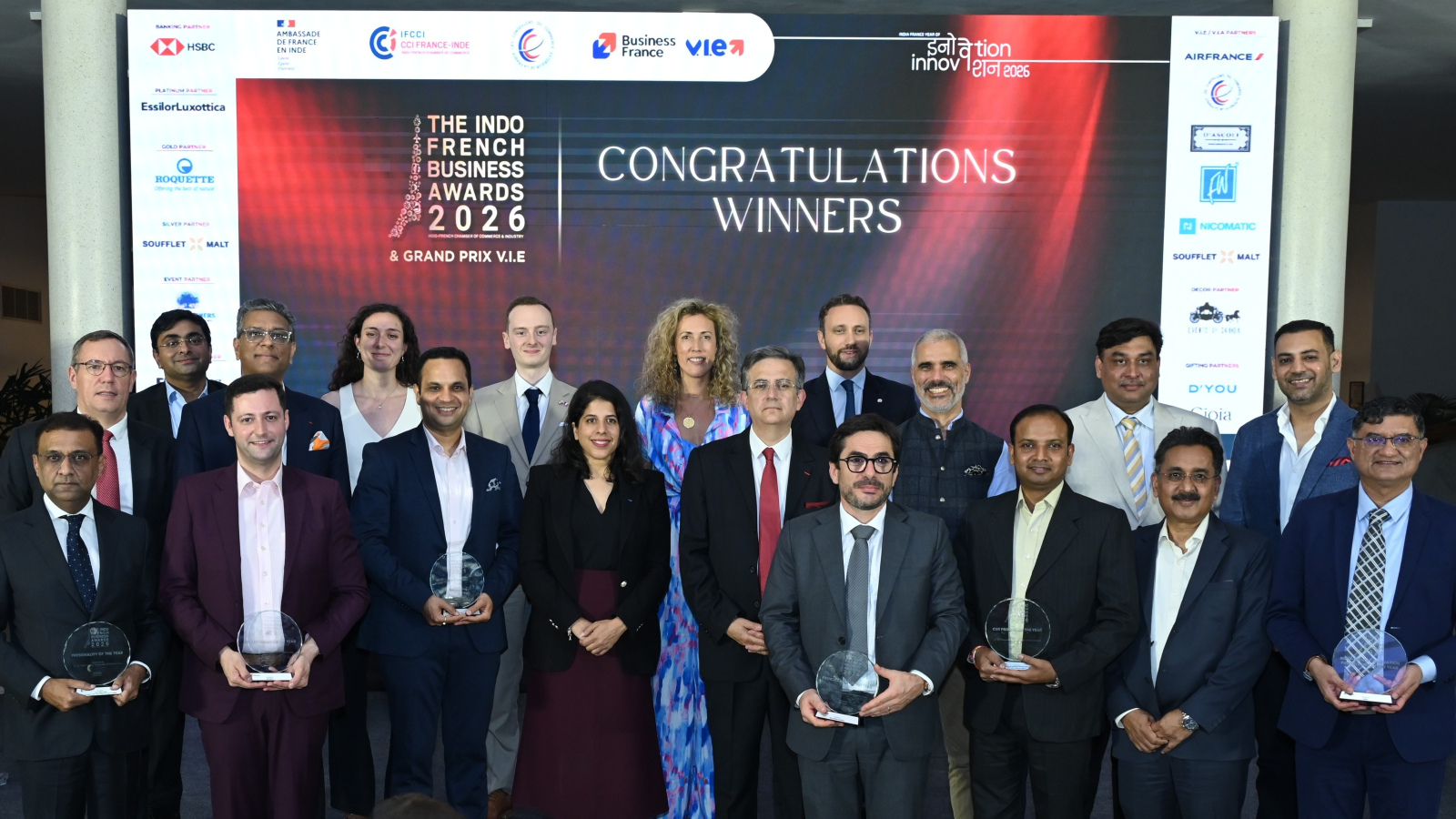
The Capitalyst: France is the 11th largest foreign investor in India, with over 1,000 companies operating from energy and transport to retail and financial services. Yet France does not occupy the same place in India’s public imagination as Germany does in manufacturing or the UK does in education and culture. Why has France struggled to build that broader brand recognition in India beyond its luxury and cultural identity — and is that a failure of communication, a failure of investment in the relationship, or something more structural?
Payal S. Kanwar: France’s image in India has long been shaped by its cultural and luxury identity indeed, and that is a wonderful asset, one many countries would envy. The French footprint, as you rightly mention here is far broader and deeper than that image suggests, woven quietly across energy, transport, engineering, financial services and, increasingly, research and technology. Much of that work simply doesn’t capture the public imagination the way a fashion house or a fine wine does, and that is the nature of the sectors rather than any measure of their importance.
So, if there is a gap, I would describe it less as a failure of investment or commitment, the substance is very much there, and more as storytelling to support it. French companies, by culture, tend to be quite modest about their achievements, and a presence as diverse as France’s is harder to distil into one memorable image than a reputation built around a single sector.
This is exactly why the India-France Year of Innovation is such an important initiative. It is helping reframe how each country sees the other; presenting France in India not only as a home of luxury and culture but as a partner in technology, research and innovation, while equally showcasing India’s own talent and inventiveness to audiences in France. With initiatives and exchanges taking place on both sides, in both countries, it tells that broader story in a way no single campaign ever could.
The Capitalyst: You hosted the IFCCI Luxury Symposium alongside Comité Colbert’s Bénédicte Epinay, bringing together voices from Sabyasachi, Rahul Mishra, Tarun Tahiliani, Cartier, Moët Hennessy and BCG. In July 2026 you are hosting India’s New Script on Luxury, Craft and Culture at the Swami Vivekananda Cultural Centre in Paris. But here is the uncomfortable question: is India being invited to the luxury table as a market to be sold to, or as a creative and manufacturing partner with genuine authorship in the global luxury narrative — and are those two things being honestly distinguished in the conversations you are hosting?
Payal S. Kanwar: I would say it is both, and I think that is something to welcome rather than a tension to resolve. India is one of the world’s fastest-growing economies, which represents immense potential for the luxury industry. Having said that, India is also, and increasingly, a creative author in the global luxury story and not simply an audience for it. The conversations we host are designed to hold both of those truths together, with equal respect.
Some of the most admired work by French maisons carries Indian craftsmanship at its heart such as Dior’s long and celebrated partnership with the Chanakya ateliers, Cartier’s engagement with Indian design thinking, Bvlgari drawing on Indian artisanship within its own iconic motifs. These are acts of co-creation, and they speak to a deep mutual regard.
I am also mindful that this is not a question of India and the global houses standing on opposite sides. In our experience they are far more complementary and each draws on its own traditions, and together they enlarge the space for craft, for design and for the consumer alike. That has also been the spirit of our advocacy work through the IFCCI Luxury and Design Committee; encouraging an ecosystem that nurtures Indian craftsmanship, skills and creative enterprise while welcoming the international maisons, so that both may flourish together.
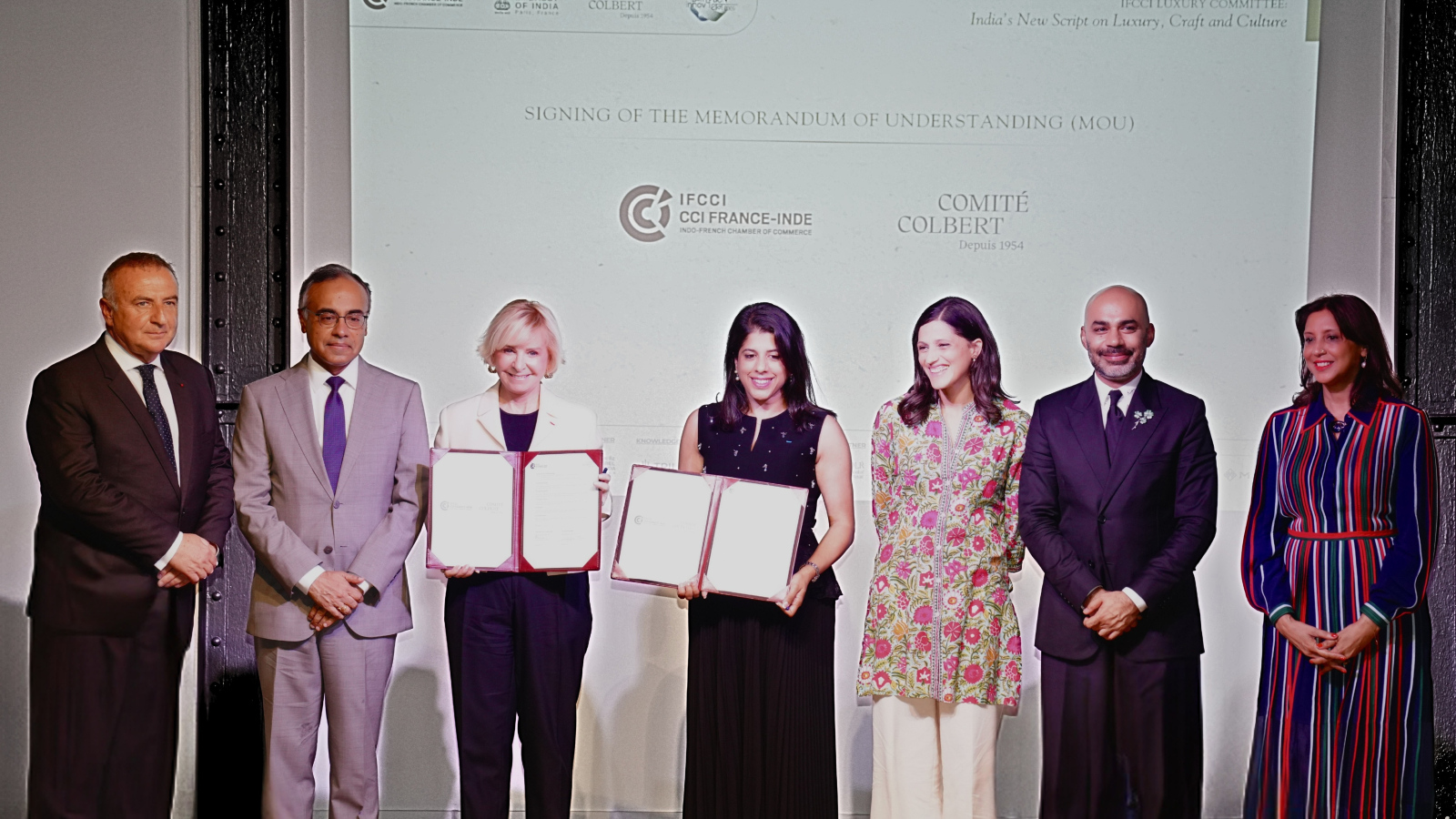
As to whether these distinctions are drawn thoughtfully in the rooms we convene, I would say that is precisely what we set out to do. The recent gathering in Paris, and the long-term partnership we were proud to sign with Comité Colbert, are intentionally intended to be much more than a marketplace, and rather a continuous and purposeful bridge between the two ecosystems, in which India’s designers, artisans and entrepreneurs have a full and meaningful voice. The commercial opportunity is real and very welcome; but alongside it, we take care to honour the hand, the eye and the years of skill behind these creations. And on that, I have found, both the French and Indian houses share a great deal indeed.
The Capitalyst: India’s relationship with France in defence — from the Rafale deal to the P75 submarine programme with Naval Group and the recently confirmed acquisition of 26 Rafale-Marine jets — is strategically significant and commercially enormous. Yet these deals have frequently been delayed, politically contested and diplomatically complicated. As Director General you sit close to those tensions without being inside them. What does the friction around those defence partnerships tell you about the deeper structural challenges in how India and France negotiate commercially at the highest levels, and what would a more functional model of defence trade partnership actually look like?
Payal S. Kanwar: Defence is a domain that both governments handle directly, government-to-government, and rightly so given its strategic sensitivity. As a chamber, we follow the relationship closely and understand its significance well, but we also respect that these matters belong at the highest levels of the two states, with the confidentiality that comes with them. So, while I have a clear sense of how important this pillar is, I would rather leave the specifics to those conducting them.
What I can say with conviction is that defence has long been among the most trusted foundations of the India-France partnership, built patiently and deliberately over decades. Partnerships of that strategic weight are complex by their very nature, and the care with which they are approached reflects how seriously both sides take them. At IFCCI, our own work sits alongside this; in trade, investment, innovation and the wider business relationship and it is all part of the same larger story: two countries that trust one another and continue to deepen that trust across every domain. On the direction of that relationship, I remain very optimistic.
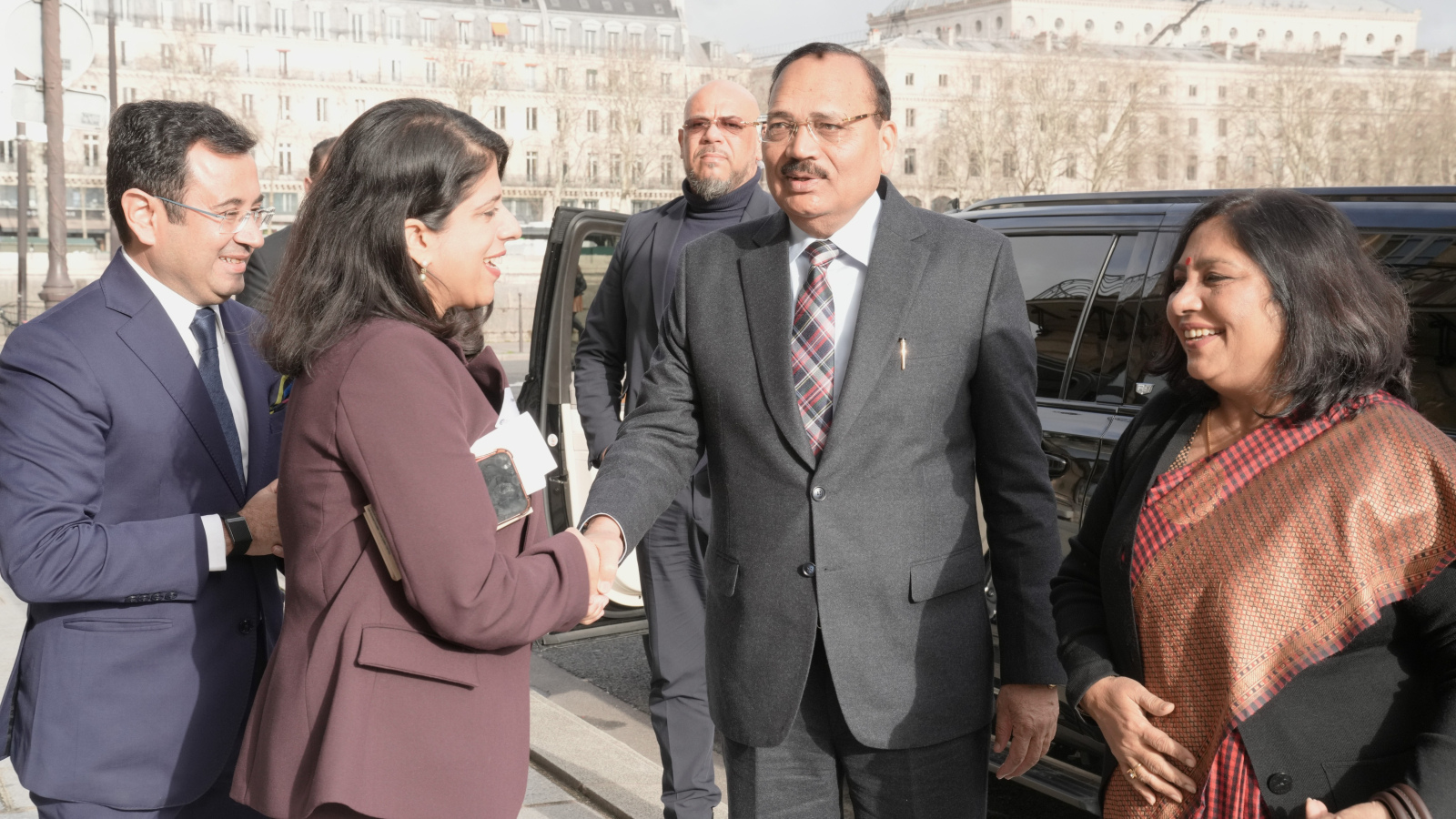
The Capitalyst: India and France both position themselves as advocates of strategic autonomy, refusing bloc alignments and insisting on independent positions. On paper that shared value should create a natural affinity. In practice, the two have diverged on Russia and Ukraine, and France has expressed concerns about India’s insufficient intellectual property protections for French businesses. Where does the relationship still feel unequal or misaligned, and what needs to change on both sides for it to become a genuinely reciprocal partnership?
Payal S. Kanwar: I’d begin by reframing the premise. Strategic autonomy is not what divides India and France; if anything, it is part of what draws them together. Both are sovereign-minded countries that value the ability to arrive at their own positions, and that shared instinct creates a genuine mutual respect.
So rather than “misalignment,” I would speak of a relationship that is maturing, and at speed. Looked at through the lens I know best, business and investment, the area with the most room to grow is simply balance. French engagement in India is deep and long-established; Indian investment into France, while encouraging, still has considerable headroom. A balanced partnership is one where those flows run confidently in both directions, and helping them do so is precisely the work ahead of us.
The India-EU Free Trade Agreement is, to my mind, the most significant development of all. France is a central voice within the European Union, so an agreement of this kind speaks directly to the India-France relationship. It should make market access simpler in both directions, ease the flow of goods and investment, and give companies the confidence that comes from clearer, more stable rules. For French businesses weighing India, and for Indian companies looking to Europe, it removes a good deal of the friction that has held smaller players back until now. That is where I see the next real chapter of this partnership being written.
The Capitalyst: You have championed India’s participation as Country Partner at the Tamil Nadu Global Investors Meet for three consecutive years, worked with DPIIT, Invest India and state governments to connect French companies to India’s investment landscape, and contributed policy recommendations to ministries. That is patient, unglamorous, institutional work that rarely generates headlines. What is the single policy barrier between India and France that you have been trying to move for the longest time and that still has not shifted — and what would it take to finally move it?
Payal S. Kanwar: The honest answer is almost anticlimactic, because the barrier that matters most is not a headline issue at all. It is the predictability and consistency of the policy environment over time; the confidence that the terms on which an investment is made today will still broadly hold several years from now.
I say this carefully, because it is often misheard as a call for lighter regulation. French industrial investors are quite comfortable with demanding rules. What they find harder to plan around is change itself eg. a tax treatment revisited, a duty adjusted, a requirement introduced mid-course. Much of the French investment India wants is long gestation by nature: a factory or an R&D centre is a multi-decade commitment, and it is built on a set of assumptions about the environment. When those assumptions change suddenly, the existing project usually carries on while companies just grow wary of their next investment.
To be fair, most of this is already going in the right direction. India has made strides in the ease of doing business over the past decade, and that deserves to be said plainly. I raise predictability only because it’s the natural next thing to get right. Moving it doesn’t call for a sweeping new policy, but for steady institutional work, much of what we do, in fact. There’s a clear willingness on the Indian side to keep at it, and I’m confident we’ll get there.
The Capitalyst: You are positioning India not just as a luxury market but as a source of artistry, innovation and craftsmanship reshaping the global luxury imagination. At the same time India’s intellectual property protections, its artisan welfare frameworks and its ability to retain creative talent remain areas of concern, as France itself has acknowledged. Before India can fully claim its place as a creative partner in global luxury, what are the two or three things India needs to fix internally — and is IFCCI in a position to say those things out loud in its advocacy even when they are uncomfortable for the Indian stakeholders in the room?
Payal S. Kanwar: A chamber does have to be able to speak candidly and that’s much of what IFCCI’s advocacy is for. But I’d gently question the idea that these are uncomfortable truths, or that voicing them puts us at odds with Indian stakeholders. In my experience, the Indian government and Indian industry want precisely these things too. Our role isn’t to point out shortcomings but is rather to bring an honest, constructive perspective to a conversation everyone in the room is already invested in.
For India, I’d highlight three, less as a gap to fix than an advantage to sharpen. First, continuing to strengthen how design and creativity are protected. Second, and closest to my heart, celebrating and empowering our artisans even more fully and ensuring the people whose hands create this value share generously in it. And third for me is the deepening of the ecosystem through design education, skilling and world-class infrastructure, so India becomes the place creative talent most wants to build a future.
None of this takes away from what India already is. It’s the scaffolding that lets India’s ambition stand fully upright, and much of it is exactly what our Advocacy Department and IFCCI Luxury and Design Committee has been constructively putting forward to policymakers. So yes, we do say these things. But we say them as a partner in rooms where there is real goodwill to act on them. To me, that is what good advocacy is: candid, but always in the service of a goal both sides genuinely want to reach.