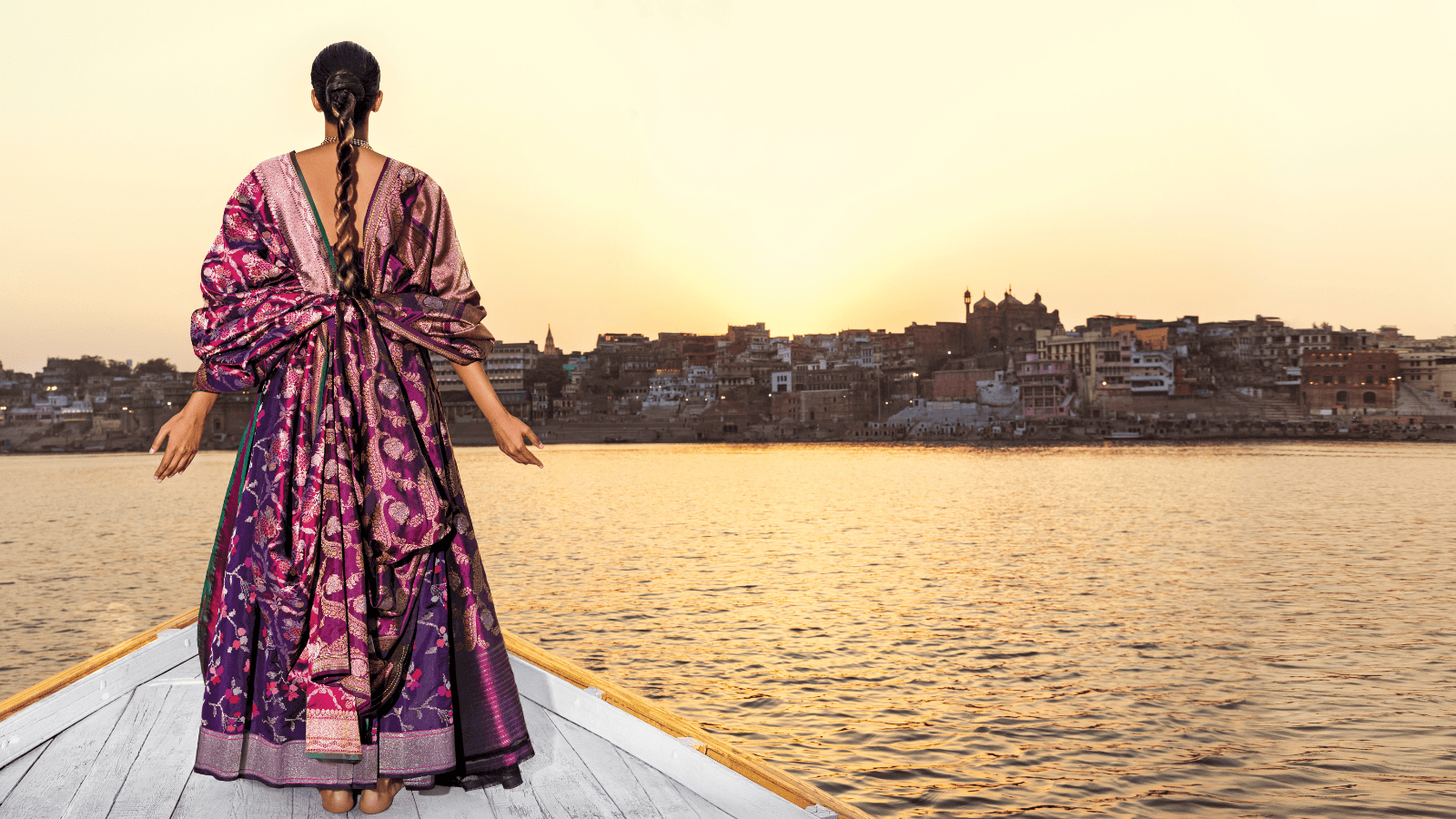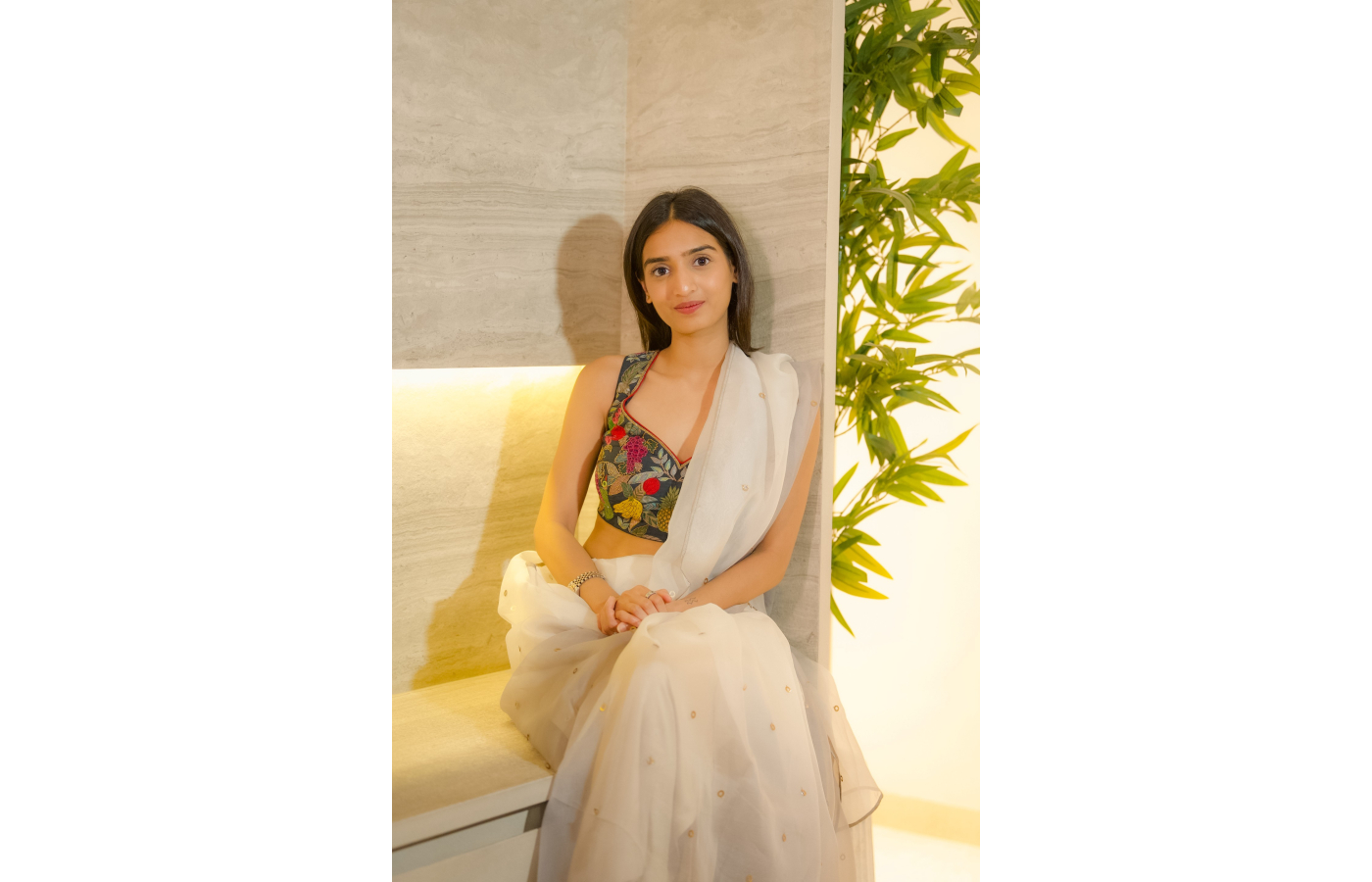
The Capitalyst: Shanti Banaras takes its name from your late grandmother Shanti, whose deep love for sarees became the founding spirit of the brand. You grew up in a family that has been pioneering Banarasi weaving for over 70 years, which means the looms, the weavers and the silk were present before you had words for them. At what age did the craft shift from being simply the furniture of your childhood to something you felt a personal responsibility toward?
Khushi Shah: I think when you grow up around something from childhood, you almost take it for granted at first. The looms, the silk – it all just felt normal to me growing up in Varanasi. But I think the shift happened much later, probably when I moved to New York and stepped outside that ecosystem. Distance gave me perspective. I suddenly realised that what I had grown up around so casually was actually incredibly rare and emotionally rich. I also began to understand how fragile it all was – how many crafts were disappearing and how many younger generations were moving away from weaving. That’s when it stopped being just my family’s business and started feeling like a responsibility. Not just to preserve it, but to make it relevant again for people my age.
The Capitalyst: You studied Fashion Business Management at the Fashion Institute of Technology in New York between 2017 and 2021, and before returning to Varanasi worked at studios including Tintorio Mattei, Amber Tikari and Anju Modi. That is a deliberately international education for someone who would eventually come back to work with intergenerational weavers in the lanes of Banaras. What did New York teach you about what Banarasi craft was not getting right in how it presented itself to the world?
Khushi Shah: New York taught me that Banarasi craft was never lacking in beauty, it was lacking in presentation, storytelling and positioning. The luxury world there understands how to create aspiration around heritage. I realised Indian textiles often spoke only to tradition and occasion, but not enough to desire. We were treating Banarasi sarees as something ceremonial, while global luxury brands were making heritage feel contemporary and collectible. That really changed my thinking. I came back wanting to present Banarasi not as something old or intimidating, but as something glamorous, emotional and deeply valuable.
The Capitalyst: You joined the brand at 21 and described being surprised to see peers your own age choosing simpler garments over sarees at weddings, not out of disinterest in tradition but out of a lack of awareness about handloom. That is a very specific diagnosis of the problem. What did you do differently from what the brand had been doing before, and where did you find the most resistance to that change from within your own family?
Khushi Shah: I think the biggest thing I changed was the language around the saree. Earlier, the conversation was more product-led, weave, zari, craftsmanship. While those things are extremely important, my generation also connects through imagery, styling, culture and storytelling. So, we started building stronger visual worlds around the collections and making the saree feel emotionally and culturally relevant again. I also wanted to remove the idea that a Banarasi saree is only for weddings or for a certain age group. The resistance honestly came less from disagreement and more from caution. When you’re part of a legacy business, naturally there’s fear around changing something that has worked for decades.
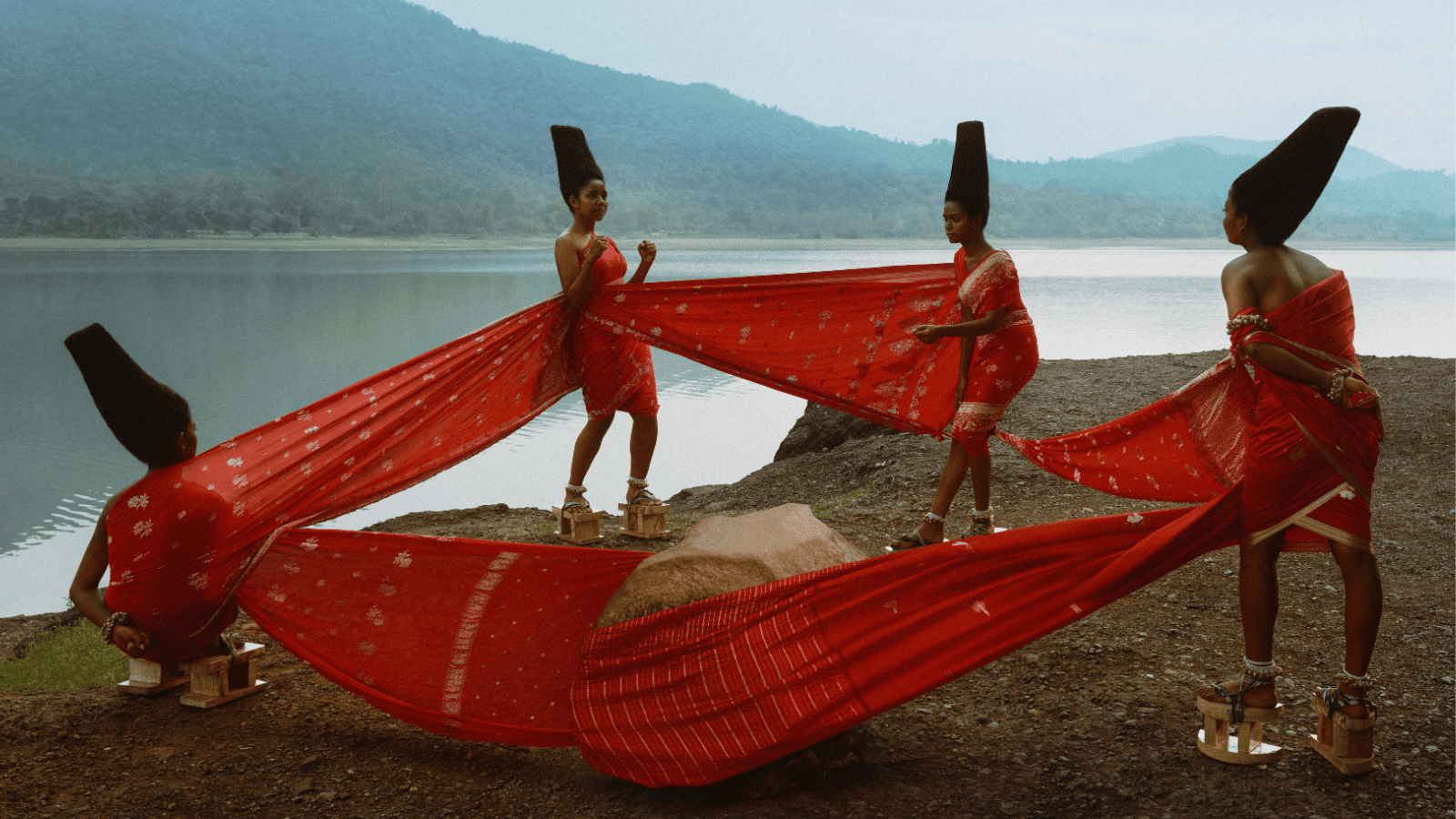
The Capitalyst: The Akathya campaign in 2021 featured eight transgender people, their life stories told as a photo essay, each wrapped in handpicked weaves from your master weave series. The campaign was initiated through your mother-in-law Anjali’s work as a social worker closely connected to the transgender community. You described it not as a pity campaign but as a call for participation. At a time when most Indian fashion brands were treating social inclusion as a risk rather than a position, what gave you the confidence to go there so fully?
Khushi Shah: I think the important thing for us was that the campaign never came from a place of “uplifting” or “giving visibility” to the transgender community because these were already incredibly accomplished, confident and inspiring individuals in their own right. One of them ran multiple businesses, one was a radio jockey, another was a makeup artist. They were all leaders in their own worlds. The campaign actually began through my sister-in-law’s mother, Anjali, who works very closely with the transgender community, so the connection already existed in a very genuine and personal way. What stayed with us was their individuality, strength and presence. The campaign was really about embracing them as they are and portraying them with the same beauty, dignity and emotional depth we would bring to any Shanti Banaras story. It was never intended to feel like charity or a social statement for the sake of branding. We simply wanted participation and representation to feel natural rather than performative.
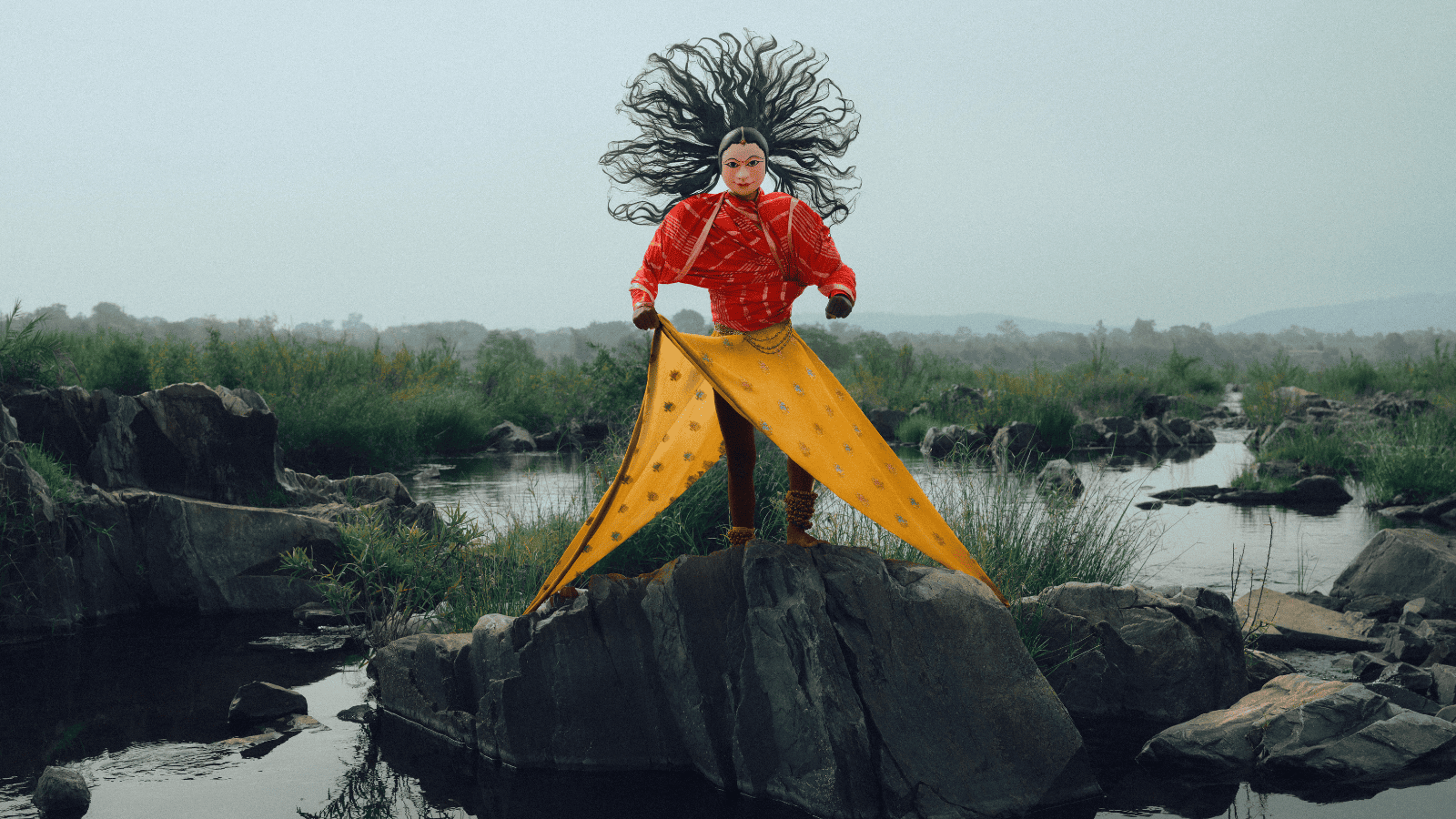
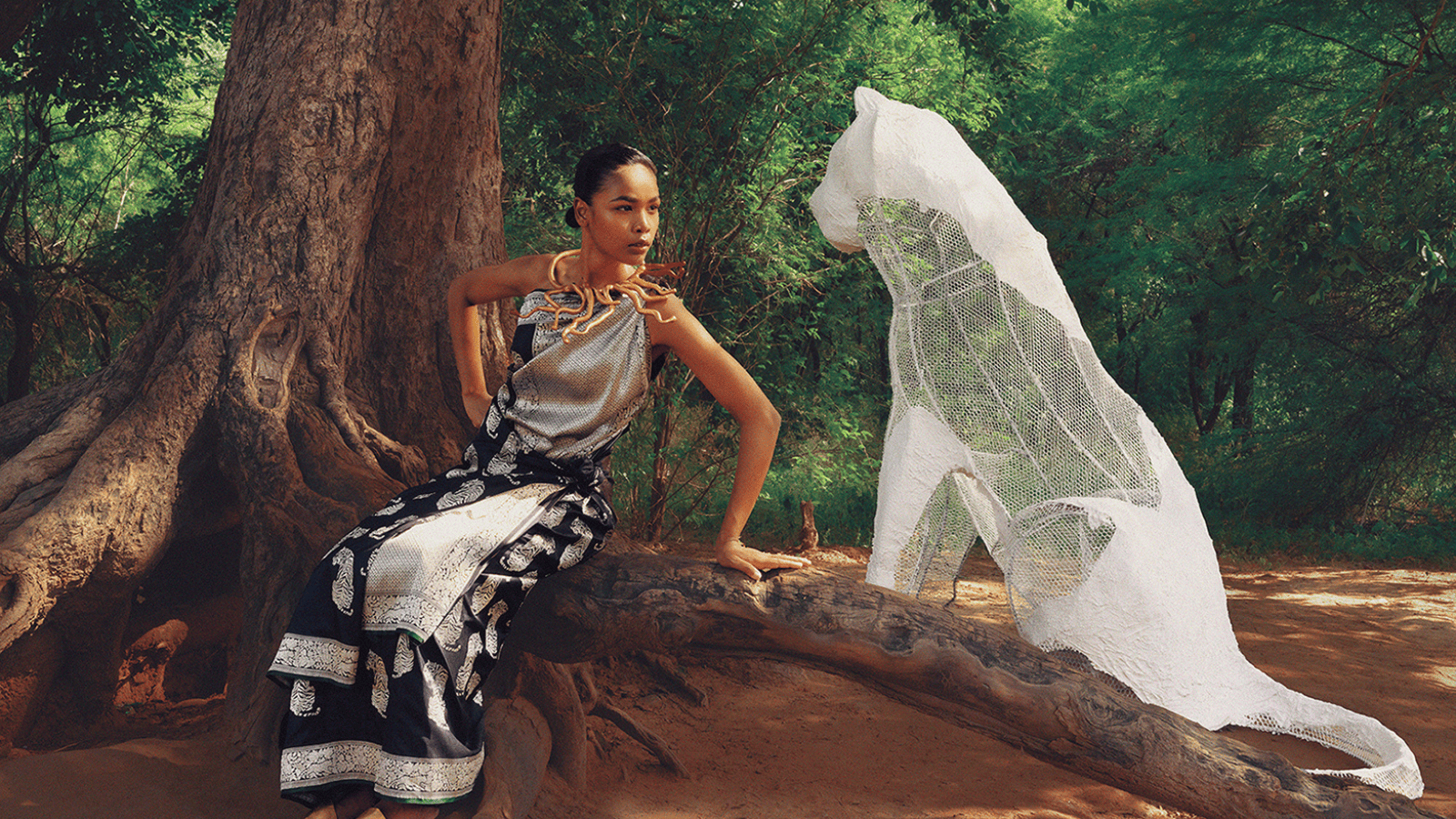
The Capitalyst: In 2023 the Roar collection wove tiger motifs into opulent Banarasi silks featuring silvery Badia work, making a direct argument about wildlife conservation through the language of craft. Then in 2025 the Chhau By Shanti campaign brought twelve tribal artists from Jharkhand, West Bengal and Odisha into the frame, wearing Banarasi georgettes and crepe in the forested villages of eastern India, shot in Jamshedpur under the creative direction of Pranoy Sarkar. Each campaign is conceived around a concept first, then a collection. Where does a new concept begin for you, and how do you know when an idea is strong enough to carry the full weight of a Shanti Banaras campaign?
Khushi Shah: I honestly think creativity is everywhere around you, you just have to stay curious enough to notice it. A lot of my ideas don’t necessarily begin within fashion itself. They come from people, travel, conversations, films, music or culture. I think my own life experiences have shaped that perspective a lot. I studied at Mayo College Girls’ School, then moved to New York City for college, while still being deeply rooted in the cultural environment of Banaras. So, I’ve constantly lived between very different worlds, one extremely traditional and emotional, and the other very global and contemporary. I think that balance naturally reflects in the way I’m shaping Shanti Banaras today. There’s always an emotional or cultural core to our campaigns, but I never want them to feel overly serious or museum-like. I want them to feel conversational, alive and emotionally relevant to people today.
The Capitalyst: The Chhau dance form that anchors your most recent campaign is deeply rooted in the Mahabharata, the Ramayana and local folklore from three distinct regional traditions — Saraikela, Purulia and Mayurbhanj. How do you approach the ethical responsibility of putting a living tribal art form in dialogue with a luxury textile brand without the collaboration tipping into appropriation, and how did the Chhau artists themselves respond to being placed in that frame?
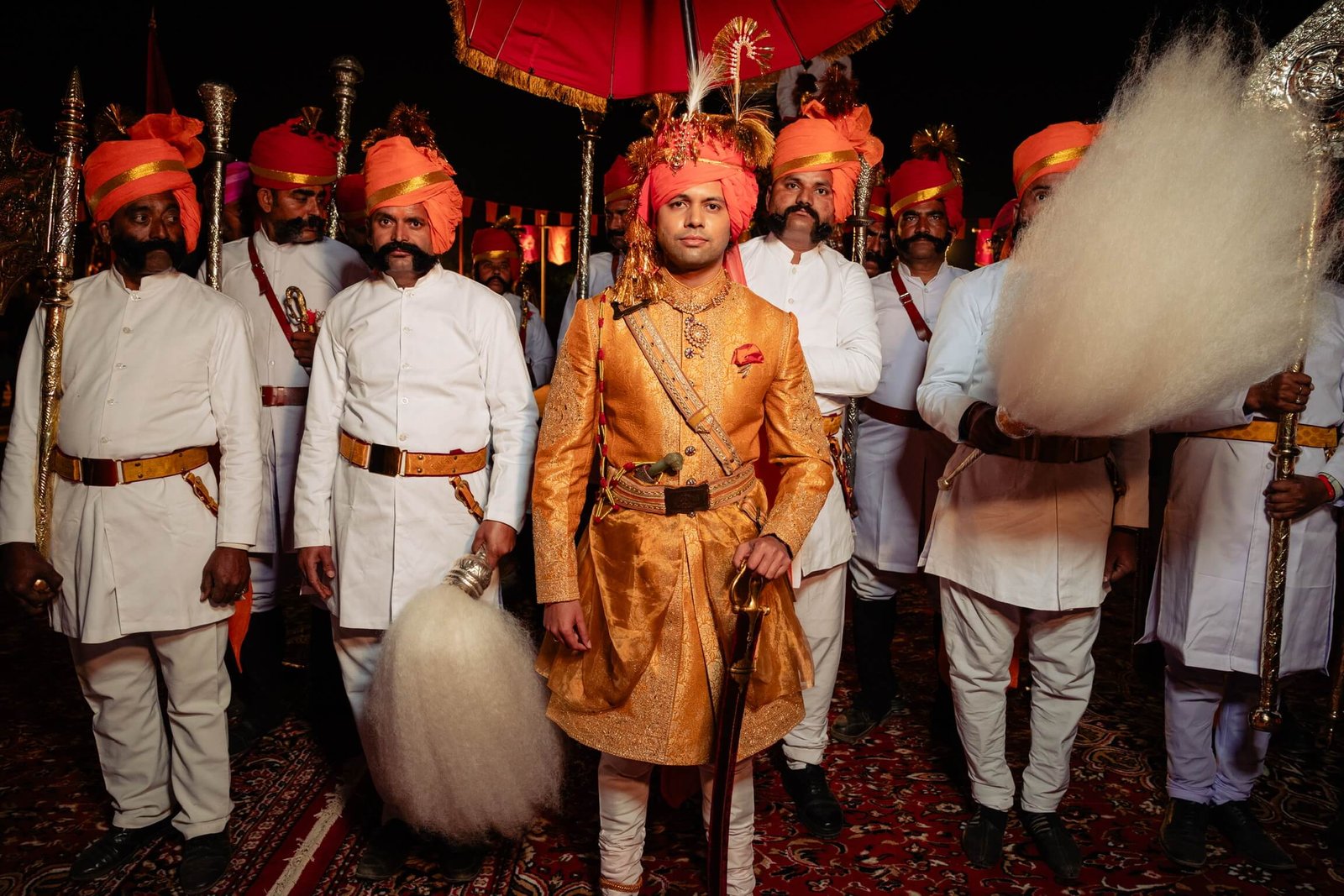
Khushi Shah: I think the most important thing is approaching the collaboration with humility rather than ownership. We were very conscious that Chhau is a living art form with deep cultural and spiritual roots, not simply a visual aesthetic. So, the process involved listening first, understanding the artists, their traditions and their own relationship with the art. We wanted the campaign to feel collaborative rather than extractive. Even visually, we tried to shoot the artists within their own landscapes and environments rather than removing them from it completely. Honestly, one of the most rewarding parts was seeing how naturally the artists carried the textiles into their performance language. It became less about fashion wearing culture, and more about two art forms existing together.
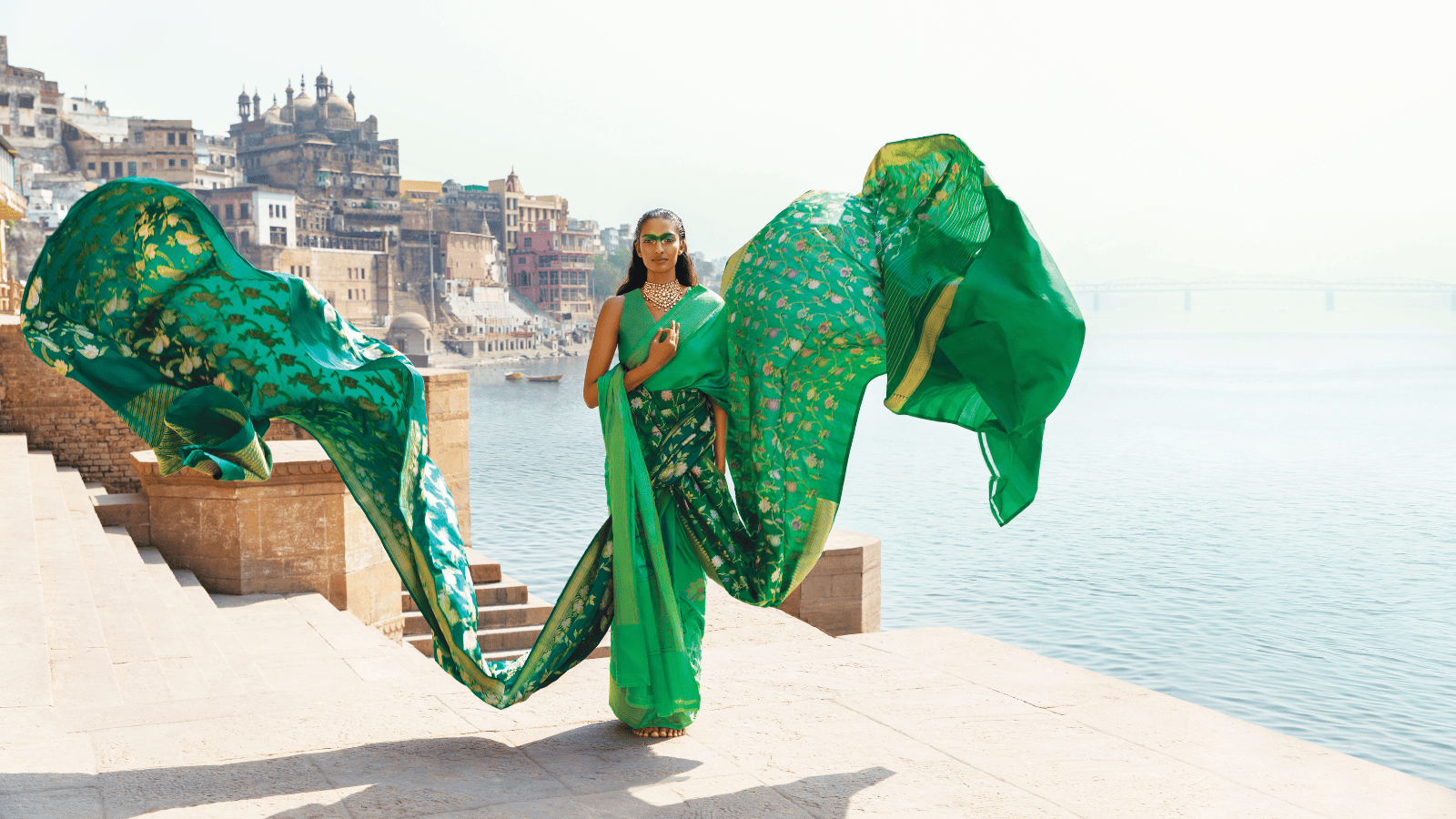
The Capitalyst: Shanti Banaras now has stores in Varanasi, Delhi and Mumbai and an active online presence. A Banarasi saree is by its nature a physical object — its beauty, the weight of the real zari thread, the precise ratio of 24-carat gold to silver, the feel of the silk — none of that translates fully to a screen. How do you sell the tactile in a digital world, and what has surprised you about what Indian consumers are willing to trust without touching?
Khushi Shah: Selling textiles digitally is definitely challenging because so much of a Banarasi saree is tactile. The weight, the drape, the zari, the texture; you really understand it completely only when you touch it. And for us, storytelling becomes extremely important online. Detailed imagery, movement, styling and education around weaving all help bridge that gap.
What has surprised me is that consumers today are far more emotionally informed than before. If the storytelling feels authentic and the product quality remains consistent, people are willing to trust luxury purchases digitally, even at very high value points. But to be fair, I’ve always been a bit of a brick-and-mortar girl. I still believe textiles are best experienced physically through touch, texture and emotion.
The Capitalyst: You have spoken candidly about the crisis facing Banarasi weavers — powerloom production displacing handloom, wages that cannot sustain families across generations, children of master weavers leaving the craft entirely. These are structural problems that predate Shanti Banaras and will outlast any single brand’s efforts. What is Shanti Banaras actually doing at the production end that goes beyond a brand narrative, and what do you honestly believe a luxury textile house can and cannot fix?
Khushi Shah: I think it’s important to be honest here because luxury brands sometimes romanticise craft problems without acknowledging their scale. A single brand cannot solve structural issues that have existed for generations. What we can do is create sustained value for handloom weaving by investing in it consistently, paying fairly, developing long-term relationships with artisans and preserving techniques like real zari weaving that are slowly disappearing because they are expensive and time-consuming. But the larger issues like powerloom economics, migration and generational shifts are much bigger than any one company. I think brands can contribute meaningfully, but they cannot single-handedly repair an entire ecosystem.
The Capitalyst: Your Real Zari concept involves sarees with 58 to 60 per cent pure silver and 24-carat gold ratios of 1.25 to 3.5 grams per piece, making each an object of genuine financial value as well as cultural heritage. You have positioned these as heirlooms to be passed down rather than fashion to be worn once. That is a fundamentally different pitch from most of the Indian fashion market. Who is the buyer you are actually speaking to, and has that buyer changed since you launched in 2019?
Khushi Shah: The real zari buyer is usually someone who understands emotional value beyond trend cycles. They’re not buying a saree for one event. They’re buying memory, craftsmanship, inheritance and rarity. Earlier, that buyer was often older and deeply traditional. But I think that’s changing now. We’re seeing younger women becoming much more interested in provenance, handcraft and collectible fashion. They may style the saree differently or wear it in a more contemporary way, but they still value the idea of owning something timeless and deeply made.
The Capitalyst: You were named on the Forbes India 30 Under 30 list in the Fashion category, described as instrumental in developing Shanti’s brand identity and positioning. You have also said you spend your free time watching advertisements because they drive you creatively. What is the piece of brand storytelling, by anyone in any industry anywhere in the world, that you think has come closest to doing what you are trying to do with Shanti Banaras, and what does it understand about culture and commerce that you are still working toward?
Khushi Shah: I’ve always been very fascinated by advertising and emotional storytelling, even outside fashion. Growing up, I loved watching older campaigns by brands like Cadbury, and even globally I’ve always admired the simplicity of Apple campaigns. They made people feel something beyond the product itself, and I think that stayed with me very deeply. Even today, I consume a lot of advertising because it inspires me creatively. I’m far more interested in storytelling, emotion and cultural relevance than aggressive selling. At the same time, I think we’re living in a very Instagram-driven world where a lot of branding can start looking visually similar. So, with Shanti Banaras, I’m constantly trying to build a language that feels emotionally rooted, culturally aware and timeless rather than just trend-led.