The Capitalyst: According to your own account, you founded Calcutta Street, your first restaurant venture in London, at 24, raising over £1 million from VC and PE funds before you’d built any track record in hospitality. What actually convinced investors to back a first-time restaurateur at that age, and what was the pitch you made that got you in the room in the first place?
Shrimoyee Chakraborty: I raised one million, and I was twenty five when it closed, though I started fundraising at twenty four. And it isn’t quite right that I had no track record in hospitality. I’d been doing pop-ups for over a year by that point, and I had food blogs. I was also Head of Yelp in Manchester, which was one of my first jobs after university. So I’d built a position for myself in the food space, starting from blogs, to pop-ups, and then to restaurants.
As for why investors backed me at that age: there was no casual dining regional Indian restaurant at that point besides Dishoom, and I was trying to do something completely different, which was regional Indian food, food from Calcutta specifically. Nobody was doing that at the time. Because of my pop-ups, I was getting a lot of press, and I had a loyal base of customers who came regularly, including pop-ups on the South Bank, in various bars, and tie-ins with Star Chefs. I suppose that combination is what got me in the room. And the PE fund partner actually told me, later, that the reason he invested was my energy, whatever that means.
The Capitalyst: You’ve said your shift from economics toward culinary work came from watching how Indian food was being interpreted, and often flattened, in the UK. What was the specific dish, menu, or moment that made you realize the gap between how Indian food was being served in London and what it actually was, and did that realization come before or after you’d already committed to opening Calcutta Street?
Shrimoyee Chakraborty: My biggest frustration started when I moved to Manchester for my master’s. I was a hungry student, and I suddenly started missing Indian food. I realized there was a huge gap in the market, because I couldn’t find the food I actually liked to eat. Indian food was mostly represented by curry houses or kebab joints, and neither of those were authentic. It was all creamy, sweet, over-coloured, nothing like what I’d grown up eating. Then on the other end, there were Michelin-starred restaurants that were bastardizing the food in a different way, trying to turn it into some kind of gourmet abstraction. I just wanted Indian food as it actually is.
And beyond that, I never saw food from anywhere outside the usual regions represented on menus. I never saw food from where I’m from, Calcutta. That was a real pain point for me, and it’s what pushed me to start the blogs, then the pop-ups, and eventually the restaurant.
The Capitalyst: You were hired by Taster, a French food concept, and opened five sites for it, a very different cuisine and format from your own restaurant. What did building a brand rooted in someone else’s culinary tradition, rather than your own, teach you about the mechanics of scaling food businesses that Calcutta Street hadn’t?
Shrimoyee Chakraborty: Taster is a brand founded by Anton Soulier, and I was hired by the team to lead the UK launch. It’s also not quite a French food concept, it’s a French company, but the concepts themselves were things like Korean fried chicken, Mission Saigon which was Vietnamese, and a poke brand.
What I got out of it was learning the dark kitchen space and how to scale. Taster was backed by solid investors, including Rocket Investments and Local Globe, among other big names in the industry, and I wanted to learn how to scale and grow a brand properly. What I realized is that there’s a huge difference between running a dark kitchen brand and a traditional restaurant brand. Dark kitchen brands are far more profitable and much easier to grow and scale, whereas a traditional restaurant is very heavily capital-expenditure driven, the investment required is much higher. A dark kitchen, by comparison, is a plug-and-play concept. I really enjoyed that process, and I learned a lot from it.
The Capitalyst: You hold a master’s in business and finance from the University of Manchester alongside a diploma in Drama from the Guildhall School of Music and Drama in London, two credentials that rarely sit in the same career. When you’re developing a documentary like “Spirit of the Wildflower” or hosting “India Bites,” which of those two trainings do you actually reach for first, the finance instinct or the performance instinct?
Shrimoyee Chakraborty: Those two are quite different in what they meant to me. The Guildhall diploma, the drama training, was something I did out of passion. My master’s, and my undergrad before it, were things I did for a career.
But honestly, both come into play when I’m making something like Spirit of the Wildflower. My degree in business and economics means I’m not scared of spreadsheets, or profit and loss accounts, or numbers, or legal documents. It taught me how to deal-make, from my time working in PE funds, so I understand the business side of cinema. The other side is the creative side, which I’ve always had, and that’s what helps with the storytelling. I think both really come in handy, because to be a good filmmaker who wants to actually reach an audience, who wants filmmaking to be a profession and not a hobby, you need to understand both worlds. A huge part of filmmaking is distribution, sales, and raising investment. It’s essentially a mini startup.
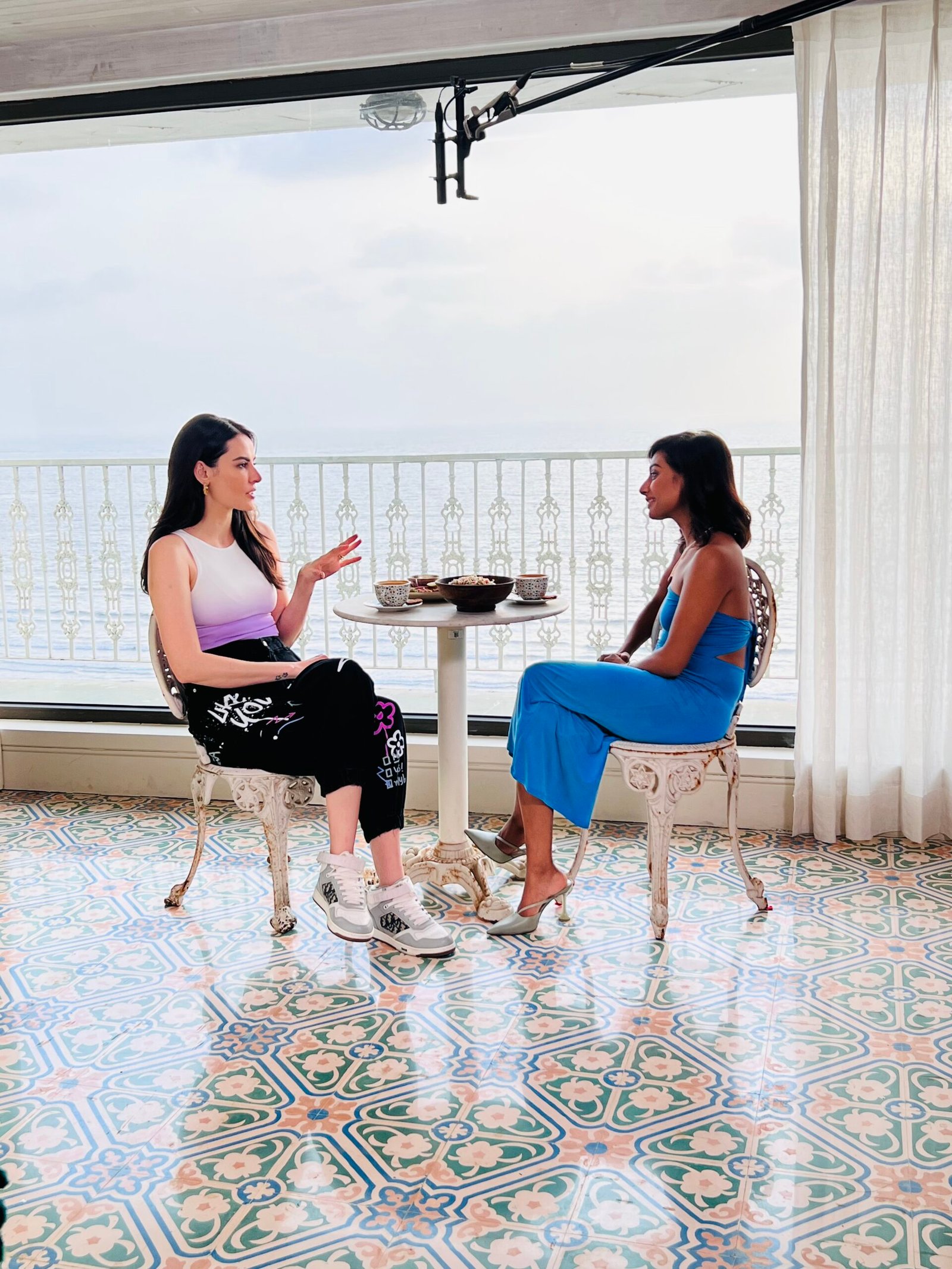
The Capitalyst: “India Bites,” your five-part Tastemade docuseries, set out to break stereotypes about modern India through food, touching on race, sexuality, indie music, and entrepreneurship along the way. Food shows often stay safely in the kitchen. What was the hardest sell, either to a network executive or to yourself, when you wanted an episode to go somewhere more culturally or politically charged than a typical food format allows?
Shrimoyee Chakraborty: Every concept I’ve made comes from a place of frustration, and this one was no different. My frustration was that food shows were mostly kitchen-bound, and the shows that did go outside the kitchen were almost always fronted by men, people like Anthony Bourdain, who I’m a huge fan of, Gordon Ramsay, Rick Stein. They got to go out into the world and meet people. Whereas women chefs, traditionally, even the biggest names like Nigella Lawson, were kept to the top-and-chat format: stay in the kitchen, show how to make a recipe.
I wanted to break that stereotype. I was also frustrated by watching Western media cover Indian food again and again through the same lens, always the same regions like Rajasthan, always narrated by white men telling us what Indian food is. I wanted to be an Indian person who actually understands Indian food, telling that story through people, because for me food and people are deeply connected. Food, culture, and sociology all go hand in hand. That’s what I wanted to do, but made for a Western and international audience.
The Capitalyst: Your documentary “Forbidden Drinks” follows mahua, a heritage liquor still illegal in most parts of India despite sustaining the Santhal, Gond, Munda, and Oraon tribes for generations, and it was accredited in the Docs-in-Progress category at Cannes in 2024. Getting a story about a banned tribal drink in front of a festival like Cannes is a very different achievement than getting a food show onto a streaming platform. What did access to those tribal communities actually require of you before they trusted you enough to be filmed?
Shrimoyee Chakraborty: For context, Forbidden Drinks and Spirit of the Wildflower are the same film. It was originally titled Forbidden Drinks, and I later renamed it Spirit of the Wildflower, which is now doing the rounds at documentary festivals, so hopefully there will be more news on that soon.
It was a four year journey to make this film, and it was never about money, this is purely where the passion worked, not the economics. I’d always been interested in the Naxalite movement, and I had a real problem with how mainstream media portrayed the tribal population of our country. That interest drew me to mahua, which I knew was a drink central to their lives. It’s something that had fascinated me since my university days, around the Nandigram protests and everything tied to that movement. Separately, through my food work, I started working closely with the UN and became genuinely interested in the Sustainable Development Goals and how to actually achieve them. One of the ways is by empowering women and empowering tribal and indigenous communities, and that’s what led me to make this film.
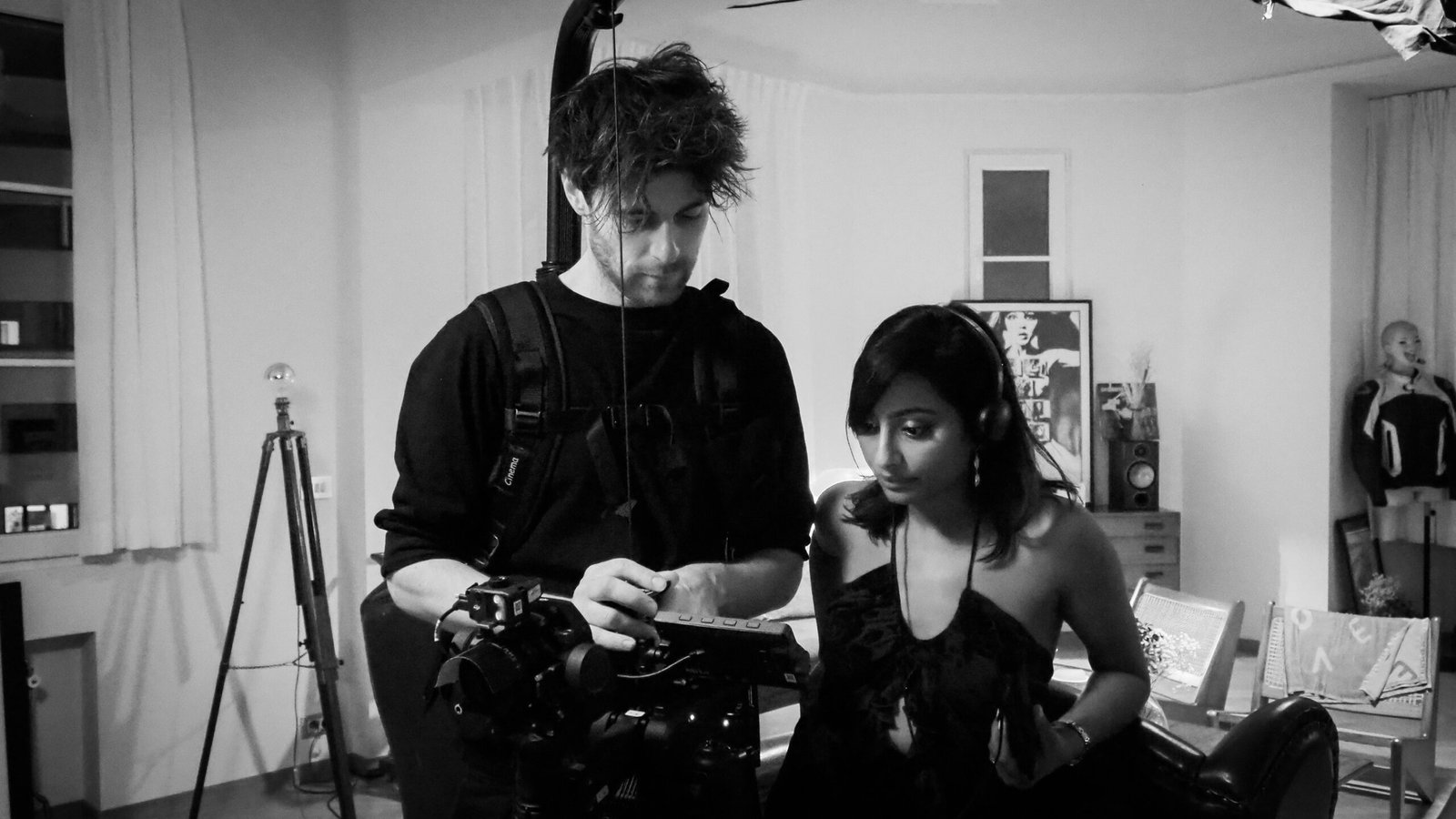
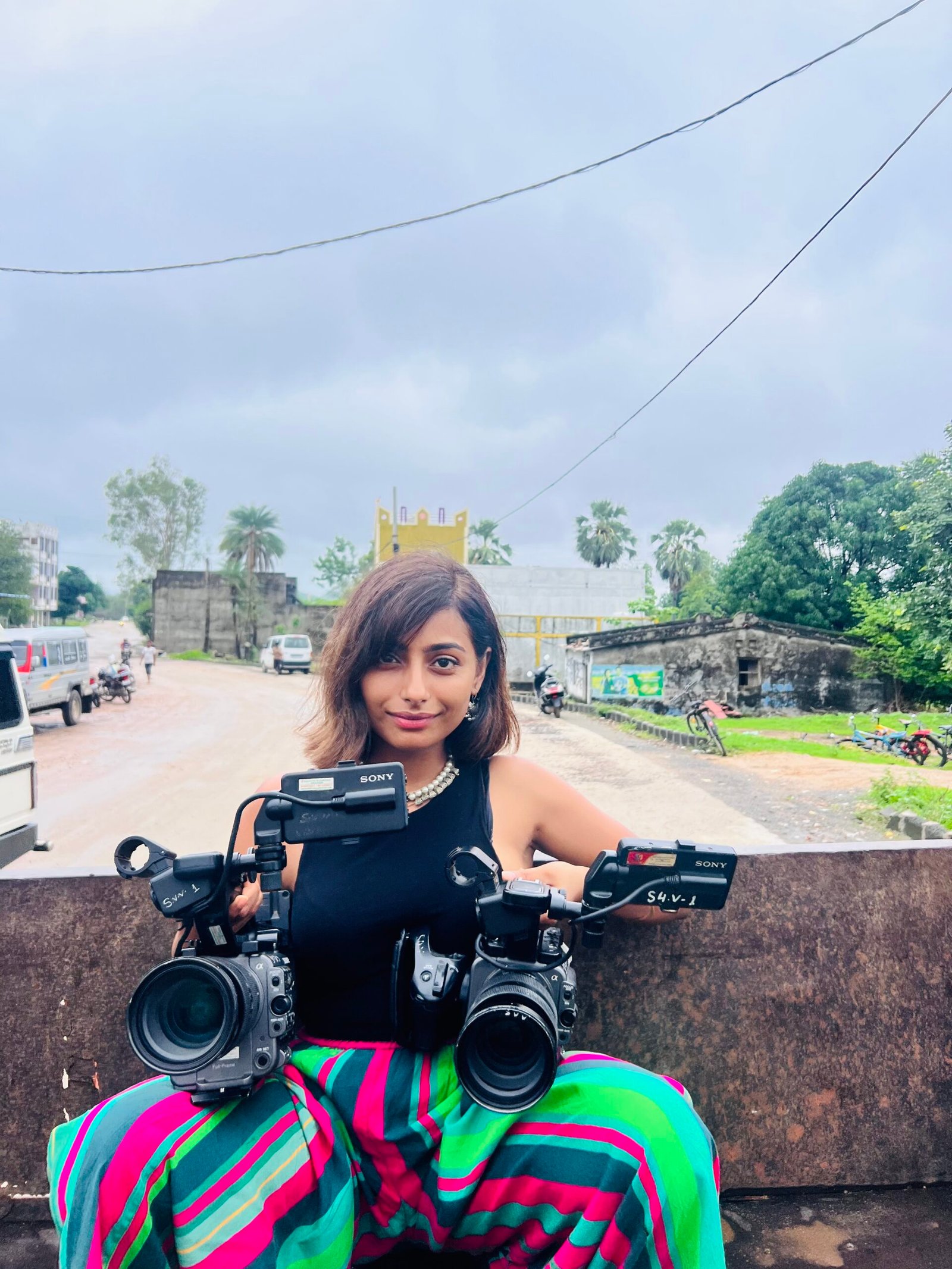
Honestly, it takes real time to get integrated into a community like that. I had to earn their trust, and I stayed with them. I lived with them in those forests, alongside my DOP, Rusha Bose. Eventually, they became like family. It was a completely different experience, one that asked me to step outside my comfort zone and see things through someone else’s eyes, and to handle the subject matter with real sensitivity, since there was a trans subject at the heart of it. I also worked with a primarily LGBTQ+ crew, which helped us handle the topic with the sensitivity it deserved. We now have solid backing for the film, including Radhika Piramal, Featuristic Films, Sundance winner Neeraj Churi, and Keshav Suri.
The Capitalyst: You founded Tabernacle Street Films as a cross-border production company operating between India, London, and Brussels, and one of its projects, “Mind the Gap,” is filmed entirely inside a moving London Tube carriage with guests from politics, fashion, food, and the arts. What made a Tube carriage, of all places, feel like the right format for that show, and what have you learned about getting genuinely unscripted moments out of guests once the doors close and the train starts moving?
Shrimoyee Chakraborty: Tabernacle Street Films, for me, is a production company built around telling primarily female stories and stories from underrepresented communities, and my biggest aim with it is to take Indian stories global.
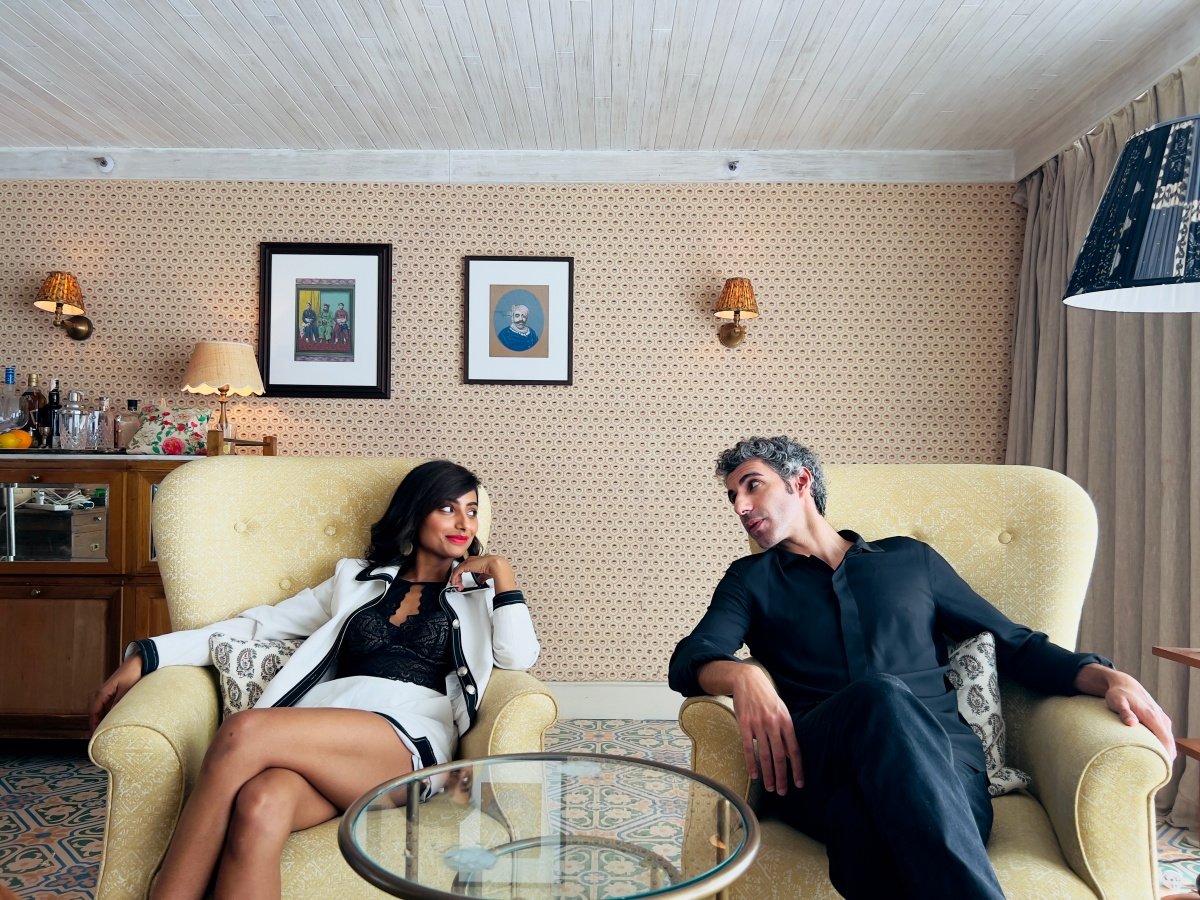
Mind the Gap came about when Network18, the CNN and CNBC group, approached me to make a show about London, specifically about the South Asian immigrant community in London. I thought the Tube was the biggest leveller there is. Everyone in London takes the Tube, from politicians to the biggest actors to the ordinary person on the street. There’s something fascinating about a train journey too, it mirrors a person’s journey through life, and the Tube also physically takes you everywhere across London. It felt like a very central part of what it means to be a Londoner, and that’s why I chose the carriage as the setting.
As for unscripted moments, that’s genuinely my favourite part of the work. It’s all about making the person feel comfortable enough to forget the cameras exist, and I think that’s something I’m reasonably good at. It comes naturally to me.
The Capitalyst: Alongside your production work, you’ve been an active voice on food security, working with The Food Foundation’s Action4Change campaign and appearing on a panel at the UN Food Systems Summit. How do you actually keep that advocacy work connected to your filmmaking and restaurant background rather than letting it become a separate, disconnected lane in your career?
Shrimoyee Chakraborty: That work, with The Food Foundation and the UN Food Systems Summit, is always at the back of my mind. Even when I’m writing a script, it’s connected. Spirit of the Wildflower is very tied to that work, and so is another show I’m developing called Picky Little Eaters, about feeding kids, teaching them about food waste, and teaching children to cook, because cooking has become something of a lost art, and that loss is part of why our diets, especially in the Western world, have become so unhealthy.
So it’s always connected to my life and to the projects I take on. Not everything I do, obviously, but whenever a project is food related, that thread is there.
The Capitalyst: You’ve built your career across genuinely distinct identities, restaurateur, TV presenter, documentary filmmaker, food-security advocate, and production company founder, each demanding a different skill set and a different kind of credibility. Is there a version of “Shrimoyee Chakraborty” a stranger meets today who doesn’t quite match how you’d describe yourself, and which identity do you feel is closest to who you actually are underneath all of them?
Shrimoyee Chakraborty: I’ve never really thought about that question before. I’d say when a stranger meets me, the reaction is usually the same, people comment on my energy and my hustle. When I was younger, I used to take that badly. I’d think, what do you mean by so much energy, what do you mean by so much hustle, I didn’t think those were good words. But the older I get, the more I’ve started owning it, because to survive in this industry, media and food, though these days it’s really more media, and food is the channel I use to tell stories, you need that.
And that’s actually something I’ve always done, even with the restaurants, it was a way to highlight India and regional Indian food. For me, it’s always been about storytelling. If you look at everything I do, TV presenter, documentary filmmaker, food security advocate, production company founder, it’s all built around storytelling. So I’d describe myself as a storyteller and a hustler, because without the hustle, you can’t tell stories anymore. Those days are gone where you could just quietly tell a story. Now you have to cut through a lot of noise to make your place, and you have to put blinkers on and keep going.
The Capitalyst: Between Tabernacle Street Films, “Spirit of the Wildflower” and the Cannes recognition for “Forbidden Drinks,” your work is increasingly centered on serious documentary storytelling rather than the food-and-travel format that first made you known. Is that a permanent shift in direction, and is there a story you’re still chasing, one you haven’t yet found the access, funding, or courage to actually make?
Shrimoyee Chakraborty: I don’t really think in terms of serious versus non-serious, I don’t like that distinction. A story is a story, and whatever story fascinates me is one I want to tell. I obviously started as a presenter in food and travel formats, and moved into longer form, more observational documentary work.
While making Spirit of the Wildflower, I realized I actually wanted to make fiction, which scared me at first, because I thought of myself as someone who makes documentaries and TV formats, and I wasn’t sure I could make the jump to fiction. But a lot of industry people who saw the film told me I should try. So this year I took a leap of faith and made two fiction shorts, Girls’ Night In and The Music Teacher. We’ll see how they do. I also have plans to make a full length fiction feature at some point this year, which I’m currently raising funds for.
And I’ve worked as a producer on two larger fiction projects: 88 Keys, a British fiction film releasing later this year or next, and an animated feature called Bollywood, another British production set in India, also releasing next year.