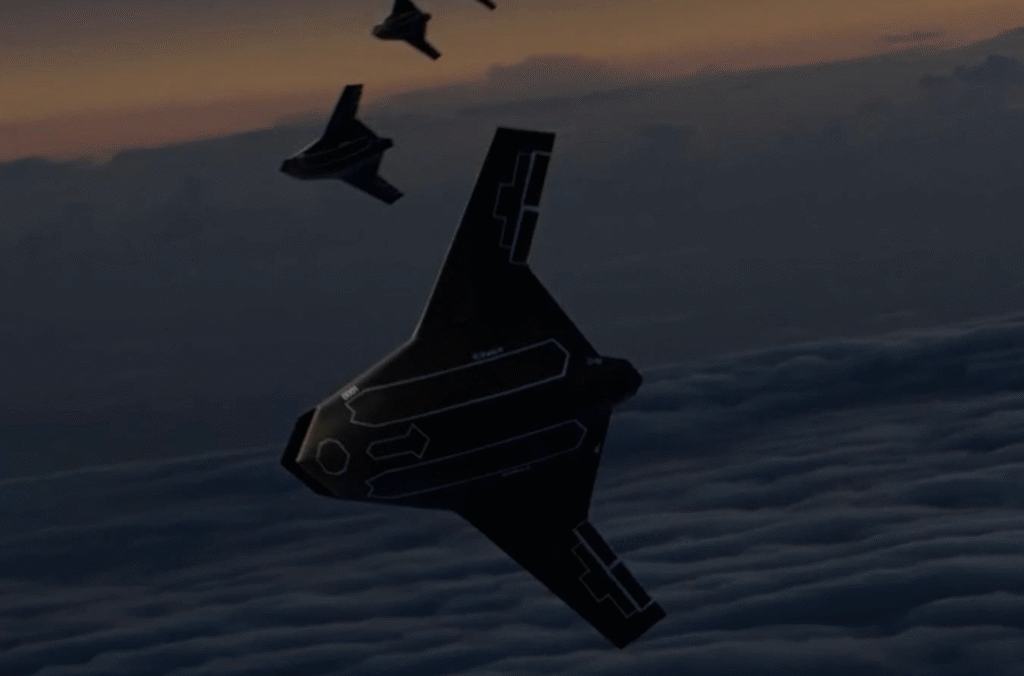
Imagine a fighter jet that can take off and land vertically, fly through the skies with the precision of a human pilot, and operate independently using advanced artificial intelligence. This is not a scene from a sci-fi movie anymore; it’s the reality of the X-BAT — the world’s first AI-piloted Vertical Takeoff and Landing (VTOL) fighter jet. As it soars into the future of aerial combat, it promises to revolutionize air warfare forever, combining unmatched agility, autonomous operation, and cutting-edge technology.
The Birth of a Flight Revolution
The story of X-BAT begins with the rapid evolution of drone technology and artificial intelligence. Governments and defense agencies worldwide are investing heavily in autonomous systems to enhance military capabilities, reduce human casualties, and gain strategic advantages. Recognizing this trend, aerospace engineers set out to develop a fighter jet that would blend the agility of a traditional jet with the autonomy and versatility of modern drones.
Led by a team of pioneers in aerospace and AI, the X-BAT was conceived as a game-changer. Unlike conventional fighter jets that require extensive piloting skill, X-BAT operates independently, using deep learning algorithms, real-time sensor data, and predictive analytics to make split-second decisions in combat scenarios. Its VTOL capabilities mean it can operate from unconventional locations—small strips, urban rooftops, or even ships—making it highly adaptable to diverse mission demands.
Cutting-Edge Technology in the Sky
The heart of the X-BAT project lies in its sophisticated AI system. Equipped with autonomous navigation algorithms, threat detection sensors, and adaptive combat tactics, the jet can perform complex maneuvers without human intervention. Thanks to real-time data processing, X-BAT can analyze enemy movements, avoid obstacles, and execute countermeasures faster than any human pilot could.
Advanced machine learning models allow the X-BAT to continuously improve its operational efficiency through ongoing missions. This adaptability means the jet learns and adjusts strategies with each flight, enhancing its survivability and combat effectiveness. Its AI pilot is not just a remote-controlled drone; it’s a fully autonomous fighter capable of engaging in dogfights, reconnaissance, and targeted strikes with minimal human oversight.
Vertical Takeoff and Unmatched Flexibility
The hallmark of X-BAT is its VTOL capability. Traditional fighter jets require long runways for takeoff and landing, limiting operational flexibility. In contrast, X-BAT’s vertical lift engines and advanced stabilization systems enable it to ascend and descend from confined spaces swiftly. This means military forces can deploy aircraft directly from ships, urban combat zones, or remote forward bases without the need for airstrips — dramatically increasing response speed and tactical mobility.
This flexibility is vital in modern warfare, where the battlefield is no longer only vast open spaces but also urban environments and maritime theaters. X-BAT’s VTOL design allows it to operate seamlessly in these challenging terrains, offering a strategic edge over conventional aircraft.
The Advantages of an AI-Piloted Future
The implications of a fully autonomous, AI-powered fighter jet are profound:
- Enhanced Safety: By minimizing or eliminating the need for human pilots, X-BAT reduces the risk of casualties during dangerous missions.
- Operational Efficiency: AI systems can operate 24/7 without fatigue, providing continuous surveillance, rapid response, and sustained combat presence.
- Cost Reduction: Over time, autonomous jets could lower training, crew, and maintenance costs, optimizing defense budgets.
- Strategic Surprise: Autonomous operation allows for rapid, stealthy deployments and maneuvers that are difficult for adversaries to predict or counter.
Beyond combat, X-BAT can be instrumental in reconnaissance, intelligence gathering, and humanitarian missions—delivering aid to disaster zones with precision and speed that was previously unimaginable.
Overcoming Challenges on the Flight Path
Despite its impressive capabilities, the development of X-BAT was fraught with challenges. Ensuring the AI’s reliability in unpredictable combat scenarios required immense testing, extensive data collection, and rigorous safety protocols. Ensuring cybersecurity against hacking and electronic warfare poses another hurdle, as an autonomous jet is a high-value target for cyber-attacks.
Furthermore, legal, ethical, and strategic debates surround the use of autonomous lethal systems. The question of accountability—who is responsible if an AI pilot makes a mistake—remains a hot topic. Ensuring transparency, ethical AI operation, and international regulations are critical as these systems mature.
Nevertheless, the technological advances and strategic necessity are driving rapid adoption. Governments are investing in AI-enhanced defense systems, viewing the X-BAT as a vital upgrade to modern military arsenals.
The Broader Impact: A New Era of Air Warfare
X-BAT’s introduction marks the beginning of an era where autonomous aerial combat may become the norm. Its success paves the way for future breakthroughs in AI-powered military technology, including unmanned combat drones, AI-controlled navy vessels, and robotic ground units.
The implications extend beyond military applications. The technology behind X-BAT could transform commercial aviation, drone delivery systems, and disaster response efforts—making flights safer, more efficient, and more accessible worldwide.
Final Thoughts: The Sky’s the Limit
The launch and operationalization of the world’s first AI-piloted VTOL fighter jet symbolize a significant leap toward autonomous warfare. As the technology continues to develop, the line between manned and unmanned combat will blur, reshaping military strategies, international security, and geopolitical dynamics.
While challenges remain—ethical debates, cybersecurity threats, and the need for international regulation—the potential benefits in safety, efficiency, and tactical flexibility cannot be ignored. The sky is no longer the limit; it’s the starting point of a new chapter in human innovation and military mastery.
The future belongs to those who dare to innovate, and with X-BAT leading the way, humanity is flying into a brave new world of autonomous airpower.
Summary – The X-BAT is the world’s first AI-piloted VTOL fighter jet, combining stealth, speed, and autonomous operation for revolutionary air combat, offering unmatched versatility, long range, and cost-effective military power.