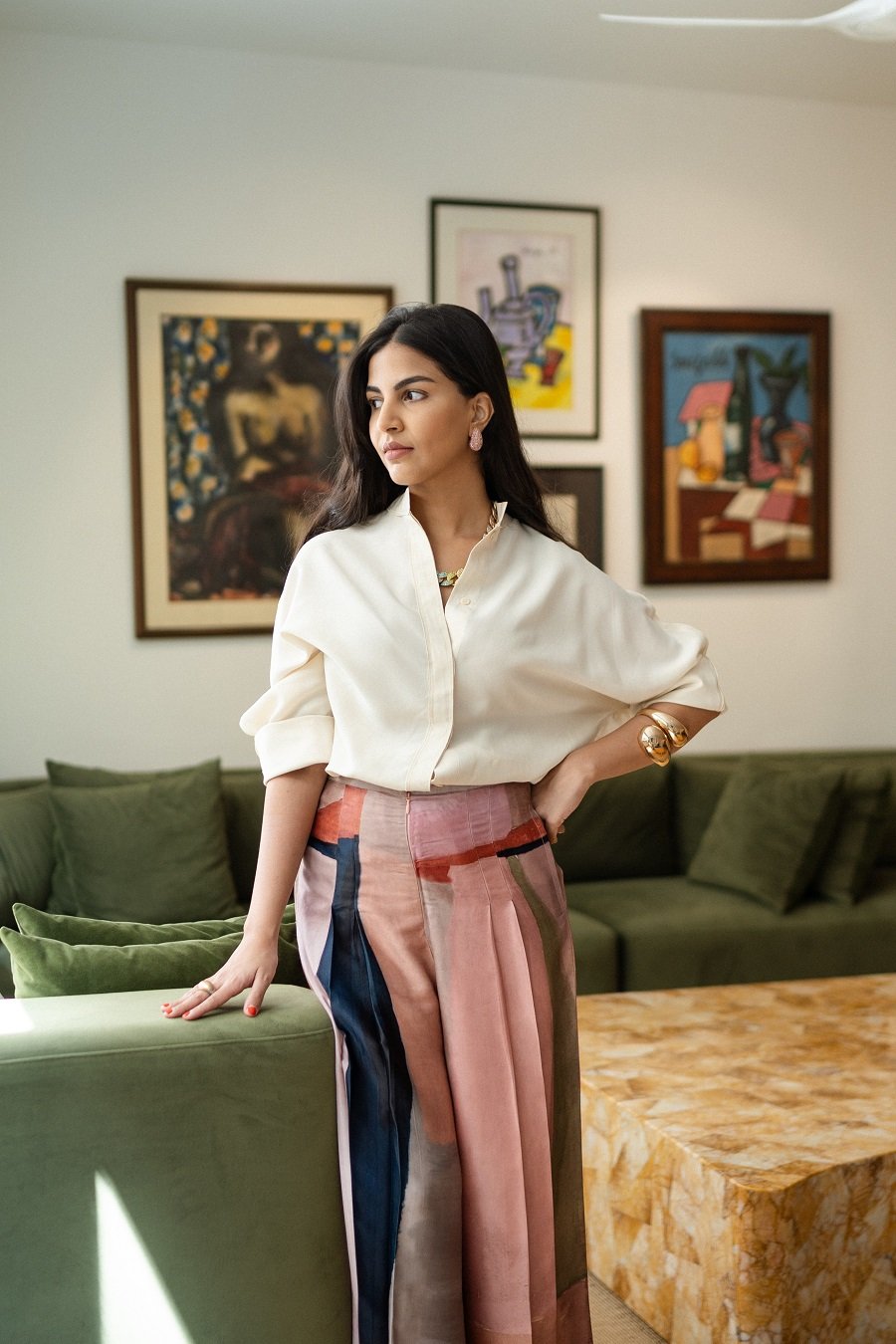
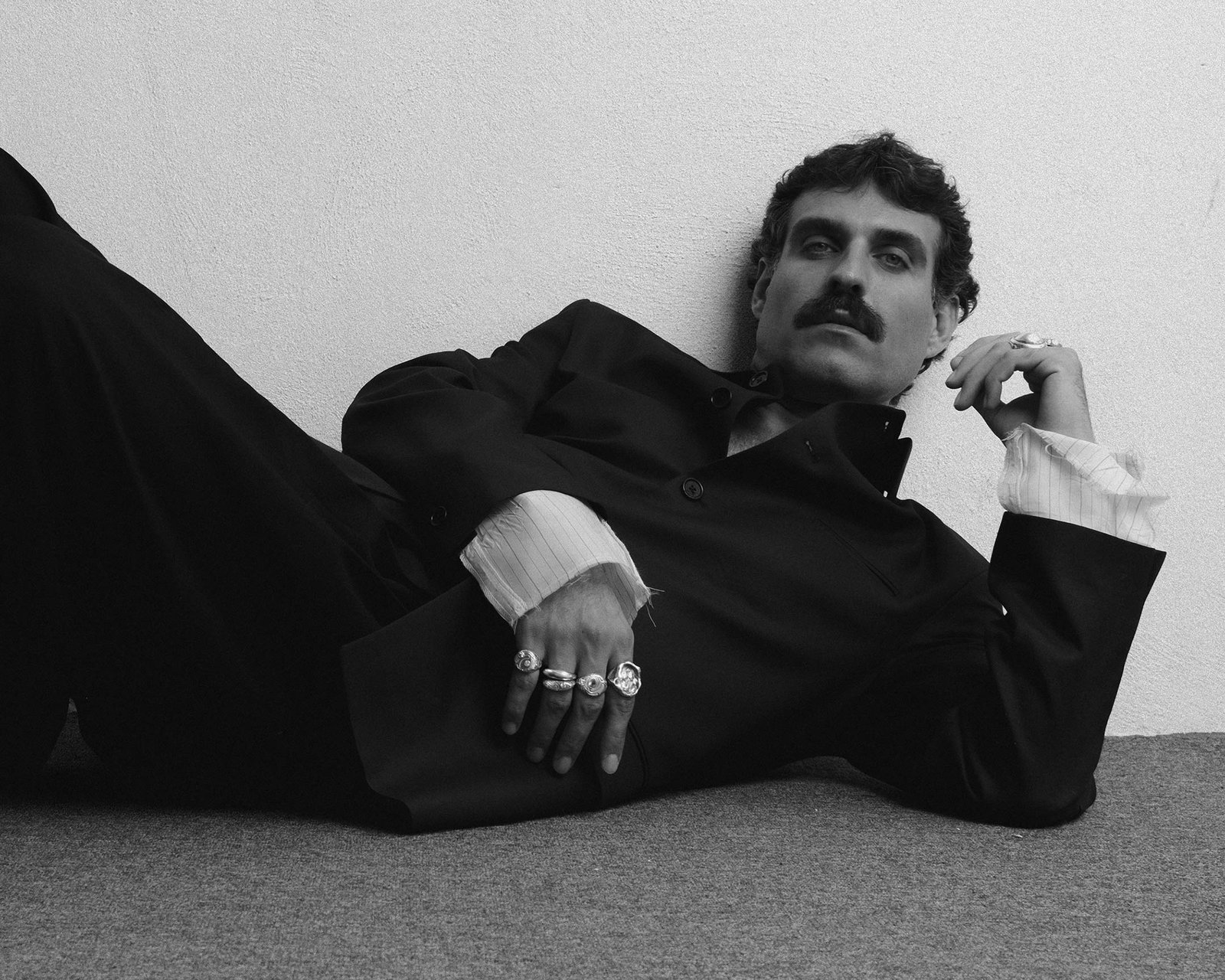
The Capitalyst: You first encountered Middle Eastern art through in New York, which eventually led you to study abroad at the American University of Sharjah in 2014, and then back to the region on a Fulbright Scholarship in 2016 to research the UAE’s then largely undocumented art history. That’s a long chain of steps from a single gallery visit to building an entire career. Was there a specific artwork or artist in New York that actually planted the idea, or did the pull come more gradually?
Suzy Sikorski: I still cannot believe it has been over a decade since I first moved to the Middle East, nor how far the journey has taken me, especially coming from a small town on Long Island, New York. My initial interest in Middle Eastern art emerged from the intersection of my studies in Middle Eastern international relations and my early experiences working in the New York art market. Though as much as it was ‘on-the-ground,’ it also began online discovering the art market abroad through auctions, artists’ writings, and publications. I often remind myself that if Abdulnasser Gharem was able to discover contemporary art while living in Abha, Saudi Arabia, then anyone can immerse themselves in a field they are passionate about, and even if disconnected geographically.
As with any art market, there is a framework for understanding it, and auctions provide one of the clearest entry points. They offer a real pulse on what is happening, who is collecting, and which artists are gaining attention. At the time, the Gulf was hosting a vibrant calendar of auctions in the UAE and Qatar. I became fascinated by following the sales that coincided with Art Dubai and Abu Dhabi Art, studying the artists represented in the catalogues and the stories behind the collections. It provided an immediate window into the region, introducing me to modern and contemporary Arab and Iranian art while revealing which artists were attracting international attention and which galleries were representing them.
Names such as Farhad Moshiri, Ayman Baalbaki, Paul Guiragossian, and Charles-Hossein Zenderoudi were commanding significant prices. The lot essays were especially important because they contained historical details about collectors, artworks, and artist biographies that often could not be found elsewhere. In many ways, they became my first ‘art history’ textbooks. Alongside the auction catalogues, I devoured publications and even started to write articles for publications like Canvas magazine and Harper’s Bazaar Arabia, often picking them up at places like Taymour Grahne Art Gallery and Leila Heller Gallery in New York – who did at the time represent artists from the Middle East. Together, they offered a broader cultural context and introduced me to the conversations shaping the region’s art scene. It all felt like discovering a pulse I instinctively knew I wanted to follow for the rest of my life. I remember bringing my parents to Taymour Grahne’s opening for Walid Siti in 2013, and having one of those rare moments of certainty. Standing there, I thought, “Mom and Dad, this is it. This is what I want to do.” The rest unfolded.
The Capitalyst: During your Fulbright year, you volunteered at galleries and personally interviewed pioneering UAE artists, work you’ve said became the direct foundation for Mid East Art. What was different about sitting across from those artists as an independent researcher, with no institutional backing yet, compared to how those same conversations might go now that you represent a platform with real reach?
Suzy Sikorski: It’s a good point because, at that moment, I was simply a young researcher trying to piece together a puzzle of seemingly disconnected, but ultimately interconnected, dots. I’m also not ethnically from the region, and much of my work involved building relationships and connecting narratives that were entirely new to me. I knew early on that speaking with first-generation artists would be critical to understanding the foundations of the art scene and mapping its many stories. Like exploring any cultural ecosystem, whether in music, sports, or film, I’ve always enjoyed going back to what I call “GOAT mountain”: who were the greats, and how did we get here? Where is the root of the source? So I did just that and held my microphone up, and camera on. During my Fulbright year in 2016-2017, there were countless moments at the Emirates Fine Arts Society in Sharjah when one artist would call another and say, “You have to meet Suzy,” before handing me the phone, a number, and an address to the next studio I needed to visit. I would grab my camera, put on my running sneakers, and travel however I could, by train, taxi, and cross national bus to make sure I could interview them.
Some of those memories remain incredibly vivid. I once missed the last bus from Khorfakkan to Dubai and accidentally left my tripod onboard, only to eventually recover it at Deira City Centre bus station. During an interview with Qatari pioneer Ali Hassan, I discovered afterwards that the camera hadn’t been recording at all, a lesson I never forgot. Another time, I arrived to interview Mohammed Ahmed Ibrahim and found him tending to his potted plants ahead of an approaching rainstorm. These small moments often stayed with me as much as the interviews themselves. Today, it’s much clearer that Mid East Art has evolved into both a community and, in many ways, a way of seeing, particularly following the Artists in Quarantine series in 2020. While the platform began as part of my own journey from New York to the Middle East, it has grown into a resource that houses many of my early interviews and now extends into storytelling events that I often describe as “time-travel chambers” viewed through Mid East Art glasses.
Today, my educational card packets are held by children, taught from by teachers, and displayed in artists’ studios across the world. It’s humbling to think that a little piece of Mid East Art has found its way into so many lives. Many readers still return to those early interviews and have incorporated them into academic research and publications. What excites me most is that Mid East Art now encourages interdisciplinary ways of engaging with art, moving beyond simple East-West frameworks and instead asking how we can approach these works through different lenses and perspectives. It has also made me reflect on who the audience for Mid East Art really is. While it serves local audiences, it also speaks to a global one. In many ways, it’s for the next curious young person, much like I once was, who might decide to travel halfway across the world, knowing no one, and somehow build a life around a passion they can’t quite explain yet.
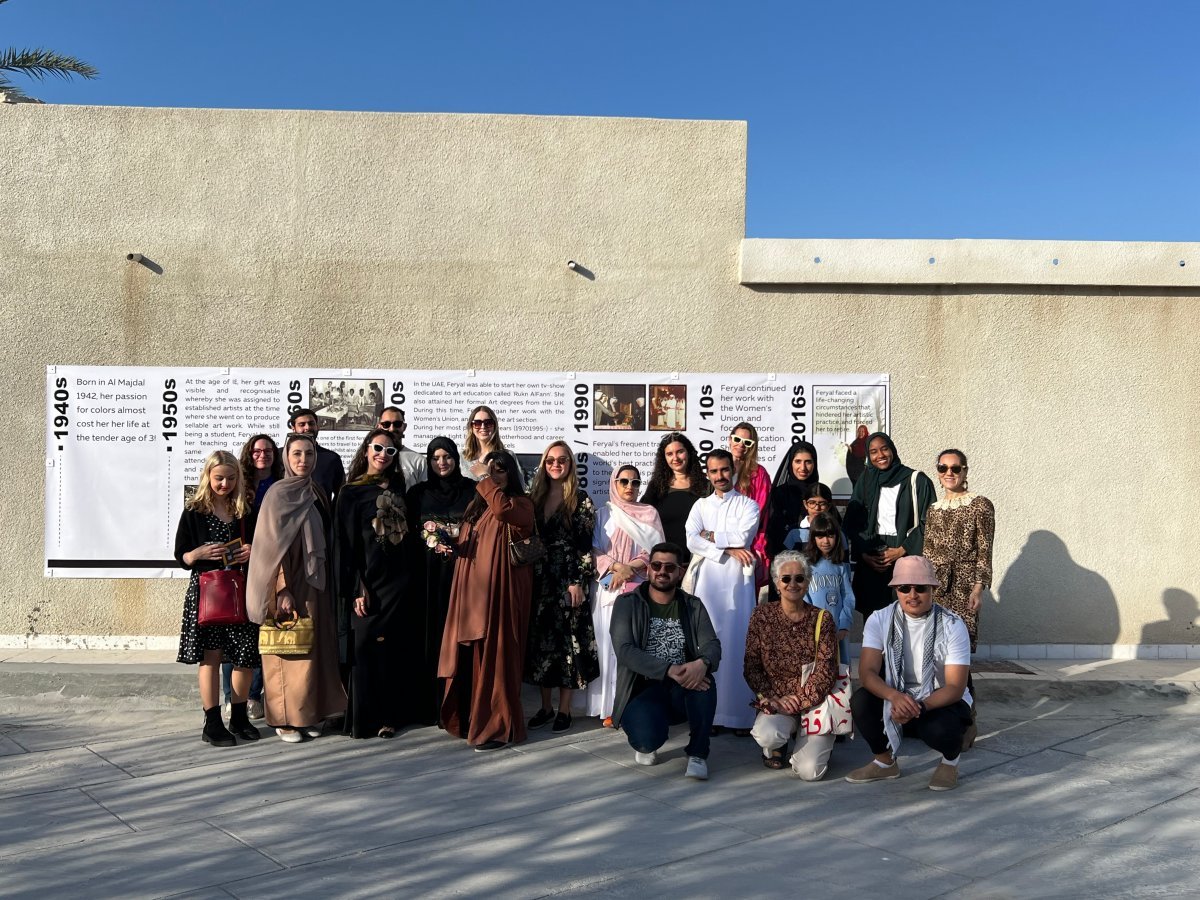
The Capitalyst: You founded Mid East Art in 2017, the same year you joined Christie’s in Dubai as a specialist in Middle Eastern twentieth and twenty-first century art, effectively building an independent platform and starting a major auction house career at the same time. How did you keep those two roles, one commercial and market-driven, one archival and independent, from bleeding into or compromising each other in those early years?
Suzy Sikorski: It was certainly difficult at the start because learning the trade of the art market, and particularly the niche field of Middle Eastern art, required a very specific focus. I often look back on those early years as an apprenticeship, because specialists in the auction world frequently uphold two roles at once: part art dealer and part art historian. You would be surprised by the constellation of people you are fortunate enough to meet along the way, from artists’ friends and family members to renowned scholars, curators, collectors, and researchers. To be honest, both roles reinforced one another. While balancing an independent platform with an auction-house career could be challenging in some markets, I was fortunate to have supportive management throughout the years who recognized the importance of documenting the local art scene and amplifying voices from the region.
The weeken change to Saturday/Sunday definitely helped as most of my weekend work was structured for MEA, and why not host ‘Storytelling Sunday’s now that I could enjoy my day off in the comforts of Sharjah Art Museum, with friends? Today, I think the commercial and curatorial worlds are more interconnected than ever. Auction houses are increasingly working directly with living artists and positioning contemporary artists within broader cultural narratives. The market is changing, and being based in the Middle East has given me a unique perspective on how institutions, governments, collectors, and market leaders are building more sustainable ecosystems around art and culture.
Everyone on my team was surprised that someone from New York had written a thesis on Hassan Sharif. I could not have been prouder carrying around my thesis, with Hassan’s Combs featured on the cover, and presenting it in class. At the time, it felt incredibly niche. That experience has always stayed with me, and it is something I often share when mentoring others: find something you are genuinely passionate about, even if it appears highly specialized, and explore it from every possible angle. I see the same trait reflected in many of the auction specialists I work alongside today. The strongest specialists often have a particular area of deep expertise, whether they have published monographs, worked on catalogues raisonnés, or spent years researching a single movement, artist, or collecting category. That depth of knowledge becomes their contribution to the wider field.
The Capitalyst: You’ve conducted over 150 artist interviews through MidEast Art, including your “Artists in Quarantine” series capturing creative process and personal narrative during a genuinely disorienting global moment. Looking back at that series specifically, what did artists reveal to you during lockdown that you don’t think they would have said under normal circumstances?
Suzy Sikorski: What a watershed moment for the platform. The year 2020 was such a vulnerable time for so many people, and truly one of the first moments when I felt a genuine sense of community through Mid East Art. This was before our storytelling events, but in many ways the Artists in Quarantine series became a form of digital storytelling. People looked forward to each new installment, and every week I would curate and publish a new set of stories. What was particularly striking was the honesty. Some artists did not feel comfortable speaking at all. Others openly admitted that they were not feeling creative, and their responses were often simple and understated because they genuinely felt disconnected from their practice. It varied tremendously from person to person. Some were isolated in places they did not consider home, while others were navigating entirely different circumstances.
During that period, I also developed a series with the UAE Embassy in Washington, D.C., hosting private conversations between American and Emirati artists. One discussion in particular, between Stephen Shore and Ammar Al Attar, has always stayed with me. Shore’s road-trip diaries felt like exactly the kind of reflection and perspective we needed at that moment, and later that summer I found myself embarking on my own road trip across the Northeastern United States. Stephen Shore had documented a generation of cultural change through his photography, just as Ammar Al Attar had captured a generation of pioneering artists in the UAE. I still remember one moment from that conversation when Stephen simply remarked, “Time passes.” It was such a simple observation, yet it has remained with me ever since.
Looking back, I think many of the ideas and reflections that emerged during that period planted seeds that only became visible years later. I also recorded private video messages for artists and shared them within the community. It was a vulnerable moment that transformed Mid East Art from a platform into something much more communal, connected, and enduring.
The Capitalyst: You handled the Orin and Rita Parker Collection of Modern Iraqi art, which you’ve described as one of the largest and most historically diverse collections of Modern Arab art to come to market from an American family, and preparing it meant piecing together an American family’s story living between two worlds in 1960s Baghdad, something you’ve said you personally identify with. What part of the Parkers’ story felt most personally resonant to you, and did that identification change how carefully or differently you handled the research?
Suzy Sikorski: That was one of the most special collections I have ever encountered, especially because I had the opportunity to meet the Parker family in California at the time of the sale. It was remarkable to encounter an American family who had lived in the Middle East and contributed to shaping Baghdad’s arts and cultural landscape during the 1950s and 1960s through the American Friends of the Middle East’s gallery and cultural programming.
Although Orin and Rita Parker had passed away, their children had become custodians of an extraordinary archive of artworks, memories, photographs, and stories. Having the opportunity to meet them and learn directly from their recollections felt like a real privilege. I also felt a deep responsibility in helping to share that history. One aspect that particularly resonated with me was Rita Parker’s meticulous documentation of family life. Like many parents, she assembled scrapbooks, preserved photographs, and recorded everyday moments. Through those materials, you begin to see fascinating cultural intersections: Christmas cards made in Baghdad, holiday decorations appearing in family photographs, and even traces of those moments finding their way into artworks themselves, yes, including Ghazi Al Saudi. These subtle details became woven into the wider history of the collection.
To think that one of Orin’s first responsibilities upon arriving in Baghdad as Director of AFME was attending Jewad Selim’s funeral in 1961 is extraordinary. It felt like a full-circle moment for me, having handled numerous works by Jewad throughout my career. Suddenly, the history I had spent years studying became deeply personal through the family’s stories and memories. After the auction, the family sent me a beautiful thank-you note. It is something I still revisit today because it reminds me of how meaningful that connection was. It also reinforced for me the wider role I played, as an American researching and presenting the collection of another American family whose lives had become so deeply intertwined with the cultural history of Iraq.
The Capitalyst: You handled the Orin and Rita Parker Collection of Modern Iraqi art, which you’ve described as one of the largest and most historically diverse collections of Modern Arab art to come to market from an American family, and preparing it meant piecing together an American family’s story living between two worlds in 1960s Baghdad, something you’ve said you personally identify with. What part of the Parkers’ story felt most personally resonant to you, and did that identification change how carefully or differently you handled the research?
Suzy Sikorski: That was one of the most special collections I have ever encountered, especially because I had the opportunity to meet members of the Parker family at the time of the sale. It was remarkable to encounter an American family who had lived in the Middle East and contributed to shaping Baghdad’s arts and cultural landscape during the 1950s and 1960s through the American Friends of the Middle East’s gallery and cultural programming.
Although Orin and Rita Parker had passed away, their children had become custodians of an extraordinary archive of artworks, memories, photographs, and stories. Having the opportunity to meet them and learn directly from their recollections felt like a real privilege. I also felt a deep responsibility in helping to share that history. One aspect that particularly resonated with me was Rita Parker’s meticulous documentation of family life. Like many parents, she assembled scrapbooks, preserved photographs, and recorded everyday moments. Through those materials, you begin to see fascinating cultural intersections: Christmas cards made in Baghdad, holiday decorations appearing in family photographs, and even traces of those moments finding their way into artworks themselves, yes, including Ghazi Al Saudi. These subtle details became woven into the wider history of the collection.
To think that one of Orin’s first responsibilities upon arriving in Baghdad as Director of AFME was attending Jewad Selim’s funeral in 1961 is extraordinary. It felt like a full-circle moment for me, having handled numerous works by Jewad throughout my career. Suddenly, the history I had spent years studying became deeply personal through the family’s stories and memories.
The auction memories is something I still revisit today because it reminds me of how meaningful that connection was. It also reinforced for me the wider role I played, as an American researching and presenting the collection of another American family whose lives had become so deeply intertwined with the cultural history of Iraq.
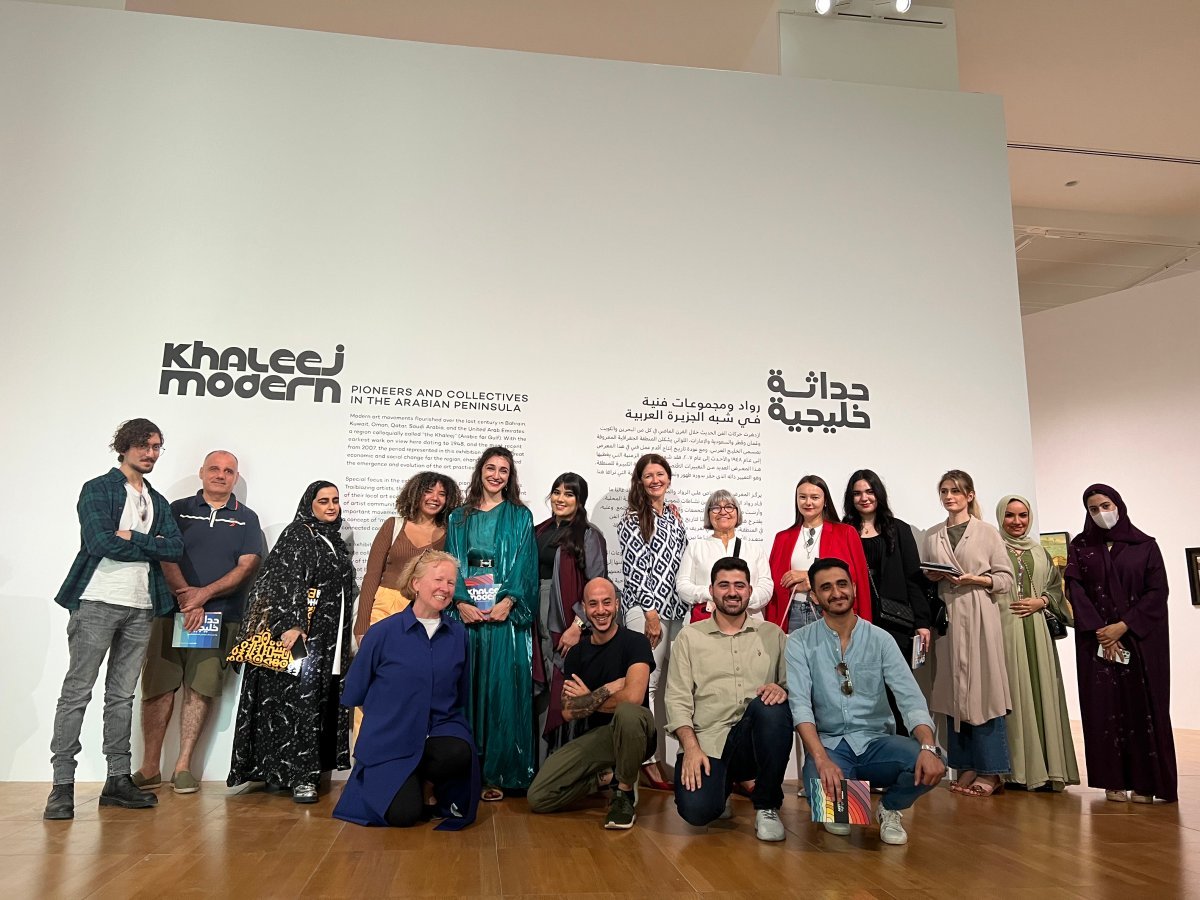
The Capitalyst: You now serve as Business Development Director for the Middle East at Bonhams, based between Dubai and Riyadh, after building your specialist career at Christie’s. Moving between major auction houses while continuing to run an independent platform like Mid East Art means constantly managing where commercial obligation ends and independent archival work begins. Has that boundary ever gotten genuinely difficult to hold, a discovery or relationship that could have served either purpose?
Suzy Sikorski: Of course, there are moments when a passion for art history does not align with commercial success in the art market. I remember researching the archives of a modern Gulf artist and becoming incredibly excited about the possibility of bringing the works to auction, only to realize that the market simply was not ready. One of the most challenging parts of the process was having to communicate that reality to the family. While that can be disappointing, it reinforces an important truth: an auction ultimately depends on demand and the pool of potential bidders willing to compete for a work. Collectors come to auction for many reasons, whether provenance, rarity, historical significance, or the opportunity to acquire works that may otherwise be unavailable.
There are certainly areas of research that do not always translate directly into the market. As much as I would love to spotlight every overlooked Syrian, Lebanese, or Gulf artist whose work deserves greater attention, not every important story results in a record-breaking sale. In that sense, I have learned to keep the archival and commercial aspects of my work distinct while recognizing that both play an important role in shaping the broader art ecosystem.
That said, building a wider team around Mid East Art has become increasingly important as my career has evolved. Interestingly, many Bonhams clients first encountered me through a Mid East Art storytelling event before ever engaging with me in a professional auction-house capacity. That crossover has been incredibly rewarding because it demonstrates how education, storytelling, and community-building can ultimately foster deeper engagement with the art world. Finding people who genuinely care about the platform and share its values has been critical. It has been reassuring to watch readers, contributors, artists, and collectors become invested in Mid East Art’s mission and future. In many ways, that sense of community has become just as meaningful as any individual sale or professional milestone.
The Capitalyst: You’ve collaborated with Warehouse 421 on “Whistle While You Work,” a four-part podcast series focused on artists’ daily rituals and habits rather than their finished output, and you’ve spoken on panels at MIT, the Courtauld Institute, Misk Art Foundation, and Qatar Foundation. Presenting to an academic institution like the Courtauld versus a regional cultural foundation like Misk likely calls for different framing entirely. How do you adjust what story you’re telling about Middle Eastern art depending on which kind of institution you’re standing in front of?
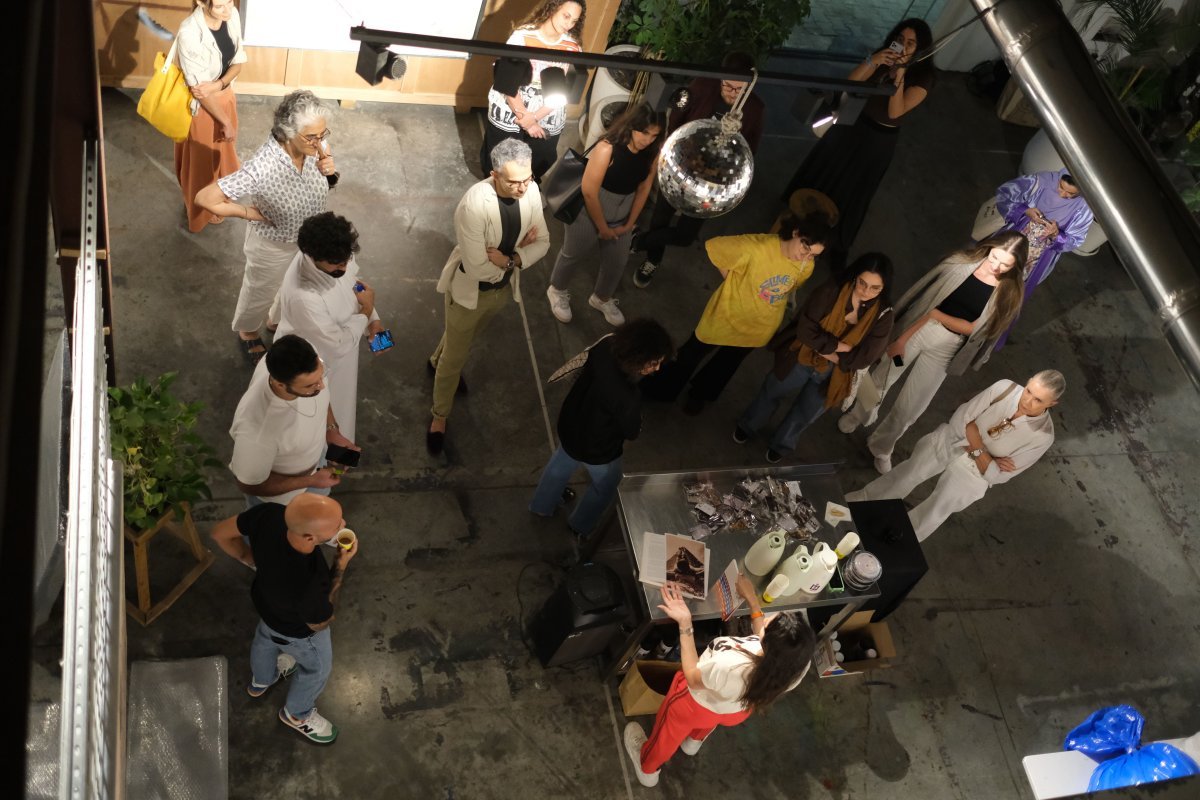
Suzy Sikorski: It’s all about understanding your audience and knowing how to frame a story within a particular context. The Mid East Art storytelling events I host in the United States, Europe, and the Middle East are all very different because each audience brings its own level of familiarity, perspective, and point of entry into the subject. Even when discussing modern Arab art within the Gulf, where institutions are increasingly dedicating significant attention to the field, there remains a tremendous need for educational talks, accessible conversations, and opportunities for deeper engagement. Art history is not static; it is something that must constantly be revisited, shared, and reinterpreted for new audiences.
That said, I don’t think the differences between audiences are as dramatic as they once were. Today, many people already recognize names such as Etel Adnan and other internationally celebrated artists, and increasingly understand that these figures belong to a much broader narrative of modern and contemporary art from the region. The conversation has matured. Rather than asking for introductions, audiences are now asking for deeper dives.
People want to learn about the leading women artists of the Middle East, movements such as Art and Liberty in Egypt, the Khartoum School in Sudan, or the development of conceptual art in the Gulf. Many of the foundational seeds have already been planted internationally, and audiences are now eager to move beyond survey-level narratives and engage with the nuances, complexities, and lesser-known stories that continue to shape the region’s art history. What excites me most is seeing these conversations become increasingly interdisciplinary. Art is often the starting point, but discussions naturally expand into literature, architecture, music, politics, migration, identity, and memory. In many ways, my role is less about teaching a definitive history and more about creating pathways into these wider conversations, helping audiences discover connections they may not have considered before.
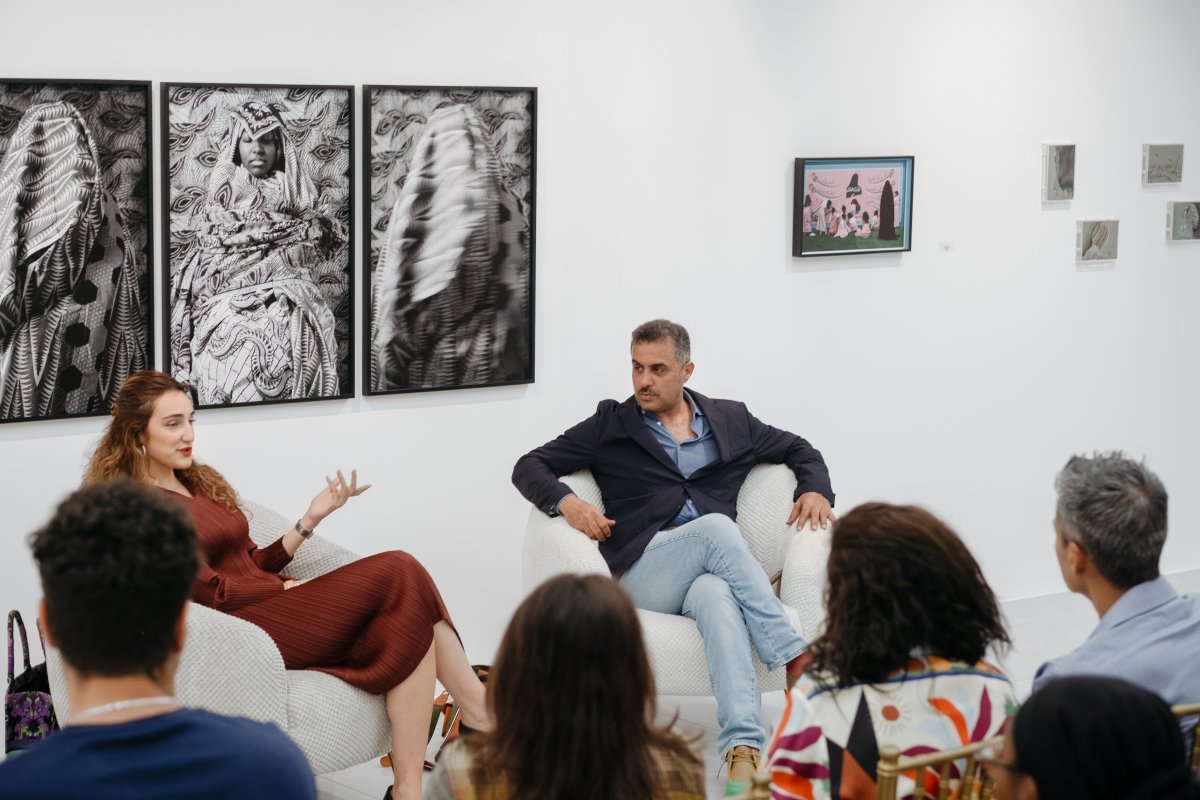
The Capitalyst: Nearly a decade since your Fulbright year, you’ve built a reputation as both a serious market specialist and an independent chronicler of the region’s art history, two roles that don’t always coexist easily in the art world. Is there a piece of Middle Eastern art history you still feel is dangerously under-documented, at risk of disappearing with a generation of artists, that you’re specifically trying to get to before it’s too late?
Suzy Sikorski: One of the most memorable research trips I undertook was meeting a family in Madrid that owned a collection of works by Hamid Ewais. It felt almost like a form of time travel, particularly when considering Ewais’s experience studying at the San Fernando Academy in Madrid between 1967 and 1969. That experience reinforced a research area that I believe remains significantly underexplored: the years that Arab artists spent studying abroad in Europe during the mid-twentieth century. These artists underwent profound transformations while living in cities such as Paris, Rome, London, New York, and Moscow. They encountered new artistic movements, educational methodologies, and intellectual environments before bringing those experiences back to their home countries, where they would go on to shape the development of modern art movements.
One area I would love to explore further is the archives of these academies and institutions. Who were these artists’ professors? Who were their mentors? Who were the individuals, both personal and professional, who influenced their thinking during these formative years? Were there friendships, artistic circles, or even romantic relationships that helped shape their outlook? And do traces of these encounters still survive in letters, memoirs, university archives, or forgotten collections? One example is Hassan Sharif’s experience at Central Saint Martins. I had the opportunity to interview one of his former professors and most influential mentors, Tam Giles, who was in her nineties at the time. Her recollections of meeting Hassan and witnessing his artistic development were extraordinary. Suddenly, a figure who is often written about through the lens of art history became much more human and immediate.
You can trace similar stories throughout the region. Many archives remain largely untapped, whether at the Slade School of Fine Art in London, the Accademia di Belle Arti in Rome, or the École des Beaux-Arts in Paris, where generations of Arab artists studied. Through these institutions, an entirely different narrative begins to emerge, one that intersects with artists such as Jewad Selim, Louay Kayyali, Saloua Raouda Choucair, and countless others who crossed borders in search of artistic education and new ideas. While much scholarship has focused on how modern art scenes developed within Middle Eastern capitals, I believe there is an equally compelling story to be told through these international crossroads. There are diaries, letters, correspondence, photographs, and fragments of documentation that provide clues. Even when the material is limited, it has the potential to form an invaluable counter-archive, offering a richer and more nuanced understanding of how modern art movements across the region came into being.