The Capitalyst: You studied history and art history at the Sorbonne, then film studies and journalism in London, and you started out writing about architecture, design, wellness and luxury travel. In 2021 you described yourself as a newbie to jewellery, with only about four years of writing about it behind you. What was the first story that made you realise you’d found your subject?
Sonia Esther Soltani: This is such a great question, and I had to think about it for a while. Was it a specific story? I don’t think so. It was more the combination of stories I was researching during my first year at Rapaport in 2017, the articles I was commissioning from incredibly talented writers, and everything I was learning from my colleagues as I immersed myself in the diamond and jewellery industry. The first story I ever wrote for Rapaport was about the invention of lab-grown diamonds, and it brought together everything I have always enjoyed: social history, unexpected anecdotes and an exploration of an invention’s wider impact.
The Capitalyst: You’ve said your grandmother’s motto was less is more, as long as the less is well made, and that your mum wears her plainer signet ring more than the diamond because of the connection to the person who owned it. How much of your taste still comes from those two women, and which piece in your own life carries that kind of story?
Sonia Esther Soltani: My beloved late grandmother appreciated beautiful things, whether furniture, a hat or tableware, as long as they were well made. My mother and I have inherited her philosophy of buying less but buying well, although we have quite different approaches to wearing jewellery! My mum tends to save her few diamond pieces for special occasions, sometimes never wearing them at all, whereas I’m much more of a live-in-the-moment person. I’ll happily wear a family diamond heirloom on an ordinary day. One of my most cherished possessions is my grandmother’s engagement ring, a lovely Retro-style design set with a minuscule diamond. I’ve had the privilege of trying on jewels worth millions, but this little ring remains my most treasured piece.
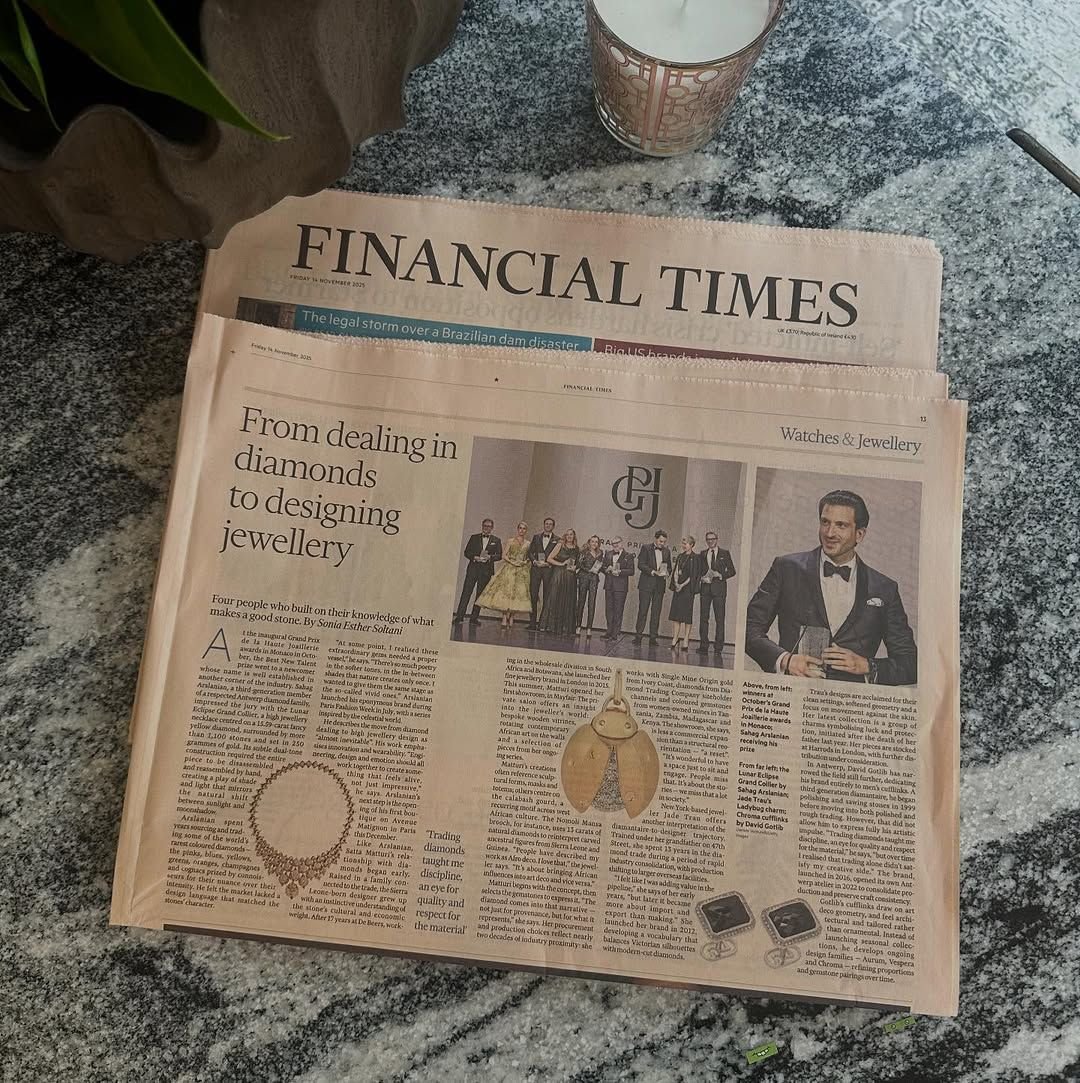
The Capitalyst: From 2017 to 2024 you were editor-in-chief at Rapaport, running the print magazine, the online blog, the news site and a podcast. Covering everything from mine to retail is a very different view from what most consumer jewellery writers get. What did those seven years teach you about the industry that outsiders rarely see?
Sonia Esther Soltani: One of the greatest privileges of working at Rapaport was having access to the entire supply chain. It gave me a perspective that is quite different from looking at jewellery exclusively through the lens of trends and attractive visuals. Behind every beautiful jewel is a remarkable network of people, skills and decisions. Miners, cutters, dealers, designers, craftspeople, and retailers each have a story to tell. I also discovered how generous this industry can be. People have opened their doors, shared their knowledge, and introduced me to others simply because they wanted to help me understand their world.
The Capitalyst: You founded the Instagram account for jewellery professionals, which grew past 100,000 followers, and you hosted a podcast about jewellery history and styles. A trade audience on Instagram and a history audience on audio are two very different crowds. What did you learn about telling jewellery stories to each?
Sonia Esther Soltani: When I launched the jewellery-focused Instagram account at Rapaport, I was speaking to an industry audience, but that didn’t mean everything had to be technical or commercially driven. People responded to beautiful, unusual designs and interesting stories. The podcast allowed us to explore those stories in much greater depth. The challenge with Instagram is capturing someone’s attention in seconds. With a podcast, you have the luxury of time to develop a story, ask another question, and sometimes discover something completely unexpected. But the principle is the same: you need to give people a reason to care.
The Capitalyst: You’ve interviewed more than a hundred jewellers from around the world. In another interview, you said that “an ornament that reflects my personality and life story is the biggest luxury.” After a hundred conversations, what do the most memorable jewellers have in common, and is there a question you ask that reliably gets the best answer?
Sonia Esther Soltani: The designers I find most fascinating rarely follow trends. I’m particularly drawn to people who have developed a recognisable creative language. If you can show me a jewel without telling me who made it, and I can identify the designer, I think that’s quite an achievement.
As for questions, I think asking someone about their journey reveals more than asking them to describe their latest collection. I love understanding why people do what they do, what has shaped their aesthetic and how their experiences find their way into their work. But there’s also what goes unsaid during an interview: those moments when you sense there’s more to the story and gently try to explore it further.
The Capitalyst: You love jewellery with a story, you’re obsessed with emeralds, you’ve said you’d happily live with only a Belperron ring, and you often share auction favourites, like a René Boivin citrine and ruby bracelet. What makes you fall for a piece at auction in a way you rarely do for a brand-new design?
Sonia Esther Soltani: I love jewellery that has lived a life before reaching us. Antique and vintage pieces carry an element of mystery. Who commissioned this jewel? Who wore it? What did it mean to them? How did it survive all these years? I also find it fascinating to look at jewellery through the context of its time. A jewel can tell you so much about a particular period’s artistic movements, social conventions, and technical innovations. And then there’s the design. I have a particular weakness for the boldness and imagination of the 1930s and 1940s. That said, I fall in love with contemporary jewellery all the time. What attracts me isn’t necessarily age, but originality. I want a jewel to have something to say.
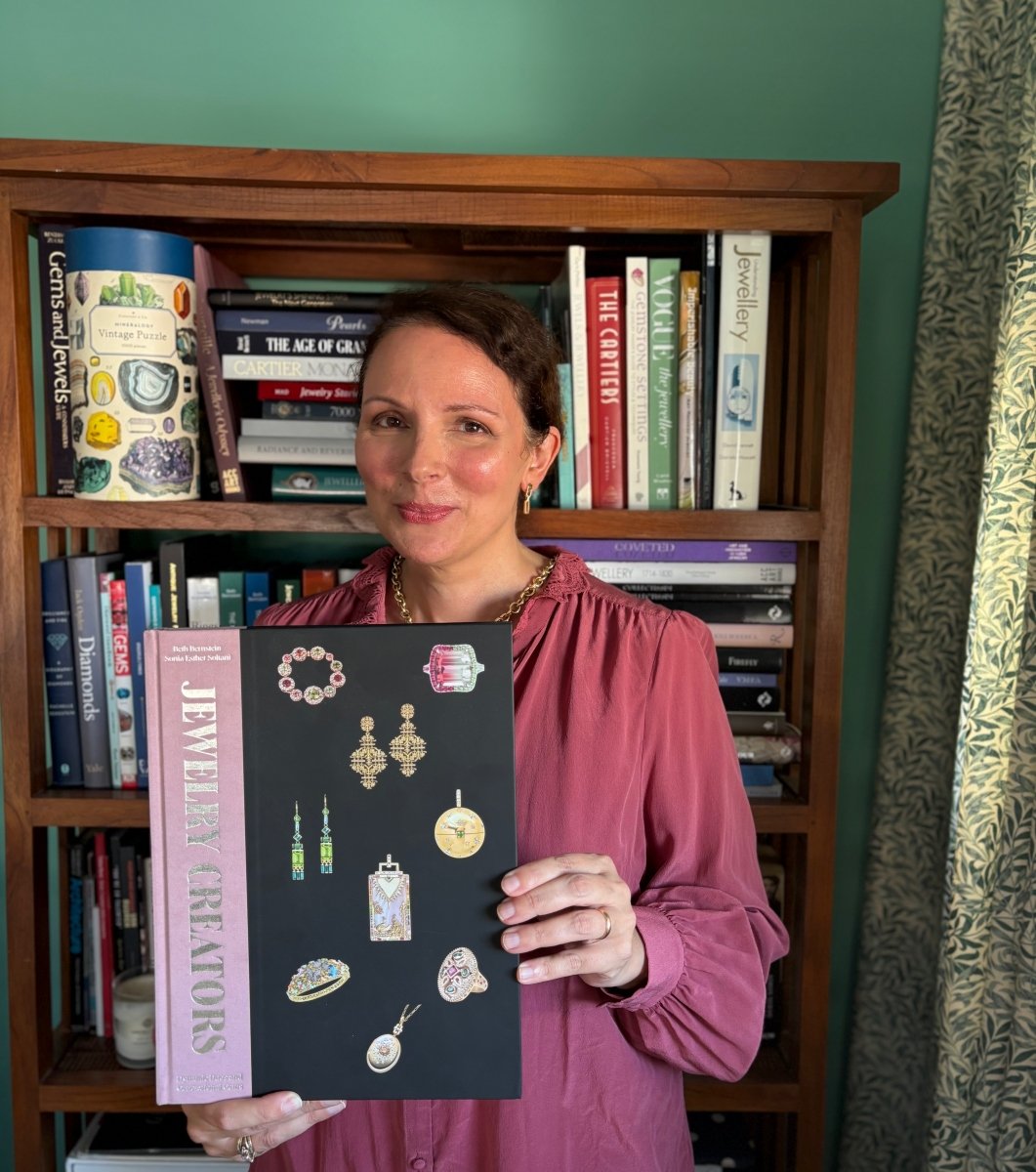
The Capitalyst: Your book with Beth Bernstein, Jewelry Creators, profiles 22 designers, brands and gem dealers who work as duos, from relatives to close friends, or carry a generational legacy. Which pair surprised you most behind the scenes, and what did writing about so many partnerships teach you about how creative people actually work together?
Sonia Esther Soltani: Beth and I explored relationships between siblings, spouses, parents and children, friends and business partners. In certain partnerships, one person is the creative force and the other provides the business expertise. In others, they share the creative process. There’s no formula for a successful partnership. But trust, mutual respect and the ability to recognise each other’s strengths came up repeatedly. I also found the generational stories particularly moving. There’s something fascinating about inheriting a family business or creative legacy while trying to establish your own identity. And of course, the book itself came out of a friendship! Beth and I met through the jewelry industry, and our shared curiosity and appreciation for the people behind the jewels eventually led us to write a book together. It feels rather fitting that a book about relationships was born out of one.
The Capitalyst: You’ve said sustainability isn’t a trend and is here to stay, because younger buyers keep asking where a piece comes from, who made it and what impact it had. Where do you think the industry still falls short of answering those questions, and what should a first-time buyer ask a jeweller?
Sonia Esther Soltani: I’d like to preface this by saying that the industry is doing a phenomenal job of communicating more clearly about sourcing, environmental impact and working conditions. There are so many fantastic initiatives and a genuine desire to share this information with consumers. If anything, we sometimes become too technical in our eagerness to explain everything. The jewellery supply chain is complex, and translating that complexity into clear, accessible information isn’t always easy. I’m the proud communications advisor to Truly Precious, an educational non-profit working to bring greater transparency and data to the industry. It’s one initiative among many praiseworthy efforts to help people better understand a jewel’s journey.
For first-time buyers, I encourage them to start by asking what matters most to them. Is it the provenance of the diamonds, gemstones or precious metals? The jeweller’s contribution to local communities? Or understanding what lies behind terms such as “ethical,” “responsible” and “sustainable”? These words are used frequently, but they don’t always mean the same thing to consumers and industry professionals. The important thing is to ask questions and feel comfortable having that conversation with your jeweller.
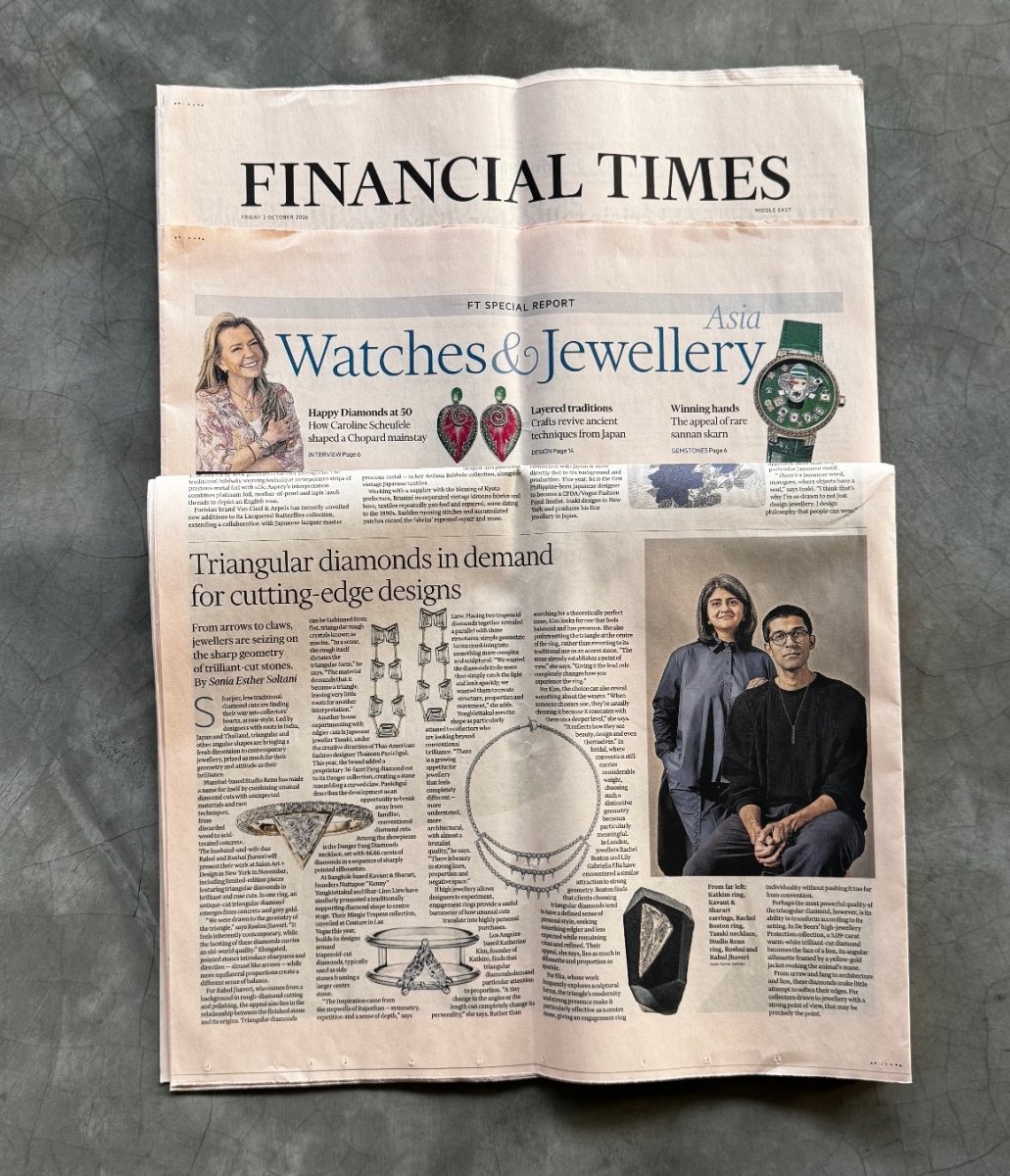
The Capitalyst: You trained as a life and career coach and advise independent designers and jewellery professionals. What’s the most common mistake you see, and what do designers need to hear that nobody around them is willing to say?
Sonia Esther Soltani: The most common mistake I see comes from enthusiasm and dedication. When you’re starting a business, it’s tempting to do absolutely everything yourself, from designing and creating jewellery to marketing, sales, customer relations and, of course, the dreaded accounts! It’s easy to stretch yourself too thin. I understand how hard it can be to let go of control of your vision, not to mention finding the financial resources to delegate. But you need to consider it if you want to build a sustainable business.
Another mistake is feeling uncomfortable discussing money, whether that’s setting prices for your creations or negotiating your fees as a professional. I always encourage my clients to recognize the value of their expertise, experience and creativity, and not to be afraid to ask for what they’re worth.
The Capitalyst: Before you stepped away from Rapaport, you made a five-episode video series on careers in the jewellery industry, and now you write your own Substack, The Portrait Cut, with press roundups and reading lists like essential references for a jewellery history library. What does writing on your own let you do that a magazine never did, and what’s the one jewellery story or collection you’re still hoping to tell or see?
Sonia Esther Soltani: The Portrait Cut has given me something I hadn’t experienced quite like this before: complete editorial freedom. After years of working with publication schedules, editorial briefs and specific audiences, it’s wonderful to have a space where I can follow my curiosity wherever it takes me. I can recommend books that have inspired me, interview someone whose career fascinates me, or share stories that don’t necessarily fit into a conventional magazine format.
It’s also a way of connecting directly with readers. I love the idea of building a community of people who are genuinely curious about jewellery, whether they work in the industry, collect it or simply appreciate beautiful things.
As for the stories I still want to tell, I don’t think there will ever be just one. There are people I’d love to meet and interview — JAR, for instance, but also the next JARs, whoever they may be. And perhaps that’s the greatest pleasure of this career: I have no idea what extraordinary story I’ll discover next.