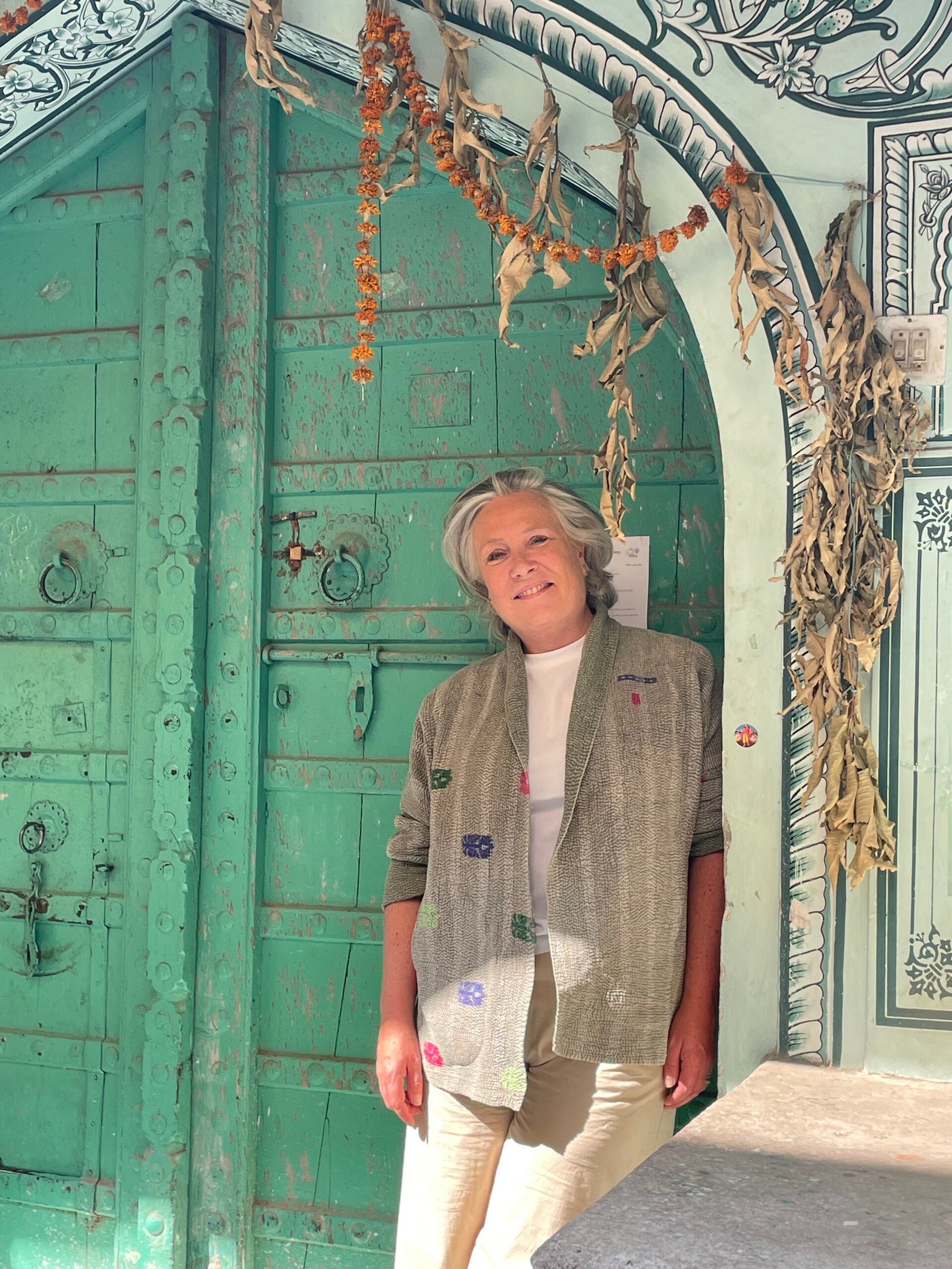
The Capitalyst: You were born and raised in Paris, began your career in corporate and new media PR there, then spent several years working in New York before founding Peepul in 2006 and choosing to relocate to India to grow it. That’s three fundamentally different media and PR cultures in a single career arc. What made you decide India, specifically, was where you wanted to build your own company rather than continuing to grow within the Paris or New York industries you already knew?
Srimoyi Bhattacharya: When I came to India in 2007, I saw a real white space in strategic communications, particularly within fashion and luxury. But what excited me equally was the sense that there was room to experiment. The market wasn’t yet governed by a fixed playbook, and there was an openness to ideas, creative approaches and strategies that weren’t necessarily cookie-cutter.
It was also a moment when a number of international fashion, homegrown labels and luxury houses were beginning to establish themselves in India, so there was a natural convergence of timing and opportunity. It felt like the right market at the right moment — both to build something and to participate in shaping an industry that was still finding its grounding whether in business or branding.
The Capitalyst: Nearly two decades in, Peepul is described as a leading pan-India communications advisory firm focused specifically on luxury and lifestyle. Luxury PR in Europe often relies on decades of brand heritage and established codes of exclusivity. What did you have to reinvent about how luxury communication actually works when you brought that expertise into the Indian market, where the codes of aspiration and status are genuinely different?
Srimoyi Bhattacharya: One of the most important things I learnt working in India was that we also had to rediscover and “reclaim” or build our own luxury codes.
If you look at the early fashion weeks in India, for instance, they were initially presented in formats very similar to New York or Paris. Gradually, those formats began to change and respond to the realities of the Indian market — how people buy, how they celebrate, how fashion is experienced and how luxury is consumed. Communication had to evolve in much the same way.
For me, this has been a gradual process of revisiting ideas of what luxury is supposed to look like and understanding what is genuinely relevant here. India has always had extraordinarily sophisticated traditions of luxury, materiality, craftsmanship and patronage. The opportunity is not simply to import global luxury codes, but to understand how those codes converse with our own.

The Capitalyst: You wrote “Pitch Perfect,” a book built on insider knowledge from your own clients along with input from editors, industry experts, and business heads across fashion, beauty, and media. Writing a how-to book means handing over a version of your own competitive playbook. What made you decide the industry needed that book publicly rather than keeping that expertise inside Peepul’s own client relationships?
Srimoyi Bhattacharya: I have always believed that thought leadership comes from sharing – that is what we ask from our clients. In fact, it is something I have also encouraged within my own teams over the years — as people learn and develop expertise, they are very able to articulate that knowledge and build their own footprint.
The book came from a similar intent. Is there a larger purpose to what we learn beyond applying it to our own businesses? Can we contribute to shaping an industry?
When I first came to India, I was incredibly fortunate to meet colleagues who were generous with their insights and helped me understand a business and a market that were new to me. The book is, in some ways, my way of documenting our collective experience. That philosophy also informs the work I do with the Luxury Committee. India’s organised luxury ecosystem is still relatively young, and I think those of us who have had the privilege of participating in its evolution also have a responsibility to share, debate, and help build what comes next.
The Capitalyst: You serve as Chairperson of Comité Luxe at the Indo-French Chamber of Commerce, a role that puts you at the formal intersection of French luxury heritage and the Indian market you’ve spent your career building expertise in. What tension, if any, have you seen between how French luxury houses want to be positioned globally and what actually resonates with Indian consumers?
Srimoyi Bhattacharya: Interestingly, I think Indian consumers increasingly want precisely the opposite of being treated differently.
They want the same excellence, desirability, access, and brand experience that they would encounter anywhere else in the world. They don’t want to feel like a secondary consumer or that India is somehow a secondary market.
If I had to reduce it to one sentence: what matters to India is that India matters. The localisation must come through intelligence and relevance rather than dilution. The global positioning of the house should remain intact; the question is how meaningfully it engages with the Indian consumer and the Indian context.

The Capitalyst: You describe your PR philosophy as needing the right mix of creativity and strategy, at a moment when brand communication has expanded far beyond traditional media into influencers, micro-influencers, and both online and offline communities, as you’ve written about yourself. When those two demands genuinely pull in different directions, a strategically sound plan versus a creatively bold one, which do you personally trust more when advising a client?
Srimoyi Bhattacharya: My guiding question is always: what does this do for the brand narrative and the brand’s positioning?
Perhaps the biggest exercise I undertake with clients today is extracting what they truly own. What is the idea, point of view, expertise or universe that can authentically belong to this brand and not to ten others?
I think of it as authorship. In a landscape where everybody has access to similar platforms, formats and even audiences, ownership becomes incredibly important. Once you understand what a brand can genuinely author, decisions around communication become much clearer. So when two demands pull in different directions, I tend to return to that: which choice reinforces what the brand has the right to own?
The Capitalyst: You now live with your family in Goa rather than in one of India’s traditional PR and media hubs like Mumbai or Delhi. Running a pan-India luxury advisory business from outside the country’s major media centers is an unconventional choice. What does that distance actually give you, in perspective or focus, that being embedded in Mumbai’s or Delhi’s media circuit wouldn’t?
Srimoyi Bhattacharya: The distance from main cities of action, has been tremendously beneficial – although it is always so special to attend brand events and connect with various fraternities!
Part of my decision to move to Goa coincided with an evolution in my own work. I wanted to move away from being primarily involved in press relations — which is now handled by my peers and new partners — and concentrate more deeply on advisory work. That doesn’t require me to be in the thick of things every day.
I still absolutely love meeting people. I love discovering new tastemakers, creators and ways of communicating, and I don’t think you can understand this constantly changing world without participating in it – and attending a select set of events is of great joy. But I’ve also discovered that I am much more productive in Goa. I’m not socialising constantly, and there is space to think. Perhaps most importantly, distance has given me a certain objectivity. When I was running a PR business, there was inevitably a sense that one needed to be seen in the right places as part of the job. Today I can choose where I need to be because it is relevant to the work rather than simply because I ought to be there. That has been quite liberating.

The Capitalyst: Your own identity spans being a Bengali Parisian, an entrepreneur who moved continents twice for her career, and now someone based in Goa advising India’s luxury sector. Which of those identities do you think clients actually respond to most when they’re deciding whether to trust Peepul with their brand story, the Parisian training, the Indian market fluency, or something else entirely?
Srimoyi Bhattacharya: I think it is really the sum of all those experiences that gives me whatever intuition I bring to a brand.
People perhaps come to me for a certain breadth of exposure — having grown up in Paris, worked internationally and then spent so much of my career building within India. But alongside that is a very strong sense of pride and determination about what Indian brands can become globally.
There is something quite wonderful about the circularity of it for me: I grew up surrounded by many of the international luxury houses that I later had the privilege of helping engage with India, and today I feel an equally strong sense of purpose in helping Indian brands find their rightful place internationally.
The Capitalyst: You built Peepul from the ground up in 2006, arriving in India as an outsider to the market you were about to build a business inside of. What was the single hardest thing to earn in those early years, the trust of Indian luxury and lifestyle brands, access to the country’s media landscape, or something else you hadn’t anticipated needing at all?
Srimoyi Bhattacharya: I came to India with a great deal of apprehension. I had never lived here. I had worked in Paris and New York and across cities in Europe, so professionally and personally, this was going to be an entirely new experience. Interestingly, what proved difficult wasn’t finding my way into the industry. My conversations had already begun from New York, and when I arrived, I felt incredibly welcomed. I received an immense amount of support, and I owe a great deal to the many people who made space for a newcomer at a moment when the industry itself was burgeoning.
Timing certainly helped. There was space for new people and new ideas in a way that perhaps feels harder today when the landscape is considerably more crowded. The real challenge for me was learning how to run a company. I didn’t have an MBA and, quite simply, I didn’t know how to run a business. I particularly struggled with the financial and operational aspects of building an agency. Those were skills I had to acquire along the way.
At the same time, we made some clear choices from the beginning. We were probably among the more expensive agencies in our space which helped with an economy of quality, and we were never afraid to say no when we felt there wasn’t the right fit. That wasn’t always the easiest position to take when you were building a young business, because there is an obvious temptation to compromise in the interest of growth. So if I look back, the greatest tension wasn’t finding my place creatively or within the industry. It was learning how to build a financially sound company while preserving the integrity of the kind of work we wanted to do.

The Capitalyst: With nearly 25 years of experience spanning three continents, you’ve now moved from being purely a service provider for other brands’ stories to also being a public author and industry voice in your own right through your book and your Comité Luxe role. Does stepping into that more visible, personal-brand role change how carefully you have to manage your own image compared to when your job was entirely about managing everyone else’s?
Srimoyi Bhattacharya: Ironically, my current role has made me much more private.
There is often far more at stake now in terms of business strategy, intellectual property and the future direction of a brand. Advisory work requires a different kind of discretion. You are being invited into conversations that are often not meant to be visible at all.
Again, Goa works beautifully for this stage of my career. It gives me privacy in a very literal, spatial sense, but it also allows the consultancy itself to operate more quietly. I don’t need to be visible for the work to be visible.
The Capitalyst: Between running Peepul, chairing Comité Luxe, and having written a book that essentially teaches others how to do parts of your job, you’ve built something that now extends well beyond a single consultancy. What does the next chapter actually look like for you, and is there a part of the luxury and lifestyle industry in India you haven’t yet worked in that you’re specifically hoping to break into next?
Srimoyi Bhattacharya: I’m at a rather wonderful juncture in my career where I feel a genuine sense of fulfilment in the work I’m doing. I’m working deeply with a smaller set of clients, and that depth is something I’ve realised I have always wanted.
One of the things that was always very clear is how much I enjoy working closely and deeply with brands rather than simply working across a large roster. In many ways, my career has naturally moved towards that.
So perhaps my next aspiration isn’t necessarily about becoming bigger. It’s about creating more space — for the work I find meaningful, for my own creative playground, Table Code by Sri, and for doing more in Goa. And, quite simply, more space for personal time. At this stage, I think that too is an aspiration.