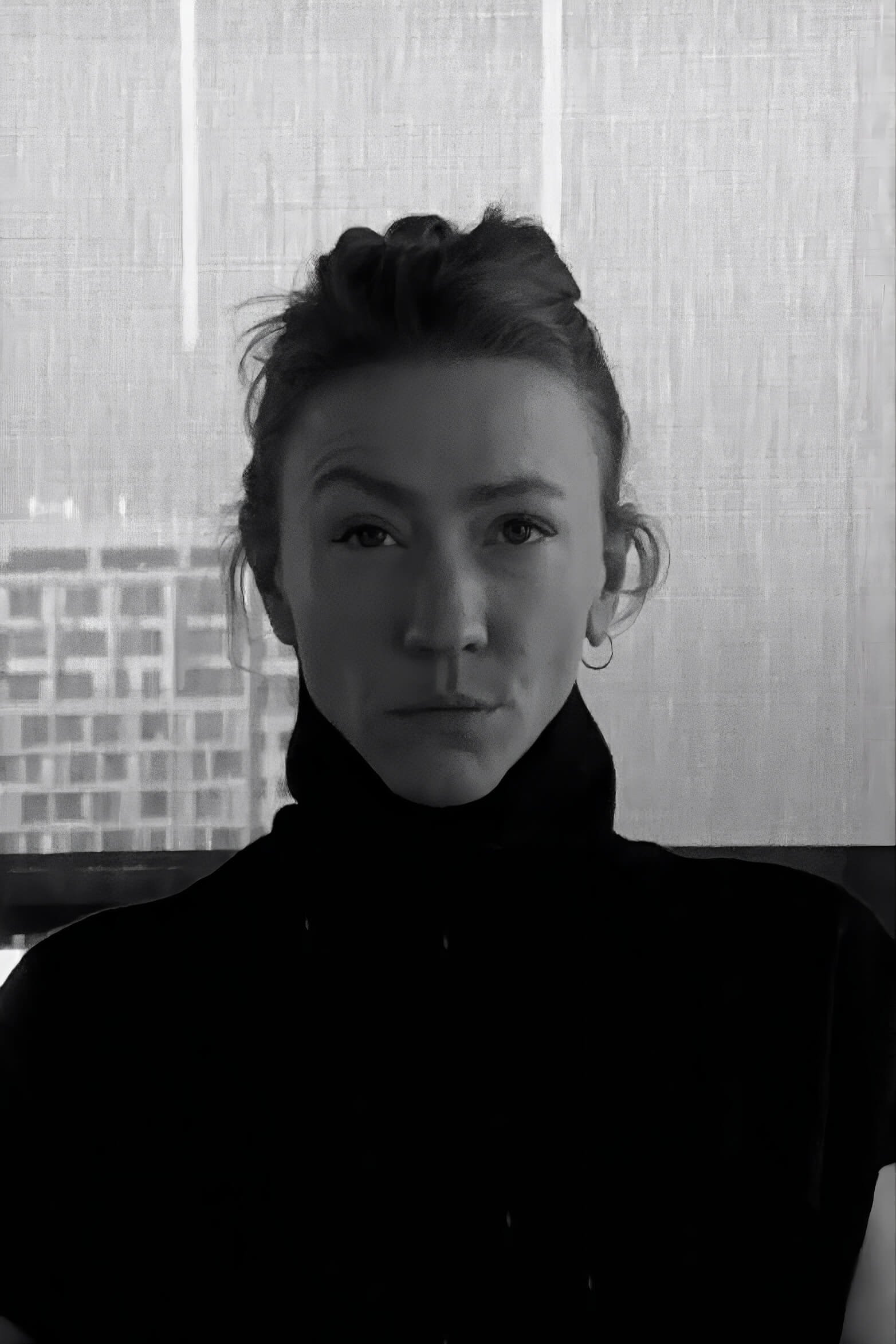
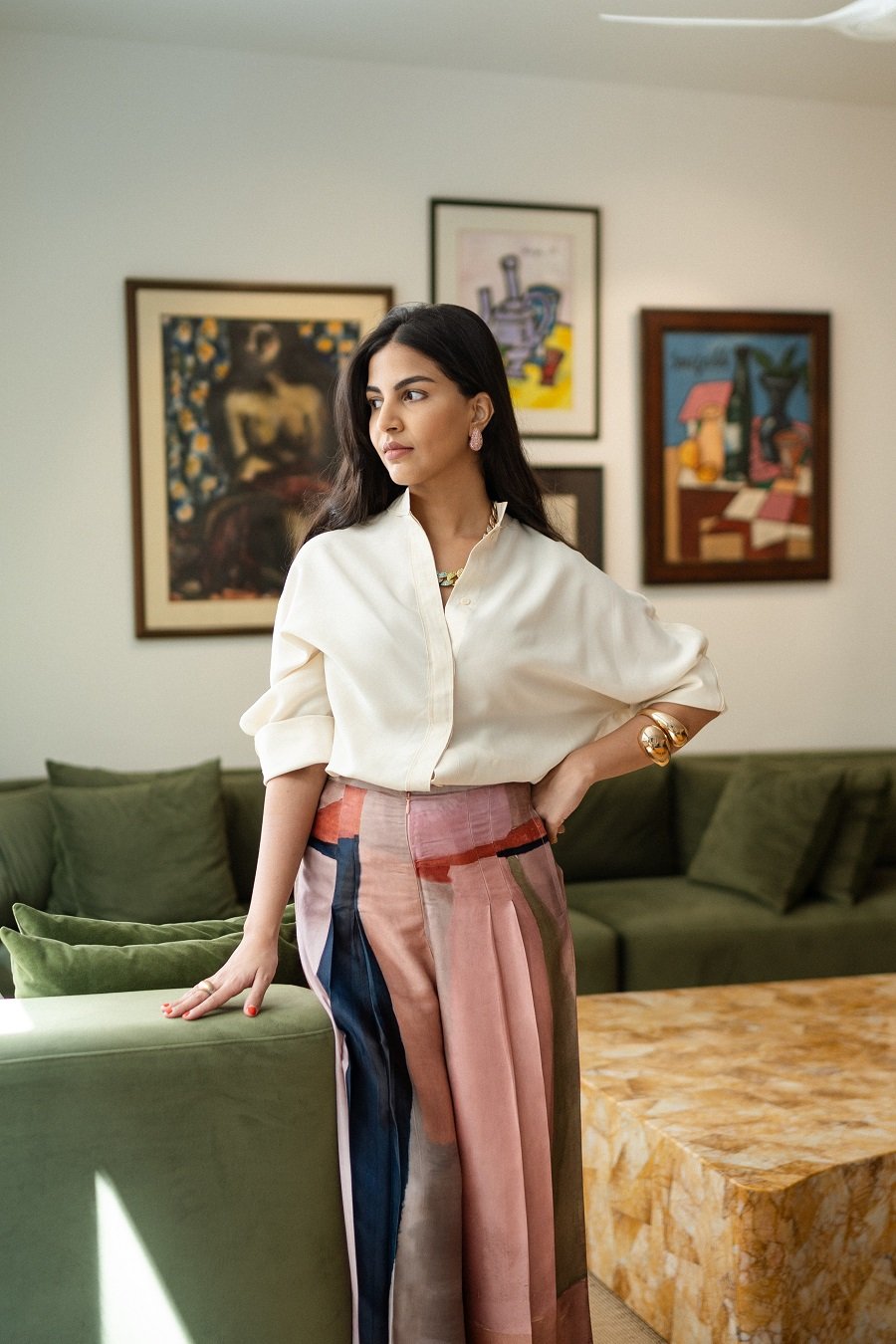
The Capitalyst: You were born in Delhi on November 25 1978 into one of India’s most prominent media families, your father Aroon Purie the chairman of the India Today Group and your aunt Madhu Trehan a pioneering journalist in her own right. You attended Modern School in Delhi, studied Politics, Philosophy and Economics at the University of York, and then trained at the Royal Academy of Dramatic Art in London, graduating in 2002. Most people with that family background would have gone straight into journalism or media management. You went to RADA instead. What were you saying no to when you chose acting, and what were you saying yes to that nothing else could have given you?
Koel Purie: I didn’t choose acting, it chose me. As you rightly say, given the background I come from and being academically inclined, acting was no more than a hobby. I acted on stage every opportunity I got, but it was not to be taken seriously. Growing up in the intellectual circles of Delhi in the 90s, Bollywood was so far removed and negatively judged that it was not even a consideration. I wanted to do a masters in broadcasting journalism, which was such a buzz word back then when India was on the brink of the cable TV explosion. I landed an intern job as a TV presenter and general dogs-body for a travel show which went from DD to the newly launched Star TV. It was the most exciting time, we felt like pioneers. We had a 2-rupee budget, no makeup, wore our own clothes, shot on U-matic tapes, edited on analogue worrying about generation loss… but within a month of graduating from York my household sat around the kitchen idiot box and watched me on national TV. The high was addictive. I had to find a way to make this my life and once I got into RADA, no mean feat, my path was set. Acting gives me adrenalin that nothing can compete with. A film set or a rehearsal room is till date my happiest place.
The Capitalyst: You describe yourself on your own website as a professional attention seeker and a licensed storyteller who does whatever it takes to stay in the limelight, from acting in dodgy films to encouraging presidents to reveal their darkest secrets on television, to globetrotting so you can write about it. That is a very particular and disarming kind of self-awareness. How do you distinguish between the attention that is in service of the story and the kind that is in service of the self, and has that line ever been difficult to find in practice?
Koel Purie: The story is always the king or better still the queen. I am nothing without a story. If my attention seeking doesn’t serve the story, be it an interview I’m conducting or a role I’m essaying, there will be no limelight. Even an Instagram post tells a story, no one including myself, is interested if it doesn’t. There have been moments in my younger days when the self has superseded and it has never gotten the desired result. This is a learning and something I remind myself of often because the film industry, particularly in India, is designed to make the person bigger than the story. Every time I’ve leaned into that, while it may give some instant gratification it depletes my creativity and eventually makes me miserable. Don’t get me wrong, the self is important, of course it is, it is why we do what we do, but only as far as it serves the story. And when those two goals align magic happens.
The Capitalyst: On the Couch with Koel on Headlines Today became one of Indian television’s most distinctive interview formats, a show where public figures including presidents, actors and cultural figures were drawn into genuinely unguarded conversation. You have said the show was built on the conviction that the most revealing moments happen when someone forgets they are on television. What techniques did you develop for creating that kind of forgetting, and is there a guest who surprised you most by what they were willing to say when they felt safe enough to say it?
Koel Purie: Many things coming together contributed to that. The format was that we did not ask the guest to come to a studio but we went to them. We set up our couch in people’s private and preferred spaces from bedrooms to tennis courts to even an aeroplane hangar and highway in the middle of Maharashtra. As invasive as that was, it also put them at ease once they saw how respectful we were of that space I had an excellent crew, who understood the goal and once set up were as good as invisible. My research team was diligent and I studied each guest like an exam, which meant when they came on the couch I knew and remembered things about them that they may have forgotten. It also helped me to actively listen and not be wedded to my line of questioning. I’m naturally curious about people, even when I don’t like someone, as an actor and writer, everything is potential material and I want to understand what makes someone tick. I must give out some kind of energy because people always overshare with me – strangers, people I barely know pour their hearts out, it surprises my husband, but I see it as a gift. The guest who surprised me most with his candour was President Pervez Musharaf as it was so out of character, I think he even blushed while recounting a tale of a forgotten love.
The Capitalyst: You have worked on over 20 films across India, the United Kingdom and Canada, played Desdemona at the Leicester Haymarket, performed in A Taste for Mangoes adapted from William Dalrymple’s White Mughals, made your cinematic debut with Rahul Bose’s Everybody Says I’m Fine in 2001, starred opposite Irrfan Khan in Road to Ladakh, and appeared in Zoya Akhtar’s The Archies in 2023. That is a career built across theatre, film and television on three continents. What does the stage give you as a performer that film still cannot, and is there a role you have turned down that you think about?
Koel Purie: Stage gives you an immediacy that screen never can. Any art form be it a painting, a book, or a character you perform is incomplete without being interpreted by the recipient. On stage that completion is instantaneous and you fail or succeed in real time. Any actor worth their craft can feel that connection or disconnection with the audience within the first 5 minutes and sometimes it can be agony (for all concerned) to get through an entire performance when the audience is not with you.
Luckily art is entirely subjective, so you search to feel the vibe of that one person in the audience who might be digging you while everyone else is not and ride on that energy to carry on, or you rely on yourself and co-actors to get you through. With screen you’re quite removed from what you offer and when and how it’s received. The only film I regret not saying yes to in Honeymoon Travels Pvt Ltd, not because it was a super success but because I truly enjoyed the madness Reema managed to convey.
The Capitalyst: Through your production company 185 Carat Films, based in Paris with creative operations spanning Mumbai, Tokyo, London and Paris, you optioned the rights to adapt Koh-i-Noor: The History of the World’s Most Infamous Diamond by William Dalrymple and Anita Anand into a television series in 2020, with partners Raquel Carreras and Kamayani Punia. That is an ambitious adaptation of one of the most layered and contested objects in colonial and post-colonial history. Where is that project now, and what made you the right producer to tell that particular story?
Koel Purie: It is the most fascinating story to tell, it spreads across cultures, across continents, much like I do. I do not have blood on my hands like the stone does nor claim to be the symbol of power and sovereignty but thanks to my mixed culture education I do understand how the history of the Empire is taught differently in India and the UK. My British friends who are still monarchists have no idea how self-serving and cruel British rule was. Dalrymple and Anand have begun to redress this wrong with their podcast and this book which was, I’m sure, the seed for it is so cleverly written, of course the research is impeccable, but the real life characters and stories are so entertaining that you can’t put the book down. Sadly, Viacom is sitting on this incredible project and I doubt it can be made in the current political climate of India. For starters, Ranjit Singh needs to be shown as he was – a crippled, one-eyed, uneducated maverick with charisma enough to charm the white-ist of white rulers. Imagine the wrath of the Sikh community if he is portrayed anything short of He-man.
The Capitalyst: While living in Tokyo, the Japanese government appointed you as a tourism mascot and you created a series of videos promoting Japan to international audiences. That is an unusual assignment for an Indian actress and producer, one that required you to be a cultural translator between two very different worlds for a third audience altogether. What did living in Tokyo teach you about how culture is performed for outsiders, and is there something about Japan that you feel never made it into any of the tourism content because it was simply too difficult to explain?
Koel Purie: To say that was a dream job would be an understatement. I had gone as a trailing spouse to Tokyo believing I’d welcome a few years of not working, but after 2.5 expat lunches I was done. So, I cast a wide net and literally met anyone and everyone who could give a job to a non-Japanese speaker. Again a case of luck favours those who persevere. Japan is a coded universe and you will be helped, aided and treated with the utmost request but never welcomed. You can marry a local, learn the language and the gazillion codes of conduct – from who sips the tea first and which way to angle the tea cup depending on hierarchy, but you will always remain a Gaijin (outsider).
It’s essential but extremely complicated to understand the concept of Wa (communal harmony) that governs every action and thought in Japan. A baby is shushed when born to not disturb the wa, there is a strict distinction between your true feelings (honne) and your public face (Tatemae) and as you get older the circle you can be honest with becomes smaller and smaller. While it works to keep a society harmonious, I personally find that suffocating and it perhaps explains the high level of depression and loneliness in the country.
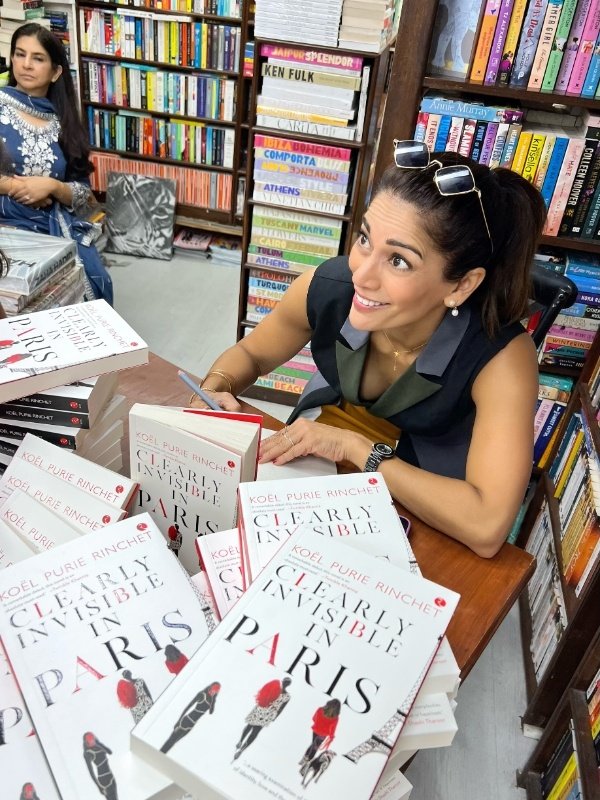
The Capitalyst: Your debut novel Clearly Invisible in Paris, published in 2023, is set in the city you now call home and explores female friendship and modern life through what you have described as Paris’s polarity, its capacity to hold love and darkness, beauty and strife, simultaneously. You have said that in Paris you encountered many stories about women’s will to survive. Was the novel a way of documenting those stories or a way of processing them, and what does fiction allow you to say about women’s lives in Paris that journalism or memoir could not?
Koel Purie: Fiction always allows you to tell the truth more directly. The novel was my way of sharing as well as processing how these powerful and dynamic women from all over the world that I was meeting were finding themselves pushed to the periphery of society in Paris. It wasn’t merely a language barrier, Paris is an insular city that pretends to be cosmopolitan. A lot has changed in the 9 years I have lived here, it is thanks to these women that the DNA of Paris is transforming. All French owned luxury houses, the bastions of privilege, now have ‘foreign’ women in decision-making managerial positions. Women change the world while men change their circumstances. My female friendships have always been my greatest wealth and joy.
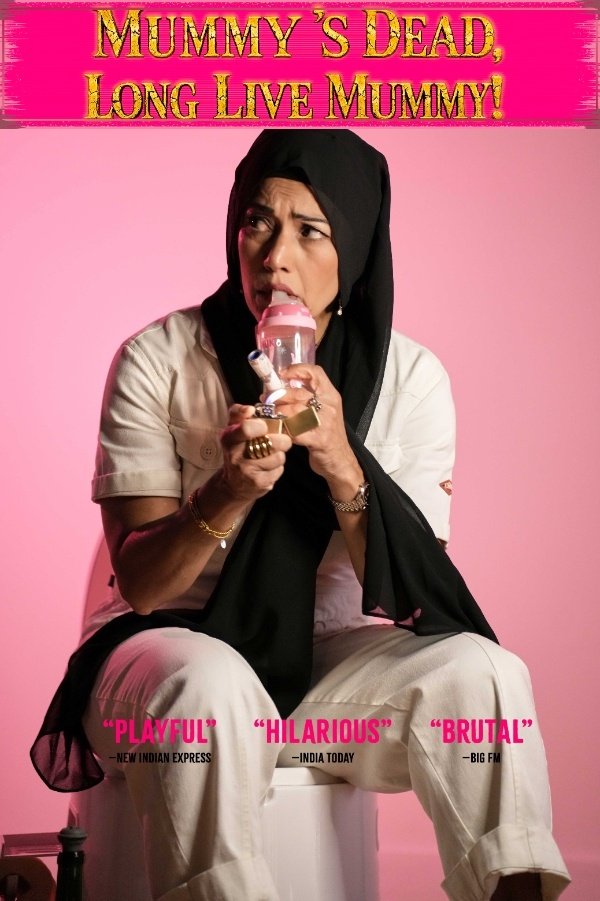
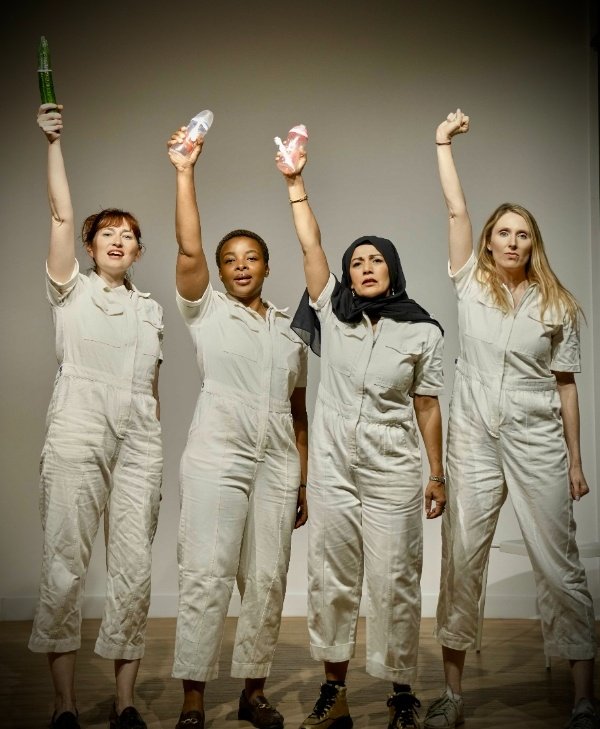
The Capitalyst: You scripted your first play Mummy’s Dead, Long Live Mummy, which debuted in Paris with sold-out shows and has been described as a deeply personal work. Writing a play is a very different creative act from writing a novel or producing a film, one where the language has to do everything alone without images or cinematography to carry it. What did writing for the stage reveal about your relationship to your own voice that the other forms had not, and is there something in the play that you found yourself saying that surprised you once it was on the page?
Koel Purie: I didn’t set out to write a play, it was meant to be a sort of memoir of motherhood but the minute I put pen to paper, my character started lamenting against the all-pervasive judgement she felt from an invisible entity (God/ society / mothers before her). The laments were loud and hysterical and I knew then this was a play not a book. For me the subject finds its medium. Writing for stage is liberating, you can create your own world with its own rules and there are no constraints of universal logic or physical plausibility. Mummy’s Dead, Long Live Mummy! is living up to my dream of going beyond the stage and becoming a conversation where other parents feel safe to say they’re not OK. The play is now going to Edinburgh Fringe which is a huge deal and from there I wish for it to have a world tour and become a movement.

The Capitalyst: You have written regularly for Cosmopolitan India, DNA, Harper’s Bazaar and India Today, often on personal empowerment, modern social dynamics and issues affecting women. You describe yourself as someone who uses different mediums simply as different means of telling stories. Is there a story you have been trying to tell across all of those forms, across the acting, the producing, the novel, the play and the journalism, that you feel you have still not fully arrived at, and what form do you think it will finally take?
Koel Purie: The day I believe I have arrived and have nothing to explore will be the death of me. There are so many stories inside me, time is not my friend. I’m burning to tell the story of my grandfather, who came from Lahore during partition as a refugee and ended up financing all of Raj Kapoor’s early films. He introduced Switzerland to the Chopra brothers. He was a renegade, traveling the world with film reels, introducing Hindi cinema to it, the reason Russian taxi drivers sang songs from Mother India is thanks to him. I will do it at some point but the research for it will be mammoth and terrifies me.
The Capitalyst: You are the daughter of one of India’s most powerful media figures, have built an entirely independent creative practice across four countries, and have chosen to live and work from Paris rather than Delhi or Mumbai. That is a set of decisions that carries its own argument about freedom, identity and what it means to build a life at a deliberate distance from the context that formed you. What does Paris give you creatively and personally that India could not, and is there a version of you that stayed in Delhi that you think about sometimes?
Koel Purie: I carry India in me, my sense of identity comes from India, even more fiercely now that I live away from it. Paris gives me the freedom to breathe literally and creatively. Despite the moody inhabitants it remains the most beautiful city in the world. Creative people for centuries have flocked here for the way the light hits the limestone buildings, the sunsets reflected on the Seine and the way the city teaches you to take in the details. I love the years I spent living in Mumbai and my heart belongs to Goa but the life I have in Paris is enchanted.