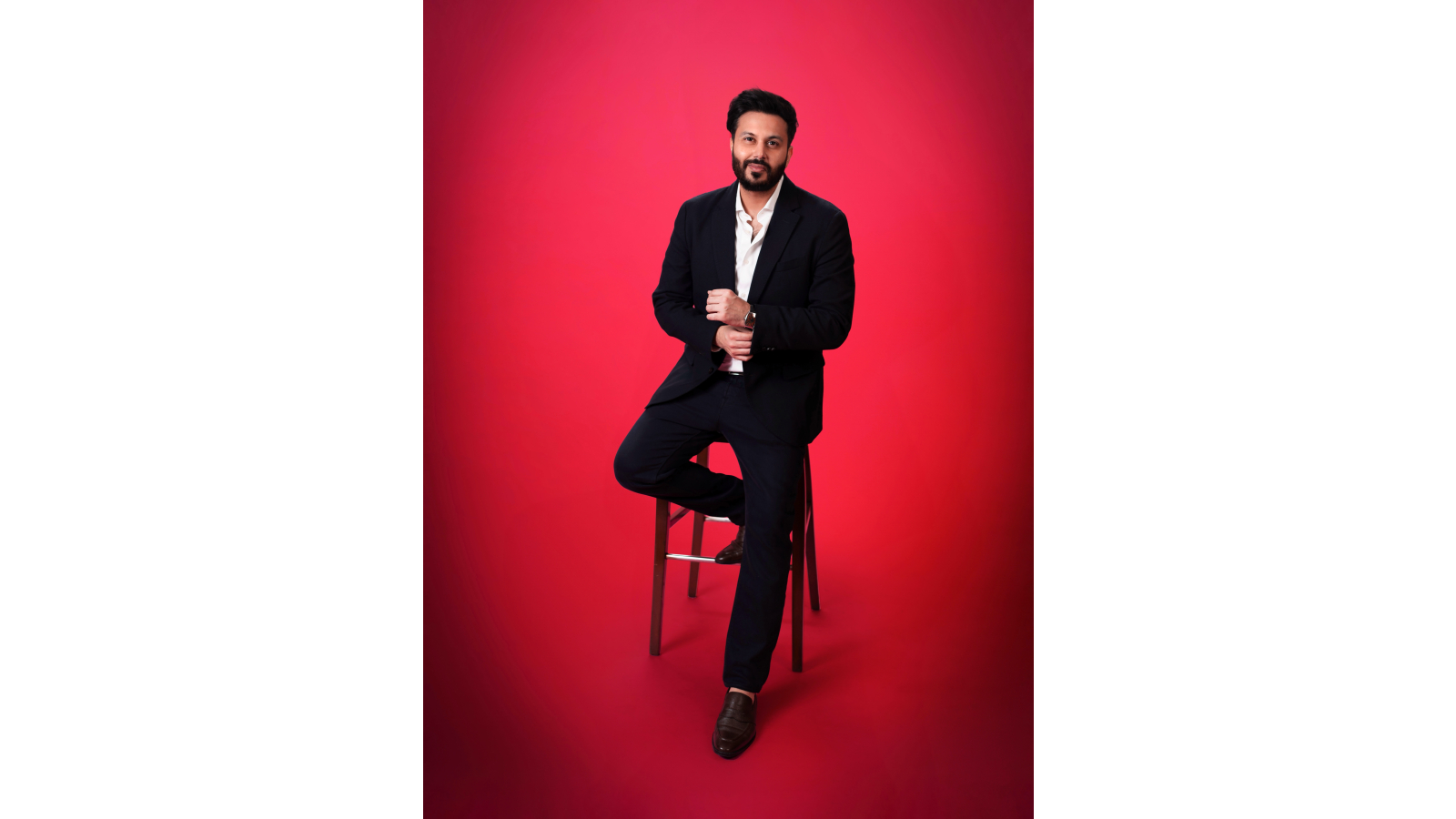
The Capitalyst: Your family founded The Leela Palaces, Hotels and Resorts, tracing back to your grandfather Captain Krishnan Nair, who started with a lace-manufacturing business named Leela Scottish Lace in the 1950s before opening his first luxury hotel at age 65. You’ve said that despite that incredible legacy, you were always yearning to create something of your own. What was the actual moment you realized inheriting the family’s hospitality instinct wasn’t the same as inheriting the family business, and that you needed a completely separate venture to feel like it was truly yours?
Samyukta Nair: Growing up, hospitality was simply part of our family life. I watched my grandparents and parents build a brand through decisions both grand and quietly considered: the design of a room, the anticipation behind thoughtful service, the smallest detail a guest might never notice but would always feel. From them, I learnt that hospitality is deeply personal, and that a brand takes shape through the care you bring to it every day. Finding my own path though was a gradual realisation rather than one defining moment. When I returned from hotel school, I found myself increasingly drawn to entrepreneurship. I wanted to build something from the beginning, make my own decisions and take responsibility for how they turned out. That first took shape through Dandelion, my sleepwear label. It gave me the opportunity to explore my own creative instincts and understand what it takes to turn an idea into a business.
My return to hospitality happened quite organically. An investment my father, Dinesh, had made with a previous business partner hadn’t worked out as planned, but he believed there was an opportunity to create an exceptional Indian restaurant in London. This coincided with our family’s exit from The Leela, and I stepped in to help launch Jamavar London. What began with a nudge from my father became a world I wanted to build for myself. Restaurants brought together so much of what I loved: food, design, the energy of a room and the familiarity that grows with guests who return. In bringing Jamavar London to life, I found my own voice as a restaurateur.
With LSL Capital, which I co-founded with my father, I’ve been able to develop my own creative voice and be accountable for the decisions behind it. I’m very conscious of the privilege of where I come from. What matters to me is what I do with it: building restaurants with their own identities, earning our guests’ loyalty and contributing to the family’s story in my own way.
The Capitalyst: LSL Capital’s very name, Leela Scottish Lace, is a direct homage to that original textile business your grandfather built long before the hotels existed. Choosing to name your own restaurant group after the company’s earliest, least glamorous chapter rather than after the hotels everyone associates with your family is a deliberate act of memory. What does keeping that specific piece of history alive in your restaurants’ branding mean to you personally, especially for guests who have no idea that name origin exists?
Samyukta Nair: I went to school in Nottingham, the city where my grandfather bought the lace machinery that laid the foundations for our family’s textile business. My father went on to build it into a textile empire, which he later exited. Naming our restaurant group LSL Capital connects that chapter of my own life with the entrepreneurial journeys of both my grandfather and my father.
For me, Leela Scottish Lace holds the spirit of everything that came before the hotels: the curiosity to explore something unfamiliar, an eye for quality and the conviction to build. Those qualities are as much a part of our inheritance as hospitality itself. Keeping the name alive felt natural as we began our own chapter. Guests may never know what the initials stand for, but the care, attention to detail and sense of possibility behind them are things I hope they experience in our restaurants.
The Capitalyst: You’ve said your father, Dinesh Nair, is your biggest mentor, and that his uncompromising eye for cuisine, quality, and service shaped how you think about hospitality at large. You’ve also said he saw something in you long before you saw it in yourself. What is something specific he pushed you toward early in LSL Capital’s life that you resisted at the time but now recognize as exactly right?
Samyukta Nair: My father saw the love and care I put into building dandelion, and I think that gave him confidence in me before I had quite found it myself. He would say that if you could run a garment business, you could run anything. He understood how much sits behind it: product, design, production, people and the discipline of making all those elements work together.
His nudge was towards taking a bigger role in Jamavar London. I had been building something in a world I’d chosen for myself, and he encouraged me to see how those instincts could translate into hospitality. He recognised that my attention to detail and desire to create something personal could become strengths as a restaurateur. That belief continued as my ambitions grew. When I wanted to move beyond Indian restaurants and create MiMi Mei Fair, he backed me as though I were his winning horse. That meant so much because it came from him as both a father and a business partner. He was placing his experience, resources and reputation behind my judgement. There’s something incredibly empowering about being trusted in that way. His confidence helped me find my own, and that goes a very long way.
The Capitalyst: Co-founding a business with a parent means the professional relationship and the personal one are permanently entangled, disagreements at work don’t stay at work, and family dynamics don’t stay out of the boardroom. When you and your father genuinely disagree on a creative or business decision for LSL Capital, how does that actually get resolved, and has a disagreement between the two of you ever meaningfully changed the direction of a restaurant?
Samyukta Nair: In many ways, my father and I are the same person. We share very similar instincts about food, quality and how we want people to feel in our restaurants, so there is usually a common starting point, even when we disagree on how to get there.We’ve learnt to agree to disagree and give each other the space to make a case. His experience brings perspective; I bring my own ideas and a sense of what I want to create. We talk things through, sometimes quite spiritedly, but there is a great deal of trust underneath those conversations.
One of the biggest lessons I’ve learnt from him is that you can have a strong point of view and still leave room for someone else’s. MiMi Mei Fair was an important expression of that trust. Moving beyond Indian restaurants opened up a new direction for us, leading to Nipotina and, more recently, KOYN Thai’s evolution into MiKo Mei Fair.
Having a sparring partner makes you examine your ideas more closely and become clearer about why you believe in them. Mine happens to be my father, with years of experience, wisdom and instinct in my corner. I’m very fortunate to have that.
The Capitalyst: Jamavar regained its Michelin star in 2021 alongside Culinary Director Surender Mohan, and you’ve described wanting the restaurant to showcase Indian cuisine in a global light, luxurious, rich, diverse, and unapologetically bold. Winning back a Michelin star is a very different kind of validation than opening a restaurant that’s simply popular or profitable. What did that specific recognition confirm for you about the direction you’d chosen for Jamavar, and did it change the ambition you set for the restaurants that came after it?
Samyukta Nair: We won our first Michelin star just eight months after opening Jamavar London and lost it the following year. Earning it back under Surender Mohan’s culinary leadership was deeply important to us, and a real matter of pride. I always say the first star was on loan; this one was ours to keep.
It recognised the work that had gone into the restaurant: the discipline in the kitchen, the care in the service and our belief in presenting Indian cuisine with the depth, diversity and confidence it deserves. We wanted Indian food to be unapologetically itself, accompanied by the warmth and generosity that define Indian hospitality, and take its place among the finest dining experiences in London. Regaining the star affirmed that direction. Seeing Jamavar Doha and Dubai each earn a Michelin star has deepened that pride, recognising our teams’ ability to bring the same culinary conviction and spirit of Indian hospitality to different cities.
Personally, it sharpened my understanding of ambition. Recognition is a moment; sustaining the standard is the work you return to every day. I’ve carried that lesson into every other LSL restaurant since. Each restaurant has its own identity, but we try to bring the same quality and care to all of them. My hope is that they become places people feel welcome in and want to return to, and that we keep giving them a reason to.
The Capitalyst: Your portfolio spans Jamavar’s Indian fine dining, Bombay Bustle’s tribute to Mumbai’s dabbawalas, MiMi Mei Fair’s pan-Asian fantasy dining inside a Georgian townhouse, KOYN’s izakaya concept housed in a former US Embassy building, and now Miko Mei Fair’s Thai, fire-led cooking. You’ve said each concept has to tell its own distinct and meaningful story rather than simply extending a single restaurant formula. When you’re conceiving a brand-new concept, what comes first in your process, the cuisine, the space, or the story you want the room itself to tell? (KOYN has closed – we have 5 brands now
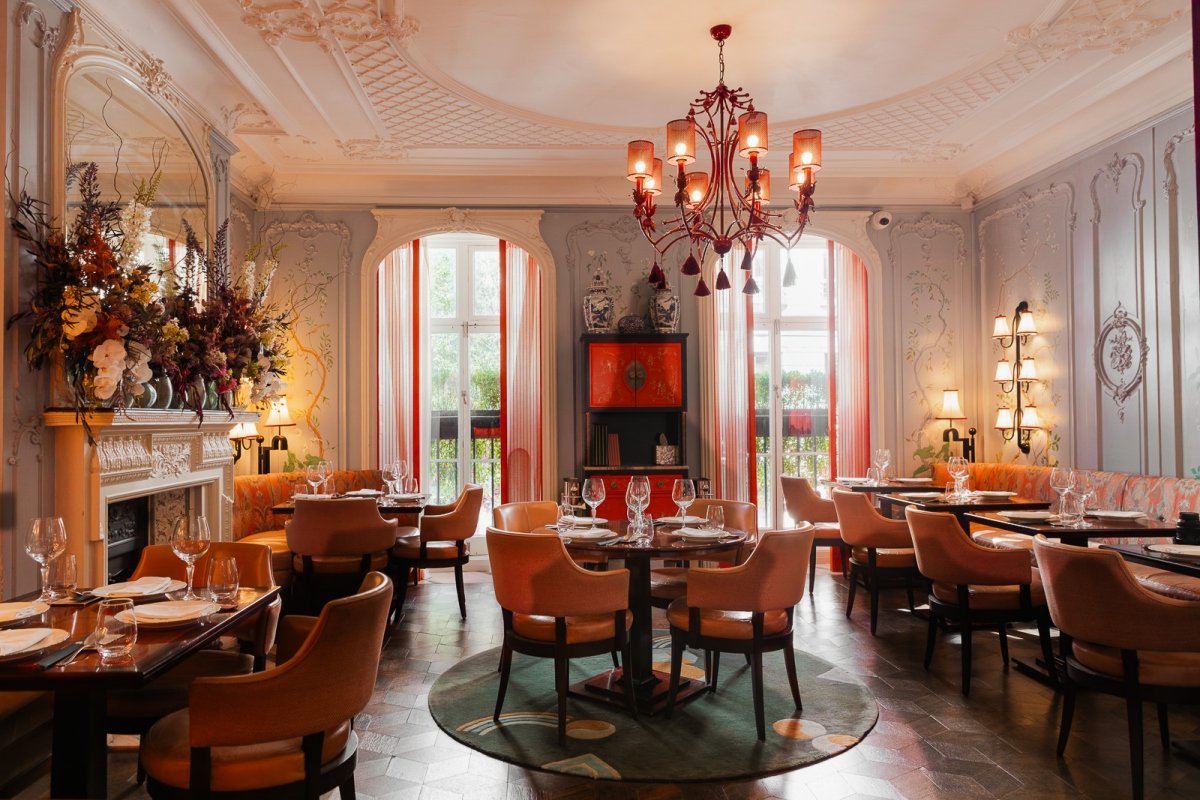
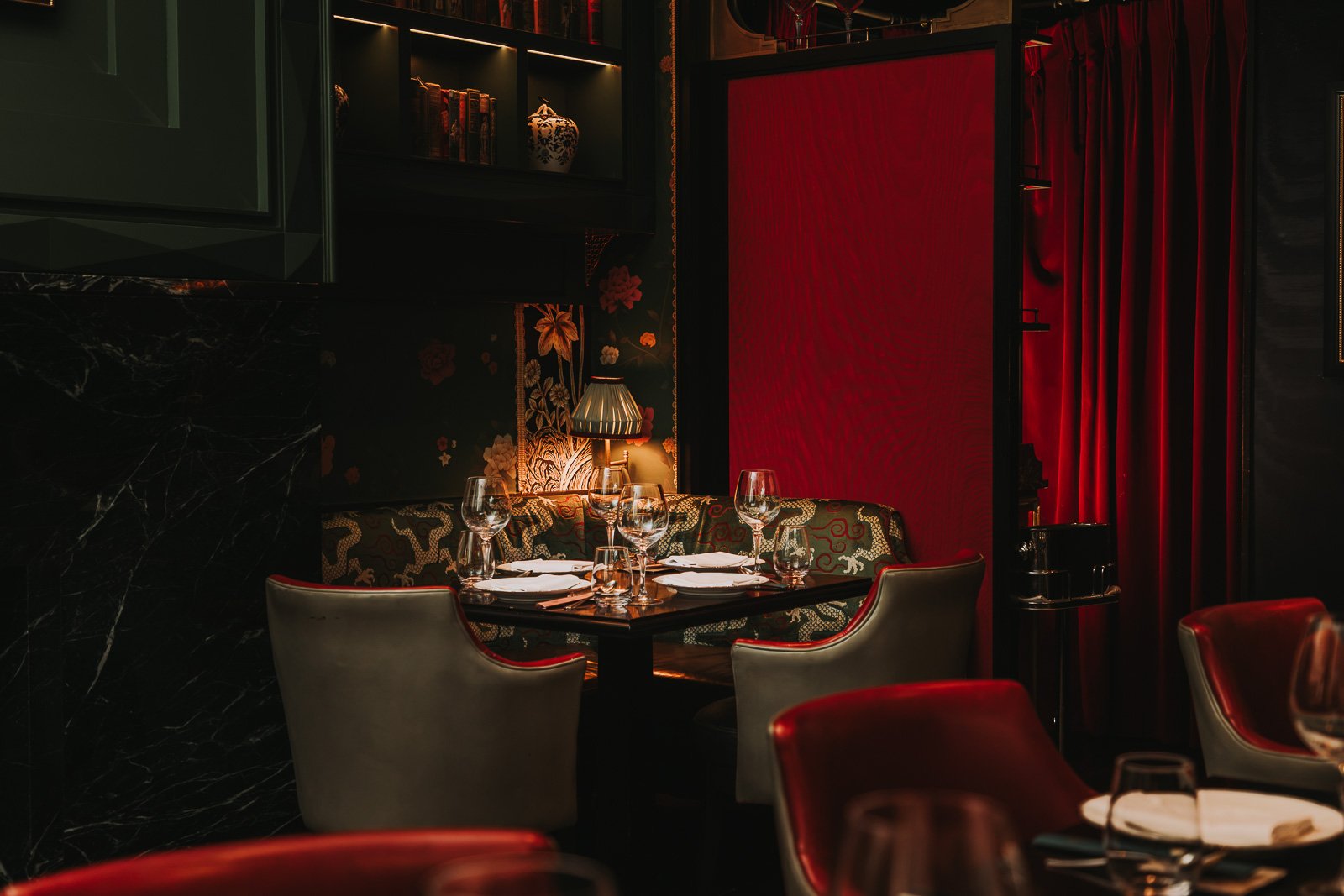
Samyukta Nair: Everything begins around a table, in conversation with my father. A memorable meal, a place we’ve discovered, a space that has caught our imagination. We follow that curiosity and see where it takes us. There is no fixed sequence, though a space often gives me the first creative cue. Its proportions, light and history suggest how a restaurant might feel, while the cuisine gives it character and rhythm. The story emerges as those elements come together. At MiMi Mei Fair, the townhouse invited the intimacy of a private home: rooms with distinct personalities, connected by the presence of MiMi, our imagined hostess. With MiKo, the fire and generosity of Thai cooking suggested a warmer, more spirited atmosphere.
Once that character is clear, it informs every choice: the menu, the materials, the music, the tableware and how someone is welcomed. I want guests to feel a sense of belonging within that world, without needing to know the thinking behind every detail. Through it all, I come back to a simple question: what would make someone want to return? A room can capture your imagination, but a restaurant becomes meaningful through the meals, conversations and occasions people make their own.
The Capitalyst: You were named Restaurateur of the Year at the National Restaurant Awards in 2023, alongside Best Restaurateur at the GQ Food and Drink Awards and Hospitality’s Woman of the Year from Code Hospitality, all within a relatively short window. Does that kind of concentrated industry recognition change how you personally think about your own work, or does the day-to-day reality of running six restaurants across multiple cities make those honors feel disconnected from what you’re actually doing at any given moment?
Samyukta Nair: It would be disingenuous to say those honours don’t mean something. When you’re so immersed in building and running restaurants, you rarely pause to consider the work as a whole. Recognition from people who understand how much happens behind the scenes gives you a moment to do that, and I’m very grateful for it. Coming from a family legacy like mine carries an enormous sense of responsibility. These moments give me confidence that I’m making a contribution of my own, while carrying forward the values I grew up with. Although the award may carry my name, it reflects the work of so many people, including my father and the teams who bring our restaurants to life every day.
Then it’s back to work. The next service has to be good, whether you’ve won an award or not. Guests have expectations, teams need you to show up, and there is always something to get right. The recognition gives me confidence, but the restaurants keep me honest. You have to earn people’s trust every day.
The Capitalyst: LSL Capital has expanded beyond London into Dubai and Doha, taking concepts built around Mayfair’s specific dining culture into entirely different markets and audiences. What actually has to change about a concept like Jamavar or Bombay Bustle when it moves from London to the Gulf, and is there something about the original London version of a restaurant you’ve had to consciously let go of to make it work somewhere else?
Samyukta Nair: You have to arrive with a clear sense of who you are and enough humility to understand the market you’re entering. With Jamavar, the foundations remain the same: the depth of Indian cooking, the quality of the ingredients and the warmth and generosity of our hospitality. But you have to understand how each city dines: when people come in, who they come with, how they order and what makes them feel comfortable. MiMi Mei Fair’s expansion into Dubai brought that into focus too. In London, her world unfolds within an intimate Mayfair townhouse. In Dubai, that same character finds a different expression through the Garden Terrace, the Moon Bar and a setting that opens onto the city. The personality remains, while the experience responds to its surroundings.
What I’ve had to let go of is the assumption that London should always be the reference point. Mayfair shaped our restaurants, but each new location needs the freedom to build its own relationships and become part of its city. We bring what makes Jamavar or MiMi recognisable, then listen to our teams and guests. The aim is for someone to feel the same care in every location, while knowing exactly which city they’re in.
The Capitalyst: You’ve said the hardest part of running a multi-brand hospitality venture is that each concept demands its own voice, identity, and operational strategy, yet you’re the connective thread across all of them personally. As LSL Capital keeps growing, how do you protect your own creative fingerprint across restaurants that are all deliberately meant to feel like separate worlds, rather than the group starting to feel like one brand wearing different costumes?
Samyukta Nair: My creative fingerprint lies in the details I care about: the feeling of entering a room, the lighting, the tableware, the warmth of the welcome. Those considerations follow me into every project, but they find a different expression each time. MiMi should feel like MiMi; Nipotina should feel like Nipotina. I want every restaurant in the LSL Capital portfolio to have enough character for guests to form a relationship with it on its own terms. As we grow, that means being clear about what makes each restaurant special and giving our teams the confidence to carry it forward. I can’t be in every room for every service, so their judgement is essential. My role is to stay close, ask questions and recognise when something no longer feels true to the place. The connection across the group is the care we bring to each restaurant. Guests may never know we’re behind them all, but I hope they feel equally well looked after.
The Capitalyst: With Miko Mei Fair marking your fifth Mayfair restaurant and LSL Capital’s continued expansion into new cities, you’re building what’s increasingly described as a global hospitality group rather than a single family business. Looking at where LSL Capital stands today, what does the next phase of growth actually look like for you and your father, and is there a cuisine, city, or type of dining experience you’re both quietly determined to bring into the portfolio next?
Samyukta Nair: The next chapter is a homecoming. With Makaan in Juhu, Mumbai, we’ve made our first investment in India, alongside my friend Karan Shah. After years of building restaurants abroad, there’s something deeply personal about returning to the neighbourhood where I grew up. Makaan celebrates Gujarati home cooking and the generosity of a Gujarati home, something I knew well from growing up around friends’ family tables. It’s vegetarian, alcohol-free and rooted in the pleasure of an everyday meal shared with people you love.
For my father and I, growth has always begun with a conversation and a belief that there is something worth creating. India opens up new possibilities, but right now I’m excited about watching Makaan find its place in the neighbourhood of Juhu where I spent my childhood years. There is a particular responsibility in coming home: you know the place, the people and how much it means to get it right. My hope is that we build something they feel is theirs.