The Capitalyst: You’ve said Rohet Garh has been your family home since 1622, making you the 15th generation living there, and that your grandparents converted it into one of the country’s first heritage hotels back in 1990, calling it an “experiment.” Growing up inside a home that was simultaneously your family’s private history and a working hotel must have blurred some very normal boundaries. What did it actually feel like as a child to watch your ancestral home turn into a guest destination, and did you understand at the time what your grandparents were risking?
Avijit Singh: My childhood was a very unique one, and I was very blessed to have had the opportunity of growing up in such circumstances. Very few get the chance to do so. So coming from a family which has an illustrious history and has a deep-rooted connection with the land, with the people of the region, and with the building we were living in.
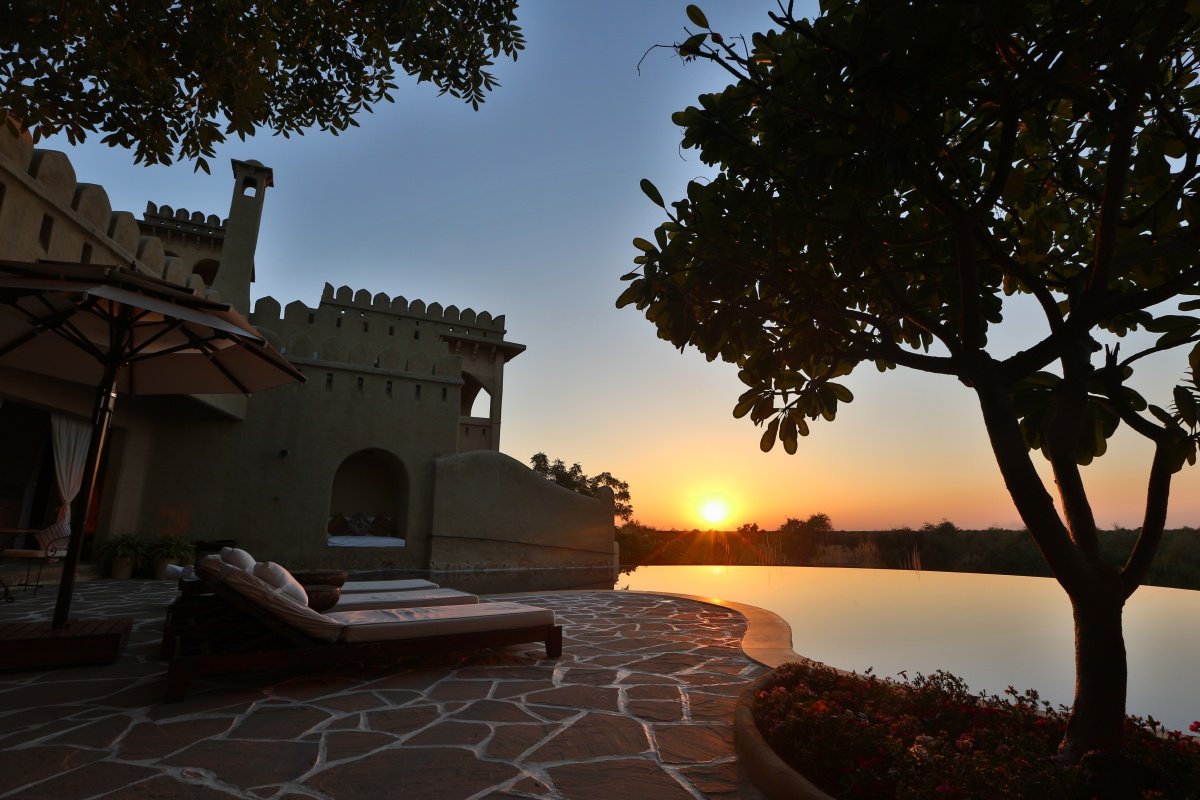
The Rohet Garh Fort had stood strong for over 400 years, and then independence and democracy became a very large house which was growing over time harder and harder to maintain. So the decision of my grandparents and my father together to open our gates and welcome in guests was a very bold one back in the day, still when tourism in India was in its infancy. And it was a great experience because the hotel was born 2 years before I was, and I constantly only saw my home which had Travelers coming through it at all times, and it was very interesting.
I made great friends with people from around the world at a very young age. I got to see the world walking through my gates, and as a child it’s difficult to understand what was being risked. It’s difficult to understand what the consequences of this not working might be. But personally, it was fantastic. I would get goodies from friends who are traveling, repeat guests who are coming from around the world. I would get to make friends of similar age children traveling with their parents and having completely different backgrounds to me. Overall, it was a great grounding experience growing up.
The Capitalyst: You trained at a prestigious hospitality school in Switzerland before returning to run a business built on the exact opposite instinct, intimacy, family history, and a deliberately small footprint rather than the scale and standardization that international hotel education usually teaches. What did you actually have to unlearn from that Swiss training once you came home to run four properties rooted in one family’s specific story?
Avijit Singh: So I was very lucky to be able to study at École Hôtelière de Lausanne in Switzerland and get global exposure working at some of the top hotels of the world as well as some of the biggest hotel companies and seeing all facets of the business, not just the operational, but even from an investment point of view, from a business point of view and many others.
But coming back to India after all of that, it was not so much unlearning of what I had already learned, but I would say adapting. The greatest training in the world, in my opinion, is experience. No classroom can teach you that. But what the classroom does teach you is the ability to absorb experience faster. And that’s what I felt I really got from my education abroad and my chances working, my chance to work in various other organizations before joining my family business was that I was able to learn from my mistakes faster.
I was able to learn from other people’s mistakes and I was able to adapt in a way of speaking, adapting what I had learned. To a certain extent to the ground reality of what it would mean to run a hotel or hotels in India, especially with a specific rooted story like ours.
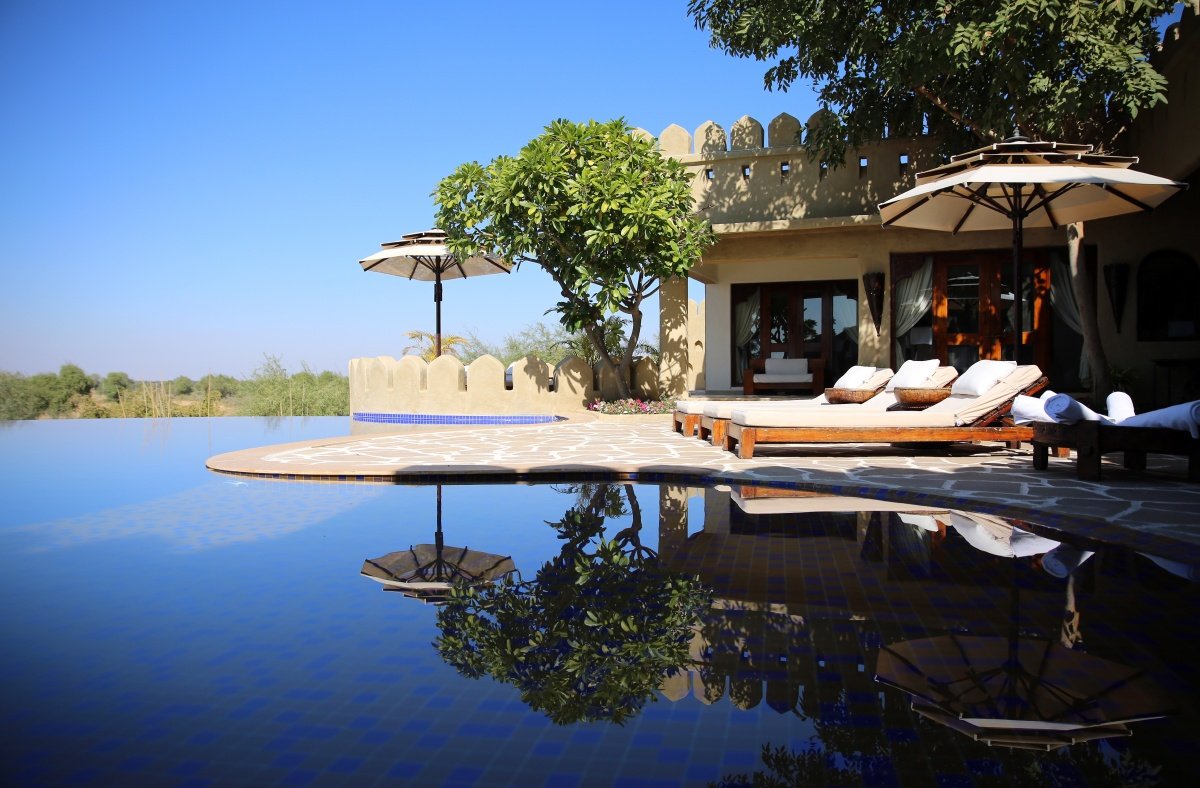
The Capitalyst: Mihir Garh rose entirely from nothing on a sand dune in the Thar Desert, a site your family once used simply as a picnic spot for Rohet Garh’s guests, and it’s now a nine-suite property that’s part of the Relais & Châteaux group. Building a nine-suite luxury hotel in the literal middle of a desert must have involved solving problems no hospitality textbook prepares you for. What was the single hardest logistical problem in building something that remote actually created, and how far into construction were you before you knew it would genuinely work?
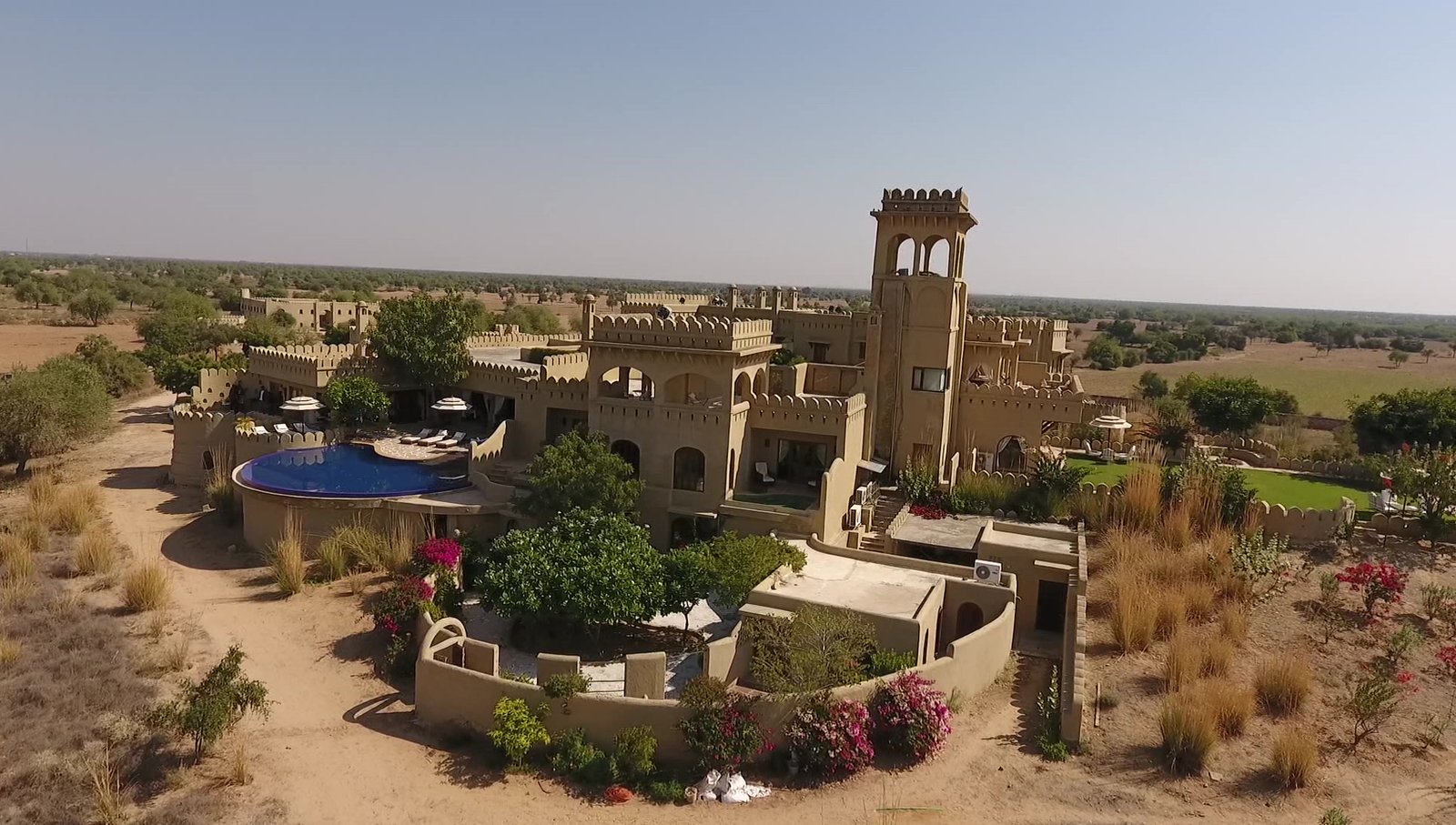
Avijit Singh: It was a part of Relais & Châteaux group, not anymore. So Mihir Garh was a complete leap of faith for my parents. They said themselves, my father says he, they went into this project guided more by intuition rather than logic. Creating Mihir Garh was like a complete labor of love for them. They really just wanted to create something spectacular and figure out how it would work later, and that’s exactly what they did.
Logistical problems- it’s hard to pinpoint a single one. There were many, from taking material to the destination to finding water there, finding electricity there at the time of construction. When finally having built it, to staff it there, because it’s not a location out in the middle of nowhere, especially back when Mahir Garh opened. It was a new concept and people did not want to work at locations so far away. To then finally convincing people to come and stay far away, removed from your popular tourist sites and big cities, and spend time in the countryside. Even more remote than staying in a village like Rohet Garh.
So many levels of challenges, but again, the logic wasn’t really thought out beforehand. And as for the fact that when we realized it would genuinely work, we never had a doubt that it would work because we were convinced of what we were creating from the get-go and we had a very clear vision, we just didn’t know how it would come out in the long-run but with God’s grace it turned out fairly well as it can be seen.
The Capitalyst: Your father, Sidharth Singh, sits on the board of the All India Marwari Horse Society and has been a driving force in bringing the native Marwari breed back from near-extinction, and Rohet Garh and Mihir Garh now share one of India’s leading equestrian programs. When a family passion like your father’s horse conservation work becomes part of the guest experience itself, how do you protect the conservation mission from being flattened into just another luxury amenity on a brochure?
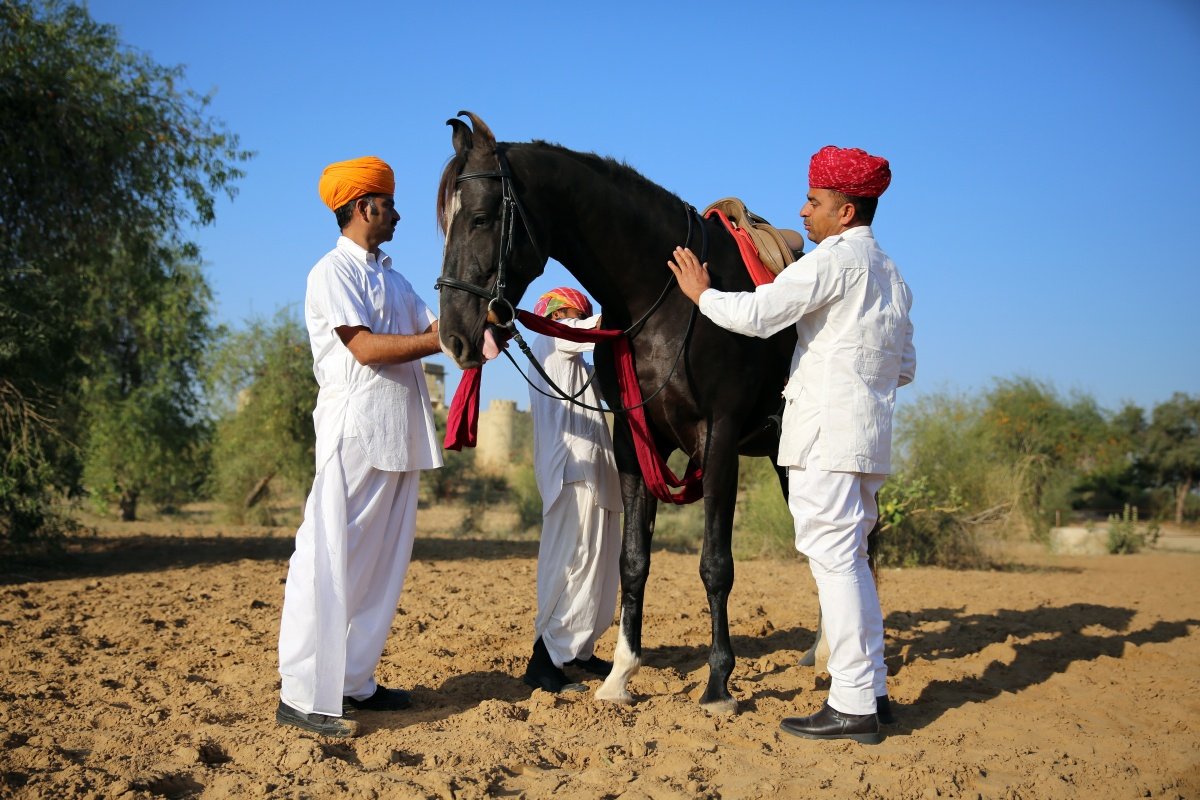
Avijit Singh: So my father’s passion for the equestrian side of things goes far beyond the hospitality aspect. In his own words, and I would quote him, he has the hotels so he can keep the horses and not the horses to be part of the hotel business. They were always his first passion, and at some point in the 1990s, he took the decision unto himself to dedicate our stables to the Marwadi breed and the conservation and kind of reemergence of it as a breed. It is our national treasure in India. Very few countries in the world have a local indigenous breed of their own. And since we do have one, we should revive it and bring it back to its former glory. My father has been working consistently over the last 2 and a half decades as a founding member of the Marwadi Horse Society in Jodhpur, which recognizes and runs a stud book for Marwadi horses.
Across the country, he has been a key part of its conception, its development and growth, and now maintaining its authority over the breed. And from our stables have sprung some of the most famous names in the country today. Most notably, Alishaan was a stallion that was from the Royat stables and who is today single-handedly responsible for all the champion horses that you see in India today.
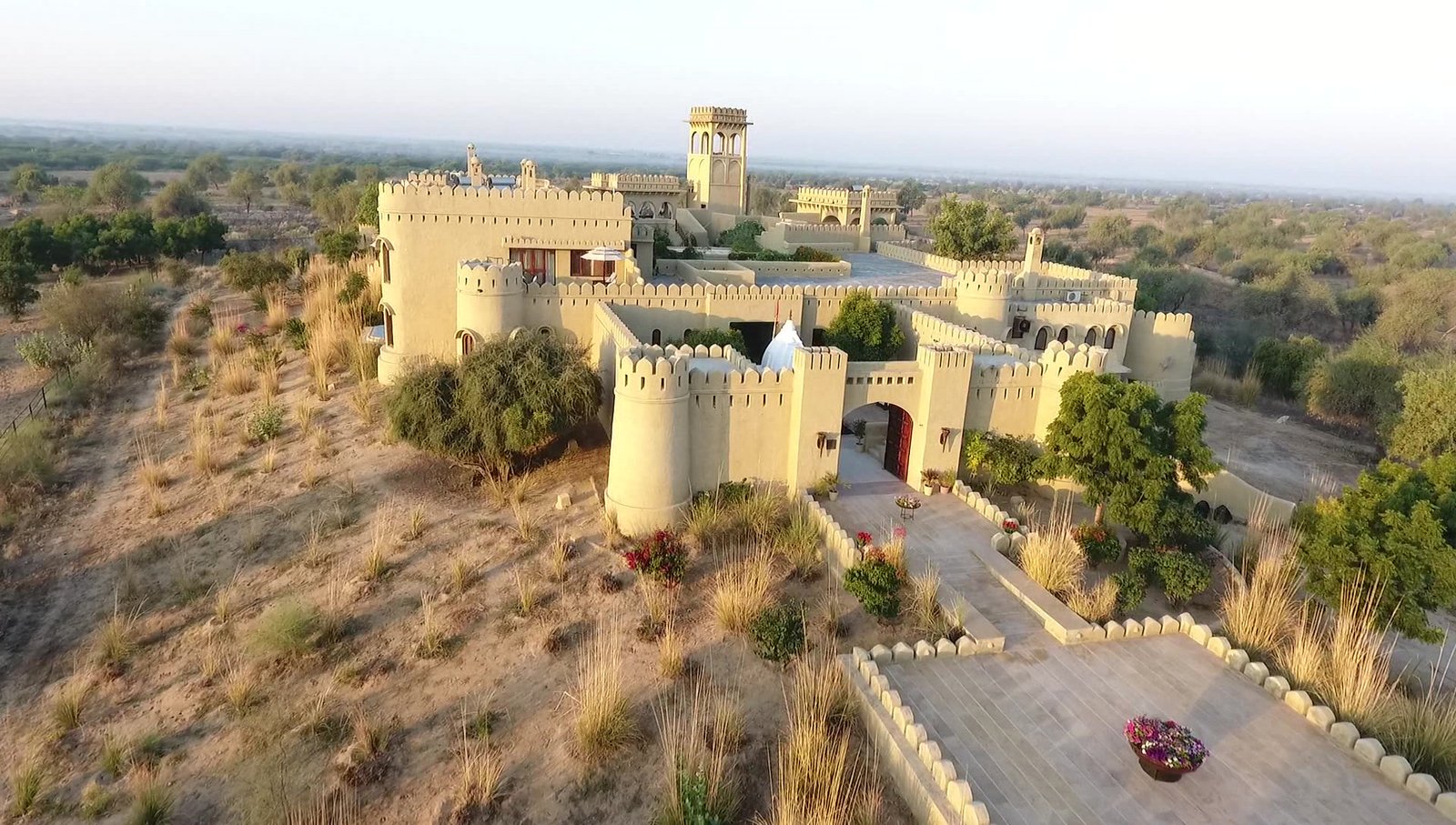
The Capitalyst: The Rohet House, your newest property, opened in Jodhpur’s Ratanada neighbourhood in late 2019, and you’ve described the idea behind it as combining traditional Rajasthan with urban chic, a very different brief from the remote, rustic character of Mihir Garh or the historic weight of Rohet Garh. When you were conceptualizing an urban property after two properties built entirely around remoteness and ancestral history, what did you have to invent from scratch rather than draw from family precedent?
Avijit Singh: Conceptualizing Rohit House was a very unique experience for us because it was our first urban property. And what there we really tried to do is pay homage to the arts of the urban spaces of the state, and not just what you see in forts and palaces or what you see in rural spaces, which we’ve already done in Mehrgarh and Rohitgarh in the past. Royate House was all about the arts of the city and how finer details make smaller spaces more beautiful.
The Capitalyst: You’ve described House of Rohet’s core purpose as helping travellers “scratch beneath the surface” into Western Rajasthan, positioning the group deliberately against standard city five-star hotels. In an industry where scale and consistency usually drive profitability, staying small and hyper-local across four properties is a genuine commercial bet. What has that bet cost you in growth compared to competitors who chose to scale faster, and would you make the same trade-off again today?
Avijit Singh: So what we mean when we say scratch beneath the surface is to make travelers out of tourists so that they can experience the region, its culture, its people, its traditions, its customs, and interact firsthand with the communities and the people of this area in an unadulterated way. And for this, we have to remain rooted. Now, of course, this is starkly different to a lot of other schools of thought which are driven more by scalability and which are driven more by their balance sheets at the end of the year.
Whereas for us, it has always been more of a way of life. How to create economic sense for ourselves from this way of life that we follow, as opposed to having the economics drive the business ideals.
The Capitalyst: Your mother, Rashmi Singh, handles interior design and oversees menus and public spaces, your father brings the equestrian and business vision, and you now run the group as managing director – family expertise divided across three very distinct disciplines. When family members who each hold real creative or operational authority disagree on a decision for the business, how does that actually get resolved, and has there been a disagreement between the three of you that changed the direction of a property?
Avijit Singh: So the dynamic in our family is quite like any other. There is a lot of deliberation, debate, and heated discussion whenever there is a disagreement. And like any other family, we, over the course of time, based on who makes better arguments, come to a unanimous decision.
Of course, my parents, being the more experienced in the field than I am, hold greater sway, but I personally also have a great deal of say in what goes and how decisions are made.
The Capitalyst: Family legend holds that the original Rohet estate was granted to your ancestor by the Maharaja of Jodhpur in 1622 as a reward for battlefield bravery. Stories like that become part of how guests experience the property today, retold at dinner, woven into the brand itself. How do you personally think about the responsibility of turning centuries of real family history into something guests consume as part of a luxury stay, without it starting to feel like performance?
Avijit Singh: The family legacy and history that I have been blessed to be born into is nothing short of what I just said, a blessing. And it’s an integral part to all that we do. We are merely custodians of this legacy and want to preserve it to pass it on to future generations. and do the best we can because that is what we owe our ancestors. And as far as it not turning into a performative experience for our guests, firstly, it is not something solely for the guests to experience. It is something that we live by, and however they experience it is the way we are living it.
The Capitalyst: House of Rohet now operates four distinct properties, Rohet Garh, Mihir Garh, The Rohet House, and the Rohet Wilderness Camp, each with a genuinely different character and purpose within the group. When you’re deciding where the group’s next investment or creative energy should go, how do you weigh strengthening an existing property against the pull of building something entirely new, the way your parents did with Mihir Garh?
Avijit Singh: So when the decision comes to expand further or strengthen what we already have, both are very important. We’re very cautious that we don’t want to expand inventories and kind of change the nature of our business. We want to stick to what we do. And if all is running well, we will expand to something entirely new rather than expanding the inventory at the existing ones.
The Capitalyst: Your family has spent over three decades turning a single ancestral home into a small, distinctive luxury hospitality group, entirely on their own terms rather than following the standard hotel-industry playbook. As the generation now actively running House of Rohet, what does the next chapter of the group actually look like under your direction, and is there a project or property you’re quietly hoping to build that hasn’t been announced yet?
Avijit Singh: It is definitely an honor to be part of such a hospitality legacy that I have grown up in. And I have grown up seeing my elders, my parents, and my grandparents before that kind of really threw the industry playbook out the window and did what they loved rather than doing what works and making sure that what they loved eventually worked. And I feel that was a brilliant way of approaching things, as in the long run, it did translate to success and it was groundbreaking. And I will not reveal any projects here, what is coming in the future, but there are some things in the pipeline, and we are definitely working towards some new groundbreaking and innovative ideas in the hospitality sector.