The Capitalyst: Indian Accent has held the No. 1 spot in India, a place on Asia’s 50 Best list for a decade running, recognition from Time and the World’s 50 Best list, and the restaurant marked seventeen years in 2026 with an all-new wine-paired tasting menu you curated. Building on an already decorated legacy is a very different challenge from building one from nothing. What’s actually harder, protecting what already works, or finding room within it to prove the kitchen is still evolving?
Shantanu Mehrotra: I think both are difficult, but in very different ways. When you build something from scratch, you are trying to convince people to believe in an idea. When you inherit something successful, you have the opposite challenge—you have to respect what people already believe in and then build up on it, if you don’t know where you’re coming from you will never know where you are going .
I believe protecting what works doesn’t mean freezing it in time. The restaurant has always been about evolution. Its identity comes from looking at Indian food with curiosity. If you look at the first menu you will notice how we have evolved and how far we have come and yes with new things coming everyday I feel its an ever evolving process.
The most important thing is to protect the principles rather than simply protecting individual dishes or techniques. We feel its deeply rooted indian food but with a diffent accent. There has to be room for new ingredients, new techniques and new ideas.The new wine-paired tasting menu was an opportunity to look at the restaurant with fresh eyes. It wasn’t about changing things simply for the sake of change. It was about asking what Indian Accent can say today.
The Capitalyst: You’ve spoken about wanting to break the myth that Indian food is only about chillies and oil floating on top, and about only adding heat when a dish specifically calls for it. That’s a deliberate correction to how Indian food is often perceived internationally. Where do you think that misconception actually comes from, and is there a dish on your current menu you built specifically to dismantle it?
Shantanu Mehrotra: I think the misconception comes partly from the way Indian food has been represented outside India. Spices are often reduced to heat, and richness is sometimes mistaken for authenticity. But Indian cuisine is far more nuanced than that. Spice is about aroma, flavour, texture and complexity—not simply how much chilli you can tolerate and I for one always ask my patrons who ask for “zero spice food” that are you looking to avoid the heat or the spices that give aroma and flavours?
That philosophy is very important to us at Indian Accent. We don’t add heat just to announce that something is Indian. If a dish calls for chilli, we use it. If it doesn’t, we don’t feel the need to force it in.I think that restraint can be quite revealing for diners who have a particular expectation of Indian food. You begin to taste the ingredient itself and notice the balance between spices rather than simply experiencing their intensity.
For me, showing that side of Indian cuisine is not about correcting people. It is about giving them a broader understanding of what Indian food can be. I feel there are many dishes that break the mould of what is defined as “indian food” I think he meetha achaar ribs is the prime example when ever we think about pork it was usually the pandi curry or a pork curry or the most famous vindaloo, us tossing it in seew and sour mango chunda kind of broke that shell and the rules that we as custodians of the cuisine were supposed to follow.
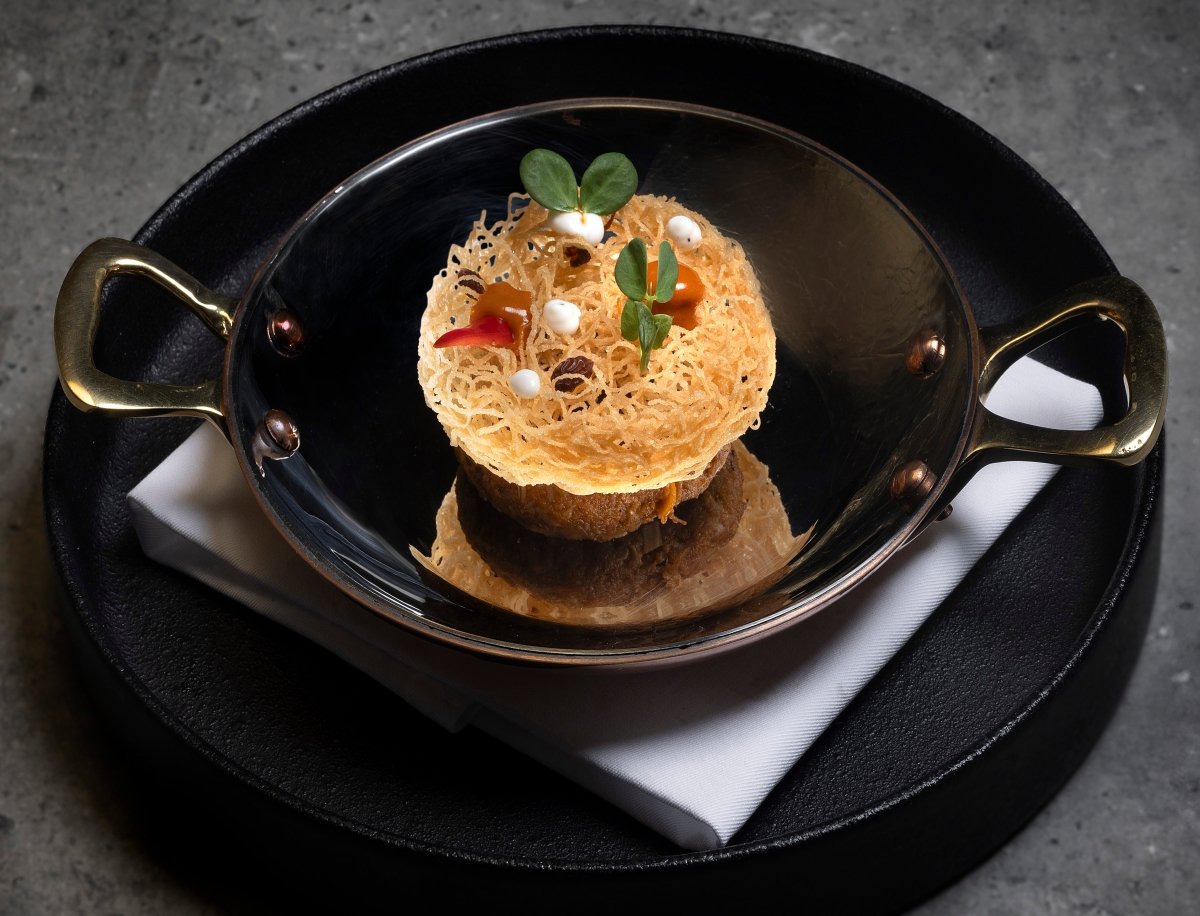
The Capitalyst: The blue cheese naan, which replaces traditional paneer in a kulcha with blue cheese, is one of the restaurant’s most enduring signatures and predates your time as the kitchen’s most senior voice. When you inherit a dish that’s become almost synonymous with the restaurant’s identity, do you feel free to eventually retire or reinvent it, or does a dish like that become permanently untouchable once it’s entered the restaurant’s mythology?
Shantanu Mehrotra: A dish like the blue cheese naan becomes part of a restaurant’s mythology because guests create their own memories around it. It is no longer simply a recipe; it becomes something people associate with their experience of Indian Accent. That deserves respect.
But I don’t believe any dish should become completely untouchable. The restaurant has to remain alive, and that means we should always be willing to question everything—even the things that are successful. At the same time, reinventing a signature dish simply for the sake of change doesn’t make sense either. There has to be a reason. If a dish continues to represent something important about the restaurant and guests still connect deeply with it. The blue cheese naan is interesting because it represents the kind of thinking that became central to Indian Accent: taking something familiar and giving it an unexpected dimension without losing its sense of identity.
I feel when the restaurant opened doors we had blue cheese naan on the menu and people would often walk upto us and say “chef I think there is something wrong with the cheese” people were too kind and 17 years ago there was very little awareness about blue cheese, but we still kept it on the menu and today its not only woven into the fabric of the experience that we want to deliver but also it has stood the test of time for us and sets the tone right for the meal to follow. There might come a time when we would change it and sometimes the best decision is simply to let a great dish remain great.
The Capitalyst: You’ve said every dish at Indian Accent needs a story behind it before it earns a place on the menu, not just a flavor combination that happens to work. Walk me through what happens when a dish tastes genuinely excellent in the kitchen but nobody can actually articulate its story. Does it ever make it to the table anyway, or is the story requirement a real veto power in your process?
Shantanu Mehrotra: For me, the story is not an intellectual exercise that we add to a dish after the cooking is finished. The story should be part of the reason the dish exists in the first place. There have been dishes that tasted very good during development but still didn’t feel complete. When that happens, I ask the team: “Why are we making this?” If the only answer is that the flavours work well together, that isn’t always enough for Indian Accent.
So yes, the story requirement can absolutely be a veto. If we cannot articulate why a dish belongs on our menu, I would rather take it back to the development stage than put it in front of a guest simply because it tastes good. The story helps people connect to the dish and the food that they are eating and that in turn enhances the experience of the diner; everything that we do has a reason behind it and what matters is that the connection feels genuine.
Taste gets a dish noticed. A story gives people a reason to remember it.
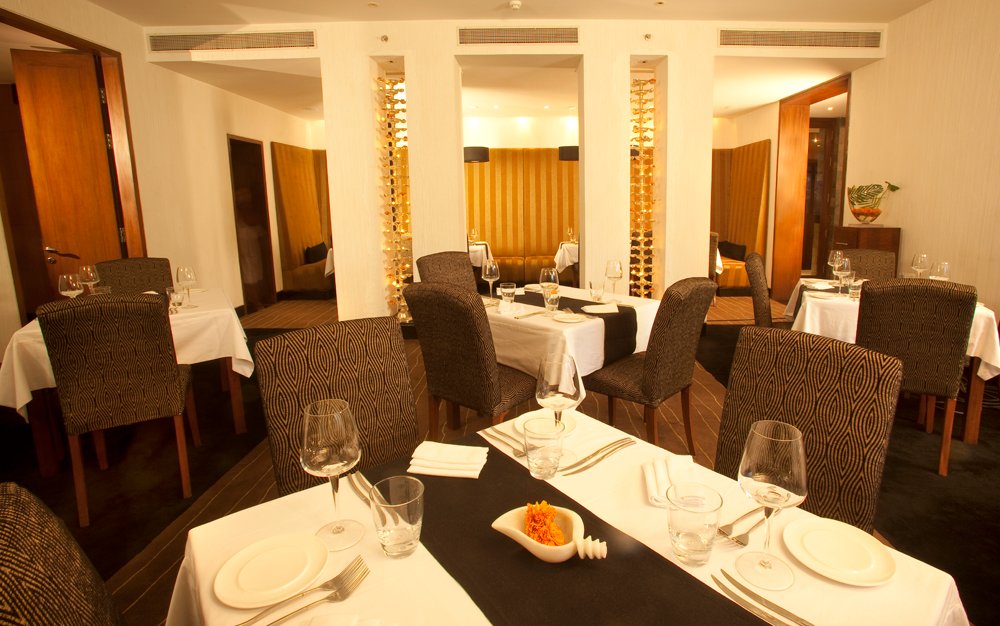
The Capitalyst: Indian Accent now operates in Delhi, New York, and Mumbai, each led by its own chef, Raveesh Kapoor in New York and Rijul Gulati in Mumbai, while you lead Delhi and, since Manish’s departure, effectively anchor the group’s culinary identity. How much of your role now is about maintaining a shared culinary language across three different chefs and three different cities, versus staying focused purely on your own kitchen?
Shantanu Mehrotra: As Indian Accent has grown across Delhi, New York and Mumbai, my role has naturally become broader than just what happens inside my own kitchen. But I don’t think maintaining a shared identity means making three restaurants cook exactly the same food.
Each city has its own personality, guests, ingredients and cultural context. That should be celebrated. What connects the restaurants is the underlying philosophy, the way we approach Indian cuisine, the importance of balance, the relationship between familiarity and surprise, and the level of detail we expect from every plate.
For me, the success of the group is not when someone visits all three restaurants and feels they have eaten the same meal three times. It is when they recognise the spirit of Indian Accent in each city while experiencing something that could only have come from that particular kitchen.
The Capitalyst: You’ve spoken about the freedom to experiment at Indian Accent, that there’s no rigid structure demanding a dish look a certain way as long as it stays true to the restaurant’s principles. What’s the furthest you’ve ever pushed a dish before you or your team pulled it back for straying too far from what the restaurant is actually supposed to be?
Shantanu Mehrotra: Experimentation is important because without it, a restaurant eventually stops moving. But there is always a point where experimentation becomes more about the chef than the food.We have certainly developed dishes that were interesting, technically exciting or even delicious, but at some point we realised we had moved too far away from what we wanted Indian Accent to communicate.
For example we worked and toyed around the idea of making a biryani that tastes like one but looked completely different but the problem is that it was not hitting the checkboxes for the story and the technique so we eventually had to drop that idea. We are comfortable surprising guests, but we don’t want to confuse them simply for the sake of being clever.
The team plays an important role here because the kitchen needs to be able to challenge an idea. Sometimes a dish that I am excited about needs someone else to say, “Chef, this isn’t working.” That is healthy. The boundaries at Indian Accent are therefore not really about appearance or technique. They are about relevance. We can push a dish very far, but it still has to feel honest to the restaurant and to the food we are trying to represent.
The Capitalyst: You’ve publicly discussed the importance of female chefs and representation in professional kitchens, a conversation still evolving across fine dining globally. What does that conversation actually look like inside your own kitchen day to day, and is there something specific you’ve changed structurally, in hiring, promotion, or kitchen culture, rather than just in sentiment?
Shantanu Mehrotra: For me, representation has to go beyond saying that we support female chefs. It has to be visible in the everyday culture of the kitchen. A professional kitchen should be a place where people are judged on their discipline, skill, attitude and ability to work with a team—not on gender. That sounds obvious, but creating that environment requires consistency.
I believe strongly in giving people opportunities based on ability and potential. That means making sure women in the kitchen have access to the same training, responsibilities and opportunities to lead as their male colleagues. It also means creating an environment where people can speak up, ask questions and make mistakes without feeling that they don’t belong. I don’t think representation should be treated as a separate initiative sitting outside the kitchen. It should be part of how the kitchen operates.
Ultimately, I want young chefs—women especially, but really everyone—to look at a professional kitchen and see a place where they can build a long-term career. Talent should never feel that it has to overcome an unnecessary barrier before it is allowed to grow.