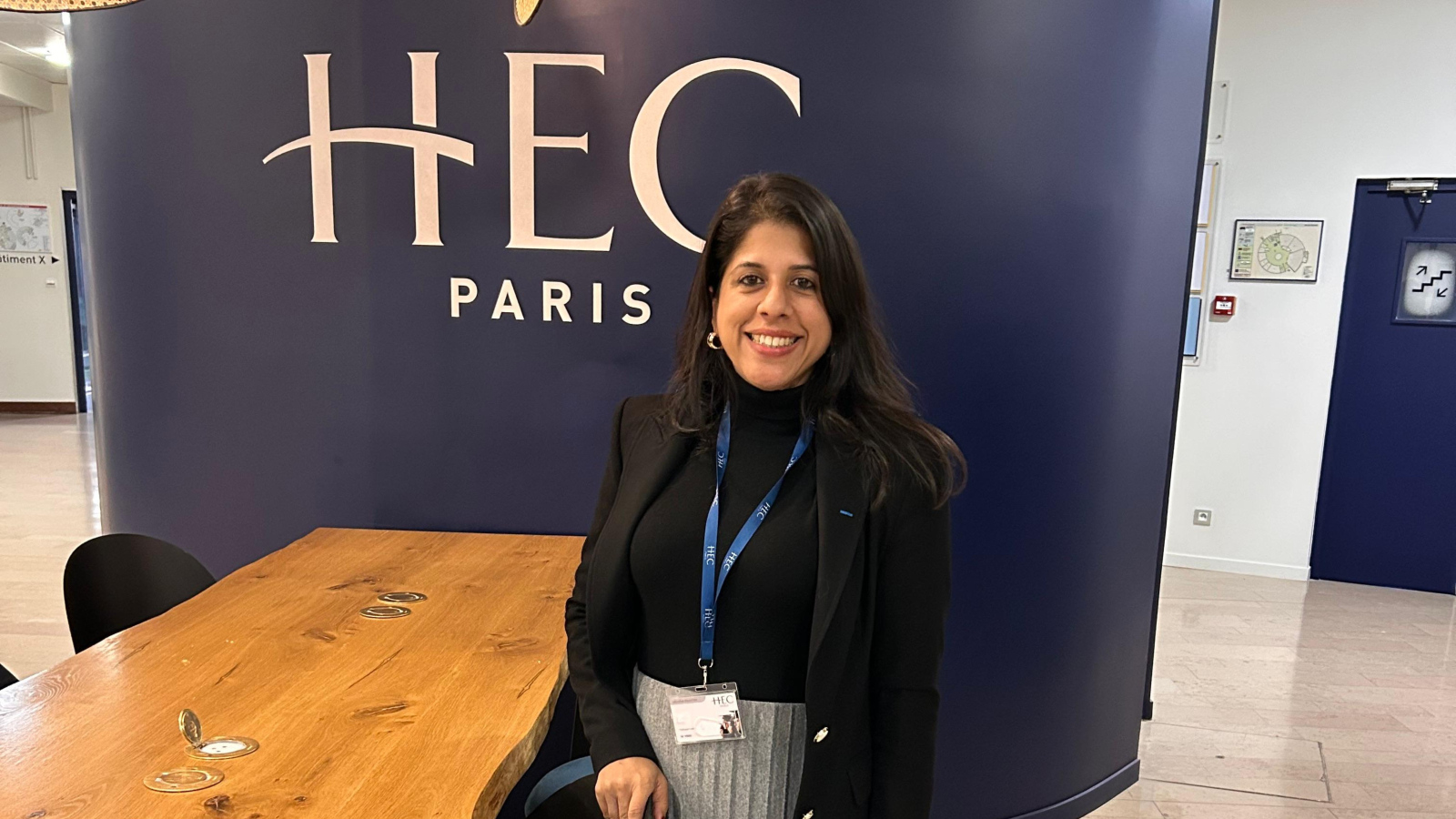
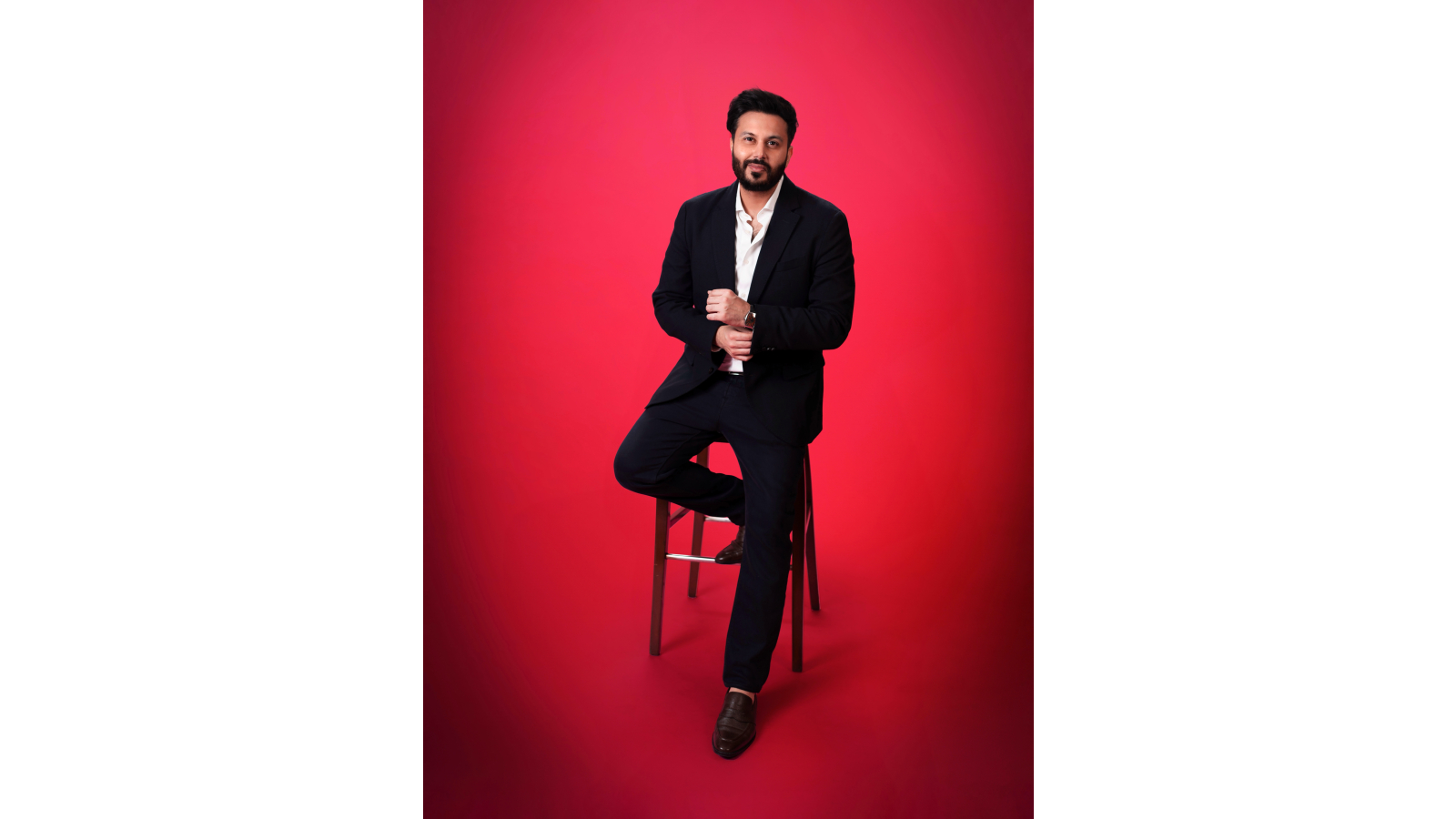
The Capitalyst: You founded Été in Toronto in 2018, in the middle of your pastry training, and then made the decision in 2020 to bring the entire brand back to Tehran rather than build your career in Canada where you’d started it. What made you choose to return at that specific moment, and did you ever seriously consider staying and building Été somewhere the pastry industry infrastructure was already established?
Ava Asadi: I was actually looking at locations in Canada and seriously considering opening Été there when COVID broke out. I left Canada in the middle of the outbreak, and that became a turning point for me.
I decided to come back to Iran and use that time to educate myself, develop my skills, and really see what was happening in the pastry industry here. What I found was very different from what I had expected. The industry in Iran had grown tremendously and, in many ways, felt much more developed and professional than what I had experienced in Canada.
That changed my perspective. I realized I didn’t want to stay in Canada simply because I had started my training there. I wanted to build Été somewhere where I felt there was more energy, creativity, and room to grow.
So I decided to establish the brand in Iran first, build my network and my experience here, and create a strong foundation before thinking about expanding internationally. It wasn’t really about giving up on Canada. It was about realizing that Iran was the right place for Été to grow and, honestly, the right place for me at that point in my life.
The Capitalyst: Starting a French-technique pâtisserie in Tehran means importing not just recipes but an entire visual and operational language, ingredients, equipment, training standards, that the local supply chain wasn’t necessarily built to support. What was the hardest logistical problem you had to solve in those early days that had nothing to do with flavor or design, just getting the business to function at all?
Ava Asadi: Actually, I think there’s a misconception in the question. People often assume that because Été was bringing French techniques to Tehran, the infrastructure and supply chain must have been a major obstacle. That really wasn’t my experience.
Iran has a very developed pastry industry, and there’s a long cultural history behind it. We have thousands of years of baking and confectionery traditions, so there was already a strong foundation to build on. Iran is also geographically and historically much closer to Europe than people outside the region might assume, and because of the historical and geopolitical relationship with Europe, I was able to access European techniques, knowledge, and products quite easily.
In fact, my learning process was much faster and easier once I was in Iran. The supply chain was quite straightforward from the beginning, and I didn’t have major difficulties sourcing what I needed to run the business.
So, honestly, the hardest part wasn’t getting the business to function logistically. It was building Été into something that felt genuinely like us—taking French technique and combining it with Iranian culture, ingredients, and the way we see pastry.
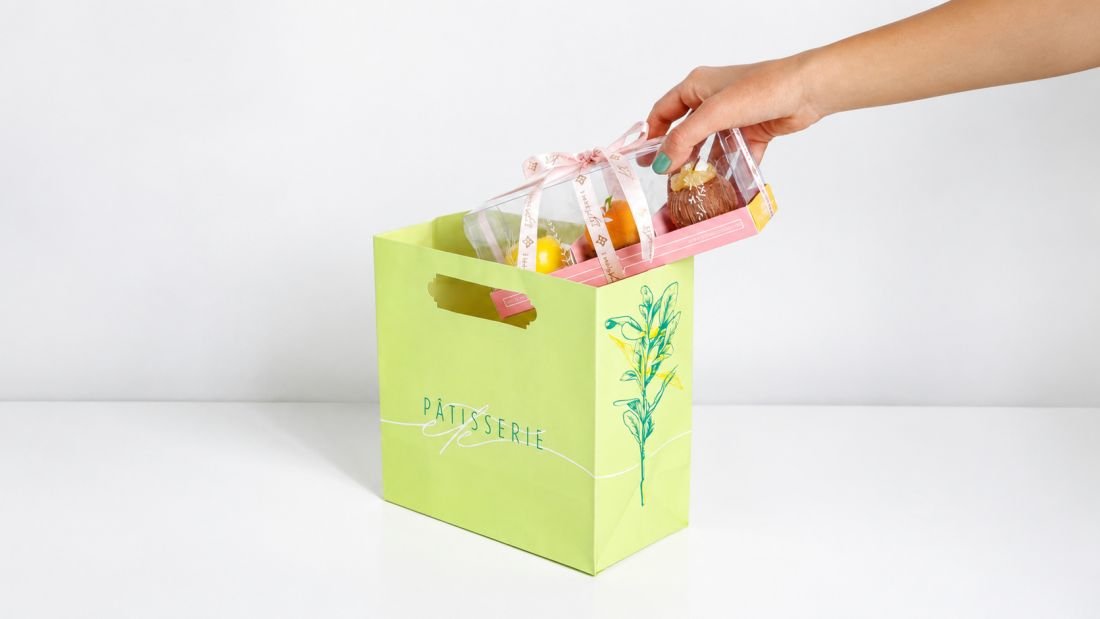
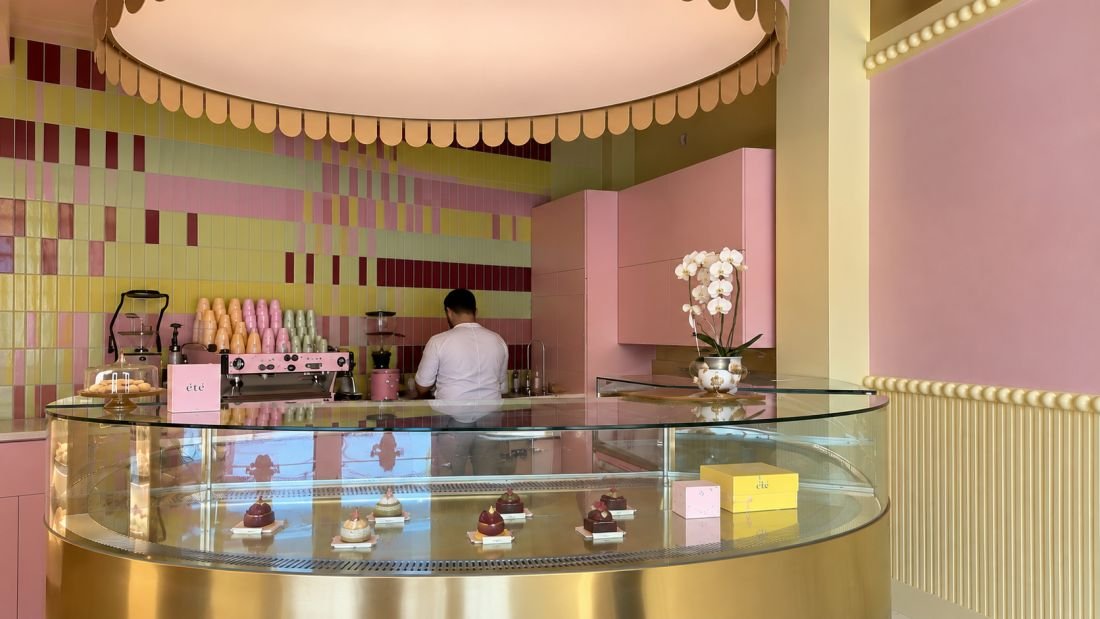
The Capitalyst: Eté’s identity rests on a very specific color language: green for pistachio, yellow for saffron, pink for rose. That’s a bold choice, building a brand around a fixed palette rather than letting it shift project to project. Was that decision there from the very beginning, or did it emerge later once you understood what actually made Été recognizable to people?
Ava Asadi: The color language was there in spirit from the beginning, but the concept itself evolved quite a lot.
When I first started Été, the idea was to build a Persian pastry shop with French influence to take Persian pastry, which has incredible flavors and a very deep history, and bring it into a more contemporary, French-inspired design language. Persian pastry has never really been pushed toward those more elaborate, beautiful, time-consuming designs in the way French pâtisserie has, and that was something I wanted to explore.
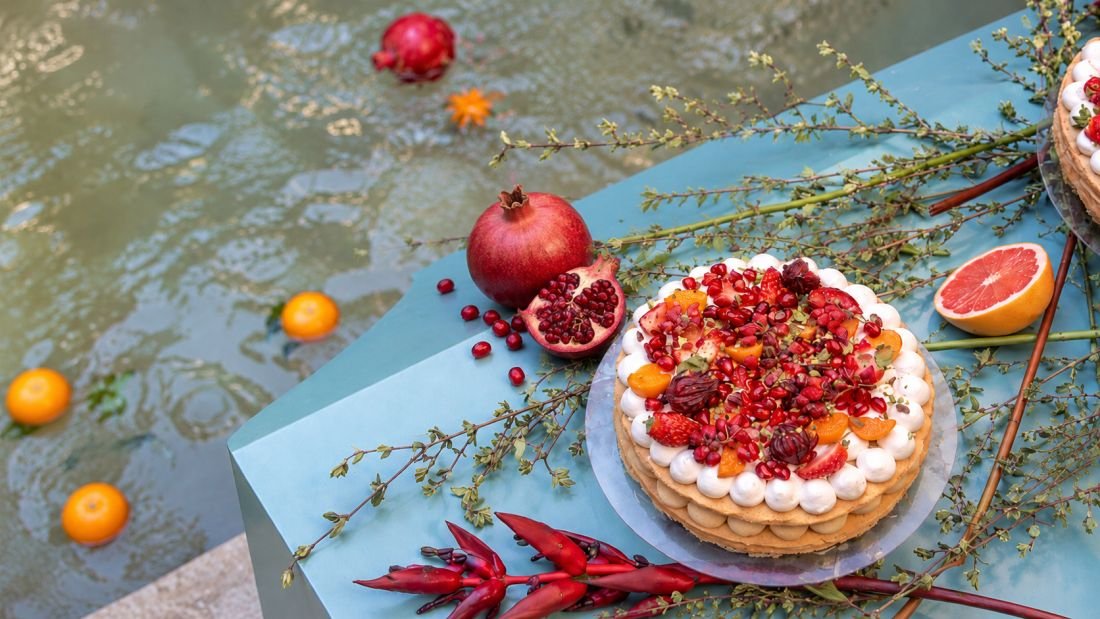
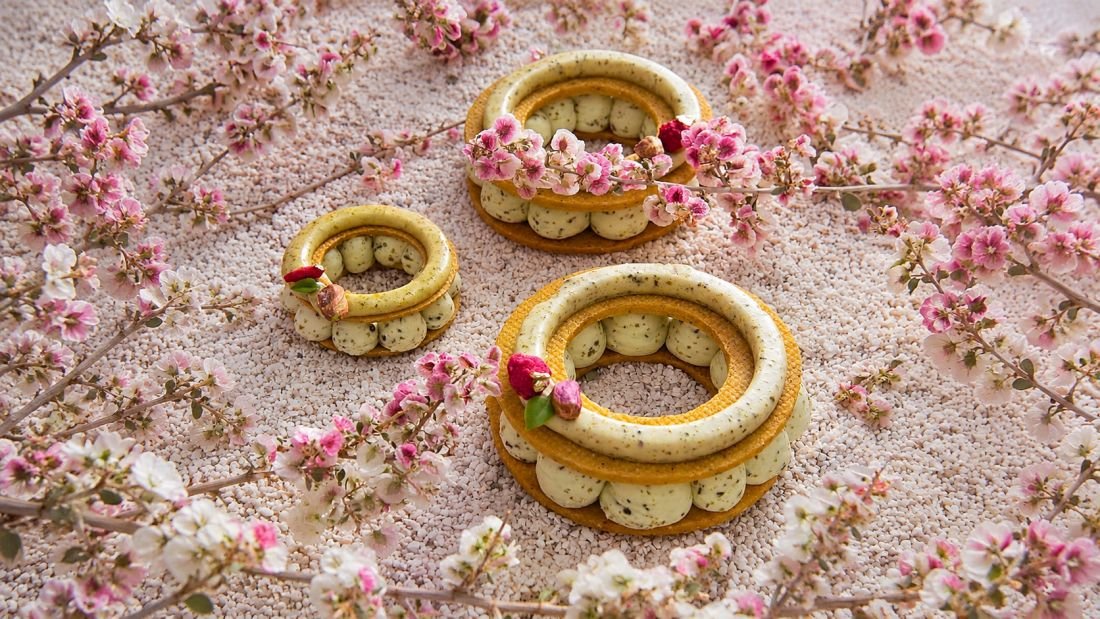
After I moved back to Iran, though, the whole concept shifted. Été became more of a French pâtisserie built around Iranian flavors. And once that became the idea, the colors naturally started to make sense: pistachio green, saffron yellow, and rose pink were already so deeply connected to the flavors and ingredients I wanted Été to represent.
The burgundy came later. I wanted another color that felt unmistakably Persian, and it reminded me of Persian carpets and the richness of our traditional visual culture.
I’ve always been very patriotic, and especially when I was younger, I couldn’t imagine building something without showing where I came from. I felt that Persian culture had so much richness and beauty that people simply didn’t see enough of. I wanted Été to be a way of showing that side of Iran, not in a traditional or nostalgic way, but by putting it into something contemporary and making people look at it differently.
The Capitalyst: You’ve described your work as being about far more than dessert, spanning food, art, design, and hospitality, and your collaborations bring together painters, florists, and architects around a single pastry concept. As a business owner, how do you protect the commercial core of a pâtisserie, the daily cakes and orders that actually pay the bills, while also investing time and resources into installations and artistic collaborations that may not directly generate revenue?
Ava Asadi: I don’t really see them as two separate things. Of course, the everyday cakes, pastries, and orders are the commercial core of the business, and that has to be protected. A business can’t survive on beautiful ideas alone.
But for me, the artistic side of Été is also part of the business. It’s what gives the brand its identity and makes people remember it. If I only focused on selling pastries every day, Été could easily become just another pâtisserie. The collaborations with artists, florists, architects, and designers are how I keep pushing the brand forward and creating something people haven’t seen before.
That doesn’t mean I invest blindly. I have to be very conscious of what the business can afford, and there are periods when the focus has to be completely on operations and sales. But I also believe that if you stop investing in creativity because it doesn’t have an immediate return, eventually the brand loses what made it special in the first place.
For me, the goal is to make the commercial side and the creative side feed each other. The daily business gives us the foundation to experiment, and the creative work gives people a reason to care about Été beyond the pastry itself.
The Capitalyst: Running a contemporary pâtisserie as a woman in Tehran carries a different weight than running one in Toronto, from how you’re perceived by suppliers and staff to how customers relate to a female-led, design-forward brand in that market. What has been the most persistent assumption you’ve had to work against, whether from within the industry or from customers themselves, simply because of who’s running the business?
Ava Asadi: Honestly, being a woman in this industry has its upsides too. I’ve actually found that many of my suppliers are incredibly supportive. They often go out of their way to help, and I’ve built really good relationships with them.
With customers, I think there is also an awareness of the weight that comes with being a woman in Iran. There are pressures that have nothing to do with running a business, and people see that. Thankfully, Été is quite niche, and a lot of the people who connect with the brand are progressive and open-minded, so I don’t feel like I’m constantly fighting against assumptions from my customers.
The harder part has always been the structures around the business. Dealing with the government can be difficult, and there are also moments where I feel a different kind of resistance from male competitors or people within the industry.
But I don’t want being a woman to become the story of Été. It is a reality of running the business, and sometimes it makes things harder, but I’ve also learned how to use the support I do have and keep moving forward. At the end of the day, I want the work to speak louder than the fact that I’m a woman running it.
The Capitalyst: Your miniature pastry collection reimagined full-size desserts in smaller form specifically for gifting and shared experiences, which is as much a business model decision as a creative one, it changes price points, portion costs, and how customers buy. What did you actually learn about your customers’ buying habits once that collection launched that you hadn’t fully understood from your original full-size offerings?
Ava Asadi: I actually noticed the gap in the market before we launched the collection. People were constantly telling us that they wanted something smaller because they didn’t want to buy a full-size dessert, eat a little of it, and have the rest go to waste.
So initially, the idea was really about reducing waste and giving people more choice. It also allowed customers to try different pastries before committing to a full-size one. I realized that people didn’t necessarily want less dessert. They wanted more flexibility in how they experienced it.
Over time, and with more experience, the collection naturally evolved. We started seeing that the same idea worked incredibly well for events, where people want to taste several things, share, and have variety rather than committing to one large dessert.
That eventually became a huge part of our business, especially weddings and events. So what started as a response to a very simple customer need—avoiding waste—turned into a completely different business opportunity that we hadn’t initially anticipated.

The Capitalyst: You’ve worked with architect Arin Hakimi, floral artist Azalee, and chef Saghar Khazeni on projects that treat pastry as one material among several in a larger installation. Bringing outside creative disciplines into a food business means giving up some control over how your product is used or interpreted. Has a collaborator ever pushed Été’s pastries in a direction you initially resisted, and did that disagreement end up making the final work better?
Ava Asadi: Honestly, I’ve never for a second doubted the people I’ve chosen to work with. I’m very selective about who I collaborate with. Before working with someone, I usually follow their work and analyze it for a long time. By the time we actually start a project, I already have a pretty good understanding of their taste, and they understand mine.
I’ve also worked with Raha Rohbari on the interiors of my stores, and that was very much the same process. I explain very clearly what Été is about, what I want it to feel like, and what I don’t want it to become. After that, I trust the person I’ve chosen.
I think that’s why I’ve never really had a situation where I felt I had to fight someone else’s creative direction. They take the identity of Été and interpret it through their own discipline, rather than trying to change what Été is.
And that’s actually what I want from a collaboration. I don’t need to control every detail. I need to know that I’ve chosen the right person, given them a clear understanding of the brand, and then trusted their expertise. So far, that approach has always made me very happy with the final result.
The Capitalyst: Building Été in Tehran means operating in an economic environment where imported ingredients, currency fluctuations, and international payment restrictions can complicate even routine parts of running a pastry business. Without getting into specifics you’d rather not share publicly, how has operating under those conditions shaped the way you plan, price, or source for the business compared to how you might if you’d stayed in Toronto?
Ava Asadi: That has definitely been the hardest part of running my business in Iran, by far. The biggest challenge is the unpredictability. Prices can change so quickly that sometimes it doesn’t even make sense to print a menu with fixed prices. We can’t realistically give a price for an order that’s going to happen several months from now, and even within a month, our costs can change significantly.
Salaries are another major factor. This year alone, they increased by around 100 percent, which forced us to completely reorganize parts of the business and rethink our pricing and planning.
It has made me much more flexible as a business owner. I have to constantly reassess costs, sourcing, pricing, and what makes sense operationally rather than relying on a plan that stays unchanged for a year. If I had stayed in Toronto, I imagine there would have been a much greater level of predictability, which would make long-term planning very different.
But I knew what I was choosing when I came back to Iran. With all the advantages of building something here (the culture, the market, the people, and the creative energy) there are also very real challenges. This is one of them. I accepted that when I came back, and I just hope that one day, hopefully soon, we won’t have to operate with this level of uncertainty.
The Capitalyst: Reinventing your seasonal collections around Iranian ingredients and cultural references means constantly translating something deeply familiar to your customers into a genuinely new pastry language, rather than just repeating tradition. How do you know when a reinterpretation has gone far enough to feel fresh without going so far that it stops feeling Iranian at all?
Ava Asadi: I don’t think I’ve found that limit yet and I don’t think there necessarily is one.
The French-Iranian fusion pastry language is still very fresh in Iran, and both cultures have such deep and old food traditions that there is an enormous amount to explore. For me, going deeper into the culture doesn’t make something less Iranian; it actually gives me more to work with.
I’m constantly trying to learn more. I travel as much as I can, both within Iran and to different cities in France, and I spend a lot of time experiencing the food, ingredients, techniques, and culture in both places. I don’t want to stop at the ingredients that everyone already associates with Iran. I want to keep discovering less obvious references and finding ways to translate them into pastry.
I think the key is that the Iranian identity has to come from somewhere real. If the inspiration, flavor, ingredient, or story has a genuine connection to the culture, I feel I can push the technique and the presentation as far as I want while still keeping that identity intact.
For me, the goal isn’t to make a traditional Iranian pastry look French. It’s to create something new that couldn’t have existed without both cultures.
The Capitalyst: You’ve built Été from a Toronto training ground into a full creative platform in Tehran spanning products, installations, and multidisciplinary collaborations. If you look at where the brand stands today versus what you imagined when you first conceived it in 2018, what’s the biggest way your own ambition for Été has changed, and is there a version of the business five years from now that would surprise the person who founded it?
Ava Asadi: Honestly, when I started Été in 2018, my ambition was already bigger than just opening a pastry shop. I wanted to show people what they were missing.
Iran has so many incredibly educated and talented people in pastry, and such a deep food culture, but I felt that the industry hadn’t always been given the love, care, and attention it deserved. A lot of the time, pastry was treated simply as a way to make money. When the focus becomes only on how quickly and cheaply you can produce something, you lose the craft, the creativity, and eventually the culture behind it.
That’s probably the biggest thing that has changed in my ambition. In the beginning, I wanted to prove what could be done with Iranian flavors and French technique. Now I want to see a whole industry that takes pastry seriously—where there is real competition, but competition based on taste, quality, creativity, and care.
Five years from now, I would love Été to be part of creating that change. I want there to be more people pushing each other, learning from each other, and genuinely caring about what they put on the plate. If that happens, and Été has played even a small part in it, that would mean much more to me than simply having a bigger business.