The Capitalyst: You built a career in communications across Paris and Casablanca before the mountains changed everything in 2019. How did that transition happen, and what did walking away from a carefully built professional life teach you about trusting yourself when there is no guaranteed path ahead?
Nawal Sfendla: I never planned to become a high-altitude mountaineer. My career was in communication and marketing, and I had spent years building it between Paris and Casablanca. On paper, everything made sense. I had stability, a clear professional trajectory, and all the elements people usually associate with success. But at some point, I realized that there was a difference between having a career and having a purpose.
The mountains entered my life gradually, and what started as curiosity became a calling. In 2019, I made the difficult decision to pause a career I had invested years in to pursue a project that came with no guarantees, no roadmap, and very little understanding from those around me. That transition taught me that confidence is not the absence of uncertainty. Confidence is the ability to move forward despite uncertainty. Every major achievement in my life started long before I knew whether it was possible. The mountains simply reinforced a lesson that applies to leadership, entrepreneurship, and life itself: sometimes you have to take the first step before the path reveals itself.
The Capitalyst: Most climbers summit Everest and walk away complete. You turned around and climbed Lhotse. Was that always the plan, or did standing on top of the world make you hungrier rather than satisfied? And what does a climber say to herself in those hours between the two summits, when the body has already given everything and the mountain is still asking for more?
Nawal Sfendla: The Everest-Lhotse combination was always the objective. From the moment I arrived in Nepal, I was preparing for both mountains. Of course, standing on the summit of Everest is an extraordinary moment. It is difficult to put into words what it feels like to stand at the highest point on Earth after years of preparation, sacrifice, and setbacks. But in my case, I knew the expedition was not over.
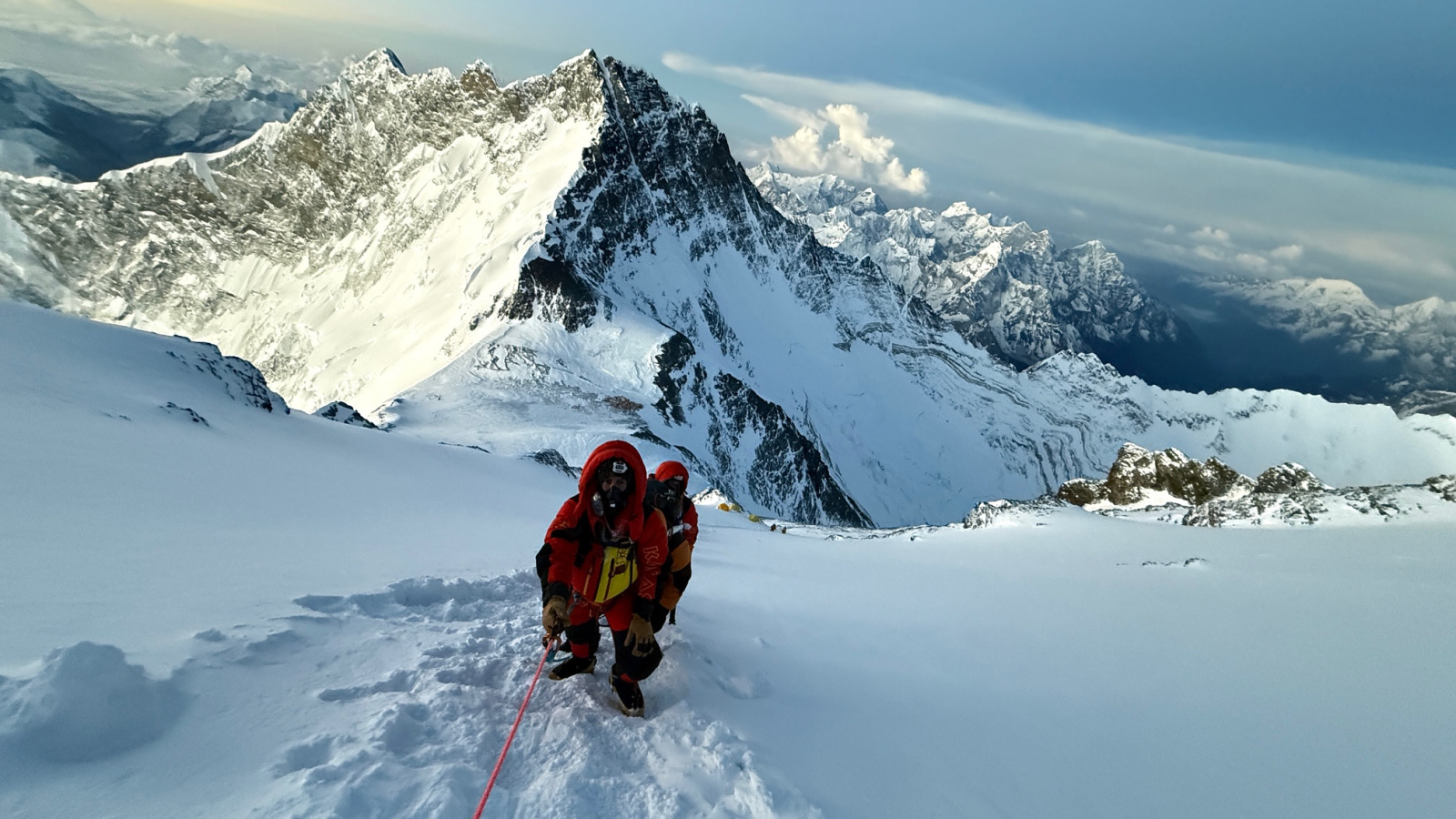
What happens between Everest and Lhotse is not really a physical battle. It becomes a mental one. By that point, your body is exhausted. You have spent hours above 8,000 metres in what climbers call the “death zone.” Every movement requires effort. Every decision matters. In those moments, I did not think about records or history. I focused only on the next step. One step. One breath. One decision at a time. That approach is not only useful in the mountains. It is how we overcome any challenge that appears bigger than us. When the goal feels overwhelming, we stop looking at the entire mountain and focus on the next step forward.
The Capitalyst: When you stood on Everest’s summit with the Moroccan flag in your hands, what story did you want that image to tell? About Morocco, about Arab women, about what becomes possible when someone refuses to accept the limits others have drawn for them?
Nawal Sfendla: When I stood on the summit of Everest holding the Moroccan flag, I was experiencing two emotions at the same time. The first was deeply personal. Everest had been a dream for years. A dream that demanded sacrifices, difficult choices, setbacks, and an extraordinary amount of perseverance. Standing on that summit was the culmination of a journey that had tested me physically, mentally, emotionally and financially. It was the realization of something I had fought for over many years. But at the same time, I knew that moment was bigger than me.
As I looked at the Moroccan flag in my hands, I thought about what it represented. Not only a country, but also a generation of young Moroccans full of ambition, talent and potential. There were many moments when this project could have ended. Financial challenges, logistical obstacles, uncertainty, failed attempts and countless occasions when it would have been easier to stop. Yet every challenge reinforced my belief that some goals are worth pursuing, even when the path is unclear. That flag represented far more than a sporting achievement. It represented the idea that Moroccans can compete and excel on the world’s biggest stages, regardless of the field. I wanted that image to send a message to young Moroccans: never allow your starting point to define your destination. The fact that something has never been done before is not a reason not to attempt it. Sometimes it is exactly the reason why you should.
For me, reaching the summit of Everest was never simply about standing on the highest point on Earth. It was about carrying Morocco to that summit and showing that our country, our youth and our values belong among the very best, because every time a Moroccan breaks a barrier, it becomes easier for the next generation to believe that they can do the same.
The Capitalyst: High altitude climbing means living inside a reality most people will never face, where fear is constant and tragedy is sometimes witnessed first-hand. How do you carry that weight while you are still in the middle of a dangerous push? And how do you begin to process it once you are finally back at sea level?
Nawal Sfendla: One of the biggest misconceptions about mountaineering is that courage means not feeling fear. The reality is the opposite. Fear is an essential part of survival in the mountains. It keeps you alert. It forces you to remain disciplined and humble. At extreme altitude, emotions have to be managed carefully because fear can become paralysing if it is not controlled. During critical moments, I focus on the variables I can influence: my breathing, my pace, my decision-making, my communication with my team.
As for witnessing difficult situations, those experiences stay with you. The mountains remind us of our vulnerability in a very direct way. Processing that reality takes time. Returning home does not immediately switch off what you have experienced. Reflection, conversations with people you trust, and simply allowing yourself time to absorb the journey are all part of the process. The mountains teach you many things, but perhaps the most important is respect, for nature, for life, and for the fragility of both.
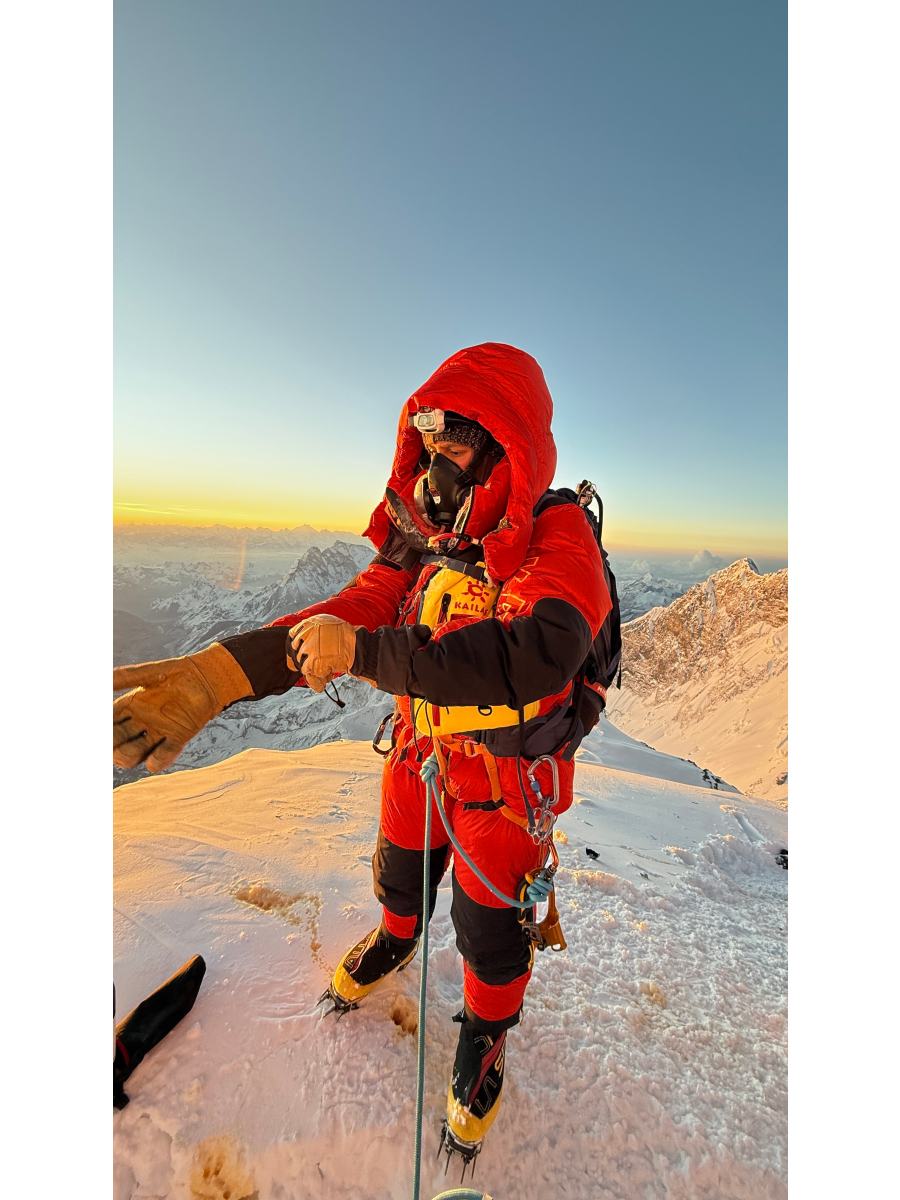
The Capitalyst: Take us inside Base Camp in those final days before your summit push. What was the atmosphere like among the team, what was your body telling you at that altitude, and what were the last things you did before you stepped into the dark and started climbing?
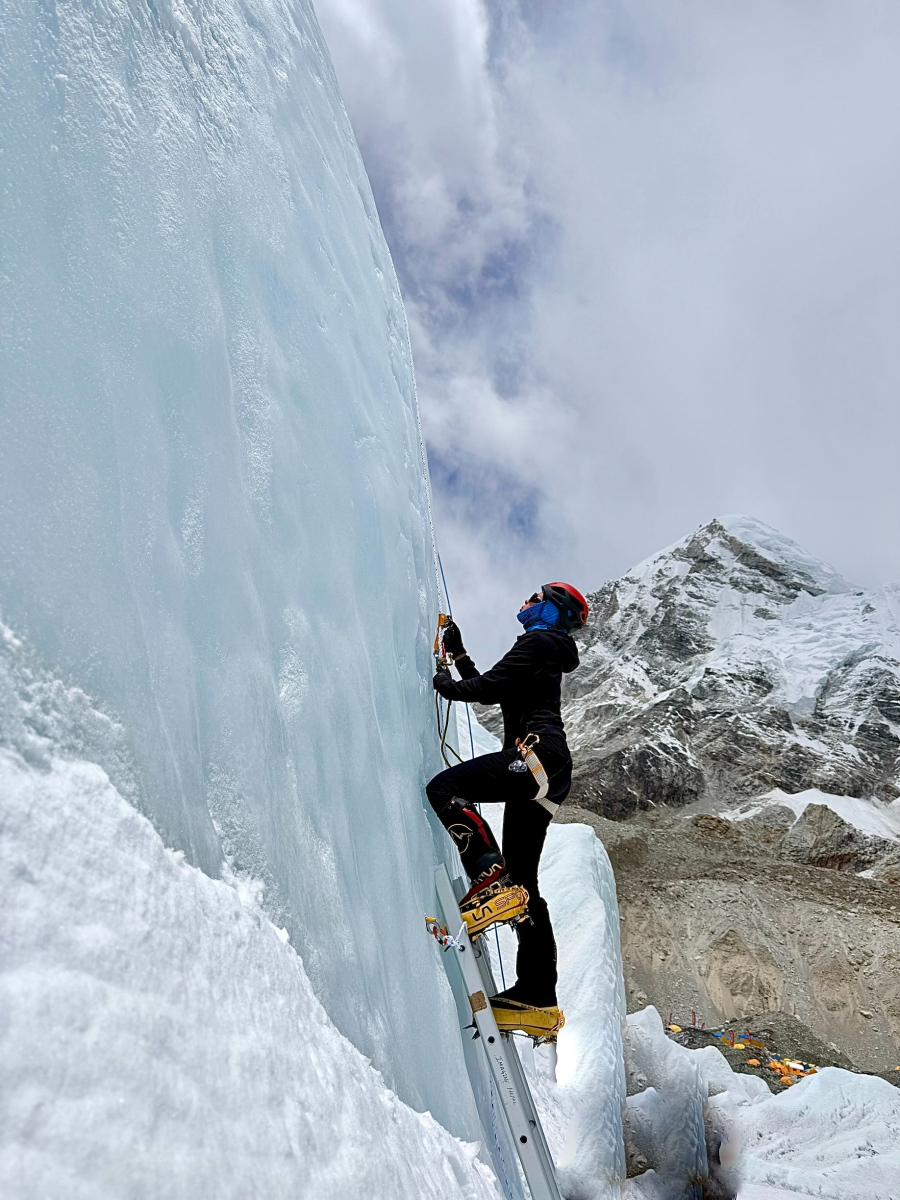
Nawal Sfendla: The days before a summit push are unlike anything else. There is excitement, of course, but above all there is focus. Everyone understands what is at stake. Months, and in my case years, of preparation come down to a very short weather window and a series of decisions that can determine the outcome of the entire expedition. Physically, I felt strong because the acclimatization process had gone well, but nobody feels completely comfortable at that altitude. Your body constantly reminds you that you are operating in an environment it was never designed for.
At Base Camp, the atmosphere was calm, disciplined and highly professional. There were weather briefings, route updates, equipment checks and endless discussions about strategy. Nobody was wasting energy. Everyone was preparing mentally for what lay ahead. In the hours before leaving, I spoke at length with my family. Those conversations were very important to me because once you leave for the summit push, communication becomes limited and all your focus shifts to the mountain. Hearing their voices gave me strength and reminded me why I had started this journey in the first place.
I also did a final equipment check with my Sherpa. At that stage, every detail matters. You want to be absolutely certain that nothing has been overlooked. I remember having a conversation with Nims Purja, the CEO of Elite Exped, who shared a few final pieces of advice before I left. Coming from someone with his experience in the Himalayas, those words carried real weight and reinforced my confidence before the climb. Then I took a few quiet moments for myself. When the climb begins, it usually starts in darkness. You step out of your tent and into the unknown, with only the beam of your headlamp illuminating a small section of the path ahead. Standing there, I knew that years of work had brought me to that moment. In many ways, that first step into the darkness is a perfect metaphor for life. You rarely see the entire path. You simply trust your preparation, your team and yourself enough to take the next step forward.
The Capitalyst: Morocco gave the world tagine, mint tea, and hammams, possibly the three most comforting things in existence. Which one did you miss most at 8,000 metres, and did you make yourself a promise that you would go straight to one the moment you landed home?
Nawal Sfendla: I have to admit that after weeks spent on a glacier, surrounded by ice, cold and altitude, the idea of a Moroccan hammam became incredibly appealing but if I’m being completely honest, what I missed most was not a specific food or tradition. It was Morocco itself. When you spend weeks in one of the most remote environments on Earth, you begin to appreciate things you normally take for granted: the warmth of home, conversations with family, the energy of your country, the familiar sounds, the culture, the people.
Morocco has a unique way of making you feel connected wherever you are in the world. During the expedition, there were moments when I thought about sharing a meal with my family, walking through Casablanca, hearing Darija around me, or simply enjoying the warmth and hospitality that are so deeply rooted in Moroccan culture. Of course, I missed Moroccan food. Like every Moroccan abroad, I dreamt about tagines, fresh bread and mint tea more than once but what I really missed was everything those things represent: family, generosity, togetherness and a sense of belonging.
And perhaps that is one of the reasons standing on the summit with the Moroccan flag was so emotional. The farther away I was from my country, the more aware I became of how much it means to me. Returning home after Everest and Lhotse reminded me of something very simple: you can travel to the highest mountains on Earth but there is something irreplaceable about coming back to Morocco. It is not only where I come from. It is a part of who I am.
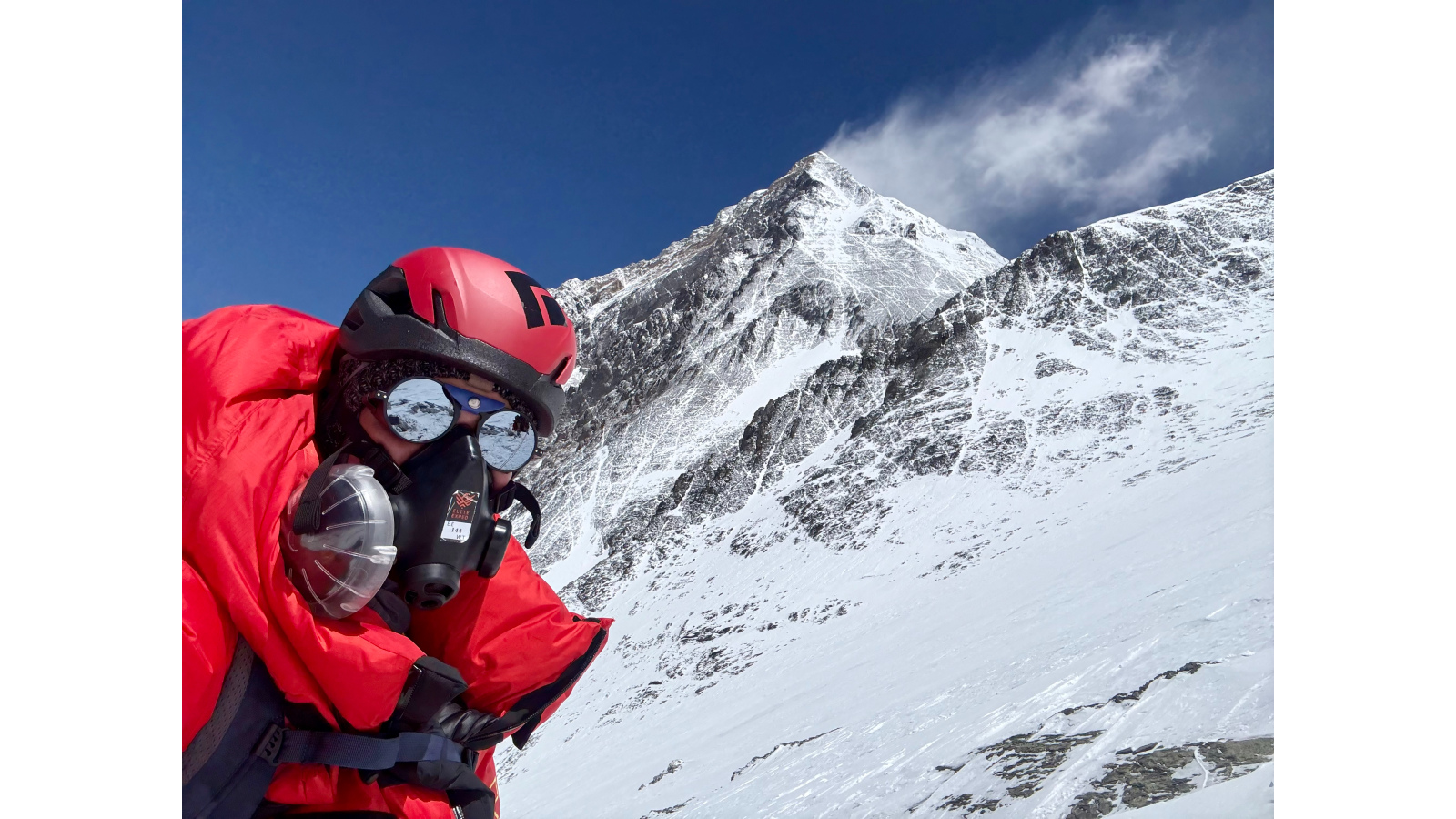
The Capitalyst: As a Moroccan Arab woman entering a sport historically dominated by Western men, you had no blueprint to follow. What were the most stubborn invisible barriers you encountered when breaking into that world, and how has your success begun to shift the conversation for North African women in extreme sport?
Nawal Sfendla: The most difficult barriers were not on the mountains, they were the assumptions. When there are very few examples around you, people naturally question whether something is realistic. They may not intend to discourage you, but their doubts become part of the environment you have to navigate. I had to build credibility step by step. Not only as an athlete, but also as someone capable of managing the financial, logistical, and strategic dimensions of large-scale expeditions.
Today, I believe the conversation is evolving. More women and young women from Morocco and across North Africa are reaching out to me because they can now see a tangible example of what is possible. That does not mean everyone should become a mountaineer. The real lesson is broader than that. The lesson is that women should feel empowered to enter spaces where they are underrepresented, whether those spaces are boardrooms, laboratories, entrepreneurial ventures, or mountains. Progress begins when someone decides that being the first is worth the challenge.
The Capitalyst: Right after your historic climb, you hinted on social media that the real historical challenge may have only just begun. What does the next chapter look like for Nawal Sfendla, both on the mountains and beyond them?
Nawal Sfendla: The Everest-Lhotse expedition was a major milestone, but I do not see it as an ending. I see it as a beginning. On the mountaineering side, there are still important objectives ahead, including completing the Seven Summits challenge with the remaining Vinson Massif in Antarctica. Beyond that, I intend to continue pushing my limits through ambitious challenges, both internationally and here in Morocco, always seeking new ways to grow, learn and explore what is possible.
But beyond the mountains, my ambition is larger. Over the past years, I have realized that the most meaningful impact does not necessarily happen on a summit. It happens when experiences are transformed into lessons that can help others navigate their own challenges. Today, I am increasingly focused on sharing what the mountains have taught me about leadership, resilience, risk management, decision-making under pressure, and long-term vision. If climbing mountains has taught me anything, it is that every summit eventually becomes a platform from which to serve a purpose greater than yourself. That is the chapter I am entering now.