The Capitalyst: You completed your Bachelor’s degree in Architecture at the University of Bath in 2016, worked at Urban Studio in Mumbai during your degree where you learned complex spatial modelling, then at Alford Hall Monaghan Morris in London where you were part of the team working on the Google headquarters project, and also at SEZA in Mumbai before joining Sanjay Puri Architects in 2018. That is a deliberately international and cross-cultural trajectory before returning to India. What did each of those offices teach you that the others could not, and which experience surprised you the most?
Ayesha Puri: I was fortunate that each office came into my life at a very different stage and taught me something completely different.
Urban Studio was my first exposure to practice while I was still in my first year of architecture school. Their work was incredibly experimental, particularly in its approach to geometry and form. They were exploring complex curved structures and digital modelling at a time when those conversations were far less common in India. Being immersed in that environment pushed me to learn software like Rhino very early on and, more importantly, it expanded my understanding of what architecture could be. It made me comfortable with complexity and gave me an appreciation for more organic and fluid forms.
AHMM was almost the opposite experience. It was a large, highly structured practice of around 300 people, and what fascinated me there was not just the architecture but the organisation behind it. Working on projects at an urban scale, including the Google headquarters project, showed me how large teams coordinate, collaborate and maintain design quality across incredibly complex developments. It taught me the value of systems, process and context-driven design.
SEZA was where architecture became much more personal. It was a smaller studio focused on high-end residential work, and because they handled both architecture and interiors, I was exposed to projects in a far more holistic way. I sat in client meetings, visited sites regularly and saw how design decisions translated into built reality. It taught me how much architecture is ultimately about people rather than drawings.
The experience that surprised me most was probably AHMM. Coming from smaller studios, I expected a large firm to feel impersonal. Instead, I was struck by how much thought had gone into creating an environment where designers at every level felt invested in the work. It completely changed my perception of what a large practice could be.
The Capitalyst: You grew up in a home where both your parents are celebrated architects, your family holidays revolved around visits to structures of architectural interest, and your early exposure to Frank Lloyd Wright and Le Corbusier came not from a classroom but from dinner table conversation. Most people arrive at architecture through a single revelation. You were practically born inside the discipline. At what point did architecture stop feeling like your parents’ world and start feeling like yours?
Ayesha Puri: I think it happened the moment I realised I could disagree with my father about a space and defend my own position.
Growing up, so much of my understanding of architecture was shaped by what my parents exposed us to. Our holidays revolved around buildings, our dinner table conversations revolved around design, and many of my earliest architectural references came directly from them. For a long time, my tastes and opinions were naturally influenced by theirs.
The shift happened during university. Studying in Bath exposed me to new architects, new places and new ways of thinking. Travelling through Portugal and studying Álvaro Siza’s work, for example, had a profound impact on me. Those experiences helped me develop my own design language and understand what resonated with me personally.
Architecture became mine when I stopped asking whether I liked something because my parents did and started asking whether it aligned with my own instincts. That process is still evolving, but that was the point at which it stopped feeling inherited and started feeling personal.
The Capitalyst: You joined Sanjay Puri Architects in 2018, working directly under your father Sanjay Puri and mother Nina Puri, whose firm has won over 225 awards including the World Architecture Festival’s Best Housing Project of the Year 2018 and the LEAF Awards World’s Best Residential Building. Working inside a parent’s firm carries a very particular kind of pressure that no other professional relationship quite replicates. How do you navigate the line between being a daughter and being an architect in the same room, and has that boundary become easier or harder over time?
Ayesha Puri: The boundary is probably blurrier than it would be in most workplaces, especially now that my sister has joined the practice as well. Office lunches often turn into design critiques, family discussions become project discussions, and vice versa.
What makes it work is that all four of us have very different design instincts. We are constantly debating ideas, often passionately, and usually with a lot of laughter. In many ways, that creative friction is one of the strengths of the studio because projects benefit from multiple perspectives rather than a single dominant voice. The privilege of working with family is knowing that even when we disagree, there is a level of trust underneath it all. My parents have always encouraged us to explore ideas that may be outside their comfort zone, even when those ideas don’t succeed. That freedom to experiment has been invaluable.
The harder part is that my parents have decades of experience and very strong convictions, so introducing new ways of thinking can sometimes require persistence. Over time, though, the conversations have become more collaborative. It feels less like proving a point and more like collectively pushing the work forward.
The Capitalyst: One of your notable recent projects is Nine X Nine, a family home in Gandhinagar, Gujarat, designed together with your father Sanjay, mother Nina and Nilesh Patel, built to withstand temperatures exceeding 50 degrees Celsius in a semi-arid climate. The brief demanded both climate resilience and intimacy simultaneously. What was the specific design decision in that project that you pushed for and that you feel most defines the building as it stands today?
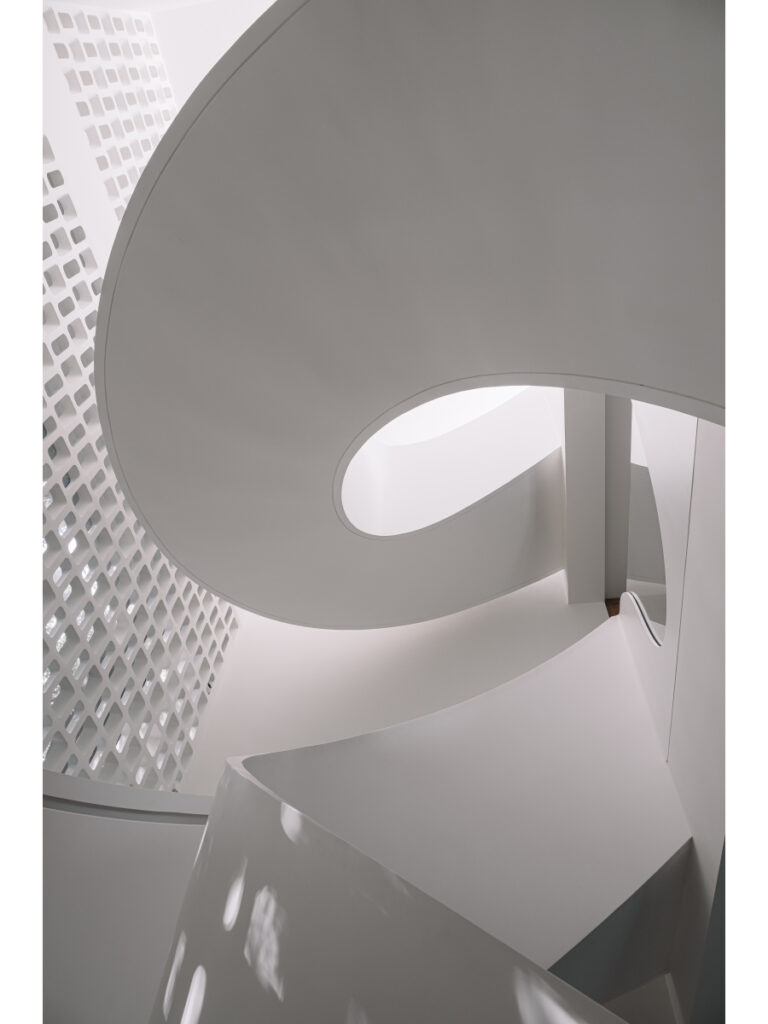
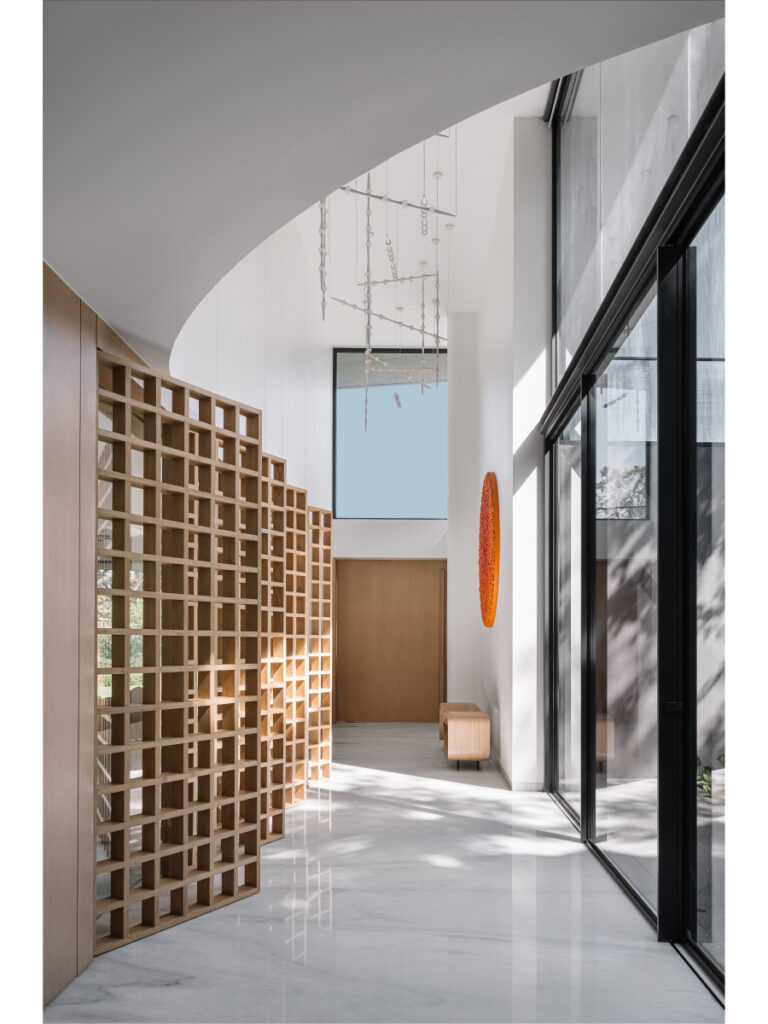
Ayesha Puri: What stood out to me about the project was the relationship between the house and its landscape. The site was beautiful, and the family themselves lived in a very understated, uncluttered way. The decision I pushed for was to embrace that simplicity rather than compete with the architecture or the setting. We kept the interiors intentionally restrained, focusing on volume, proportion and natural light rather than layering the space with excessive materials or objects.
The goal was to make the landscape feel like an extension of the interior. Large openings, a neutral palette and carefully selected focal pieces allow the architecture and the outdoors to take centre stage. For me, that sense of calm and connection to nature is what defines the project today.
The Capitalyst: One of your most distinctive completed projects is the interior of India’s first laboratory-grown diamond jewellery store in Mumbai, where you collaborated with artists and graphic and product designers from different cities to challenge the norms of retail design. That is a project that sits at the intersection of architecture, art direction and cultural provocation. What does designing a space for a product that deliberately subverts the traditional luxury jewellery narrative ask of an architect that a conventional retail brief does not?
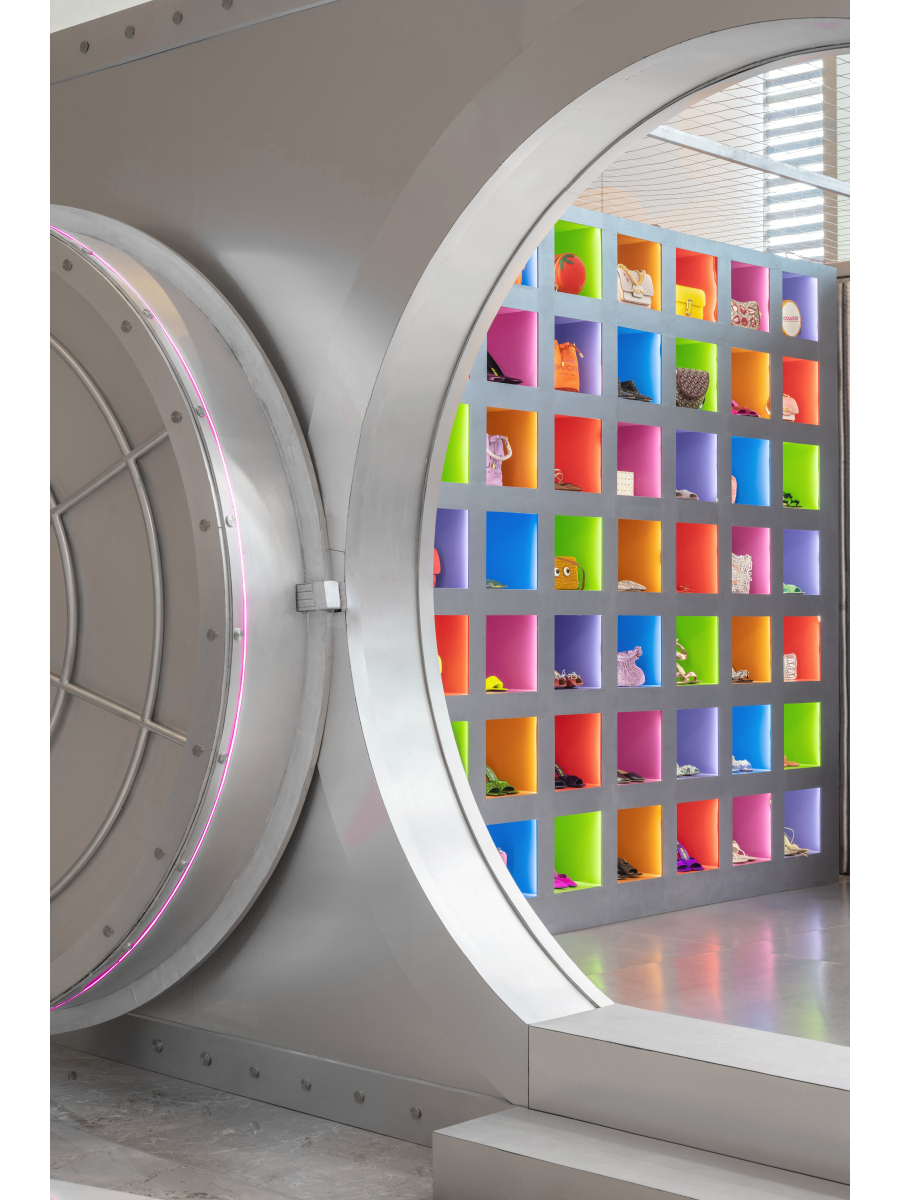
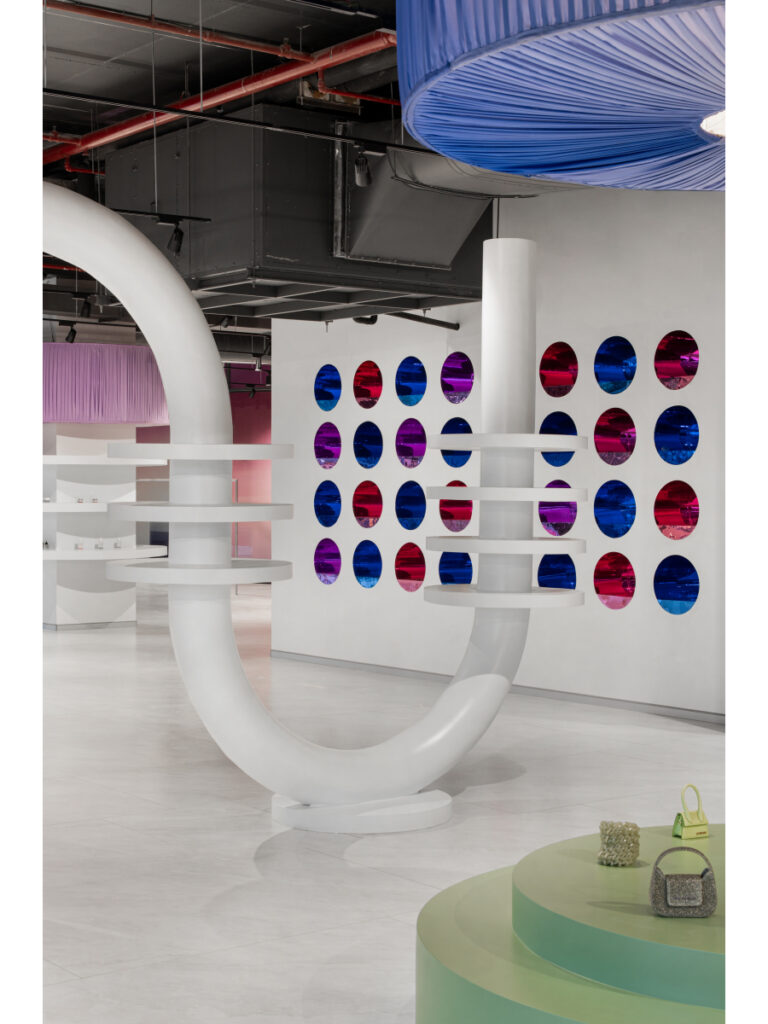
Ayesha Puri: Most luxury jewellery stores rely on familiar visual cues to communicate value. This project challenged us to rethink those assumptions entirely. The starting point was the product itself. Laboratory-grown diamonds combine luxury with innovation, so we wanted the space to embody both qualities simultaneously. Rather than creating a conventional jewellery environment, we focused on crafting moments of surprise and discovery. We integrated technology directly into the experience through automated display systems that reveal collections as they move. We collaborated with artists and designers to transform everyday objects into unexpected pieces within the space—a hand-painted piano became a sculptural installation, while a speaker was reimagined as a suspended artwork.
What made the project unique was that every element had to contribute to a larger narrative about redefining luxury. It wasn’t simply about displaying a product beautifully; it was about encouraging visitors to question what luxury can look like in a contemporary world.
The Capitalyst: You have described a keen interest in colours and patterns and a love of collaborating with artists, which sets you apart from a more purely structural or spatial approach to architecture. Indian craft, textile traditions and visual culture are extraordinarily rich sources for that kind of cross-disciplinary thinking. How do you actually bring those influences into a built project without the architecture becoming decorative, and where is the line between ornamentation and integral design for you?
Ayesha Puri: For me, the distinction comes down to where the craft sits within the hierarchy of the space. I believe the architectural framework—the materials that will remain for decades—should be relatively timeless. Elements such as stone, marble, wood and metal form the foundation of a project and should age gracefully without relying on trends or overt decoration.
Once that framework is established, it creates room for experimentation elsewhere. That’s where craft, colour, pattern and artistic collaboration can become part of the experience. A crafted glass panel can become artwork within a door. Dyed veneers can transform shelving into a sculptural element. Textiles, furniture and custom details can introduce richness and personality. The line between ornamentation and integral design is whether something feels applied or embedded. When craft helps tell the story of a space and is woven into how it functions and is experienced, it becomes architecture rather than decoration.
The Capitalyst: Sanjay Puri Architects has been notably described as reversing the trend of foreign architects being called to India, with the firm now being sought out internationally for projects in Montenegro, Spain, the UAE and Mauritius. You have grown up watching that reversal happen in real time. Do you think Indian architecture has fully claimed the global confidence it deserves, or is there still a deference to Western architectural language that the next generation needs to dismantle?
Ayesha Puri: I think Indian architecture is far more confident today than it was a decade ago, but there is still work to be done. What makes India unique is the depth of knowledge embedded within our materials, crafts and climatic responses. We have centuries of expertise in building for extreme conditions, working with local materials and creating spaces that are deeply connected to culture and place.
What’s exciting is that many of these approaches are now becoming globally relevant. For example, using traditional stone from regions like Jodhpur isn’t simply an aesthetic decision—it can also be an effective response to extreme heat and sustainability concerns. Solutions that evolved locally often address some of the same challenges the world is grappling with today. Rather than looking outward for validation, I think the next generation’s responsibility is to continue reinterpreting these traditions in contemporary ways. Confidence comes not from imitating global trends but from contributing something distinctive to them.
The Capitalyst: You were named in the top 50 young architects in India by Architect and Interiors India. India is currently in the middle of one of the largest construction booms in human history, with enormous pressure to build fast, build cheap and build at scale. That is a very difficult environment for architects who care about craft, context and sustainability. Where do you see the greatest threat to thoughtful architecture in India right now, and where do you see the greatest opportunity that is not being seized?
Ayesha Puri: Interestingly, I think both the greatest threat and the greatest opportunity are the same thing: artificial intelligence.
The threat is that design can become increasingly homogenised. Clients now arrive with AI-generated images and highly developed visual references, which can sometimes narrow conversations before a project has even begun. There is also growing pressure to produce visualisations and design outputs at a much faster pace than before. At the same time, AI is an incredibly powerful tool. It allows us to communicate ideas quickly, test possibilities and visualise concepts that would previously have taken weeks to develop. It can accelerate parts of the process and make design conversations more accessible.
The challenge for architects is ensuring that AI remains a tool rather than becoming the author. The opportunity lies in using it to expand creativity, not replace it.
The Capitalyst: Sanjay Puri Architects works on over 100 projects across 40 cities simultaneously with a team of more than 70 people. You have come into that practice at a moment when it is operating at extraordinary scale. As someone who will eventually carry this practice forward, what is the thing you most want to protect about how your father built it, and what is the thing you most want to change?
Ayesha Puri: The thing I most want to protect is the commitment to treating every project as a unique response rather than applying a signature formula.
Whether it is architecture or interiors, every project begins with its context, its users and its specific challenges. That willingness to start from scratch each time is something that has defined the practice and is increasingly rare at larger scales.
What I would like to improve is the efficiency of delivery. Our dedication to design means we invest enormous amounts of time refining ideas, and while that attention to detail is valuable, it can also extend timelines, particularly for interior projects.
The challenge for the next generation is not to compromise the quality of the work, but to find smarter ways of working that allow us to maintain the same level of design rigour while responding to the pace at which the world now operates.