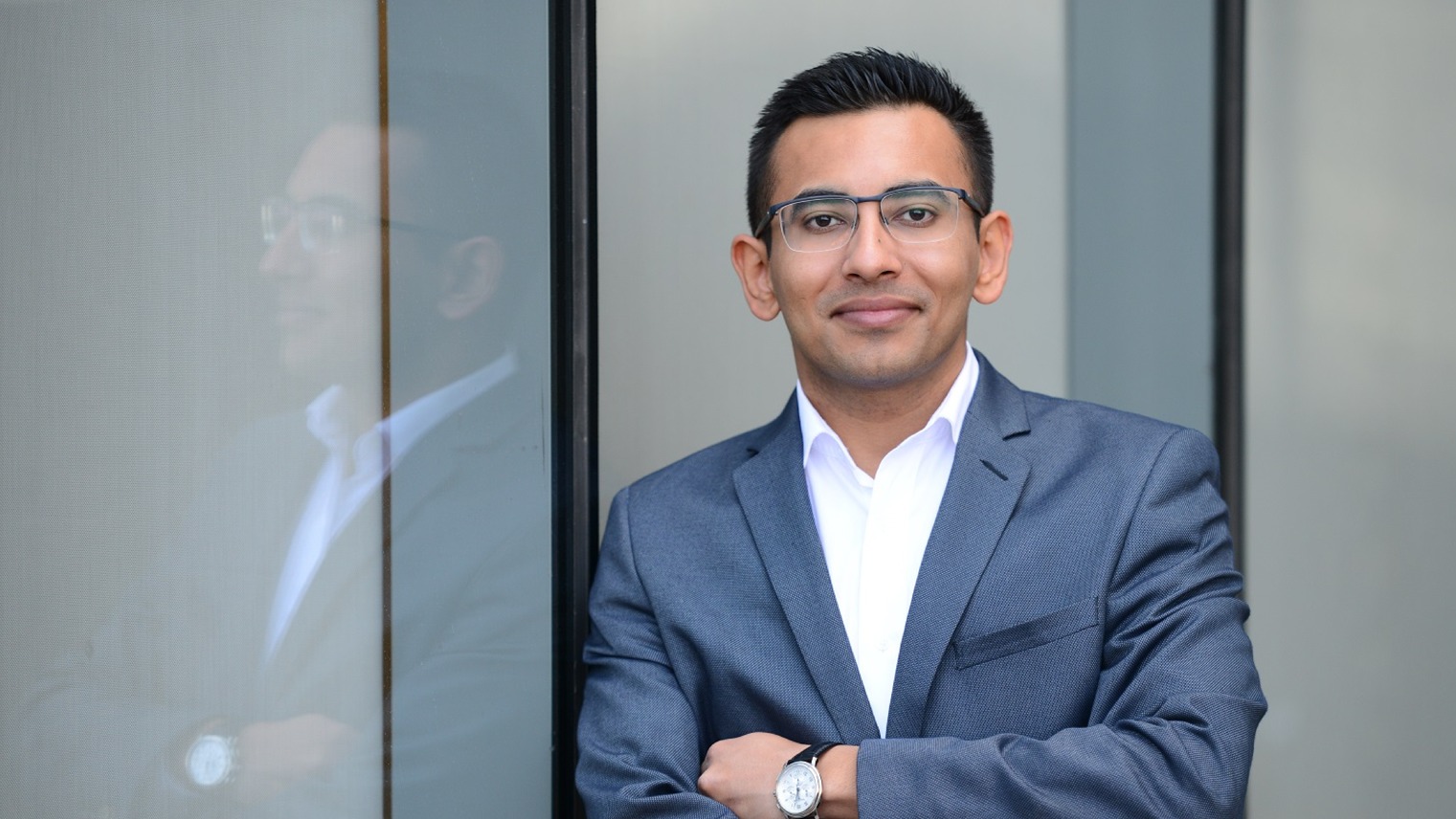
The Capitalyst: You started your career at BCG in Paris before diving headfirst into entrepreneurship in Morocco. What was the exact moment or realization that made you leave the corporate consulting path to build your own startups?
Ismael Belkhayat: There wasn’t a dramatic moment where I woke up one morning and decided to quit consulting. It was more of a gradual realization that I was spending my days advising entrepreneurs and executives on how to transform their businesses, while deep down I wanted to be the one taking the risks and building something from scratch.
BCG was an incredible training ground. I learned how to structure problems, think strategically, and operate in high-performance environments. But consulting also showed me the limits of advice. I found myself far more interested in implementation than in PowerPoint presentations. I wanted to feel the pressure of making payroll, talking to customers, and seeing the direct consequences of my decisions.
Morocco represented an opportunity that was hard to ignore. The country was undergoing a digital transformation, yet many industries remained underserved. I felt there was a chance to build businesses that could have a tangible impact on people’s daily lives. Looking back, leaving consulting was not a rejection of the corporate world; it was simply an acceptance that I was an entrepreneur at heart.
The Capitalyst: For readers who might not be familiar with the North African retail landscape, can you explain exactly how Chari works and how it creates a win-win scenario for a traditional neighbourhood grocery store?
Ismael Belkhayat: Across Morocco and much of Africa, commerce is still dominated by small independent grocery stores. These shops are deeply embedded in their communities, but they often face challenges that larger retailers don’t: fragmented supply chains, limited access to financing, and inefficient procurement processes.
Chari started by solving a very simple problem. We built an e-commerce platform that allows shop owners to order inventory directly from their smartphones and receive deliveries within a short timeframe. Instead of spending hours visiting wholesalers, comparing prices, and transporting goods themselves, they can focus on serving customers and growing their businesses.
But logistics was only the first layer. Once we built trust and transaction history with thousands of retailers, we realized we could address a much bigger challenge: financial inclusion. Many shopkeepers have healthy businesses but limited access to formal financial services. Today, through Chari, retailers can access digital payments, working capital solutions, and other financial products that were previously unavailable or difficult to obtain.
The win-win is simple. Shopkeepers save time, improve margins, and gain access to financial services. Meanwhile, suppliers and financial institutions gain access to a highly fragmented market that was historically difficult to reach. Technology becomes the bridge connecting all participants in the ecosystem.

The Capitalyst: Chari is unique because it’s a logistics play and a financial technology play. When you look at the unbanked retail sector in French-speaking Africa, what has been the biggest hurdle in convincing traditional shopkeepers to adopt digital financial tools?
Ismael Belkhayat: The biggest hurdle is not technology. It’s trust.
When people talk about financial inclusion, they often assume the challenge is building better apps or creating more sophisticated products. In reality, many small merchants have operated successfully for decades using cash, notebooks, and personal relationships. Asking them to digitize part of their business requires them to believe that the new system is genuinely better and that it won’t put their livelihood at risk.
That’s why we intentionally started with commerce rather than finance. We first helped retailers buy inventory more efficiently. We delivered value before asking them to adopt financial products. Once a retailer has placed dozens of orders through Chari and sees that we consistently deliver on our promises, conversations about payments, lending, or banking become much easier.
The lesson we’ve learned is that financial inclusion cannot be built on technology alone. It has to be built on trust, relevance, and tangible value. If a digital tool saves a merchant time, helps them increase sales, or gives them access to capital when they need it most, adoption follows naturally.
The Capitalyst: You co-founded Chari with your wife, Sophia Alj. What does it actually look like to build a startup together as a married couple — the good, the hard, and the non-negotiable rules?
Ismael Belkhayat: Building a company with your spouse is both a privilege and a challenge. On the positive side, there is a level of trust that is very difficult to replicate in any other professional relationship. We share the same long-term vision, understand each other’s strengths and weaknesses, and can make decisions quickly because there is a deep foundation of mutual confidence.
The difficult part is obvious: startups do not respect office hours. When your co-founder is also your spouse, it’s very easy for business conversations to take over every dinner, every weekend, and every family moment. If you’re not careful, the company can consume the relationship.
Over the years, we’ve learned the importance of clear role separation. Sophia and I each own specific areas of the business and respect each other’s decision-making authority. We challenge one another, but we avoid second-guessing operational decisions outside our respective domains.
The most important rule, however, is remembering that the marriage comes before the company. Companies can succeed, fail, pivot, or be sold. Family is permanent. Keeping that perspective has helped us navigate both the highs and the inevitable challenges of entrepreneurship.

The Capitalyst: You’ve successfully launched, scaled, and exited businesses like VotreChauffeur.ma and Wib.co. What is that one learning from your early founder journey that completely changed how you approach business today?
Ismael Belkhayat: The biggest lesson was learning that distribution matters more than innovation.
As a first-time founder, I was obsessed with products and features. I believed that if we built something great, customers would naturally come. Experience taught me that even the best products fail if you don’t have an efficient way to acquire, retain, and serve customers.
Today, when I evaluate an opportunity, I spend as much time thinking about distribution as I do about the product itself. How will we reach customers? What will customer acquisition cost? How do we create a defensible advantage? Those questions are often more important than the underlying technology.
This lesson influenced Chari significantly. The real value wasn’t simply creating another ordering app. The value came from building a trusted distribution network that connected thousands of retailers, suppliers, and financial institutions. Once you own the relationship with the customer, many opportunities become possible.
The Capitalyst: Morocco has positioned itself as a tech and startup hub in Africa. As someone who has been building here for over a decade, what is real and what is still missing from that narrative?
Ismael Belkhayat: The progress is very real. Compared to a decade ago, Morocco has a much stronger entrepreneurial ecosystem. There is more venture capital available, more founders with international experience, stronger incubators and accelerators, and a growing number of success stories that inspire the next generation.
The country’s infrastructure is also a major advantage. Morocco benefits from political stability, modern telecommunications, world-class logistics infrastructure, and proximity to both Europe and the rest of Africa. These are important ingredients for building technology companies with regional ambitions.
What is still missing is scale. We need more startups that grow beyond Morocco and become continental leaders. We also need more experienced operators who have gone through the full startup lifecycle and can reinvest their expertise into the ecosystem as founders, executives, angels, and mentors.
The next chapter for Morocco isn’t about proving that startups can exist here. That debate is over. The challenge now is producing globally relevant companies at scale.
The Capitalyst: If you were sitting down with a young Moroccan entrepreneur looking to launch their first tech startup this year, what is the single piece of contrarian advice you would give them about raising capital versus bootstrapping?
Ismael Belkhayat: My contrarian advice would be: don’t raise money simply because you can.
Over the last decade, fundraising has become a milestone that many founders celebrate as if it were an achievement in itself. In reality, venture capital is not success. It is a tool. Sometimes it’s the right tool, and sometimes it isn’t.
If you can reach product-market fit with limited resources and paying customers, that is often a stronger position than raising capital too early. Bootstrapping forces discipline. It forces you to focus on customers, revenue, and sustainable growth instead of vanity metrics.
I would encourage founders to raise money only when they have a clear understanding of how additional capital will accelerate a model that is already working. Capital should amplify traction, not replace it.

The Capitalyst: When your schedule is packed with fundraising, board meetings, and expansion plans, how do you practically block out time to train for an Ironman? What does a typical week of balancing health and extreme work look like for you?
Ismael Belkhayat: The secret is treating training as a non-negotiable appointment rather than a hobby. Most people schedule work and fit exercise around it. I do the opposite. Training sessions go into my calendar first, and everything else gets organized around them whenever possible.
An Ironman is an exercise in consistency more than intensity. You don’t become prepared by doing one spectacular week of training. You become prepared by accumulating hundreds of disciplined sessions over months. That mindset is actually very similar to entrepreneurship. Success rarely comes from a single breakthrough moment. It comes from showing up every day and executing consistently.
A typical week includes swimming, cycling, strength work, and running, usually early in the morning before the workday begins. It requires sacrifice, but I’ve found that training doesn’t compete with my performance as an entrepreneur—it enhances it. Endurance sports teach resilience, patience, and mental discipline, which are qualities every founder needs.
Perhaps most importantly, training creates perspective. In entrepreneurship, there is always another meeting, another challenge, another problem to solve. Spending a few hours on a bike or in the water reminds me that life is bigger than the next board meeting, and that perspective ultimately makes me a better leader.