The Capitalyst: Mr. Chaudhary, in 1978 you borrowed Rs. 5,000 from your father, turned down a bank cashier job, and started with two looms and nine artisans in Churu. Today Jaipur Rugs reaches over 40,000 artisans across 600 villages and exports to more than 90 countries. Most people describe that as a business success story. You have always described it as something else entirely, an act of dignity. What is the difference between the two, and why does that distinction still matter to you?
NK Chaudhary: To the world, success is a ladder made of numbers, revenue, exports, and market share. But to me, that is just the shadow of the work, not the light itself.
The difference between a ‘business story’ and an ‘act of dignity’ is the difference between managing people and serving souls. When I started in 1978 with those nine artisans, people saw ‘untouchables’ or ‘unskilled laborers.’ I saw masters. I saw a profound innocence and a creative depth that the modern corporate world had forgotten.
The Capitalyst: You were once refused a handshake at a social gathering because you were working with communities considered untouchable. You went ahead anyway. C.K. Prahalad later featured Jaipur Rugs in The Fortune at the Bottom of the Pyramid, and you became known as the Gandhi of the Carpet Industry. When the world finally caught up to what you had been doing all along, what changed inside the organisation, and what stayed stubbornly the same?
NK Chaudhary: That refused handshake was a pivotal moment for me. It didn’t breed resentment; it gave me clarity. It told me that the world was looking at the ‘dirty hands’ of the artisans, while I was looking at their ‘pure hearts.’
When the world finally ‘caught up’, C.K. Prahalad recognized us and the industry began calling me the ‘Gandhi of the Carpet Industry’, certain things within the organization had to evolve, but our soul stayed stubbornly still.
What changed was our scale and our confidence. We gained the platform to take the Innocence of the village to the global stage. We moved from being a small group of ‘untouchables’ to a global movement of ‘unbeatables.’ We professionalized our systems so that a weaver’s daughter could become a branch manager, and a branch manager could lead with the same efficiency as a corporate CEO. We grew the ‘body’ of the organization to match the size of our dreams.
But what stayed stubbornly the same? The ‘Soul’ of the business. Titles are for the world, but the work, the act of sitting on the floor with a weaver and sharing a meal, that is for the soul. That will never change.
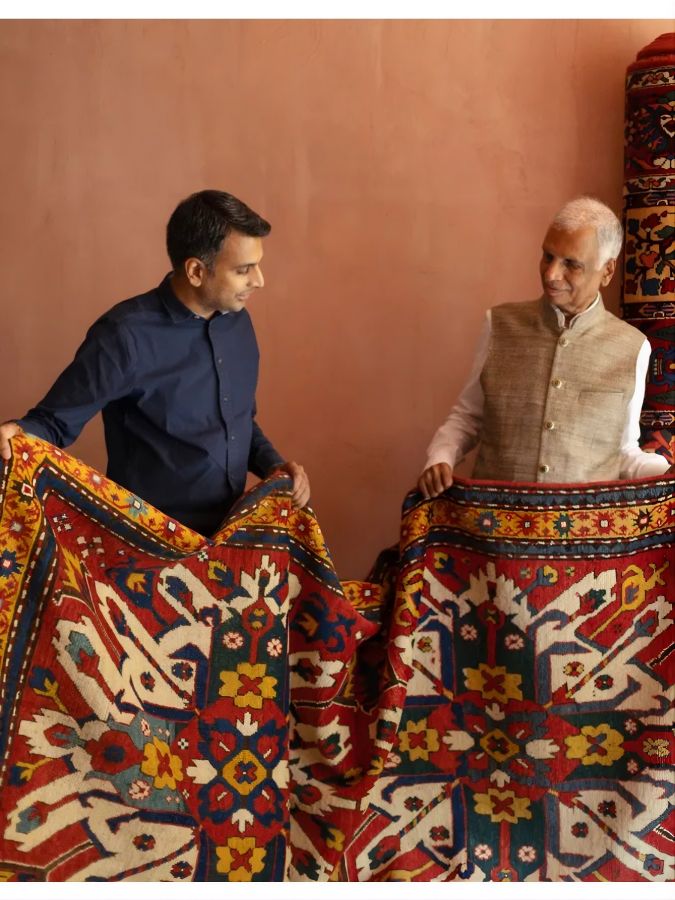
The Capitalyst: NK, you built this business on what you have called the founder’s mentality, a set of non-negotiables rooted in love, compassion and the dignity of every artisan. Yogesh, you joined as head of Sales and Marketing in 2006 and have been steering the brand’s global commercial direction. How do you hold that original emotional core intact when the business is now operating across dozens of international markets, with very different expectations at either end of that supply chain?
NK Chaudhary: For me, the answer is simple: The core is not a strategy; it is a life-force. In the early days, I was the bridge between the loom and the market. Today, that bridge is much longer, but the foundation remains the same, Innocence.
I tell my team that as we grow, we must not become ‘clever’ or ‘corporate’ in our hearts. The expectations of a high-end designer in Milan and a weaver in a remote village may seem different, but both are searching for the same thing: Truth.
Yogesh: When I joined in 2006, I realized that my challenge wasn’t just to sell rugs, it was to translate a ‘silent revolution’ into a global language. To keep the emotional core intact, we made a conscious decision: We would not hide our story; we would make it our standard. In international markets, there is often a gap between the ‘maker’ and the ‘buyer.’ We bridge that gap through radical transparency. When a customer in London or New York buys a Jaipur Rug, they aren’t just buying decor; they are becoming part of a weaver’s life.
We bring that international expectation of ‘luxury’ back to the village by empowering our branch managers and weavers to see themselves as global artists. By treating our supply chain as a ‘value chain’ of human dignity, the commercial side doesn’t dilute the soul, it amplifies it. We don’t just export products; we export the ‘Innocence’ my father started with. The ‘Founder’s Mentality’ is our greatest competitive advantage in a world that is hungry for authenticity.
The Capitalyst: Jaipur Rugs is simultaneously a social enterprise, a luxury design brand and a cultural institution. Those three identities can pull in very different directions when you are in a conversation with a high-end retailer in Milan or a design fair in New York. How do you pitch Jaipur Rugs in those rooms, and has the way you tell that story changed as Indian craft has gained more serious international recognition?
Yogesh: In those high-end rooms in Milan or New York, we don’t pitch them as three different directions; we pitch them as a single, unbreakable circle. We tell them that the Luxury is the beauty of the rug, the Social Enterprise is the soul of the rug, and the Cultural Institution is the story of the rug. You cannot have one without the others.
Earlier, we had to lead with the ‘social’ aspect to get people to listen. But as Indian craft has gained global respect, the story has shifted. We no longer ask for ‘sympathy’ for our weavers; we demand ‘respect’ for our artists. We pitch Jaipur Rugs as a ‘Living Museum’ where the consumer isn’t just buying a product, but investing in a piece of human history. Our pitch is simple: In a world of mass-produced noise, we offer a ‘silent presence’ that is deep, ethical, and culturally irreplaceable.
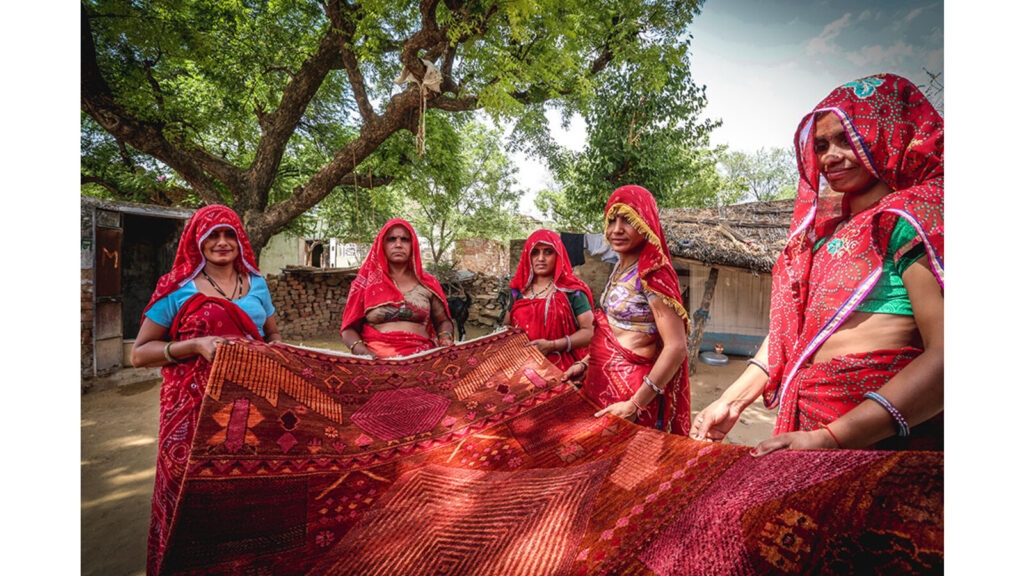
The Capitalyst: You conceived the Manchaha programme, giving weavers a fully set-up loom, leftover yarn and complete creative freedom with no talim, no design map and nothing but their own imagination. The initiative has won eight international awards including the German Design Award, the iF Design Award, the Elle Décor Award and the European Product Design Award, and weaver Bimla Devi flew from Aaspura in rural Rajasthan to Frankfurt to receive the German Design Award for her rug Kamal in 2018. When she stood on that stage, what did that moment actually mean to you as the person who had to fight for this idea in the first place?
Kavita: When Bimla Devi stood on that stage in Frankfurt, it wasn’t just a victory for a rug; it was the ultimate validation of a belief I had fought for – that freedom is the best designer. When I first conceived Manchaha, there was so much resistance. People in the industry said, ‘How can you give an uneducated weaver a loom and no map? They will create a mess.’ But I saw what others didn’t: I saw a reservoir of suppressed innocence and untapped imagination. I didn’t want to give them a job; I wanted to give them a voice. To me, that moment meant that my ‘fight’ was over, and a new era had begun. It proved that if you remove the ‘talim’ (the map) and replace it with trust, the human spirit will always create something more beautiful than any computer could ever plot. It was the day we successfully turned the ‘Bottom of the Pyramid’ into the ‘Top of the Gallery.’ It was proof that innocence, when given freedom, becomes excellence.
The Capitalyst: The Manchaha programme then extended into the Freedom Manchaha collection, designed and woven by inmates at Jaipur, Dausa and Bikaner Central Jails. That is a radical extension of the same core idea. What made you believe that the creative impulse you had witnessed in rural weavers existed equally inside a prison, and what did building that programme actually require of you that the original Manchaha did not?
Kavita: The shift from the village to the prison was a radical test of our core belief: that Innocence is not an absence of guilt, but a presence of the soul. I believed the creative impulse existed in the jails because I’ve learned that the human spirit cannot be caged by four walls. Whether a weaver is in a remote village or behind bars, the ‘Manchaha’ the heart’s desire is always there, waiting for a crack of light to express itself. In many ways, the impulse is even stronger in prison; when you have lost your physical freedom, your internal freedom becomes your only sanctuary.
However, building Freedom Manchaha required something from me that the original program did not: it required a total suspension of judgment. The original Manchaha was about unleashing creativity; Freedom Manchaha was about redeeming it.
The Capitalyst: Kavita, your collaboration with master artisan Dhapha Devi was honoured with the Design Innovation Award 2023 by President Droupadi Murmu at the National Handicrafts Awards. NK, you have always said the artisan is not a worker but an artist. Yet for decades the global design world did not see it that way. What has actually shifted in how international institutions, collectors and consumers now understand the creative authorship of an Indian hand-knotted rug, and what has not shifted nearly enough?
Kavita: The shift is in authorship. For decades, the artisan was an invisible hand; today, they are a celebrated mind. When the President of India honors a master artisan like Dhapha Devi, it signals to the world that the rug is not just a commodity, but a signed piece of contemporary art. Collectors no longer just ask ‘What is it made of?’ they ask ‘Who dreamed this up?’ What hasn’t shifted enough is the structural respect in the global supply chain, we still have to fight to ensure the ‘artist’ title comes with the same economic security as a designer in London or Milan.”
NK Chaudhary: I am happy that consumers now understand that the rug is a ‘silent presence’ of the human spirit. What has not shifted enough is the deep-seated ‘cleverness’ of the corporate world. Many still look for ‘efficiency’ where they should be looking for ’empathy.’ The artisan is a master of innocence, and while the world admires the final product, it still struggles to value the slow, sacred process that makes that beauty possible.”
The Capitalyst: India’s design and craft sector is experiencing a global visibility it has never had before. At the same time, there is growing pressure from fast production, synthetic alternatives and algorithmic design. Where do you see the greatest threat to what Jaipur Rugs represents, and where do you see the greatest opportunity you have not yet fully seized?
Yogesh: I see the threat in the ‘homogenization of design’ where algorithms tell us what people want, and everyone starts producing the same soulless patterns. If we let the algorithm lead, we lose the ‘Manchaha,’ the raw human instinct that makes our rugs irreplaceable.
Our greatest opportunity lies in ‘Digital Grassroots.’ We have only just begun to use technology to bridge the distance between the weaver and the global consumer. Imagine a world where every buyer can look at a rug and instantly connect with the heart and history of the specific artisan who made it. We haven’t yet fully unlocked the power of using the digital world to protect and amplify the physical, human spirit.
The Capitalyst: You renamed your HR department “The Search for the Divine Soul.” Raj Sisodia and Michael J. Gelb described Jaipur Rugs as an ashram in The Healing Organisation. These are not the words most global businesses use to describe themselves. Has that language ever cost you in rooms where business culture demands a different kind of vocabulary, and do you ever feel the need to translate who you are for the world?
NK Chaudhary: It hasn’t cost us; it has filtered us. Yes, there are rooms where people expect words like ‘Human Capital’ or ‘Asset Management.’ When I say ‘Search for the Divine Soul,’ some people look confused, and some look relieved. Those who are confused are looking for a machine to manage; those who are relieved are looking for a purpose to believe in.
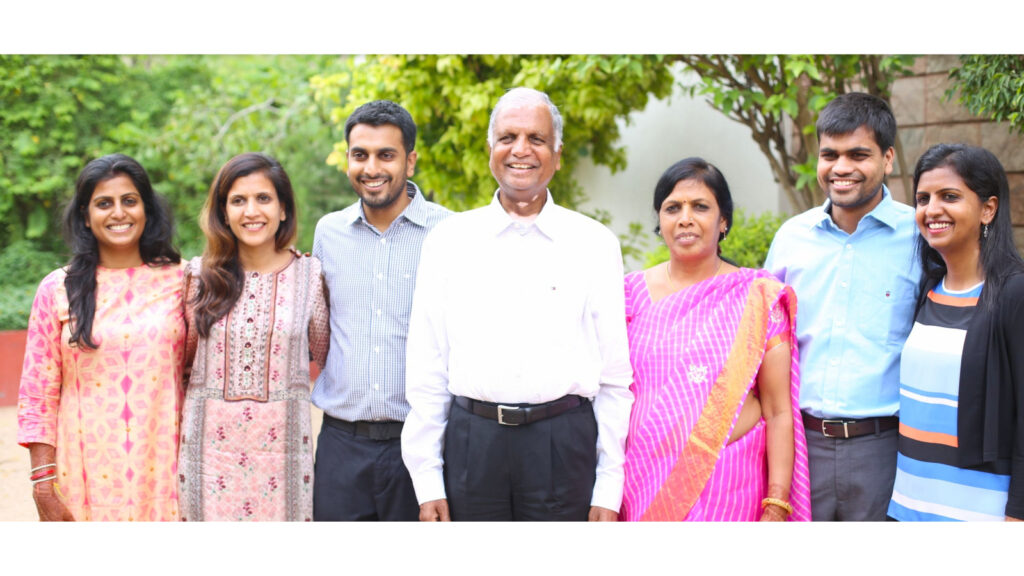
The Capitalyst: Jaipur Rugs is a genuinely family-run global organisation, with NK as Chairman, Yogesh leading sales and marketing, Kavita leading design and Asha heading Jaipur Living in the United States. Most family businesses struggle with the tension between the founder’s vision and the next generation’s instincts. What is the one thing each of you genuinely disagrees about, and how do you resolve it?
NK Chaudhary: Our disagreement usually centers on Pace. My children want to move at the speed of the global market fast, digital, and expansive. I am stubbornly protective of the ‘Slow-Craft’. We resolve it through constant dialogue. I remind them of the roots, and they show me the sky.
Yogesh: We disagree on the ‘Structure of Growth.’ Coming from the commercial side, I push for systems, scalability, and data-driven decisions. My father sometimes feels that too much ‘process’ can stifle the organic, emotional flow of the organization.
Kavita: For me, the tension is often about ‘Creative Risk.’ I want to push the boundaries of design into places that are unconventional or even ‘imperfect,’ like Manchaha. My father’s instinct is to protect the traditional dignity of the craft, while Yogesh looks at market viability. We resolve it through Trust.
The Capitalyst: A hand-knotted Jaipur rug passes through more than 180 hands from start to finish. In an era where provenance, sustainability and craft transparency are becoming genuine purchase drivers rather than marketing language, how are you thinking about making that invisible journey visible to the person who eventually unrolls the rug in their home?
Kavita: I think about visibility through Design Integrity. In the ‘Manchaha’ rugs, the journey is visible in the very patterns, a weaver might depict a local festival, a rainy day, or even a personal struggle. The ‘imperfections’ are actually the fingerprints of those 180 hands. We are teaching the consumer to read a rug like a book. When they unroll it, they aren’t just looking at a floor covering; they are looking at a map of human experiences. We make the journey visible by letting the artisan’s original, unmapped imagination lead the design.
The Capitalyst: The next decade will likely bring AI-generated design, automated weaving technology and an increasingly crowded luxury craft market. NK, you built this company on something no algorithm can replicate, the unfiltered creative life of a human being expressed through knots. Yogesh, you are the one who has to defend that proposition commercially in that future. What does Jaipur Rugs look like in 2035, and what must never change for it to still be Jaipur Rugs?
NK Chaudhary: By 2035, the world will be drowning in ‘perfect’ designs generated by machines. In that era, the ‘imperfect’ human knot will become the ultimate luxury. No AI can replicate the ‘Manchaha’ because an algorithm calculates, but a human feels. For it to still be Jaipur Rugs, we must never trade our Innocence for efficiency.
Yogesh: In 2035, my job will be to market ‘The Luxury of the Human Spirit.’ As automated weaving becomes the norm, the value of a hand-knotted rug will skyrocket not just because it’s handmade, but because it’s ‘human-made.’ We might use AI to manage logistics, but we will never use it to replace the creative spark. If we lose the emotional bridge between the village and the living room, we are just another rug company.