The Capitalyst: Your shift from elite podiums to founding Wellgevity is epic—how did the mental toughness from 20+ race wins inspire a clinic that redefines health beyond quick fixes?
Dr. Tamsin Lewis: Endurance sport teaches you something you can’t learn from shortcuts – the body always tells the truth. You can’t bluff your way through an Ironman. If your sleep, recovery, nutrition, or mindset are off, the race exposes it. Winning over 20 races wasn’t about pushing harder every season – it was about learning when to push and when to recover. That lesson became the foundation of Wellgevity.
Mental toughness isn’t grinding through red flags. It’s intelligent regulation. It’s knowing that resilience comes from rhythm — stress, recover, adapt.
At Wellgevity, we don’t chase quick fixes. We build capacity. Cellular resilience. Metabolic flexibility. Nervous system regulation. Sustainable performance over decades. That’s where real longevity lives.
The Capitalyst: Wellgevity is built around the concept of ‘BioHarmony’ — integrating body, mind, and nervous system. What does BioHarmony mean in practice, and why do many longevity clinics miss this dimension?
Dr. Tamsin Lewis: BioHarmony is simple in principle: your biology performs best when your nervous system feels safe. You can optimise blood markers all you like, but if someone is stuck in chronic fight-or-flight, they’re not thriving — they’re coping.
In practice, BioHarmony means we look at the whole system:
- Advanced diagnostics
- Muscle mass and metabolic health
- Hormonal balance
- Sleep architecture
- Trauma patterns and stress physiology
- Breath, vagal tone, and emotional load
Many longevity clinics optimise numbers. We optimise regulation. Without nervous system alignment, health becomes mechanical. With it, the body can actually adapt, repair, and perform. You can’t out-supplement a dysregulated system.

The Capitalyst: At Wellgevity, you prioritize evidence-based tools over fads—what key myths about achieving “healthy longevity” do you most often correct?
Dr. Tamsin Lewis: There are a few I gently challenge almost every day.
Myth 1: More biohacking equals more longevity.
Longevity is built on foundations — sleep, strength, metabolic health, real food, meaningful relationships. It’s consistency, not gadget accumulation.
Myth 2: Fatigue is a weakness to override.
This one matters deeply.
Fatigue is not failure. It’s feedback.
In physiology, fatigue is adaptive. It’s protective intelligence. It’s the body saying, “We need to recalibrate.” That could mean sleep debt, nervous system overload, under-fuelling, emotional stress, inflammation — or simply accumulated pressure. High performers are brilliant at overriding fatigue. But repeatedly masking it with caffeine, pushing harder in the gym, or ignoring it professionally eventually leads to breakdown.
In BioHarmony, we treat fatigue as data. Is it metabolic? Hormonal? Emotional? Training-related?
When you respond intelligently, the body adapts and becomes more resilient. When you override it long enough, that’s when burnout and illness show up. Fatigue respected builds strength. Fatigue suppressed builds dysfunction.
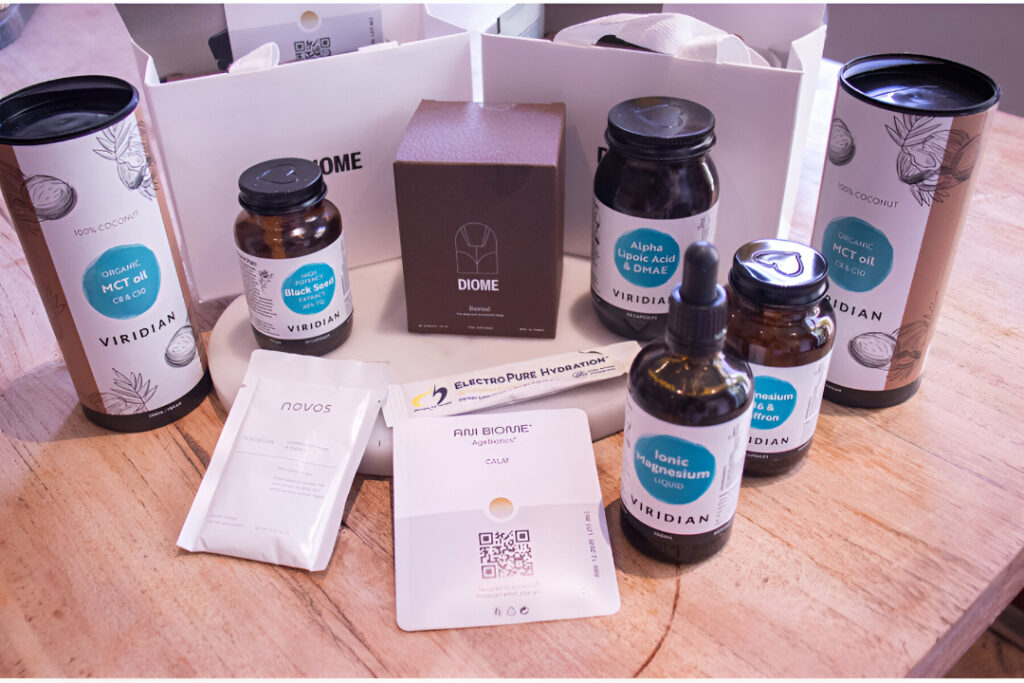
Myth 3: Supplements can compensate for lifestyle.
They can support a strong foundation. They cannot replace one.
Myth 4: Stress is just mental.
Stress is biological. It shifts hormones, glucose regulation, gut health, inflammation. The body doesn’t differentiate between psychological and physical threat — it responds the same way.
Healthy longevity is less about intensity and more about intelligent adaptation.
The Capitalyst: Many high-achievers seek your services post-burnout—what professional hurdles do you most often address, and how does your athletic background inform your approach?
Dr. Tamsin Lewis: High achievers are incredibly good at overriding signals.
The patterns we see:
- Wired-but-tired fatigue
- Sleep disruption
- Hormonal dysregulation
- Loss of drive or emotional flatness
- Overtraining the body the way they overworked their careers
My athletic background helps because I understand performance psychology deeply. Burnout isn’t weakness. It’s misapplied drive without recovery cycles. In endurance sport, you periodise training. Stress, recover, adapt. Most professionals don’t periodise their lives — they just stay in build mode indefinitely.
At Wellgevity, we reintroduce rhythm. Recovery blocks. Nervous system recalibration. Rebuilding metabolic strength before pushing performance again. It’s elite training logic applied to life.
The Capitalyst: Is there a fine line where optimizing healthspan becomes compulsive?
Dr. Tamsin Lewis: Yes — and it’s thinner than people realise.
When optimisation becomes fear-driven, it stops being health. If someone is anxious about missing a supplement, terrified of eating out, obsessively tracking every metric — that’s not BioHarmony. That’s control disguised as wellness. True longevity includes flexibility. Psychological flexibility. Metabolic flexibility. Social flexibility. Health should expand your life, not narrow it.
The Capitalyst: With longevity medicine advancing rapidly, how do you see Wellgevity evolving over the next five years?
Dr. Tamsin Lewis: The science is accelerating – precision diagnostics, mitochondrial therapies, genomics, AI-driven risk modelling. It’s an exciting time. But our evolution isn’t just about more technology. It’s about deeper integration and environment. We already run Wellgevity retreats — and they’ve become one of the most powerful parts of what we do.
Our retreats aren’t spa weekends. They’re medically grounded, performance-informed reset experiences. We integrate diagnostics, structured training, metabolic education, nervous system regulation, sleep restoration, nutrition strategy, and psychological decompression – all in one immersive setting.
People arrive depleted and leave recalibrated. Over the next five years, we’ll expand these retreats further – more specialised themes, deeper clinical immersion, and longer-format experiences focused on executive burnout, metabolic reset, hormonal optimisation, and performance longevity.
And beyond retreats, I see Wellgevity developing live-in longevity experiences – structured residential programmes where people can fully step out of their stress environment and into a longevity ecosystem. Where food, light exposure, movement, recovery therapies, medical oversight, emotional regulation practices, and community are all aligned.
Because sometimes you can’t fully recalibrate in the same environment that created the overload. The future of longevity isn’t just prescriptions or peptides. It’s lifestyle architecture. It’s building environments where the body can remember how to thrive. That’s the direction we’re moving in.

The Capitalyst: Looking back from Ironman champion to longevity trailblazer, what is the most unexpected revelation about the body-mind link?
Dr. Tamsin Lewis: That emotional stress alters physiology as powerfully as physical stress.
I used to think performance was primarily muscular and cardiovascular. What surprised me most was how unresolved emotional load changes inflammation, sleep, recovery, hormones. The body is not separate from experience. It stores it. That insight reshaped how I practice medicine entirely.
The Capitalyst: What does a typical day look like now? Any non-negotiable longevity habits?
Dr. Tamsin Lewis: Founder life is less podium, more problem-solving and I love that phase.
A typical day includes:
- Morning – My Wellgevity Coffee + school run
- Some kind of outside movement inc strength-focused training
- Clinic consults
- Team strategy
- Research /reading
- Evening – family time or speaking events
My non-negotiables:
- Resistance training 2-3 times weekly (mostly at home)
- 7+ hours sleep
- Protein-forward whole food nutrition
- Outdoor light exposure
- Phone down with family
- Quiet breathwork or decompression before bed
Longevity for me now is rhythmic, not extreme.
The Capitalyst: One piece of advice for someone in their 30s or 40s who wants decades of high performance?
Dr. Tamsin Lewis: Build muscle. Protect your nervous system. Don’t wait for symptoms.
Strength train consistently. Eat real food. Sleep properly. Address stress before it becomes pathology. And think in decades. Healthspan isn’t built in sprints. It’s built in intelligent seasons. BioHarmony is aligning your biology so it can perform beautifully for a long, long time