The Challenge of Systemic Drug Delivery
One of the biggest challenges in modern medicine is drug delivery precisely where needed within the human body. Many medications, when administered, enter the bloodstream and circulate systemically, affecting not just the target area but also healthy tissues. This widespread distribution often leads to significant side effects, limiting the dosage that doctors can safely prescribe and hindering the development of new therapies. For example, when someone takes aspirin for a headache, the drug is absorbed into the bloodstream and dispersed throughout the whole body rather than concentrating just in the brain region affected by pain.
Such off-target effects are notorious for diminishing the clinical success of many promising drugs, leading to patient discomfort and serious health complications. Side effects can range from mild nausea to damaging vital organs, which is why many drugs never make it past clinical trials. The need for innovative delivery methods that can ferry drugs directly to their intended site of action has driven researchers to explore groundbreaking technologies. One of the most promising is microrobots designed to navigate inside the bloodstream.
Enter the Microrobot: Precision Medicine in Motion
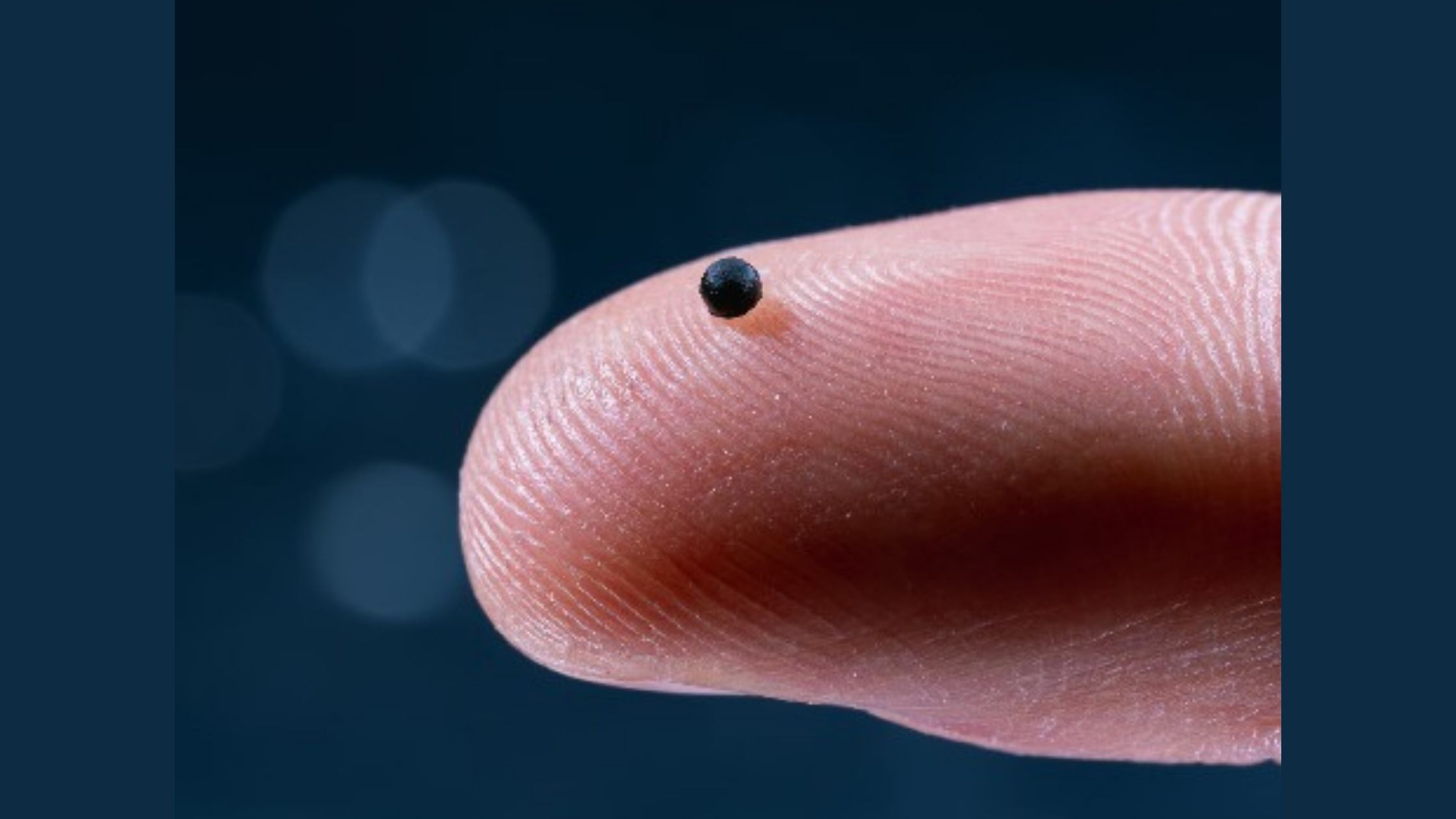
Researchers at ETH Zurich in Switzerland have developed an extraordinary solution: a microrobot the size of a grain of sand, constructed to deliver drugs with pinpoint accuracy inside the human body. This tiny robotic capsule can be controlled externally using magnets, and thanks to advanced navigation technology, it can travel through intricate blood vessel networks to reach specific disease sites.
Unlike conventional medication that disperses widely, this microrobot allows doctors to steer medicine exactly where it is needed, dramatically reducing the risk of side effects. The system’s precision offers an exciting new paradigm shift in healthcare, enabling treatments that are safer, more effective, and personalized.
Bradley J. Nelson, a professor of robotics and intelligent systems at ETH Zurich and a lead author of the research published in Science, emphasizes that this is “just the tip of the iceberg” and anticipates that surgeons will find innovative ways to harness this technology in clinical practice. The microrobot’s design and control system provide exceptional maneuverability and real-time feedback, essential for navigating the complexities of human anatomy.
How the Microrobot Works
At the heart of this breakthrough is a finely engineered capsule consisting of biocompatible materials that have all been proven safe for medical use. The device integrates iron oxide nanoparticles, which confer magnetic properties, enabling external magnetic fields to steer it through blood vessels, even against the flow of blood. To ensure visibility during the procedure, the robot includes tantalum, a dense metal that shows up clearly on X-ray imaging.
Encapsulating the therapeutic drugs is a gelatin-based shell, which serves two critical functions: protecting the medication during navigation and dissolving once the microrobot reaches its target. Physicians can remotely trigger this dissolution, releasing the drug precisely where needed.
The navigation system comprises six electromagnetic coils arranged around the patient, creating a controllable magnetic field to move the microrobot in various directions. This system offers intuitive controls somewhat akin to a PlayStation controller, allowing doctors to push or pull the capsule with great sensitivity and precision.
Thanks to this innovative design, the microrobot can be palpably guided through complicated pathways such as cerebral arteries or even cerebrospinal fluid corridors, opening new possibilities for treating conditions that were previously very challenging to manage safely.
Applications in Medicine
This new microrobotic technology holds immense promise across a range of medical applications. Primary among these are conditions that require highly localized drug delivery to delicate or hard-to-reach areas:
- Aneurysms: The microrobot can potentially deliver drugs or treatment agents directly at the site of an aneurysm, reducing the risk of rupture without affecting nearby tissues.
- Brain Cancers: Particularly aggressive tumors that are difficult to treat due to the blood-brain barrier might be targeted more safely with microrobot-guided chemotherapy.
- Arteriovenous Malformations: Abnormal connections between arteries and veins could be addressed with pinpoint precision, minimizing risks during treatment.
Beyond these, the technology could revolutionize therapies for infections, blood clots, and other vascular or localized diseases. The microrobots have already demonstrated their ability to operate effectively in silicone models of human and animal blood vessels and have been safely tested in pigs, whose vascular systems closely resemble those of humans.
These tests confirm the microrobot’s potential to change how invasive procedures and drug delivery are approached, making treatments less risky and more patient-friendly.

From Lab to Clinic: The Road Ahead
The ETH Zurich team projects that these microrobots could enter clinical trials within the next three to five years, a relatively short timeframe for such advanced medical technology. Preparing for human trials means ensuring the robot’s design meets rigorous regulatory standards for safety and efficacy, and developing user-friendly controls for medical practitioners.
Once adopted clinically, the microrobot could become a standard tool in operating rooms, used by surgeons and interventional radiologists alike. Experts outside the project, such as Howie Choset of Carnegie Mellon University, have expressed high enthusiasm, calling it “by far the most exciting” advancement in precision care that they’ve seen in decades.
The road to widespread use will involve overcoming manufacturing scale-up challenges, further testing in diverse medical conditions, and integrating the technology with existing clinical workflows.
The Broader Impact on Healthcare
The introduction of microrobotic drug delivery could revolutionize healthcare at multiple levels. Patients stand to benefit from therapies with far fewer side effects, shorter hospital stays, and better outcomes. Doctors could tailor treatments more precisely, reducing the guesswork and imprecision associated with systemic drugs.
This advancement also exemplifies the powerful integration of robotics, nanotechnology, and biomedical sciences. Such convergence fosters new innovations, enabling highly personalized medicine that adapts in real-time to each patient’s biology.
With drug delivery becoming safer and more targeted, pharmaceutical development might see higher success rates, encouraging investment and innovation in treatments that previously struggled due to collateral damage to healthy tissues.
Challenges and Future Directions
While promising, microrobot technology faces hurdles before becoming mainstream. Key challenges include:
- Ensuring safe navigation through complex and varying biological environments without causing disruptions.
- Developing reliable retrieval or bioabsorption methods to ensure microrobots do not provoke immune reactions or remain in the body.
- Expanding capabilities to deliver multiple drugs or sensors for diagnostics alongside therapies.
Future research is actively addressing these issues, improving materials, and enhancing control algorithms in tandem with clinical input. Innovations such as microrobots that dissolve entirely after use, or those integrated with biosensors for real-time monitoring, are on the horizon.
Collaborations among engineers, clinicians, and regulatory bodies will be essential to fully realize the benefits of this technology.
A New Era of Targeted Therapy
Microrobots represent a transformative leap in the pursuit of precision medicine. By delivering drugs exactly where they are needed, these tiny devices have the potential to eliminate many side effects that plague conventional therapies, fundamentally improving how diseases are treated.
As clinical trials progress and the technology advances, microrobots are expected to become common tools in hospitals worldwide. They promise safer, more effective, and personalized treatments, marking a new era in which medicine travels through the bloodstream with surgical precision and improves millions of lives.
The future of healthcare will focus not only on smarter drugs but also on smarter delivery methods, with microrobots playing a leading role.