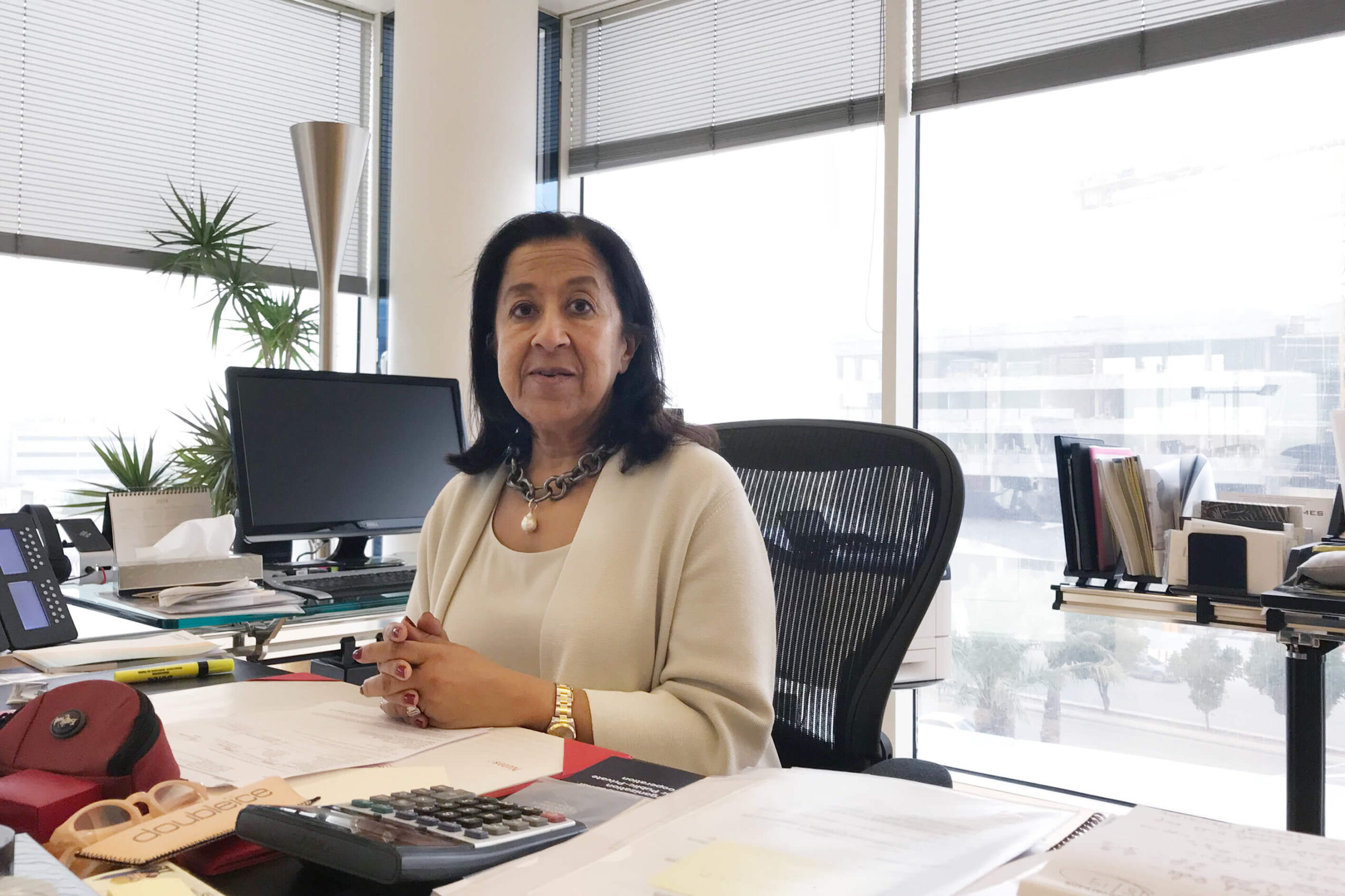
Picture this: A woman who could not legally drive in her own country, yet she ran one of its biggest conglomerates. Another woman who became the first Saudi to sit on a major U.S. corporate board, years before most Americans could find Saudi Arabia on a map. Together, these two sisters now help steer a fortune estimated at around $50 billion, quietly redefining what power looks like in the 21st century.
This is the story of Lubna and Hutham Olayan – two women who transformed a family trading business into one of the most influential private capital networks connecting Riyadh to Wall Street, all while blazing a trail for women’s leadership in one of the world’s most conservative business environments.
From Desert Dust to Global Dominance
The empire the sisters would one day inherit was not built in a boardroom. It was built on the back of trucks crossing the Arabian desert.
Their father, Suliman Olayan, was born in 1918 in Unayzah into a merchant family. In 1947, he started a trucking business, hauling goods across vast stretches of sand when Saudi Arabia was still finding its economic footing. By 1954, he had launched the General Trading Company and pioneered commercial insurance in the Kingdom. What began as a logistics operation evolved into something far more ambitious.
Today, the Olayan Group stands as a privately-owned global enterprise spanning more than 50 companies. Its portfolio cuts across equities, real estate, and private equity, with substantial stakes in some of the world’s most powerful financial institutions. This is not just wealth. It’s infrastructure. It’s influence. It’s a bridge between East and West built over decades of strategic patience.
Two Sisters, Two Continents, One Vision
The sisters operate like two halves of a single brain, separated by thousands of miles but united in purpose.
Lubna Olayan stayed in Saudi Arabia, the beating heart of the family’s Middle Eastern operations. Educated abroad but deeply rooted in Riyadh, she rose through the ranks to become CEO of Olayan Financing Company (OFC) in 2003. At the time, she was one of the first women to head a major Saudi company, a quiet revolution in a nation where women’s professional participation was minimal.
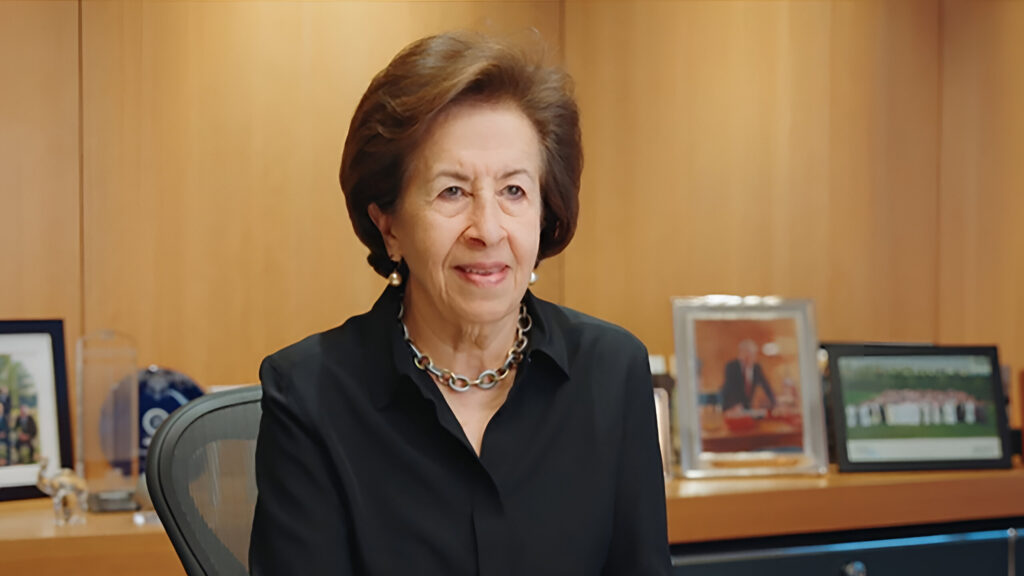
Hutham Olayan planted herself in New York, heading Olayan America and overseeing the family’s investments across North and South America. In 1987, she became the first Saudi woman to join the board of a major U.S. public company (Thermo Electron), later adding Morgan Stanley to her board positions. While Lubna navigated the complexities of Saudi business culture, Hutham wired the family fortune directly into Wall Street’s power grid.
One sister in Riyadh, shaping a region. One on Park Avenue, connecting continents.
Breaking Barriers One Factory Floor at a Time
Lubna’s early days at the family business were not marked by champagne celebrations or corner offices. They were marked by absence, the absence of women’s bathrooms in factories, the absence of female colleagues in meeting rooms, the absence of precedent.
She was often the only woman among thousands of employees. The infrastructure simply did not exist for her presence because no one had imagined it would need to.
But Lubna understood something crucial: change does not always come from confrontation. Sometimes it comes from negotiation, patience, and proving value at every turn. “You negotiate, you deal, you give and take,” she once explained about working with officials to expand women’s participation in business.
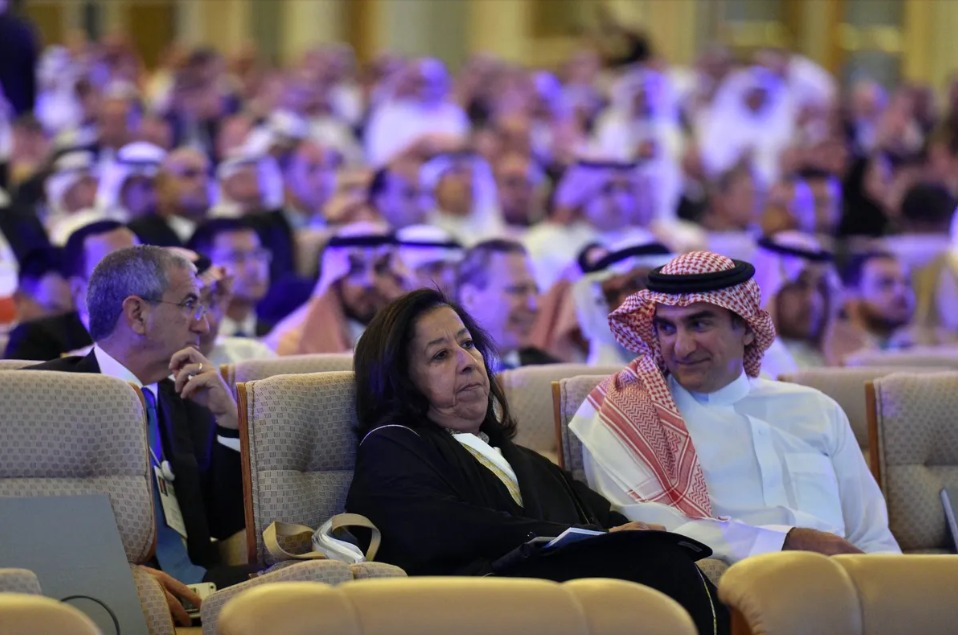
Her list of firsts tells the story of a quiet revolution: • 2004: First woman to speak at a mixed-gender conference in Saudi Arabia (Jeddah Economic Forum), where she advocated for women’s economic participation • 2004: First woman elected to the board of a Saudi publicly listed company • Later years: First Saudi woman to chair a Saudi bank (Saudi British Bank), becoming a symbol of transformation in the financial sector
These were not just personal achievements. Each one cracked open a door for the women who would follow.
The Invisible Empire: How They Actually Make Money
The Olayan sisters do not run a flashy consumer brand with billboards and commercials. They do not chase Instagram followers or magazine covers. They run something far more powerful: capital itself.
The group’s investment portfolio reads like a who’s-who of global economic power: BlackRock, JPMorgan Chase, Microsoft, Alphabet, Amazon. These are not small stakes. They’re strategic positions in the companies shaping our digital and financial future.
But the empire is not purely financial. Walk into a Burger King in Riyadh? That’s Olayan. Drink a Coca-Cola bottled in the region? Olayan. Need oilfield services? Olayan operates there too. The family business spans consumer goods, manufacturing, services, and financial services, a diversified web of operating companies and investment vehicles that generate both income and influence.
This is the genius of their approach: they are everywhere and nowhere, essential yet invisible, powerful precisely because they don’t need the spotlight.
The Power of Privacy in a Transparent World
In an era of influencer billionaires and CEO celebrities, the Olayan sisters have chosen a different path: strategic invisibility.
The family remains intensely private. You will not find them on social media. They rarely give interviews. Their wealth, now estimated at around $50 billion, is discussed more in financial circles than tabloids.
This low-profile strategy is not timidity. It is calculation. By staying out of political noise, avoiding unnecessary controversy, and aligning with national development goals, they have maintained both government trust in Saudi Arabia and investor confidence on Wall Street. In a region where visibility can mean vulnerability, the sisters understood that true power often works best in the shadows.
While others chase headlines, the Olayas chase returns. While others build personal brands, they build institutional capacity. It’s old money wisdom applied to new money scale.
The Road Ahead
Today, women in Saudi Arabia can drive. They can travel without male permission. They can work in industries once unthinkable. These changes did not happen in a vacuum. They happened because pioneers like Lubna Olayan showed it was possible, profitable, and powerful to include women in the economy.
The Olayan sisters prove that influence does not require a microphone. Change does not always announce itself with fanfare. Sometimes the most transformative leaders are the ones you do not see, the ones rewiring systems from within, moving billions across continents, opening doors they once had to knock on themselves.
Their story is not just about wealth or breaking barriers. It is about the patient, strategic work of building something that outlasts you. It is about understanding that real power isn’t loud. It’s undeniable.
And in a world obsessed with being seen, perhaps the greatest luxury of all is being powerful enough not to need the spotlight.