The Capitalyst: From Van Cleef & Arpels jewels to Hermès, what early lesson in crafting emotional brand stories shaped your eventual shift to boutique consultancy?
Marie: From my early years working with maisons such as Van Cleef & Arpels and Hermès, I learned that luxury is never about the product alone — it is about the invisible architecture of emotion built around it.
At Van Cleef & Arpels, storytelling was inseparable from craftsmanship. A jewel was not presented as an object, but as a narrative of heritage, romance, time, and transmission. Every detail — from archival references to the tone of voice in a press release — had to echo the maison’s poetic DNA. I understood very early that consistency is not rigidity; it is devotion. Emotional resonance comes from coherence.
At Hermès Parfums, I witnessed something equally powerful yet different: the art of suggestion. Fragrance cannot be “shown”; it must be evoked. There, I refined my sensitivity to nuance — to the space between words, to restraint, to the intelligence of the audience. Emotion was crafted through atmosphere rather than assertion.
The defining lesson that shaped my eventual shift to boutique consultancy was this: the most compelling brands are not the loudest, but the most aligned. When storytelling is diluted by scale, speed, or internal compromise, something essential is lost. I realized I was most impactful when working closely, almost intimately, with founders and creative directors — protecting their essence rather than amplifying noise.
Boutique consultancy became a natural extension of that philosophy. It allows me to work with the same precision and emotional integrity I admired in those maisons — crafting narratives that are not manufactured, but cultivated.
The Capitalyst: How do you identify undervalued luxury startups that are ripe for investor advisory, and what is one bold bet you’ve taken that has paid off recently?
Marie: A very concrete example is my early involvement with By Kilian, founded by Kilian Hennessy.
When Kilian was starting his business, the brand was far from the global force it would later become. But what was immediately evident was the strength of its narrative DNA: heritage (as heir to a cognac dynasty), sensuality, storytelling, and an unapologetic commitment to high perfumery codes at a time when the market was tilting toward mass prestige.
What made it undervalued in its early days wasn’t the product — the juices were exceptional — but the market’s hesitation toward a bold, niche positioning. The pricing was ambitious, the aesthetic was dark and cinematic, and the storytelling leaned into decadence rather than accessibility.
The signal I recognized was coherence. The founder’s personal mythology, the refillable lacquered coffrets, the theatrical naming — everything was aligned. It wasn’t opportunistic luxury; it was authored luxury. That kind of clarity is rare, and when it exists early, it’s often a precursor to long-term brand equity.
The bold bet was to lean into that intensity rather than soften it for broader appeal. Protect the codes. Elevate the narrative. Resist dilution.
That conviction ultimately proved right when Estée Lauder Companies acquired the brand. The acquisition validated what had been visible from the beginning: when a luxury startup has a strong emotional architecture and disciplined storytelling, it is not niche — it is simply early.
For me, that experience reinforced a core principle in investor advisory: the most valuable luxury brands are those that dare to be specific before they become universal.
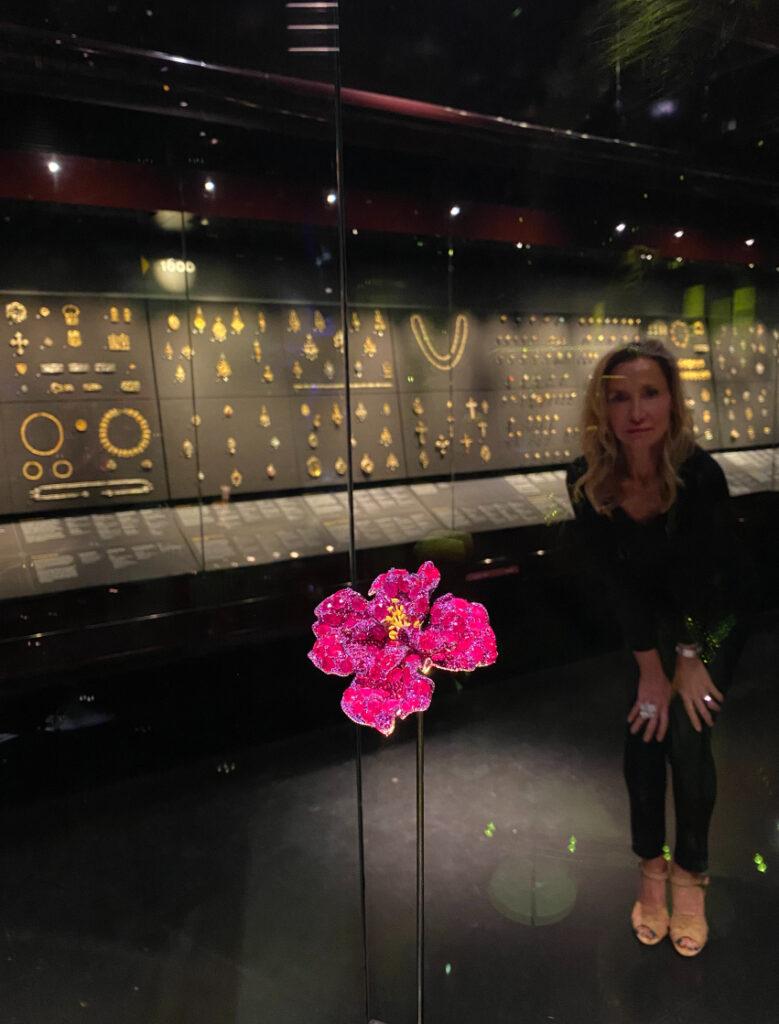
The Capitalyst: On elevating Cindy Chao’s jewelry to art for the Ruby Peony’s V&A showcase: What collector strategy proved most effective, and which curatorial challenge was toughest?
Marie: My strategy was to position Cindy Chao not simply within the world of high jewellery, but firmly within the realm of collectible art. From the outset, the objective was to elevate her creations beyond the fashion cycle and present them as timeless masterpieces worthy of the same attention as sculpture or painting.
One of the most effective approaches was introducing her work into true art contexts rather than traditional jewellery environments. By building visibility among collectors at major art fairs—particularly TEFAF Maastricht—we allowed the pieces to be seen alongside museum-level works. This subtly shifted perception: collectors began to approach the jewels not as accessories, but as unique works of art. It also brought a broader international audience to a creator who had previously been perceived primarily through the lens of Taipei’s jewellery scene.
The showcase of the Ruby Peony at the Victoria and Albert Museum reinforced that narrative. Presenting the piece within an institutional context validated the idea that Cindy’s work belongs to the canon of contemporary decorative arts.
The toughest curatorial challenge was precisely that transition in perception. Jewellery is often instinctively viewed as luxury or adornment, whereas art carries a different intellectual weight. The task was therefore to frame each piece—through storytelling, context, and placement—so that collectors understood the craftsmanship, rarity, and artistic vision behind it. Once that shift happened, the conversation changed completely: the jewels were no longer “beautiful objects,” but singular works to be collected and preserved.
The Capitalyst: From construction site to launch, you shaped Hôtel Costes London’s visual identity to echo its Parisian spirit—what was your core approach to that city-spanning translation, and what surprised you most?
Marie: From the very beginning, my role was essentially that of a cultural translator. Jean‑Louis Costes embodies a very specific Parisian spirit—sensual, slightly decadent, unmistakably French. But bringing that into At Sloane, in the heart of Chelsea and under the stewardship of the Cadogan Estate, required a delicate balance. My approach was to preserve the soul of Hôtel Costes while ensuring every detail resonated with London’s character.
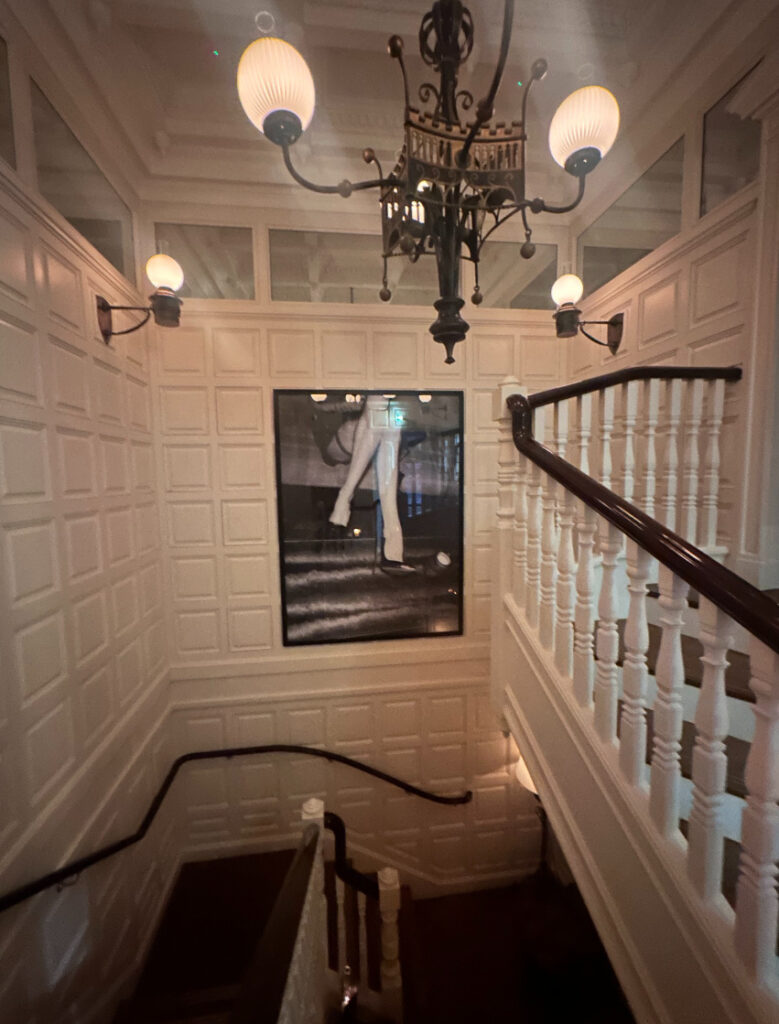
I worked from the construction phase through to launch, shaping a visual and cultural identity that felt authentically Parisian but unmistakably at home in Chelsea. That meant translating rather than copying. For example, the artwork was curated around a British photographic eye, anchoring the space locally while maintaining the sensual aesthetic associated with Costes. I even chose a picture of my legs in the staircase!
The scent chosen for the hotel came from the English perfume house Sana Jardin, grounding the experience in London’s own creative ecosystem. Even the music programming followed that philosophy—bringing in DJs who could capture the legendary Costes atmosphere while speaking to the rhythm of the London scene.
What surprised me most was how naturally the two cultures could converse. When the curation is thoughtful, Parisian elegance and British refinement don’t clash—they elevate each other. The result was not a replica of Paris, but a dialogue between two cities, with Chelsea giving Hôtel Costes a distinctly London heartbeat.
The Capitalyst: You’ve worked across Paris, New York, and London. How has your global journey redefined what “luxury communications” means in a digital-first world?
Marie: Having worked across Paris, New York, and London, I’ve seen how luxury communications must evolve without losing its soul. In Paris, I learned the artistry of storytelling and how to craft narratives that evoke desire. New York showed me the speed and immediacy required in a digital-first environment, while London emphasized balancing heritage with contemporary relevance.
Yet, even in a world dominated by screens, I remain a firm believer in the power of real-life experiences. Luxury is about creating moments that linger—whether through a beautifully curated boutique encounter or an immersive event. My global journey has taught me that digital tools are invaluable amplifiers, but they must serve the emotional, human-centered experiences that define true luxury. Working with iconic houses like Hermès, I’ve seen how weaving together IRL experiences and digital storytelling creates a resonance that neither alone could achieve.
The Capitalyst: How has luxury communications changed since you started your career, and what do brands most often get wrong today?
Marie: When I began my career in luxury communications, social media simply did not exist. The industry was built on a very different rhythm — one shaped by editorial calendars, in-person relationships, and the quiet authority of cultural gatekeepers. At houses like Hermès and Van Cleef & Arpels, communication was less about immediacy and far more about orchestration. Stories were crafted slowly and released through carefully chosen channels: a magazine cover, a private dinner, a press trip, a meaningful cultural partnership. The objective was not visibility at all costs, but resonance — creating an emotional universe around a brand that people would aspire to enter.
What has changed most today is the speed and the volume of communication. Social media has democratized visibility and made brands permanently “on stage.” While this offers extraordinary opportunities, it has also created a temptation to chase attention rather than build meaning. Luxury was once about rarity, patience, and depth; digital culture rewards frequency and immediacy.
What many brands get wrong today is confusing presence with desirability. Posting constantly, collaborating indiscriminately with influencers, or reacting to every trend often dilutes the very mystique that makes luxury powerful. True luxury communication still requires editing, restraint, and a strong point of view. The brands that succeed are those that use digital platforms as amplifiers of a coherent story — not as substitutes for it.
Despite working in a digital-first world, I still believe deeply in the power of real-life experiences. The most powerful luxury moments still happen offline: a beautifully staged event, the discovery of a fragrance, the emotion of craftsmanship seen up close. Digital can extend the story, but it cannot replace the intimacy and memory created in the physical world. That balance — between cultural relevance online and emotional experience in real life — is where the future of luxury communication truly lies.
The Capitalyst: How do you see AI reshaping luxury PR in the coming years? Will it enhance personalization and precision, or does it risk diluting the authenticity that luxury brands are built on?
Marie: AI will undoubtedly enhance personalization and precision in luxury PR, but it will only be valuable if it remains a tool rather than the author of the narrative.
Luxury communication has always been about understanding very specific audiences — collectors, cultural leaders, editors, and tastemakers — and speaking to them in a way that feels rare and considered. AI now allows brands to analyse communities and cultural signals with a level of granularity that was impossible even a few years ago. Used intelligently, it can help maisons tailor narratives and experiences with far relevance and subtlety.
The risk, however, lies in over-automation. If brands rely on AI to generate content at scale, they risk diluting the very qualities that define luxury: authorship, cultural depth, and a sense of human taste.
The brands that will succeed will treat AI as an analytical instrument while keeping creative direction firmly human. A compelling example of this balance was the approach of Virgil Abloh at Louis Vuitton. He embraced digital culture and new technologies, yet everything was anchored in a strong intellectual and cultural point of view.
Ultimately, AI can sharpen the precision of luxury communication, but authenticity — the true currency of luxury — will always come from human vision and cultural intelligence.
The Capitalyst: Looking ahead to 2027, where do you see the intersection of art collecting, sustainability, and luxury evolving? What trends are you watching most closely?
Marie: Looking ahead to 2027, I see the intersection of art collecting, sustainability, and luxury becoming far more intentional and culturally anchored.
My perspective is shaped by a very personal relationship with the art world. I’ve been a patron of the V&A, I was married for eighteen years to an Old Master dealer, and I collect photography myself. Living close to the art market for so long teaches you that collecting has always been about more than ownership — it is about stewardship and cultural continuity.
One trend I’m watching closely is a renewed respect for connoisseurship. After years of speculative collecting and trend-driven markets, serious collectors are returning to depth: understanding provenance, craftsmanship, and artistic context. Sustainability, in that sense, is also intellectual — collecting with longevity in mind rather than simply following market hype.
At the same time, sustainability in the environmental sense is beginning to influence both artists and collectors. Artists working with ecological themes, recycled materials, or slower production methods are attracting serious institutional attention. Luxury brands are also starting to engage more thoughtfully with artists, not just through sponsorships but through long-term cultural partnerships.
Photography is another area I believe will continue to grow in importance. It speaks directly to contemporary culture and allows collectors to support artists who are documenting the complexities of our time — politically, socially, and environmentally.
Ultimately, I think the most sophisticated collectors in the coming years will be those who see collecting as a form of patronage. The future of luxury will not just be about acquiring objects, but about supporting artists, institutions, and ideas that shape the cultural landscape.
The Capitalyst: You were named to the City & Beach Best Dressed List. Beyond fashion itself, what does personal style mean to you, and how does it inform the way you work with luxury brands?
Marie: Being named to the Best Dressed List by City & Beach Magazine was flattering, of course, but for me personal style has never been about fashion in the superficial sense. It is really about coherence — becoming fully who you are and expressing that with confidence and joy.
My love of colour and a certain sense of playfulness come directly from my years working with Hermès. Hermès taught me that elegance does not have to be austere; it can be vibrant, intelligent, and full of life. Colour there is never random — it is emotional, cultural, and deeply considered. That philosophy has stayed with me.
Personal style, in that sense, is a form of authorship. It reflects your eye, your discipline, and your curiosity about the world. Just as in luxury communication, it is about creating a point of view that feels authentic rather than imitative.
It also informs the way I choose the brands I work with. I would never advise or represent a luxury house that does not resonate with my own spirit and aesthetic. Authenticity is essential in this field — you cannot convincingly communicate desire, beauty, or culture if you do not genuinely believe in the universe you are helping to build.
Ultimately, style for me is not about clothes; it is about identity. Becoming who I am — and continuing to evolve — is the essence of it, and that same philosophy guides how I engage with luxury brands.
The Capitalyst: What does a perfect day look like for Marie Moatti? Walk us through it, from morning rituals to evening reflections.
Marie: A perfect day for me begins very early. I’ve always been an early bird and rarely sleep more than five hours a night. I never set an alarm — I almost always wake naturally before 6 a.m., when the city is still quiet and the light is just beginning to change. The first ritual is a black coffee, ideally while watching the sun rise. There is something deeply symbolic in that moment: the promise that a new day — and new possibilities — are unfolding.
I usually jump into the shower quickly and start listening to the news. I follow several outlets, from BBC {which I find so biased !) to Le Figaro, precisely because their perspectives can differ so much. Understanding what is happening in the world is, for me, an absolute duty. Once I feel I have a clear enough picture of the day’s events, I switch to music — which immediately changes the atmosphere.
At around 7:30 a.m., the horses from Household Cavalry pass through my street during their morning route. It’s a wonderfully theatrical London moment and a signal that the day is officially beginning. By then I’m usually already moving — sometimes literally dancing around the house, occasionally even singing. How you set your mood at dawn often determines the tone of the entire day.
Sunday is when I map out the week ahead, but I always leave space for the unexpected. I once read a book by K. P. Singh that stayed with me because of a simple idea: you must remain attentive to the signals the universe sends you. Planning is important, but so is the ability to recognize an opportunity when it appears.
My workday itself stretches across time zones. Since I no longer keep a traditional office, I tend to meet clients and collaborators in my clubs in Mayfair. It creates a far more fluid rhythm — conversations, strategy, ideas — often moving between Paris, Shanghai, Dubai, London, New York, and beyond in the same day.
I never go out before Thursday evening, but when I do, I almost always go dancing. It’s one of the most cathartic ways I know to reset the mind after a week of intense thinking and conversation.
For me, the perfect day is really about rhythm: beginning in stillness at dawn, staying intellectually curious about the world, allowing space for unexpected encounters, and ending with movement, music, and a sense that the day has been fully lived.