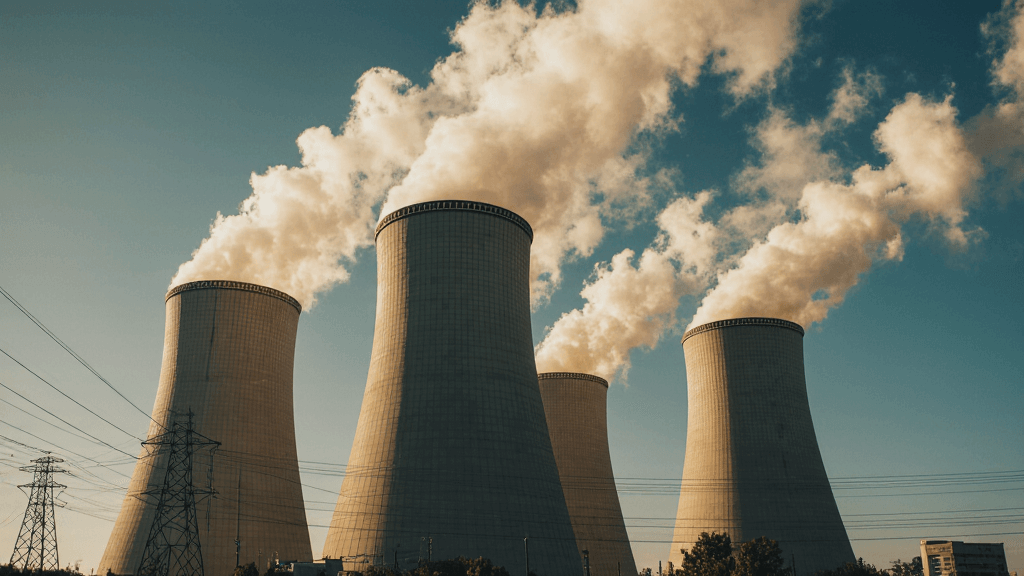
We are living through what might be the biggest energy demand surge in human history. Think about it: every ChatGPT query, every Netflix stream, every electric vehicle charging in your neighborhood is part of a global electricity hunger that is growing faster than a teenager’s appetite.
Nuclear power is becoming a key pillar of global decarbonization, with energy transition investments reaching record highs in 2024, fueled by rising demand from AI, data centers, and widespread electrification.
The numbers are staggering. Artificial intelligence alone is expected to triple data center electricity consumption by 2030. Meanwhile, we are electrifying everything from cars to heating systems, creating an energy demand tsunami that is heading straight for our power grids.
The Nuclear Comeback Story
Remember when nuclear power was the future’s golden child? Back in the 1970s and 80s, nuclear plants were popping up everywhere like Starbucks in the 2000s. Countries dreamed of electricity “too cheap to meter,” and nuclear energy seemed destined to power our modern world.
Then reality hit hard. Chernobyl in 1986 turned that dream into a nightmare, and Fukushima in 2011 delivered the final blow to public confidence. Suddenly, nuclear became the energy equivalent of that relative no one wants to talk about at family gatherings. Funding dried up, projects got cancelled, and the industry went into what felt like a decades-long hibernation.
But here is the thing about phoenixes – they rise from ashes stronger than before.
Why Wind and Solar Aren’t Enough (Yet)
Do not get me wrong – renewable energy is absolutely crucial for our planet’s future. Wind and solar have become cheaper than anyone imagined possible. But there is a problem that’s as predictable as… well, the weather.
Solar panels do not generate electricity at night and wind turbines sit idle when the air is still. It is like trying to run a 24/7 diner that only serves food when the cook feels like showing up. “It’s clear today that the strong comeback for nuclear energy that the IEA predicted several years ago is well underway, with nuclear set to generate a record level of electricity in 2025,” said IEA Executive Director Fatih Birol.
Nuclear power plants, on the other hand, are like that reliable friend who is always there when you need them. They run 24/7, rain or shine, providing what energy experts call “baseload power” – the steady foundation that keeps our lights on and our digital world spinning.
The Global Nuclear Renaissance
The numbers tell an incredible story. Nuclear energy accounts for just 10% of global electricity generation, but here is the kicker – it provides 25% of the world’s low-carbon electricity (Source: International Energy Agency). That is like being the smallest player on a basketball team but scoring a quarter of all the points.
France figured this out decades ago, generating over 70% of its electricity from nuclear power. Now, other countries are scrambling to catch up. Canada, South Korea, and the UAE are all expanding their nuclear portfolios like investors diversifying their portfolios during a bull market.
The Price Tag Reality
Let us talk about the elephant in the room: cost. Building a nuclear power plant has traditionally been like buying a luxury yacht – if you must ask the price, you probably cannot afford it. Traditional nuclear plants can cost $20-30 billion and take over a decade to build. That is like starting a construction project when your kid is born and finishing when they graduate high school.
But the industry has learned from its expensive mistakes. The new approach focuses on standardization, factory construction, and modular design – think IKEA furniture but for power plants.
The Technology Revolution
Enter Small Modular Reactors (SMRs) – the game-changing technology that is reshaping nuclear power like smartphones revolutionized communication. Small modular reactors (SMRs) lead innovation, with Holtec and NuScale advancing 600-924 MW projects
These compact, factory-built reactors can produce up to 300 megawatts of power – enough to supply electricity to about 240,000 homes. Instead of building massive plants that take forever to complete, SMRs can be manufactured in factories and assembled on-site like high-tech Lego blocks.
The U.S. government is backing this revolution with serious money. A $900 million funding initiative to advance small modular reactor deployment aims to expand the supply of reliable, affordable, and abundant energy for Americans.
Meanwhile, Generation 4 reactors and fast reactors are pushing the boundaries even further, promising enhanced safety features and the ability to “burn” existing nuclear waste as fuel.
The Safety Reality Check
Here is a fact that might surprise you: more people have died from air pollution caused by fossil fuel energy production in the past year than from nuclear accidents in the entire history of nuclear power. Coal-fired power plants release more radiation into the environment annually than nuclear plants do in normal operation.
Artificial intelligence isn’t just driving energy demand; it’s also making nuclear power safer and more efficient. AI systems now monitor reactor behavior, optimize fuel usage, predict maintenance needs, and help avoid potential problems before they occur.
It’s like having a super-intelligent co-pilot that never sleeps, never gets tired, and can process thousands of data points simultaneously to ensure everything runs smoothly.
Solving the Waste Puzzle
The radioactive waste issue has been nuclear power’s Achilles’ heel for decades. Critics love to paint pictures of glowing green barrels leaking into groundwater, but the reality is far less dramatic and much more manageable.
Here is a mind-blowing fact: all the nuclear waste ever produced in the United States could fit inside a single football field stacked 10 meters high (Source: U.S. Department of Energy). Compare that to the millions of tons of CO2 and toxic ash that fossil fuel plants pump out annually.
Even better, innovative U.S. startups like Oklo and Curio are developing closed-loop systems that convert nuclear waste into new fuel. It is like turning your trash into treasure – literally.
The Economic Ripple Effect
The nuclear renaissance isn’t just about electricity – it’s reshaping entire economies. Countries with strong nuclear programs are attracting energy-intensive industries like data centers, manufacturing, and AI development. It’s creating a competitive advantage that’s hard to replicate.
For consumers, nuclear power offers price stability in an era of volatile energy costs. Unlike fossil fuels, uranium prices don’t fluctuate based on geopolitical tensions or supply chain disruptions. Nuclear plants, once built, can operate for 60-80 years with minimal fuel costs.
Investment patterns are shifting dramatically. Nuclear power is capturing an increasing share of this massive investment flow as countries recognize its critical role in energy security and climate goals.
The Road Ahead
We are standing at an energy crossroads. The choices we make in the next decade will determine whether we can meet growing electricity demand while avoiding catastrophic climate change. Nuclear power is not the only solution, but it’s increasingly clear that it’s an essential piece of the puzzle. The nuclear phoenix is rising, powered by technological innovation, economic necessity, and a growing recognition that reliable, clean energy is not a luxury – it is the foundation of our modern civilization. Whether we are ready or not, the atomic age 2.0 is here, and it is about to electrify our world in ways we never imagined.