Shan Bhatnagar: “Indian design is rooted in craft, storytelling, and soul”
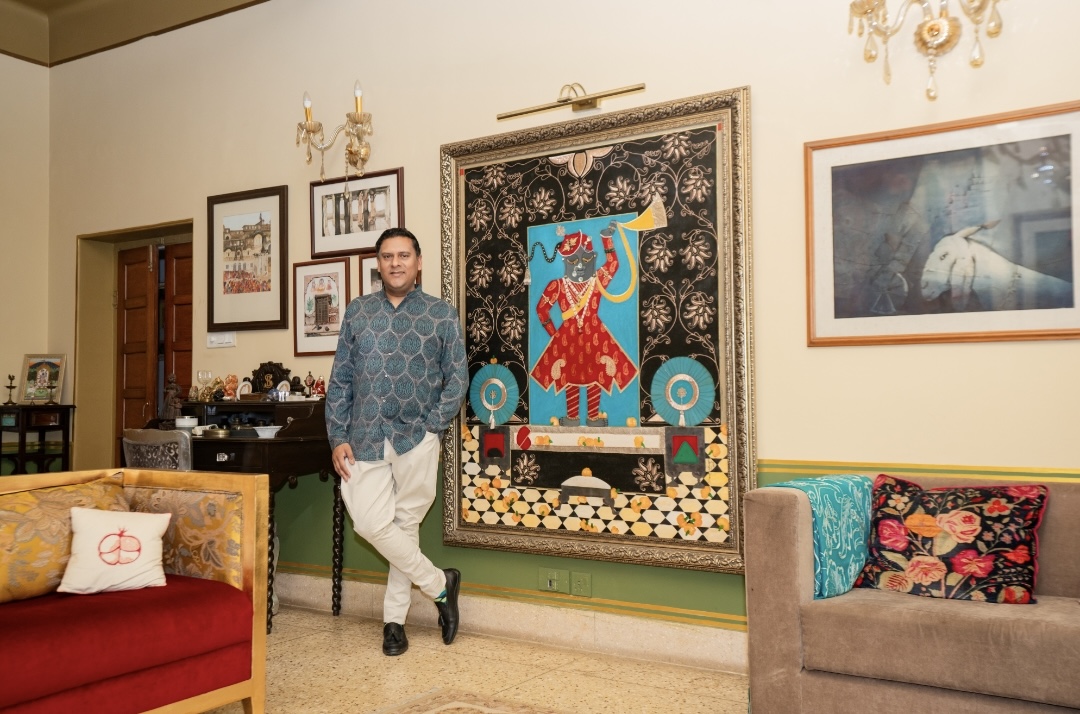
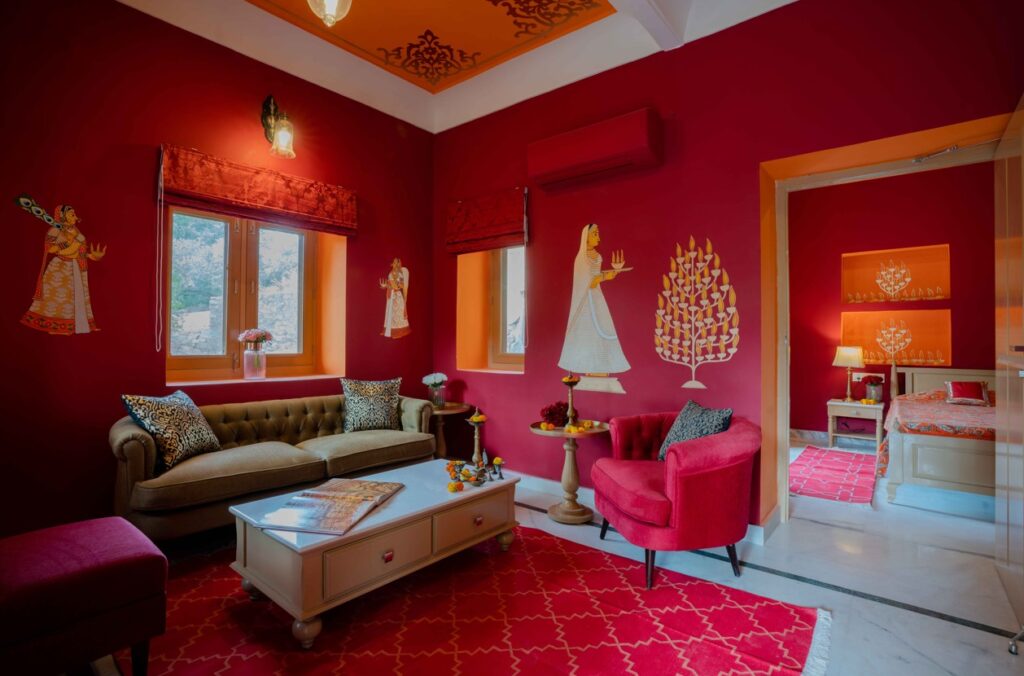
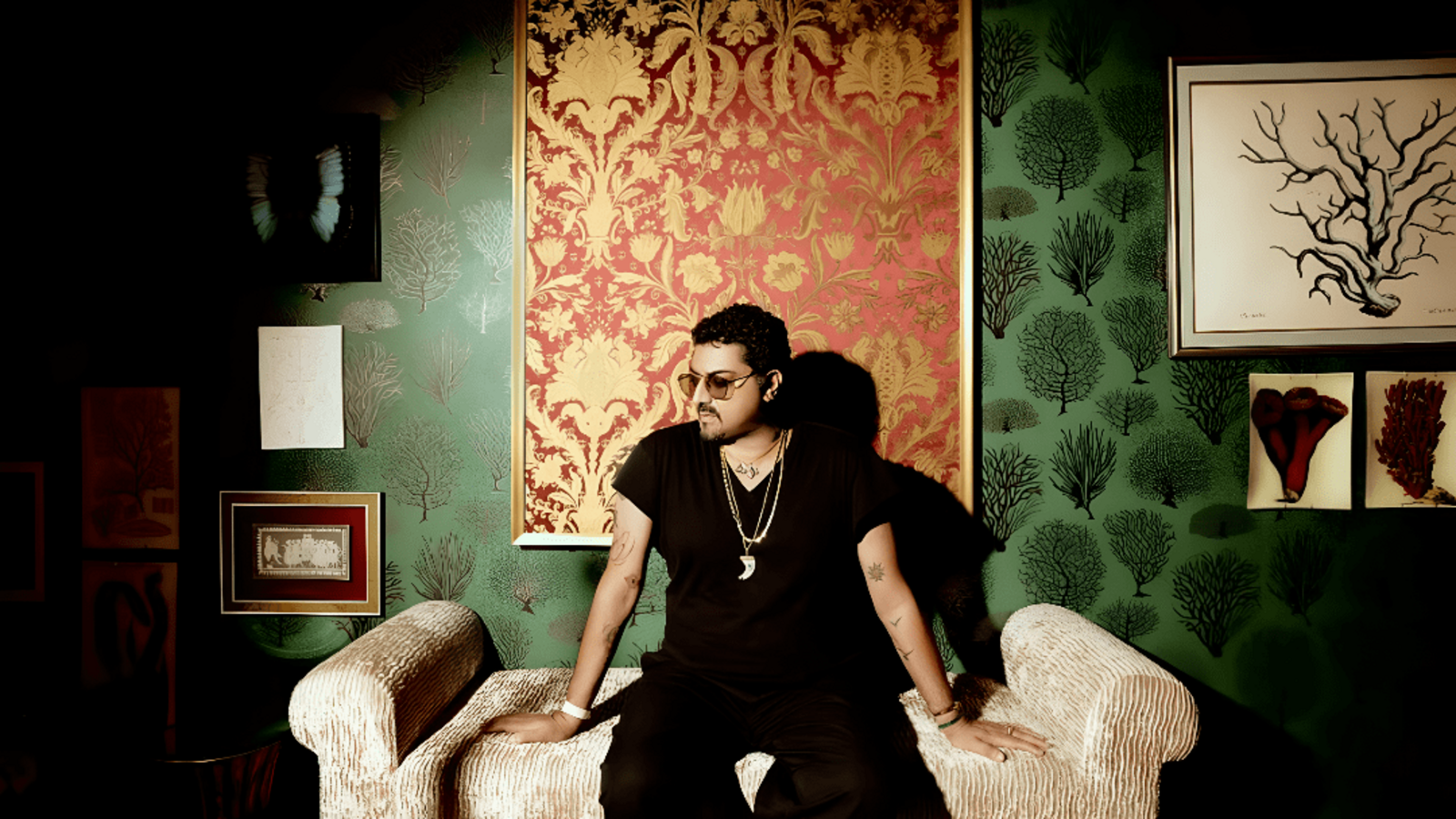
Shan Bhatnagar, Jaipur-based Pichwai artist and interior designer, masterfully blends self-taught painting with heritage preservation. From corporate economics to evoking Lord Shrinathji’s divine moods, he transforms ancestral homes and spaces like Laalee homestay into vibrant celebrations of Indian craft and maximalist storytelling.
TC: You started off sketching monuments in Delhi and eventually moved into heritage design in Jaipur. Can you take us back to your earliest memories of creativity and what first drew you to art and architecture?
SB: My earliest memories are filled with paint, brushes, and the gentle encouragement of my parents. They always celebrated my little creations, and I truly believe that when a child is praised and appreciated at a young age, it nurtures a confidence that allows their talent to grow and eventually flourish.
I grew up in Sundar Nagar in Delhi, a neighbourhood surrounded by history – Purana Qila, Humayun’s Tomb, and Lodhi Gardens were all close by. The Sunder nagar market was also famous for antique shops and art galleries The old buildings, ruins, and intricate carvings around me were a constant source of fascination. I often found myself wondering about the time, care, and craftsmanship that went into creating such detailed structures; it always left me in awe.
Looking back, I realise that this early exposure to heritage architecture and the beautiful homes in my neighbourhood played a defining role in shaping my aesthetic sensibilities. It is the reason I am naturally drawn to beauty in art, antiques, and historic spaces. Those surroundings didn’t just influence me—they formed the foundation of my creative identity.
TC: What was the turning-point when you decided to leave the corporate world and fully embrace your self-taught artist and designer identity?
SB: I would always look forward to coming home and painting, even during my corporate days. So my shift into the art world was never a sudden decision – painting has always been my first love. When opportunities came my way, I simply embraced them.
The first big moment arrived 22 years ago with an exhibition at a gallery called Tabalu. I created a series of watercolour paintings of the old city of Jaipur titled “A Coat of Pink.” The works captured havelis, temples, everyday street life—everything that exists within the fortified walls of Jaipur. The show was a complete sell-out and was attended by Her Highness Rajmata Gayatri Devi. She bought two paintings from that exhibition, which remains one of the defining highlights of my life.
From there, I continued doing a few more shows and gradually found myself drawn to painting Krishna, especially icons of Shrinathji. I began recreating the darshans I had experienced at the haveli of Shrinathji in Nathdwara. These paintings, or icons, resonated deeply with collectors as well, and found homes with some remarkable patrons such as Swati Piramal, Shobhaa De, Kanika Kapoor, Princess Diya Kumari, among others.
Each step felt natural, guided by passion rather than a plan—and that is how my artistic journey unfolded.
TC: Growing up in Delhi and then settling in Jaipur, how did those two very different cities shape your design sensibility and appreciation for heritage?
SB: I consider both cities deeply historical, filled with stunning monuments and architectural treasures—yet each with a culture entirely its own. But Jaipur captured my heart instantly. The city’s architecture, art, living heritage, and the way its people proudly embrace their traditions moved me deeply. From the poshak, saafa, and achkan, to the food and music—everything is cherished, preserved, and celebrated.
For a creative person, Jaipur feels like a natural home. The environment is incredibly conducive to imagination; inspiration greets you at every turn. It is also known as Gupt Vrindavan, which adds another layer of spiritual and artistic resonance to the city.
All these elements helped me appreciate Jaipur’s beauty and feel rooted here almost immediately. Very quickly, it became home. Today, I cannot imagine living anywhere else—Jaipur has become an integral part of my identity.
TC: Your work with INTACH and your study of Jaipur’s grid, Vâstu and craft traditions are well-documented. How did that phase of restoration and documentation influence your design practice?
SB: Life is really a series of experiences. Everything you see, feel, and love becomes a part of you, and it naturally shapes the way you think and create. My work with INTACH and Jaipur Virasat has had a profound influence on me. The stories, culture, and art of this city have left a lasting imprint, and they continue to guide my design journey in subtle, meaningful ways.
For me, it has always been an organic process. One experience flows into another – like a river fed by many tributaries. Each tributary adds depth, volume, and character to the river, just as every experience has enriched my artistic and design sensibilities.
My journey in art and design unfolded naturally, almost as if it was always meant to be. I never studied these subjects formally in college, yet they became central to my life. I instinctively apply the principles of vastu in the spaces I design – the flow of energy, natural light, and cross-ventilation are essential elements for me. Thoughtful, well-lit, and well-planned spaces always feel more inviting, more alive.
In the end, beauty comes from intention. When a space is created with sensitivity and purpose, it speaks for itself
TC: The boutique hotel Laalee reflects your artistic devotion to Shrinathji (Krishna). What does Krishna mean to you as a muse for your design and art?
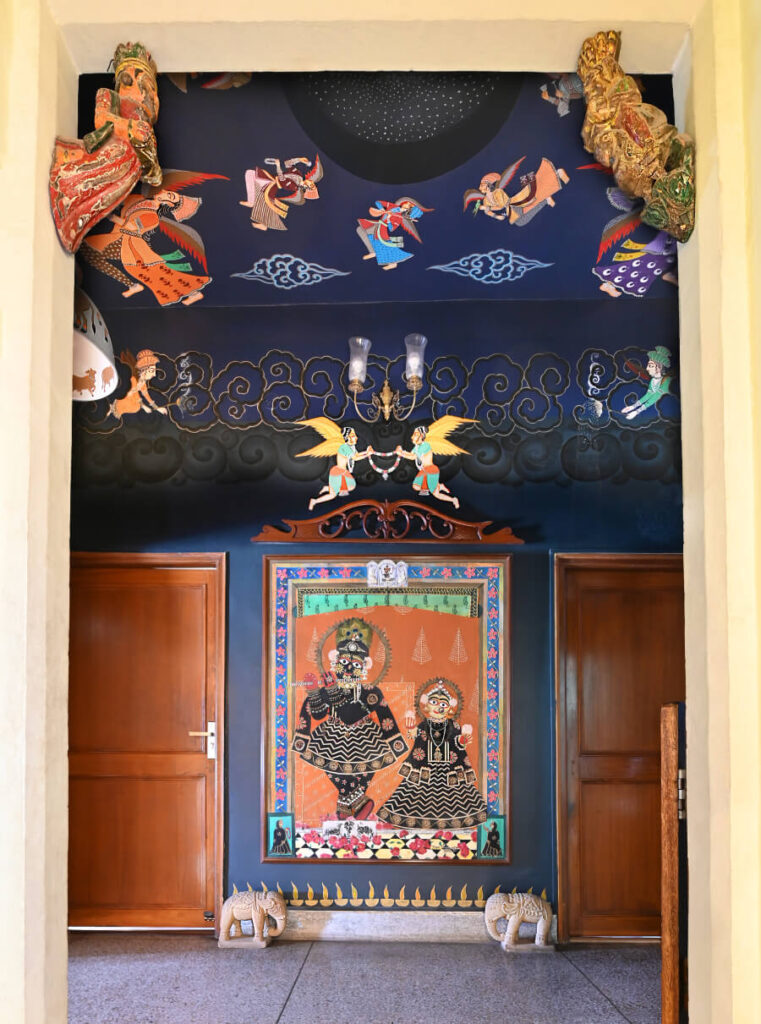
SB: The worship of Krishna as Shrinathji came to me much later in life. I was not born into a Vaishnav family, nor did I grow up witnessing Pushtimarg seva at home. Everything changed with one visit to Nathdwara. As someone who is deeply moved by aesthetics, I was overwhelmed – Shrinathji’s shrine and seva are the epitome of beauty and symbolism. Every detail – the pichwai, saaj, shringar, bhog – carries meaning, intention, and devotion. Nothing in the haveli is ever random. Even the mala that Shrinathji wears is crafted with meticulous care and love.
These details captivated me so deeply that I began reading extensively about Shrinathji and Pushtimarg, the Path of Grace. The more I learned, the more I felt drawn to Krishna. Eventually, I began doing seva of Laadla Laal at home, inspired by the traditions of the Nathdwara haveli. One quickly realises that in this path, one can never do enough – it’s an ocean, and every drop has significance. It’s impossible to absorb its entirety in a single lifetime.
This daily, elaborate seva of Shrinathji became my greatest muse. Naturally, Krishna emerged as the central figure in my artistic and design journey. Whether I am creating a traditional space or a modern one, elements inspired by my daily source of devotion inevitably find their way in. For me, storytelling comes first—everything in a space must have intention, meaning, and purpose. Nothing is ever random. While designing my boutique hotel Laalee, naturally all the stories were arounf Krishna’s time in Vrindavan. Each space unfolds a chapter in the life of Krishna hand painting with love and devotion.
TC: You often speak of “Raag, Bhog and Shringar” as the key elements of your design ethos. Can you explain how these three inform the way you conceive a space?
SB: Raag, Bhog, and Shringar are integral to the seva in Pushtimarg. Hindustani classical music – especially the Raag system – is a vast universe in itself, one that would take many lifetimes to truly understand. As someone deeply fond of classical music, the idea that specific raags belong to certain times of the day or particular seasons fascinates me endlessly. Haveli sangeet, rooted in this tradition, moves me profoundly.
The devotional compositions sung in the dhrupad style—by poets like Surdas, Parmanand Das, Ras Khan, and many others—are nothing short of breathtaking. Equally captivating are the bhog offerings, each one consecrated for a precise moment in the daily cycle of seva, and the shringar, which transforms Shrinathji with exquisite symbolism and devotion. In Pushtimarg, Prabhu Sukh—the comfort and joy of the Lord—is the central bhaav, the essence of everything.
In my design work, it is these stories and emotions that I seek to recreate. I love using elements like fountains, fireplaces, and subtle details that evoke mood and atmosphere. Ultimately, everything comes down to how a person feels when they enter a space. People may forget what they saw or how expensive something was—but they will always remember how that space made them feel.
That feeling is what I am always chasing.
TC: What is the most important form of design for you personally — is it interior architecture, craft revival, painting, spatial storytelling or something else — and why?
SB: All of these aspects are important to me when it comes to design, but storytelling is the foundation of everything. Without a story, a space lacks identity. A story binds the entire space together—giving every element meaning, value, and, most importantly, context.
Once the story is clear, everything else naturally falls into place. The materials, colours, forms, and accents all begin to align effortlessly. A well-rooted story is what transforms a space from something merely beautiful into something soulful and unforgettable.
TC: Heritage and craft are central to your work. How do you balance authenticity and tradition with modern requirements, sustainability and contemporary lifestyles?
SB: Most of the time, I find that objects created hundreds of years ago feel incredibly contemporary. I often wonder how artisans back then could conceive designs that still feel so relevant today. It reminds me that design has no age limit and no fixed period—it is all about how an object is used, how its context is shifted or amplified, and how thoughtfully it is placed. When given the right environment, even centuries-old pieces can make a space look strikingly modern.
The India Modern narrative has influenced me deeply. The exceptional workmanship, the devotion to handmade processes, and the confidence with which Indian designers are shaping a distinctly modern identity—one that no longer imitates the West but proudly expresses its own voice—truly inspires me. I am proud of how our crafts have adapted to contemporary needs without losing their essence. They remain incredibly sophisticated, elegant, and timeless.
For me, design is always about balance, never about discarding. Our craft traditions have a remarkable versatility—our heritage does not demand a transition; it naturally evolves. It feels less like reinvention and more like a graceful progression.
TC: In your view, what defines an “Indian design brand” today — in terms of philosophy, craft, community, aesthetics — and how do such brands differ from their international counterparts?
SB: As I mentioned earlier, India’s design language and aesthetic sensibilities are truly incomparable. This land has always intrigued the world—so much so that it became a major trading centre for centuries and, unfortunately, a place that was repeatedly invaded. Yet through all of this, India remained a civilisation with extraordinary craft traditions, a profound design philosophy, and a deeply rooted sense of community.
Our diverse landscape offers an immense range of crafts and design languages, each with its own history and regional character. Today, India’s presence in the international design space is growing rapidly. And this is only the beginning. With the pace at which things are evolving, it won’t be long before India emerges as a global leader in design.
The world is finally recognising what we have always known—India’s creative voice is powerful, timeless, and entirely its own.
TC: Many international design brands have global scale, marketing budgets, standardisation. What do you believe Indian brands can offer that global brands often miss out on?
SB: International design brands may have global scale, large marketing budgets, and the power of standardisation—but in that very standardisation, something deeply human often gets lost. This is where Indian brands offer something truly unique.
Indian design is rooted in craft, storytelling, and soul. Our products are not just objects; they carry the imprint of a maker’s hand, a region’s heritage, and a cultural memory that spans centuries. That emotional depth and cultural authenticity is something mass-produced global brands often cannot replicate.
TC: Looking ahead, what is your vision for how Indian design and craft can successfully scale, remain rooted and yet compete globally?
SB: The future lies in strengthening our craft ecosystems—supporting artisans, improving infrastructure, and using technology to empower rather than replace handmade traditions. Indian brands need a clear, confident design language that feels contemporary yet connected to heritage. When we preserve the stories, emotions, and cultural meaning behind our crafts, we offer the world something far richer than standardised design. With thoughtful collaboration, uncompromising quality, and a strong sense of identity, India can compete globally—not by imitating others, but by showcasing a design philosophy that is soulful, diverse, and uniquely our own.
TC: Finally, if you were to pick a single piece of advice for young designers inspired by Indian heritage and wanting to build their own brand, what would you say?
SB: If I had to offer just one piece of advice, I would say: stay true to your story. Let your inspiration from Indian heritage guide you, but interpret it in a way that feels honest and personal. Don’t try to replicate what already exists—absorb it, understand it, and then express it through your own lens. When your work carries your voice, your perspective, and your emotion, it becomes timeless. Authenticity is the strongest foundation for any brand, and in a world full of noise, it is the one thing that will always make you stand out.