TC: Your linkedin profile quotes ‘Serial Entrepreneur in Love with his Motherland’. Tell us how and when did you start your entrepreneurial journey?
NT: My entrepreneurial journey began more out of instinct than strategy. I’ve always been someone who questions how things could be better — more beautiful, more efficient, more meaningful. But the real shift happened in my early twenties, when I realized I wasn’t just building businesses — I was building experiences. Every venture since then has been driven by curiosity, creativity, and a desire to contribute something tangible to my community. That’s where the “love with my motherland” part comes from. Entrepreneurship isn’t just a career for me; it’s a way of shaping the environment I belong to.
TC: You spent your childhood in London and pursued your education in England. What led you to come back to Iran and start work considering first world has better opportunities? What is the most special thing about Tehran as an entrepreneur?
NT: If life was only about convenience, I wouldn’t have come back. But I’ve always believed opportunity is where you can create impact, not where things are already solved.
Tehran is unpredictable, chaotic, brilliant, frustrating — and full of possibility. That energy doesn’t exist in the same way in London. Here, you can build something from zero. You can feel your contribution. You can see the result of your effort in real time. What’s special about Tehran for an entrepreneur is simple: It forces you to innovate. It never lets you get comfortable. And if you succeed here, you can succeed anywhere.
TC: How do you juggle priorities across your different ventures, and what common threads unite your creative and business pursuits?
NT: The rule is that every venture must either inspire people or improve their daily lives. Preferably both. That shared mission keeps everything aligned — whether it’s development, design, art, or branding. As for juggling, I’ve learned to operate like a creative director more than a manager. I focus on vision, strategy, and culture, and I surround myself with people who are better than me in execution. That’s the only sustainable way to run multiple ventures without losing soul or direction.
TC: You are a champion of entrepreneurship and branding strategies. What is branding for you? How important is branding for any product or service in the mainstream markets? What is the biggest branding disaster for you?
NT: Branding, to me, is not a logo or a color palette — it’s a promise. It’s the emotional contract between a business and its audience. A strong brand gives clarity, identity, and trust. A weak one creates confusion and inconsistency.
In mainstream markets where choices are overwhelming, branding often is the product. People buy stories as much as solutions. The biggest branding disaster is inauthenticity — when a brand tries to be something it is not. People feel it immediately. No campaign can fix a fake identity.
TC: Ravagh group founded in 2013, is one of the most respected design groups in middle-east. Please tell us about the Ravagh story. What does the name mean? How do you see Ravagh contributing to the growth and vibrancy of Tehran’s art and culture scene today?
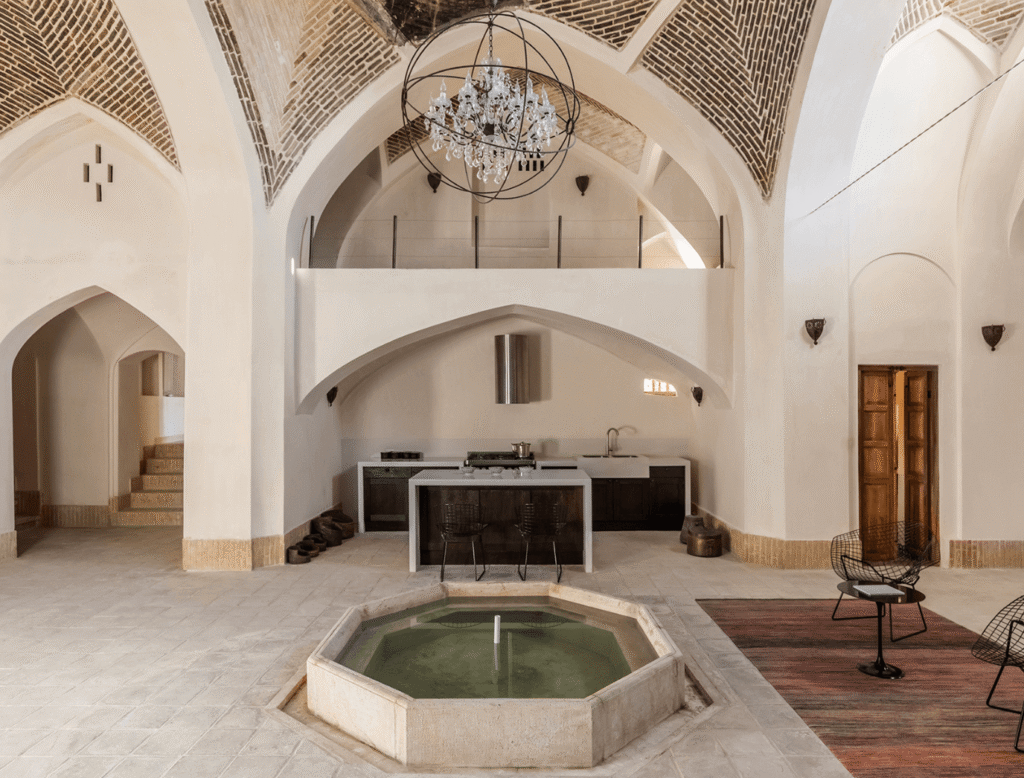
NT: “Ravagh” in Persian refers to a sheltered, refined space — a place where beauty, craftsmanship, and calm coexist. The name was chosen very intentionally. We wanted to create spaces that felt timeless, human, and rooted in Iranian design heritage.
The story of Ravagh started with a simple belief: Design is culture. And if you elevate design, you elevate the city itself.
Over the years, Ravagh has helped shape contemporary design language in Tehran — from residences to public spaces to art-focused projects. Our contribution is not just aesthetic; it’s philosophical. We aim to bring dignity, elegance, and intentionality to the way people live and experience this city.
TC: What is entrepreneurship for you? What according to you are the main difficulties for young entrepreneurs in Tehran? How can one create buffer for the same?
NT: Entrepreneurship is the courage to take responsibility for your ideas.
The difficulties in Tehran are real:
- economic instability
- unpredictable regulations
- lack of early-stage investment
- and the mental pressure of constant uncertainty
To create a buffer, young entrepreneurs need three things:
- Financial discipline – build a runway, however small.
- Mentorship – learn from people who have already survived the turbulence.
- Flexibility – your idea must evolve as fast as the environment does.
TC: I really like the names of the brands that you co-founded like ‘DOBO’, ‘Studio 8’, ‘RAVAGH’, ‘UNDO’, ‘Far From Ego’ and ‘Think Happy’. All these names have a positive undertone. What makes a name interesting for a brand for you? In what ways does innovation factor into the projects you initiate, and how do you maintain authenticity while pushing boundaries?
NT: A name should make you feel something. It should create curiosity, positivity, or comfort before you even see the product. I prefer names that are simple, universal, and emotionally charged. Innovation for me means solving problems in ways people don’t expect — but without losing honesty. Authenticity is preserved when your innovation comes from genuine human need, not from trying to impress the market.
TC: Tell us about your first failure as an entrepreneur? What did you learn from it and how did you deal with it personally?
NT: My first real failure was a project where I fell in love with the idea more than the execution. I ignored warning signs, overestimated demand, and underestimated operational complexity.
What I learned is this: The market always tells the truth. Ego never does.
It was painful — emotionally and financially — but it taught me to detach from outcomes, stay humble, and pivot quickly. That lesson has served me more than any success ever has.
TC: You were one of the investor in art gallery in Tehran called ‘O Gallery’, you have a beautiful space dedicated to art called ‘Corridor’ and you were one of the first collaborators with Dastan. Tell us about your connection with Art? As a collector, what kind of Art are you personally interested in and why? Where do you see Persian art scene in coming future?
NT: Art has always been a personal sanctuary for me. I’m drawn to pieces that carry emotion — melancholy, movement, dialogue, tension. I gravitate toward contemporary Iranian artists who reflect society with honesty rather than perfection.
As a collector, I look for storytelling — works that speak beyond technique. The Persian art scene is on the verge of a global renaissance. Our cultural depth is immense, and our contemporary voices are gaining recognition. With the right platforms and international exposure, Iranian art can become one of the most respected and influential genres globally.
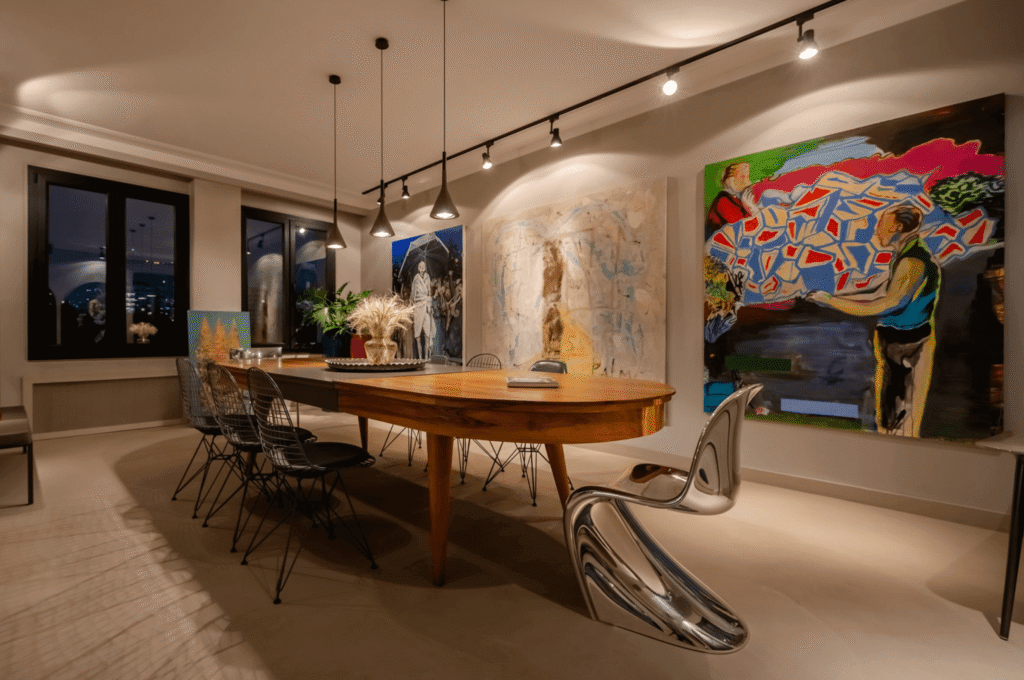
TC: You are the co-founder of ‘Think Happy’ with a mission to transform people’s places of living, working and dinning. Please share the incident that led to the birth of ‘Think Happy’. What do you wish to achieve with this company?
NT: “Think Happy was born from a very simple but powerful realization: what surrounds us, shapes us.
Happiness doesn’t just ‘happen’ — it can be designed.”
Years ago, I walked into a space that was visually perfect, but emotionally empty. It made me question why so many environments we live, work, and dine in neglect the emotional experience of the people inside them. That moment sparked the seed of what later became Think Happy Inc.
On our website we say: “Happiness is not a chance meeting; it’s a process. A journey that requires planning and guidance.” And that’s exactly what Think Happy stands for. We intentionally design spaces — and brands — that elevate people’s wellbeing. Not just through beauty or functionality, but through emotion, meaning and purpose.
Over the past twelve years, our headquarters at 82 Fereshteh has become more than an office. It’s a living manifesto — “a sanctuary of optimism amidst the noise of the city”. It’s where we test ideas, design experiences, and incubate new ventures that all share a single mission: to make life more meaningful.
Think Happy today is an umbrella of affiliated ventures — from design studios to art spaces to hospitality concepts — all united by the idea that environment shapes behaviour, and behaviour shapes happiness. Our “Affiliates” ecosystem lets us support new businesses that align with positive change and sustainable growth. Whether it’s UNDO in property development or Corridor in the art world, each brand contributes to the larger vision.
We also anchor our work in the concept of Ikigai — finding the balance between what we love, what we’re good at, what we can be paid for, and what the world truly needs. Think Happy gives us the space to operate at the intersection of all four.
Ultimately, what I wish to achieve with Think Happy is very simple: to prove that happiness can be designed.
That when you build spaces, brands and experiences with intention, you can genuinely change people’s daily lives — one home, one office, one restaurant, one encounter at a time.
TC: Please tell us about your private real estate fund in Dubai? What is your focus and how do you wish to grow the fund?
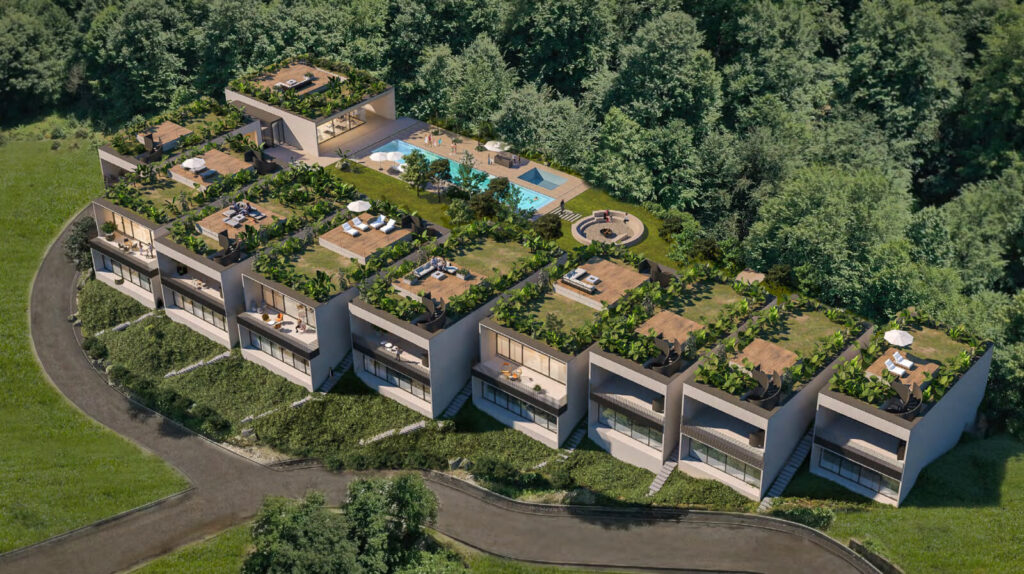
NT: My private real estate fund in Dubai was born from a very clear philosophy: identify inefficiencies in the market, move quickly, and create value through intelligent design and execution. Dubai is a city in constant motion — new districts emerging, older communities maturing, and buyer expectations evolving faster than ever. That dynamism creates opportunities for a fund that understands both the emotional side of real estate and the economic side.
Our primary focus today is on value-add residential assets — villas, townhouses, and select apartment portfolios where intelligent renovation, design, and repositioning can unlock significant upside. The fund also selectively targets off-market distress, motivated sellers, and micro-location arbitrage — areas where pricing gaps exist not because of fundamentals, but because of timing, liquidity pressure, or lack of vision from the seller.
A large part of our strategy draws on the work we’ve done for over a decade in Tehran’s luxury real estate and design scene — understanding how people want to live, what truly elevates a home, and how design can transform an asset’s desirability and value.
Going forward, our aim is to grow the fund in three ways:
Scale the value-add model by expanding into more communities and standardizing our renovation and design processes so we can turn around high-quality assets faster.
Develop boutique, high-character projects under our own brands — small clusters of intelligently designed villas and townhomes that offer the soul and individuality people often feel is missing in Dubai’s mass-developed markets.
Attract strategic co-investors who share our long-term view and disciplined approach — allowing us to deploy capital into increasingly larger projects without compromising the creativity and precision that differentiates us.
Ultimately, our fund is not about chasing volume. It’s about buying smart, designing beautifully, and exiting with value that we created — not value we waited for. That is what makes Dubai one of the most exciting real estate markets in the world today, and that is the vision that guides how we’re building this fund.
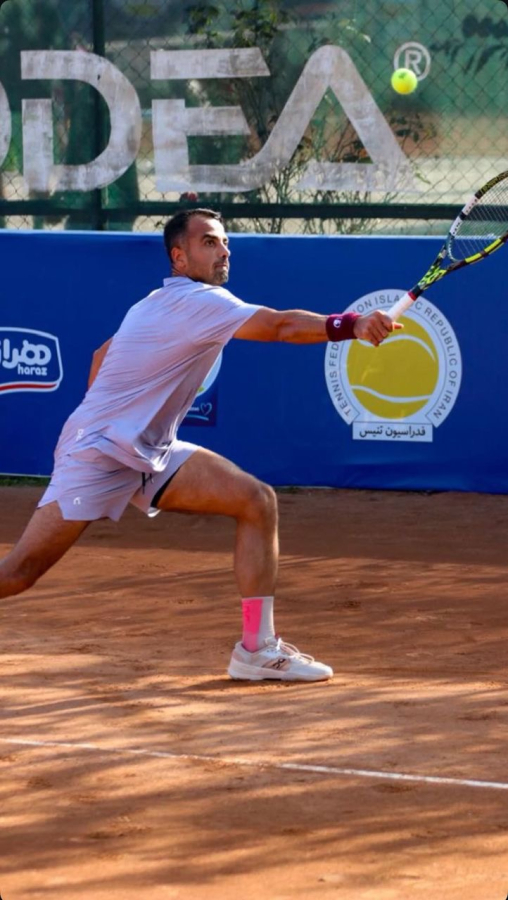
TC: How would you describe your journey in tennis so far? And what does your ITF ranking represent for you, both personally and in keeping pace with the demands of life?
NT: My journey in tennis has been anything but linear—it’s been a mirror. A mirror showing me who I really am when things get competitive, stressful, or even chaotic outside the court. I didn’t start tennis as a junior prodigy; I came into it later, when life was already full of responsibilities—business, family, people relying on me. So tennis quickly became more than a sport. It became a space where I could reconnect with myself, measure growth, and stay grounded.
What I love most is that tennis exposes everything—your discipline, your patience, your resilience. Some days I’m sharp, other days I’m exhausted from life, and those fluctuations show up immediately in my game. But instead of frustrating me, they’ve taught me self-awareness and balance. To improve in tennis, you have to improve in life: sleep better, eat better, manage stress better, move better. It’s the perfect midlife challenge, because it forces you to elevate your body, your mind, and your soul at the same time. Every time I walk on court, I feel alive in a very pure way.
As for my ITF ranking—it’s just a number on paper, but for me it represents consistency. It represents all the early mornings, the travel, the training hours squeezed between business meetings and family life. It reflects effort more than talent. I don’t see it as a badge of achievement; I see it as a marker on a longer journey. But personally, it means something deeper: it’s proof that you can still grow, compete, and push your limits even when life is at its busiest. It is not about being ‘good’—it’s about refusing to give up on myself.”
In a way, keeping an ITF ranking is my way of keeping a promise to myself—to never stop evolving, never stop competing, and never stop making room for the things that light me up.
Interview by Manik Katyal