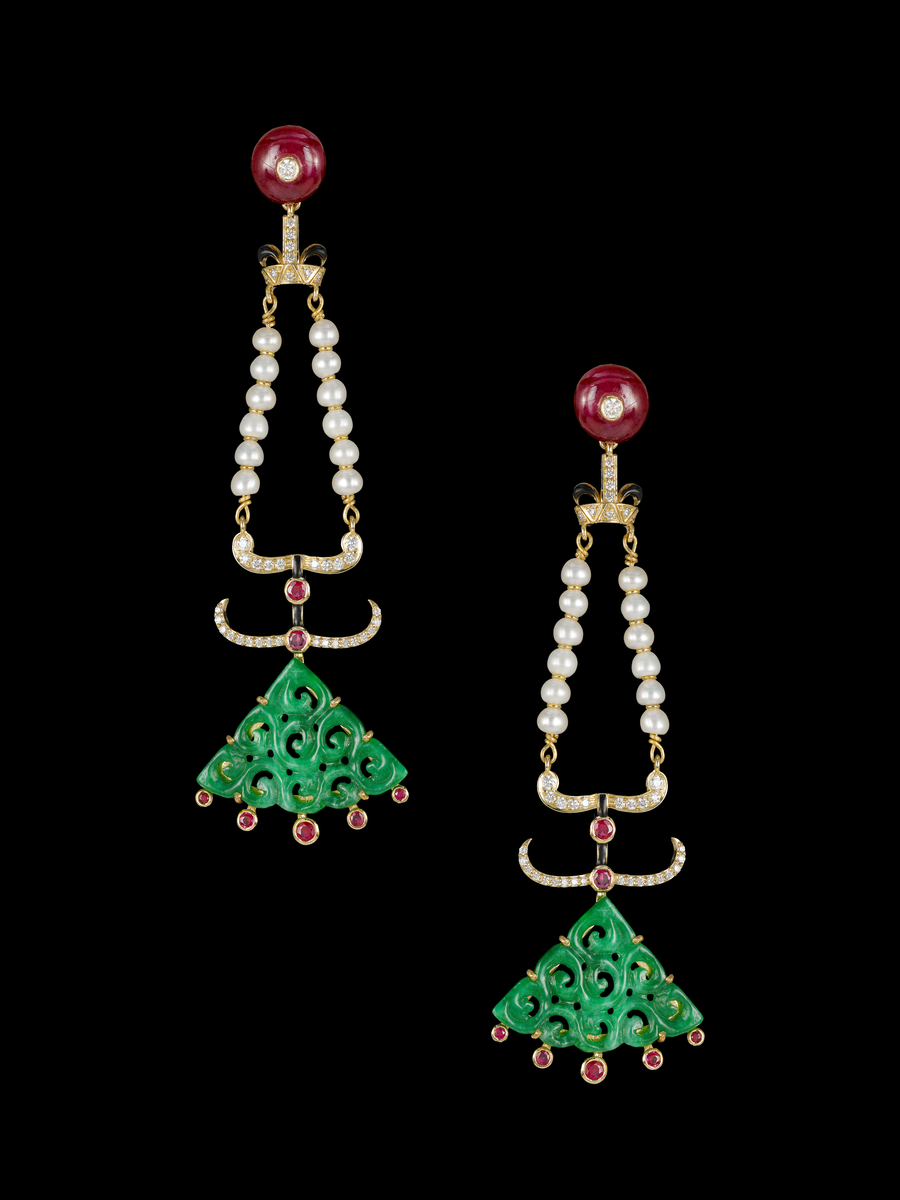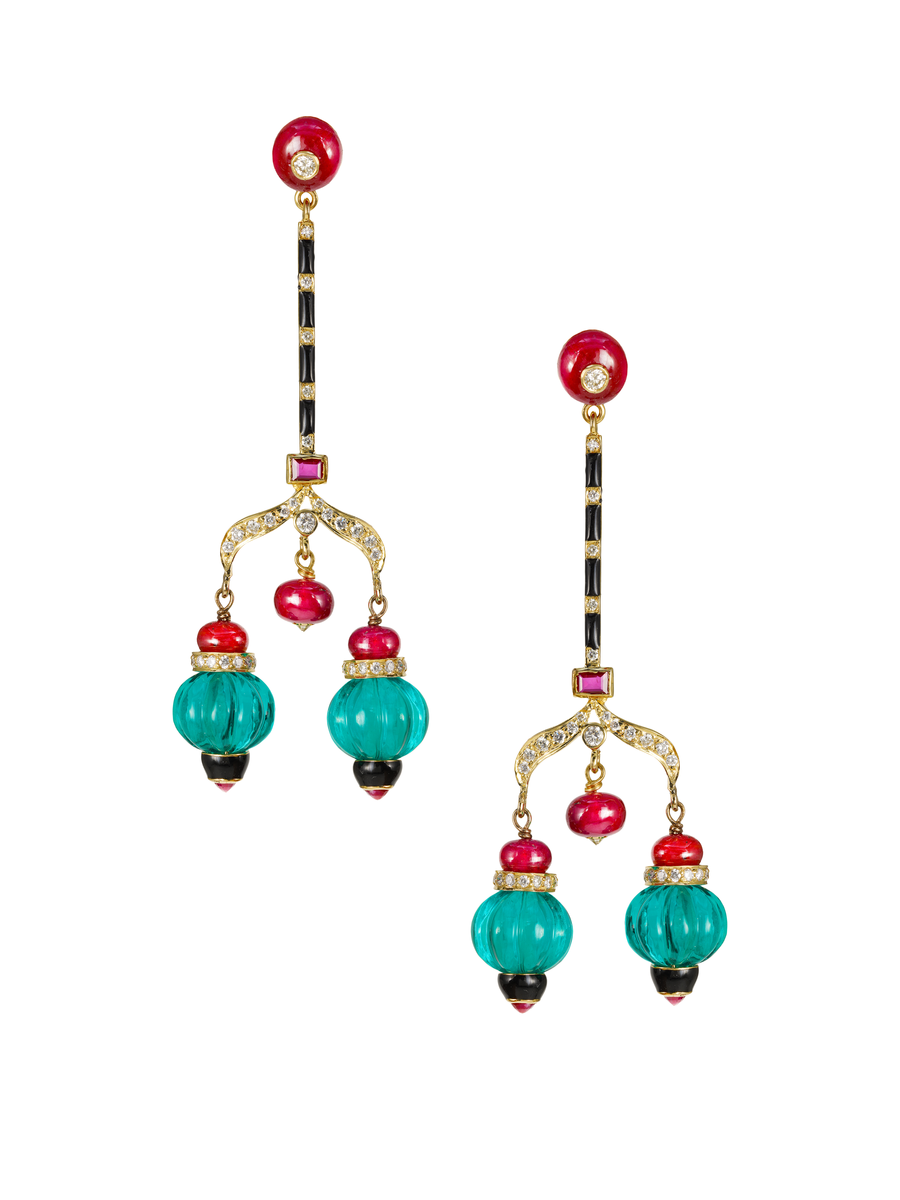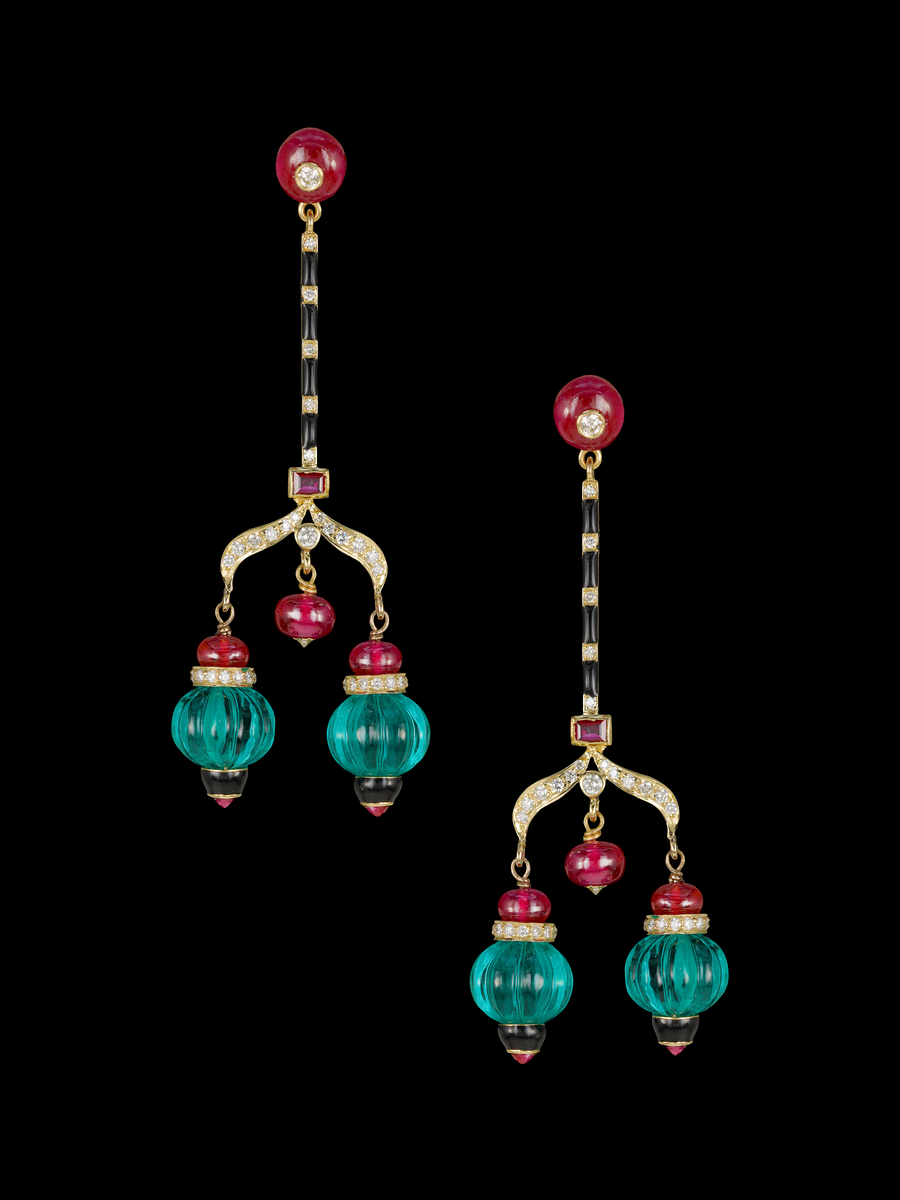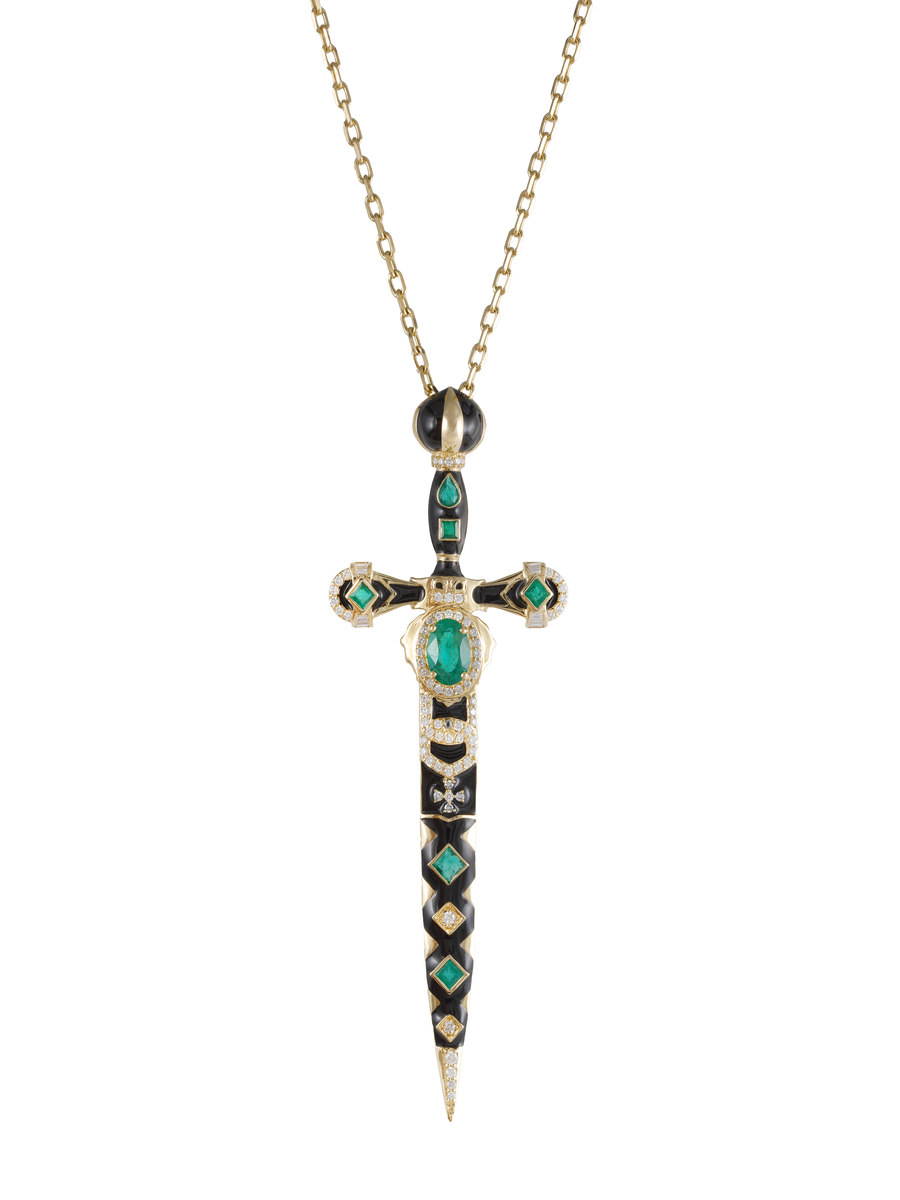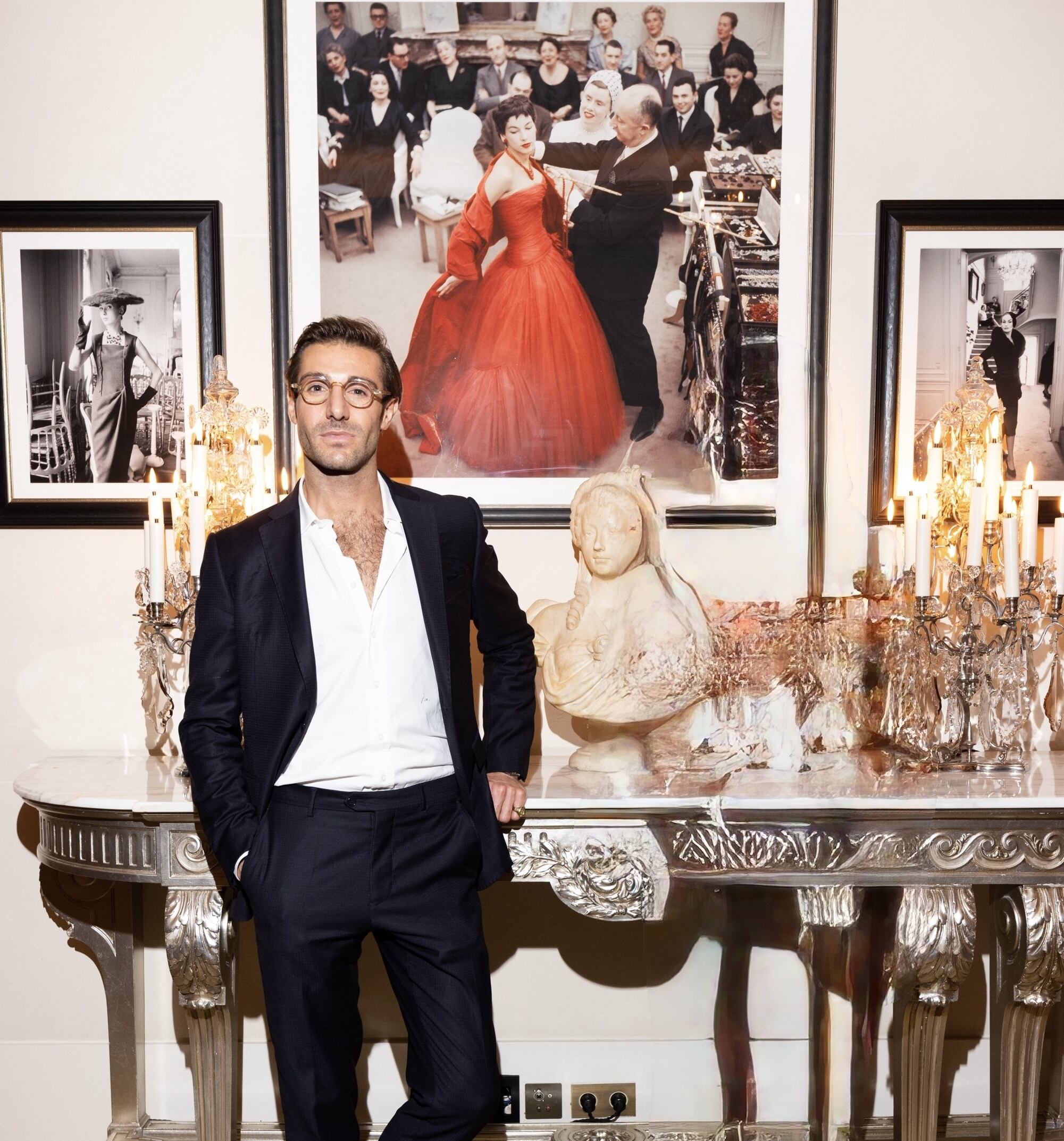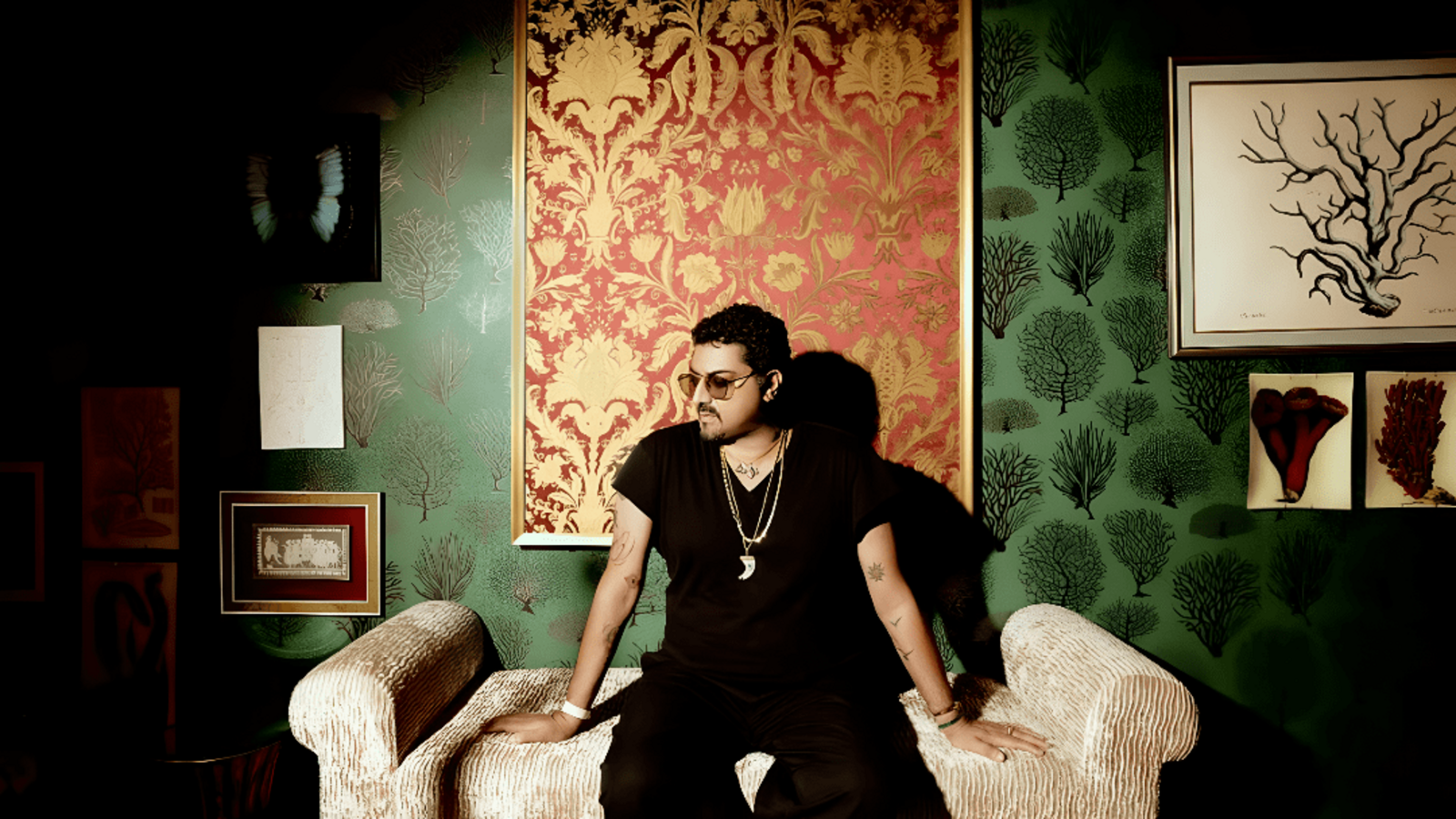
The Capitalyst: You have lived in Delhi, Mussoorie, and New York at various points in your life. Do you feel you belong to any one place, or has a certain rootlessness become essential to who you are and how you create?
Hanut: I never feel rootless. To feel rootless would seem to be a very strange dimension for me to exist in. I feel very, very rooted. I live between Delhi and Mussoorie, and over the last three decades, I have spent a great deal of time in New York as well. All three places root me tremendously. They give me succour, strength, and harmony — all of which allow me to create, to be, and to flourish.
They allow me to live a full life across three very different worlds. Each of these places varies enormously in what it does for me, in what it presents to me, and in how I move through it. And yet, in each of them, I find myself deeply, deeply rooted.
The Capitalyst: You have described your jewellery as a “well-made cocktail” of the past, present, and future. After more than two decades, what does that cocktail taste like today compared to when you first launched your label in 2002?
Hanut: Yes, my jewellery is like a very well-made cocktail. And as the years progress, the cocktail becomes more intricate, with deeper flavouring, with more additives. It is a journey. Like a beautifully made cocktail in the hands of a great mixologist, you always continue to add, subtract, and create in your mind’s eye the perfect version of what it should taste like.
The Capitalyst: You have spoken about jewellery design as a spiritual experience, feeling like a “vessel” through which designs flow from the ether. For someone outside that creative process, how do you distinguish between a design that has truly arrived and one that is still forming?
Hanut: I am very instinctive. A design that is fully realised is the one I would actually work with and play with. A half-formed idea is simply an impetus to form it entirely. I feel like a vessel. I feel that it comes to me, through me.
Of course, things need tweaking — it’s an ongoing journey, and so much of it depends on the mental space you’re in while doing that work. But I feel very blessed and lucky that it flows through me.
Half-formed ideas, no. I don’t work with half-formed ideas. I let them pan out in their entirety. And I’m really prolific, so it is an ongoing game.
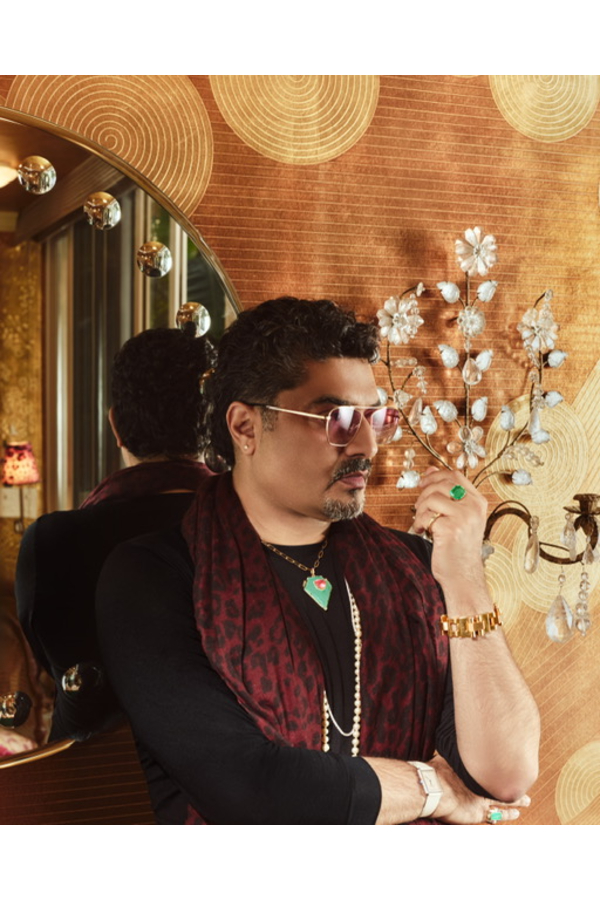
The Capitalyst: You have built the label entirely as a one-man show, without formal training, a retail store, or a large team. In an era where jewellery houses are scaling aggressively, what do you believe that singularity actually protects, and what does it cost you?
Hanut: The most unconventional business decision I’ve made is choosing to grow organically and entirely on my own terms. In an industry that constantly pressures you to scale quickly, collaborate loudly, or conform to formulas, I chose containment. I chose to build slowly, deliberately and independently.
I have always trusted my instinct over chatter, and clarity over noise. Running my business in a focused, solo, self-directed way is something I deeply pride myself on. It has allowed me to protect the integrity of my vision, and that, to me, is the greatest form of success.
The Capitalyst: Gender fluidity in jewellery has become one of the most interesting shifts of the last few years. Men are wearing pearls and chandelier earrings. Your work has always had an androgynous, almost mythological quality. Do you design with gender in mind at all, or has that always been beside the point?
Hanut: I would not even use the term gender fluidity anymore. Everything is intermingled now. I design jewels, men wear them, women wear them, and they are simply meant to be worn and adorned.
What I love is watching men wear jewellery with more élan than women do, frankly, in some cases. The boldness, the playfulness, the willingness to throw convention to the wind and create their own aesthetic… it’s refreshing, it’s fun, it’s wonderful.
And honestly, this isn’t new. Historically, the Maharajas, the rulers of India, always wore the most magnificent jewellery, with the greatest pomp and circumstance. Jewellery was made for them. So in many ways, we’re simply returning to something timeless.
What is exciting about today, though, is the sheer breadth of it. It’s not just pearls or chandelier earrings. It goes so much further than that. The music industry has been transformative, particularly hip-hop, where artists have been commissioning some of the most important jewels of our times for decades now. Look at any name you like and it’s a bounty, an explosion of extraordinary jewellery worn with conviction and flair.
So no, I don’t see it as fluid. This is here to stay, and it’s only getting more interesting.
The Capitalyst: If you could retrieve one piece you have ever made and keep it, never sell it, never give it away, what kind of piece would it be, and why?
Hanut: There are so many pieces over the years where I’ve thought — oh damn, I wish I’d kept that.
I do many one-off pieces, and those are always the most special ones, to me and to the person who eventually buys them. Sometimes it’s the stones that caught your eye or your imagination. Sometimes you have designed something so specific for someone that you find yourself wishing, hoping, wanting it for yourself. I have a laundry list of them, honestly. I would not even know where to begin.
Rings with the most extraordinary diamond cuts, pieces I let go of that still live in my memory. But growing into my work has made me more conscious of this. Now, if I truly love something, I’ll keep it for myself first and then create it again for someone else.
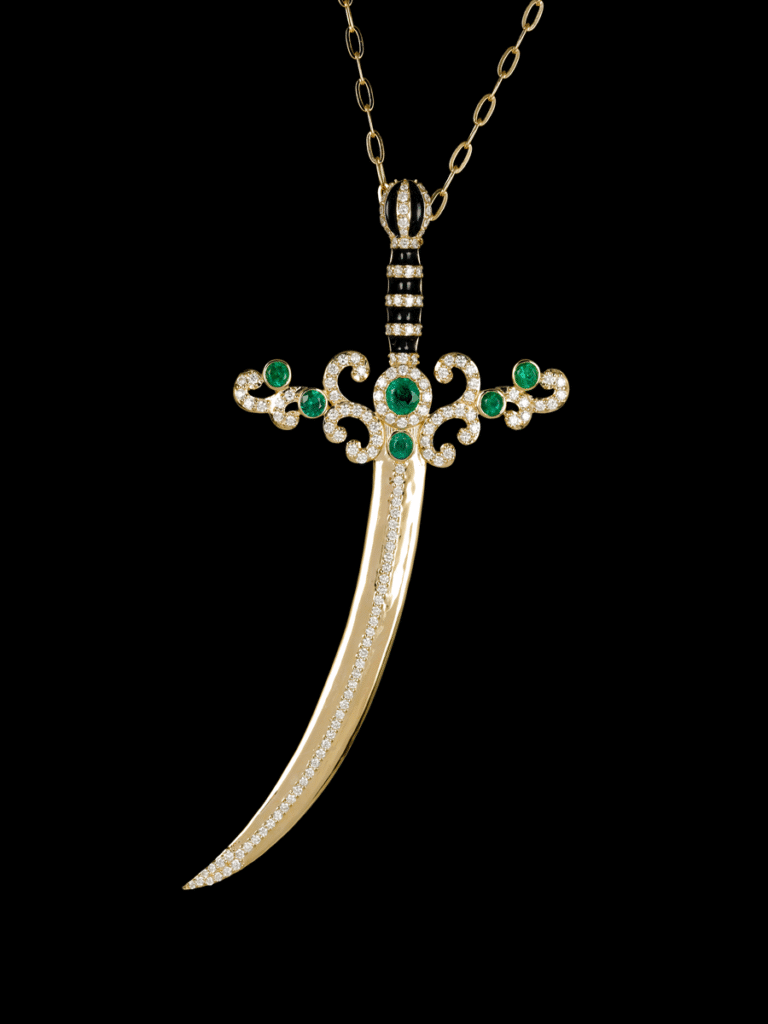
The Capitalyst: As a designer treating each piece as a spiritual act, what’s your honest take on AI generating thousands of jewellery concepts instantly—and what core jewellery element you think will never change, regardless of tech or culture?
Hanut: AI can throw out a million gazillion designs. But the human eye, the human mind, the human soul cannot be beaten.
I don’t rely on AI for any design work. Not even a little. My jewellery is my DNA. It’s deeply reflective of who I am, and I have a very signature style, so frankly, it’s not something I worry about or even think about. I play within my own world, within my own signature, and that feels like more than enough. If other people need AI to design, good for them. If it works for them, wonderful. It’s a tool, and tools serve different people differently.
But for me? I’m not using it.
The Capitalyst: After more than two decades and a roster that includes Beyoncé, Cher, Meryl Streep, and Nicole Kidman, what does ambition still look like for you? Is it about legacy, new creative territory, or something else entirely?
Hanut : Never rest on your laurels. Never. Yes, I have been very lucky to have global superstars wear my work, but that does not define me. My journey is my journey, and I am always going to be on it. May it continue with full velocity.
As Robert Frost said, miles to go before I sleep. I completely believe that. Even 25 years in, I still feel like a newbie. I didn’t start out formally trained, but I have been so deeply involved in every aspect of this work that I feel more trained now than ever.
For me, it has always been a personal journey, always a game played on my own terms. And I can only hope to continue doing exactly that.