The Capitalyst: You have said that Cron AI is not a software company but a mathematics company, focused on replicating how a 5-year-old learns to understand the world in three dimensions. Can you explain what your platform does and what makes Cron AI different from others in this space?
Tushar Chhabra: Our core platform is called senseEDGE. It’s a deep-learning-first 3D perception stack that runs on the edge, meaning it works in real-world conditions where things are messy — fog, glare, occlusion, bad angles, fast motion, inconsistent power, low bandwidth. In a simple way, I often describe it as the Android of the Physical AI world — a standardized intelligence layer that can sit across sensors, devices, and infrastructure, and help machines see and understand reality in 3D.
What makes Cron AI fundamentally different is how we approach the problem. Most of the industry still relies heavily on traditional pipelines — clustering, rules, and brittle heuristics — and those systems break the moment context changes. We went back to first principles and rebuilt the perception stack to be clustering-free and deep learning-first, so it can preserve and interpret the full scene instead of guessing based on partial information.
Here’s the example I always use because it makes the point very clearly:
Imagine you take your child to a zoo every day, and they learn what an elephant looks like. Then one day, you take them to Africa — and now the elephant isn’t standing in front of them in perfect view. The child might only see part of it — maybe the trunk, maybe the leg, maybe a shadow through trees. The context has changed, the environment has changed, and yet the child still knows, instantly, that’s an elephant.
Why? Because humans don’t memorize the whole object like a photograph. We learn features, patterns, and relationships in the world — and that is what makes our understanding robust even when the view is incomplete.
That’s exactly what we’re replicating with senseEDGE. We’re training machines to understand the world independent of context, even when objects are partially visible, distorted, or seen in difficult environments. That shift — from “object detection” to context-aware 3D intelligence — is why Cron AI behaves less like a software vendor and more like a mathematics company solving the perception problem from the ground up.
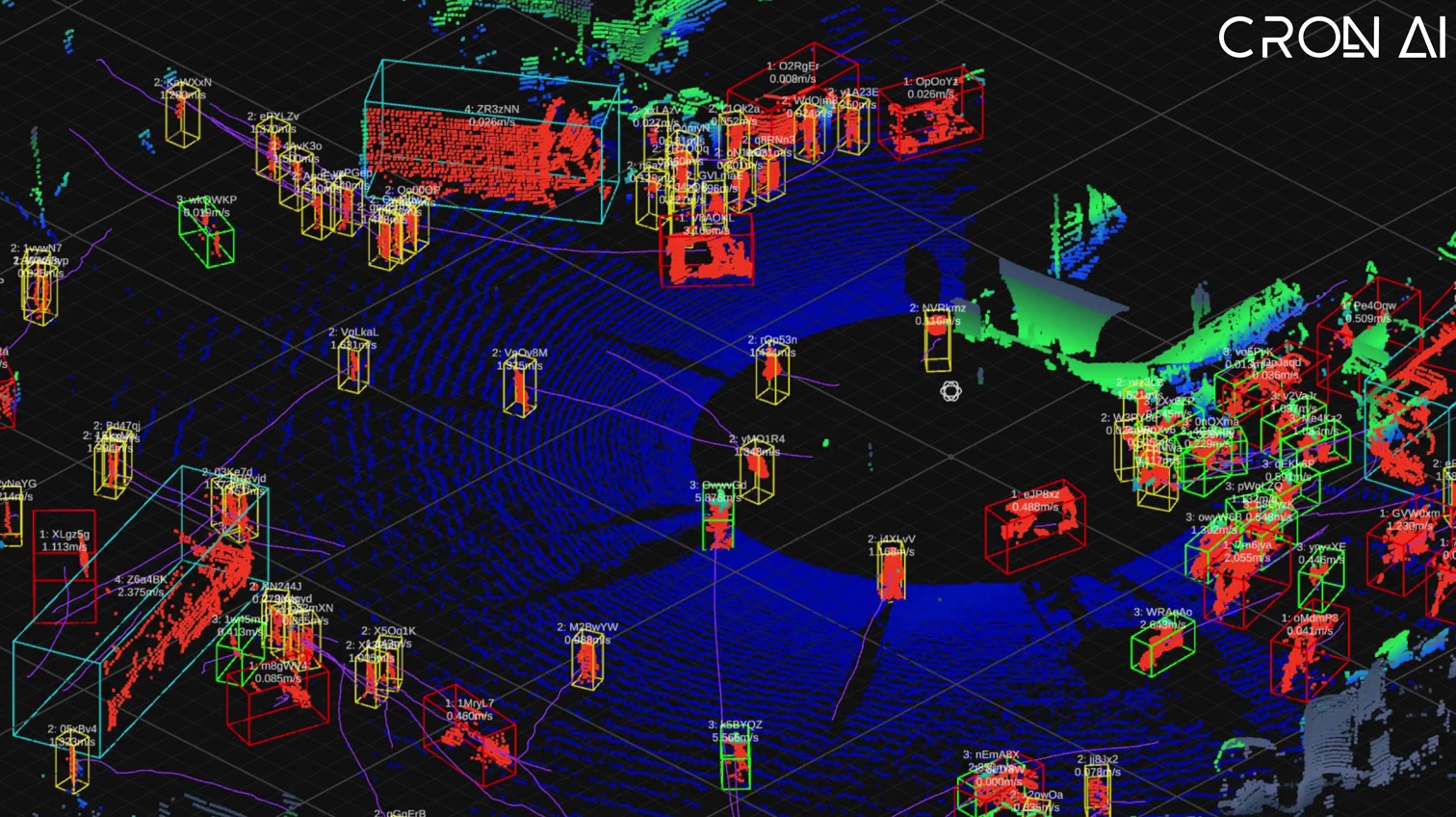 senseEDGE: Robust 3D perception for any sensor, position, condition, or density.
The Capitalyst: You worked in political strategy before building autonomous systems. Both involve predicting what happens next based on incomplete information. Do you see parallels between the two? Is teaching a machine to navigate a room anything like navigating coalition politics?
Tushar Chhabra: Yes — honestly, the parallels are uncannily real. Most people assume political strategy and autonomous systems sit in totally different worlds, but at the core they’re both about the same thing: making the best possible decision with incomplete, messy information.
When I worked in political strategy in India, we quickly realized two realities that were very different from how data-driven campaigns work in the United States: First, the data is often incomplete or unreliable. India is a living, shifting ecosystem — dialects change every few miles, local priorities flip district to district, and the “truth” on the ground can evolve overnight. Second, the data isn’t consolidated. There’s no single clean, unified view of reality. You’re stitching together fragments — conversations, signals, emotions, micro-trends, cultural context — trying to form one picture.
So, the real question was always: How do you predict what happens next when you don’t even fully understand the pattern yet?
And surprisingly, autonomous perception has the same problem — just with different stakes. The “universe” is physical instead of political, but it’s still chaotic: occlusion, fog, harsh lighting, sensor noise, unusual objects, unpredictable movement, and constantly changing scenarios. In autonomy, you rarely get a perfect view of reality — you get partial truth, and you still have to act.
That’s why I often say perception is not about “seeing everything clearly.” It’s about understanding enough to make a safe, confident decision. Coalition politics is exactly the same. You never see the whole room. You see fragments: a shift in tone, a change in alliances, a local issue boiling up, someone moving quietly behind the scenes — and you still have to decide your next move. In fact, I’d take it one step further: Navigating coalition politics teaches you that context matters more than data volume. And that belief is baked into Cron AI.
With senseEDGE, we don’t just detect objects — we build contextual 3D understanding on the edge, so machines can interpret the world the way humans do: even when the view is incomplete, even when the scene changes, even when reality isn’t neatly structured.
So yes — teaching a machine to navigate a room is absolutely like navigating coalition politics. In both worlds, the winners aren’t the ones with the most data — they’re the ones who can extract truth from partial information and still move forward with confidence.
The Capitalyst: Your Instagram handle is @ceowithatruck, and you have talked about buying a pickup truck for early testing instead of starting with pitch decks. What were you testing, is the truck still in use, and what is the most unusual place you have tested Cron AI’s technology?
Tushar Chhabra: @ceowithatruck is one of those things that started as a practical decision… and somehow became a (big) part of my personality.
In the early days, while most people were showing up with pitch decks and fancy demos, I was showing up with a pickup truck, a 4×4 rig, and lidars bolted on top — rolling into these Mercedes-driven events like, “Hi, I brought the actual product.” And after a few meetings like that, people just started calling me “the CEO with a truck.” The name stuck… and that’s how the handle came into existence.
The truck wasn’t for style (only) — it was our first real test lab.
We weren’t testing a sensor. We were testing reality. We were validating whether senseEDGE — our deep learning 3D perception stack — could hold up in the real world: bad lighting, dust, occlusion, weird angles, unpredictable movement, rough terrain… all the stuff that never makes it into glossy lab demos. When you’re trying to build the Android of the Physical AI world, the tech has to work everywhere — not just in perfect conditions.
And yes, the truck is still very much in use. In fact, a big part of Cron AI’s early story across geographies is literally written on pickup trucks. We started with an Isuzu that became the backbone of our early data collection and some of our first serious deployments with the Indian Army. Then in the U.S., the Ford F-150 basically became part of the team — it played a key role in our U.S. DOT deployments, hauling rigs, sensors, edge compute, and making sure we could show up ready to run anywhere.
I’ve always been an old-school truck guy — my view is simple: if you’re building frontier tech, your rig should be able to go where the work is… and sometimes even where you sleep. We used to drive these trucks from data collection to deployments to remote work sites, and yes, sometimes the team would crash nearby because that’s what early-stage execution looks like. Pickups were honestly our most underrated strategy — they saved money, saved time, and kept us moving. As for the most unusual place we’ve tested Cron AI’s technology… the list is wild. Everything from border locations during shelling… to cow sheds in the Netherlands.
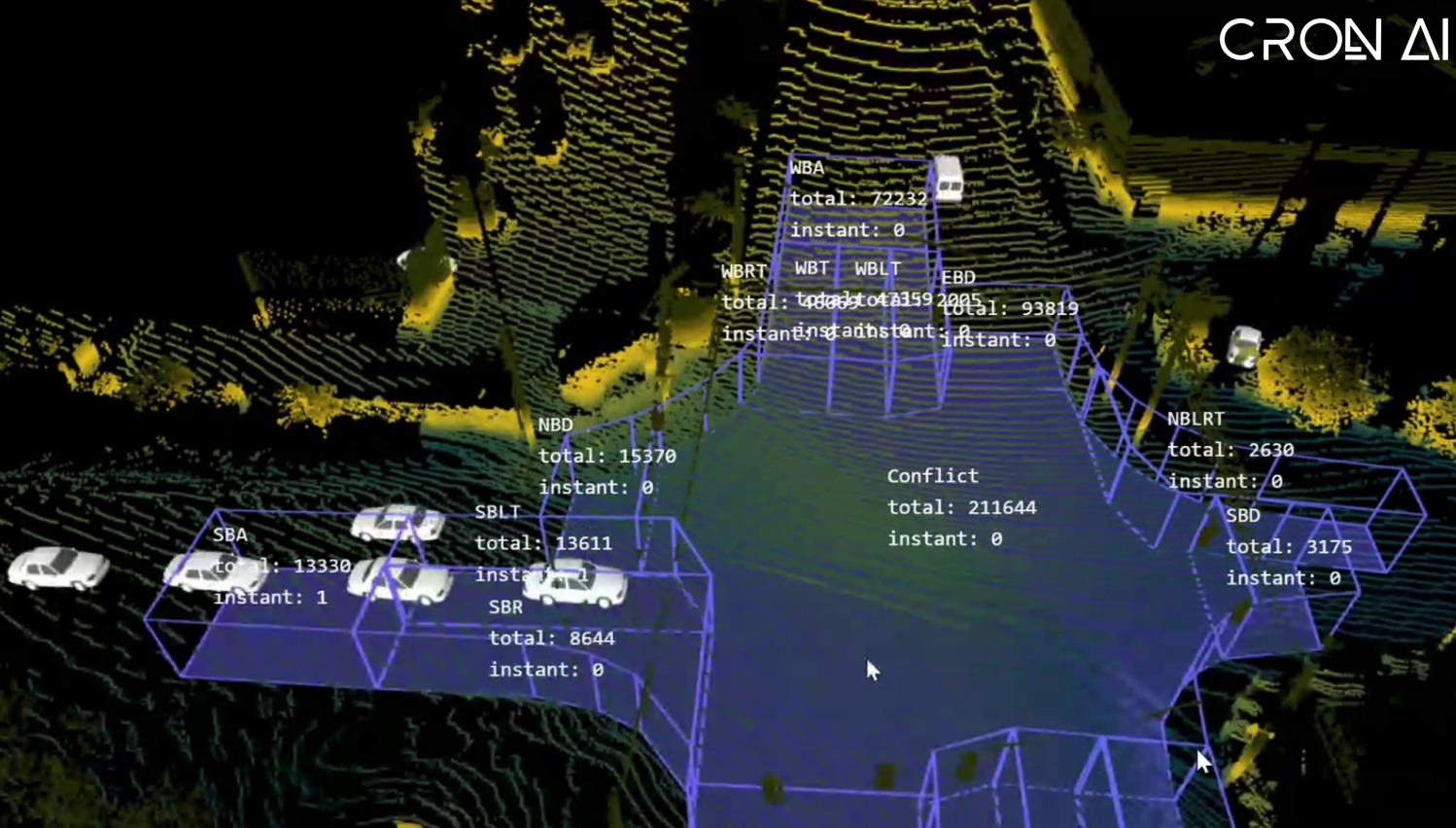 Laser-powered sensors that measure distances with light pulses, crafting precise 3D maps for spot-on object detection and classification.
The Capitalyst: Cron AI works in sensitive areas like security, defence, and autonomous systems where mistakes can have serious consequences. How do you think about the responsibility that comes with this?
Tushar Chhabra: We take that responsibility very personally — because in the areas we operate in, this isn’t “software that can crash and you just refresh the page.” In security, defence, and autonomy, a mistake isn’t a bug… it’s an incident.
One thing people underestimate in the real world is a word that sounds boring, but is actually everything: reliability.
Nobody builds with the “Toyota mindset” anymore — where the goal is not just to be advanced, but to be dependable, predictable, and built to last through years of real-world abuse.
That mindset has been in Cron AI’s DNA from day one. It also comes at a cost. We’ve had moments where a change that could’ve been shipped in a few months took us a year or more, because we were forcing ourselves to answer the hard questions:
Will this work in rain? In fog? With partial visibility? With a weird mounting angle? With imperfect power? With real-world chaos?
Startups are usually rewarded for speed and theatre — impressing investors, shipping demos, moving fast. We made a very deliberate choice to be different: we optimise for trust.
That’s also why it took us 7+ years to reach a true product launch. Because when you’re building systems meant to operate in the physical world — in places where humans depend on the output — you’re not just building “AI.” You’re building something that has to perform like a competent, responsible human operator, and eventually, outperform one.
Humans make mistakes too — but what makes humans powerful is that we adapt, learn, and understand context. That’s exactly what we’re trying to replicate with senseEDGE: perception that isn’t fragile, and decisions that aren’t blind.
So, the way we think about responsibility is simple:
-
- build with the most diverse datasets we can gather,
-
- test in the hardest real-world conditions,
-
- and hold ourselves to a standard where an engineer can trust our system without needing to babysit it.
Because at the end of the day, in our world, reliability isn’t a feature. It’s the product.
The Capitalyst: From Bangalore to London, you have built teams across continents. What is harder: getting edge AI to work in real-time or managing a distributed team with time zone chaos?
Tushar Chhabra: Honestly? Time zones are harder. And I say that as someone who literally builds real-time edge AI for a living.
Edge AI is brutal — you’re dealing with latency, power constraints, hardware limits, messy environments, and you still need the system to make decisions in milliseconds. That’s hard engineering.
But managing a distributed team across Bangalore, London, and the U.S.? That’s hard humanity. We’re living in a world now where you don’t always walk into an office, see everyone’s face, share a coffee, and feel like you’re part of something. It’s a more connected world on paper — but emotionally, it can feel more fragmented. And even though I’m a little old-school and I miss the “same room energy,” this is the reality we’re operating in.
So, the real challenge with cross-continental teams isn’t productivity — it’s belonging. It’s making people feel like they’re genuinely part of one mission, one standard, one culture — not just a set of tasks flying across Slack and Zoom. Alignment is everything. When you’re distributed, misalignment doesn’t show up as a small issue — it shows up as weeks lost.
That’s why I always say: tech is the easier part of the problem. Good people build great companies, and great companies build phenomenal products. The hardest part is giving great people a real sense of team, ownership, and shared purpose — because once that clicks, execution becomes almost automatic.
So yes, edge AI is complicated…But getting humans to feel like one crew across three time zones? That’s the real autonomy problem.
The Capitalyst: You are an Honorary Board Member of ITS India. For those unfamiliar, what does that involve, and how does it connect to Cron AI’s mission?
Tushar Chhabra: India is one of the most complex road environments in the world, and the reality is heartbreaking: we lose lives on the roads at a scale that’s almost hard to process. I sometimes describe it in a way that hits home — it’s like losing a jumbo jet full of people to accidents, again and again, and many of those tragedies are completely preventable.
So for me, ITS India is about contributing to a national mission: how do we make mobility and infrastructure safer, smarter, and more human-first using technology that actually works in Indian conditions?
At Cron AI, our first real commercial breakthrough came through the U.S. Department of Transportation ecosystem. We started deploying perception into autonomous infrastructure — making roads “intelligent” enough to understand what’s happening in real time. That work helped improve traffic flow, reduce congestion, lower emissions, and most importantly, protect vulnerable road users — pedestrians, cyclists, and two-wheelers — because now the infrastructure can see them, track risk, and respond.
That same philosophy is exactly what connects Cron AI to ITS India. We’re not here to sell a sensor. We’re here to help shape a roadmap for AI-driven infrastructure in India — where cameras, lidars, and edge compute don’t just collect data, but actually generate actionable intelligence: near-miss detection, wrong-way alerts, speed and violation analytics, intersection risk scoring, and ultimately safer roads by design.
And the bigger point is this: Cron AI sees itself as the physical AI layer for infrastructure — the “Android” layer that allows systems across cities to perceive the world consistently in 3D, even in chaotic environments like India.
So, ITS India is where mission meets scale. It’s taking what we’ve learned globally — from real deployments — and helping make India’s roads safer in a way that feels deeply personal, not just professional.
The Capitalyst: Hands-on leadership defines you, from drone teams in college to truck-testing AI. What is one “patient engineering” principle from Cron AI’s journey that every founder needs?
Tushar Chhabra: If I had to pick one “patient engineering” principle from Cron AI’s journey that every founder needs, it would be this:
Don’t confuse speed with progress. A lot of founders today — especially in the VC world — get trapped into chasing quick results. Fast demos. Fast hype. Fast validation. And yes, you can build a business that way… but you rarely build real technology that way. What you build are quick fixes. Not foundations.
Deep tech is the opposite. It doesn’t reward impatience. It punishes it.One thing I’ve felt strongly about — especially in India — is that we sometimes celebrate commercialization success more than innovation success. But innovation is what creates long-term value. It’s what moves the world forward. And innovation takes time, obsession, and an almost unreasonable level of commitment.
Personally, I’ve always been someone who doesn’t really understand “failure” the way people describe it. I don’t romanticize it. I don’t accept it as an ending. For me, it’s just feedback — it means we haven’t solved it yet. That mindset is basically the story of Cron AI.
We spent years doing things the hard way: collecting real data, rebuilding algorithms from scratch, testing in messy environments, not cutting corners just to look good in a pitch meeting. There were plenty of moments where we could’ve taken shortcuts — but we chose reliability, depth, and truth over speed.
So, the principle is simple, but it’s hard to live by: Keep your head down long enough for the real compounding to kick in.
Because there are no shortcuts to building something that actually lasts. Deep tech doesn’t need more “overnight success.” It needs perseverance — and founders who can stay in the fight when nobody is clapping.
The Capitalyst: You have worked in politics, operations, and now deep-tech AI. If you could give advice to your 20-year-old self-standing at that first strategy job in Delhi, what would it be?
Tushar Chhabra: I’d probably tell my 20-year-old self two things — one serious, one funny.
First, the funny one: “Stick to your job. Don’t start a company… it’s going to cost you your entire life.”
India is the best training ground in the world for a founder — if you let it shape you instead of frustrate you.
When you’ve seen how systems work globally, and you come back to India, a lot of things can feel chaotic or inefficient. But what you eventually realize is: that chaos is actually a superpower-builder. India forces you to develop resilience, creativity, and the ability to operate in uncertainty — and that’s basically the founder job description.
The biggest lesson I’ve learned — and I wish I learned it earlier — is that every single day is teaching you something.
Most people miss the lesson because they’re too busy trying to prove they’re smarter than the room, or faster than someone else. Real growth happens when you stop competing with people and start learning from situations.
So I’d tell him:
Don’t obsess over “solving everything immediately.”
Obsess over learning how to see the problem clearly — how to break it down, how to read people, how to understand context, how to stay calm in pressure.
And finally, I’d remind him of something that has saved me again and again in high-stakes roles — whether politics, operations, or deep tech:
Tomorrow is another day.
No matter how intense today feels, you wake up, you reset, and you go again. That mindset — more than talent — is what keeps you in the game long enough to build something real.