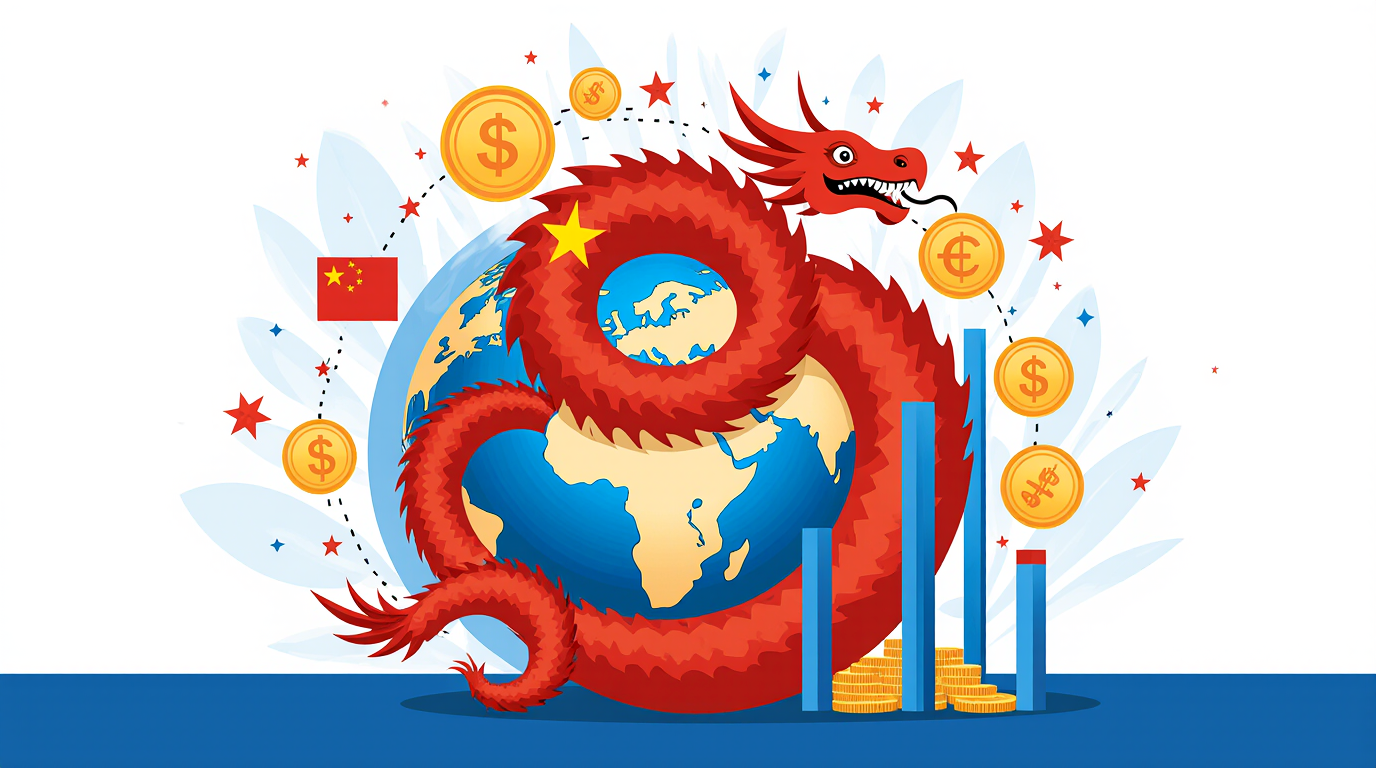
Introduction: China’s Market Muscle Behind the Scenes
If you follow global stock markets, here’s a name you need to know: China Investment Corporation (CIC). With $1.33 trillion in assets under management (AUM) as of 2025, CIC isn’t just China’s largest sovereign wealth fund—it’s one of the most influential institutional investors on the planet.Whether you’re a trader targeting tech or a long-term investor holding emerging markets ETFs, CIC’s decisions ripple through your portfolio. Let’s dive into how CIC quietly steers capital, sets trends, and redefines international equities.
Origins and Mission: Beyond Forex to Global Powerhouse
CIC was founded in 2007 to invest China’s sprawling foreign exchange reserves—then a staggering $1.6 trillion—into productive, return-generating assets across the globe. Starting with $200 billion, CIC’s mandate was simple but ambitious: generate financial returns, diversify risks, and serve China’s economic and strategic interests.
Today, CIC’s AUM is more than sixfold its original base. About one-third of CIC’s capital is parked in public equities, with the rest in fixed income, alternatives, and cash instruments.CIC takes an institutional, long-term view, emphasizing global diversification, cross-border partnerships, and capitalizing on “megatrends” like digital innovation, green energy, and emerging market growth.
CIC’s Global Portfolio: Where’s the Money Going?
So, what makes CIC so impactful? For starters, its equity strategy is truly global:
- North America: A large tilt towards U.S. equities—including tech titans (Apple, Microsoft, Alphabet), financials (JP Morgan, BlackRock), and healthcare leaders (Pfizer, J&J). As of end-2023, U.S. stocks made up over 60% of CIC’s foreign equities.
- Europe & Developed Markets: Key stakes span the FTSE 100, Eurostoxx 50, and major benchmarks, channeling billions into blue-chips and growth firms in the Eurozone and UK.
- Emerging Markets: Bet big on China’s own digital champions (Tencent, Alibaba, Meituan), Indian tech and fintech platforms, Brazil’s resource giants, and Southeast Asian e-commerce unicorns.
- Alternatives & Private Markets: A significant share devoted to hedge funds, private equity, renewable infrastructure, and, increasingly, venture capital and private credit.
CIC is both a “market owner”—holding passive, cap-weighted stakes in thousands of global stocks—and an active investor, backing growth-stage companies, ESG leaders, and future “unicorns” in the digital space.
Data-Driven Dominance: CIC’s Recent Performance
CIC’s performance speaks volumes. From 2013 to 2023, CIC delivered a 6.57% annualized net return—matching or slightly topping the returns of global institutional peers and outpacing inflation.Even with global volatility, falling tech valuations, and currency headwinds, CIC’s consistency is a result of both passive exposure and data-driven adjustments.
2025 stands out: As the S&P 500 stumbled (down over 3% YTD mid-year) and Indian stocks wobbled after corrections, Chinese equities—where CIC remains a major player—outperformed with 21% returns YTD for the Hang Seng and strong gains for the SSE and CSI 300 indices.CIC’s deep positions in Chinese and global tech, healthcare, and consumer discretionary paid off handsomely, even as energy holdings lagged.

Origins and Mission: Beyond Forex to Global Powerhouse
CIC was founded in 2007 to invest China’s sprawling foreign exchange reserves—then a staggering $1.6 trillion—into productive, return-generating assets across the globe. Starting with $200 billion, CIC’s mandate was simple but ambitious: generate financial returns, diversify risks, and serve China’s economic and strategic interests.
Today, CIC’s AUM is more than sixfold its original base. About one-third of CIC’s capital is parked in public equities, with the rest in fixed income, alternatives, and cash instruments.CIC takes an institutional, long-term view, emphasizing global diversification, cross-border partnerships, and capitalizing on “megatrends” like digital innovation, green energy, and emerging market growth.
CIC’s Global Portfolio: Where’s the Money Going?
So, what makes CIC so impactful? For starters, its equity strategy is truly global:
- North America: A large tilt towards U.S. equities—including tech titans (Apple, Microsoft, Alphabet), financials (JP Morgan, BlackRock), and healthcare leaders (Pfizer, J&J). As of end-2023, U.S. stocks made up over 60% of CIC’s foreign equities.
- Europe & Developed Markets: Key stakes span the FTSE 100, Eurostoxx 50, and major benchmarks, channeling billions into blue-chips and growth firms in the Eurozone and UK.
- Emerging Markets: Bet big on China’s own digital champions (Tencent, Alibaba, Meituan), Indian tech and fintech platforms, Brazil’s resource giants, and Southeast Asian e-commerce unicorns.
- Alternatives & Private Markets: A significant share devoted to hedge funds, private equity, renewable infrastructure, and, increasingly, venture capital and private credit.
CIC is both a “market owner”—holding passive, cap-weighted stakes in thousands of global stocks—and an active investor, backing growth-stage companies, ESG leaders, and future “unicorns” in the digital space.
Data-Driven Dominance: CIC’s Recent Performance
CIC’s performance speaks volumes. From 2013 to 2023, CIC delivered a 6.57% annualized net return—matching or slightly topping the returns of global institutional peers and outpacing inflation.Even with global volatility, falling tech valuations, and currency headwinds, CIC’s consistency is a result of both passive exposure and data-driven adjustments.
2025 stands out: As the S&P 500 stumbled (down over 3% YTD mid-year) and Indian stocks wobbled after corrections, Chinese equities—where CIC remains a major player—outperformed with 21% returns YTD for the Hang Seng and strong gains for the SSE and CSI 300 indices.CIC’s deep positions in Chinese and global tech, healthcare, and consumer discretionary paid off handsomely, even as energy holdings lagged.