The World Was Broken
Imagine waking up in 1944. Cities lie in ruins. The Great Depression destroyed people’s faith in money. Two world wars drained national treasuries. Countries are fighting economic battles, desperately devaluing their currencies to survive—a “beggar-thy-neighbor” race to the bottom where everyone loses.
Currency values swing wildly. International trade is collapsing. Nobody trusts anyone else’s money. It’s financial chaos.
But in the middle of this darkness, an idea sparked: What if countries stopped competing and started cooperating?
July 1944: A Mountain Resort Becomes History
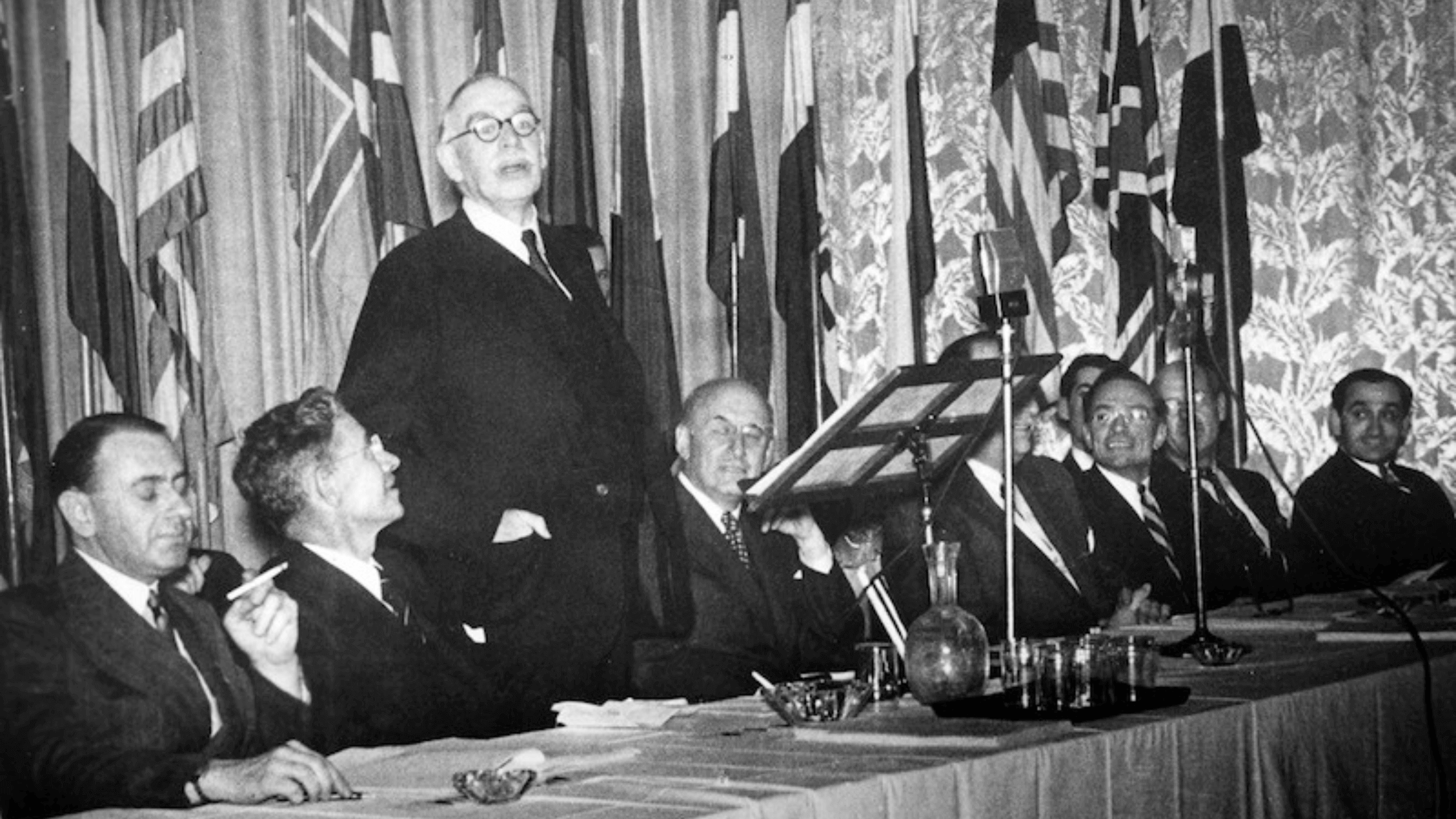
Picture this: A elegant hotel nestled in the mountains of Bretton Woods, New Hampshire. Despite World War II still raging, 730 delegates from 44 nations gather at the Mount Washington Hotel for three remarkable weeks.
Their mission? Nothing less than redesigning how the world’s money would work.
Inside those halls, something unusual happened—optimism. Representatives from the U.S. to China, from Britain to Brazil, believed they could create lasting financial peace through collaboration.
The Clash of Titans: Keynes vs. White
Two brilliant minds shaped everything.
John Maynard Keynes, Britain’s legendary economist, arrived with a bold vision. He proposed “Bancor”—a neutral international currency that would balance global interests fairly. Think of it as creating a completely new rulebook where no single player dominates.
Harry Dexter White, the sharp U.S. Treasury official, had different plans. America held most of the world’s gold and emerged from war economically strong. White believed the U.S. dollar should anchor the new system, reflecting America’s power.
Their debates were legendary—polite on the surface, fierce underneath.
In the end, White won. The dollar would become king.
The System They Built: Simple but Powerful
Here’s how Bretton Woods worked, stripped to its essence:
The Golden Anchor: The U.S. dollar was pegged to gold at $35 per ounce. Other countries fixed their currencies to the dollar. It’s like everyone agreeing to trade at fixed rates—no more wild fluctuations, no more chaos.
The Dollar’s New Role: Countries could exchange their dollars for actual gold. This guaranteed trust. The dollar became the world’s reserve currency—the one everyone wanted to hold.
Two New Institutions:
- The International Monetary Fund (IMF): A global emergency fund to help countries facing currency crises—like a financial firefighter.
- The World Bank: Tasked with rebuilding war-torn nations and funding long-term development projects.
It was elegantly simple: stability through cooperation, backed by gold.
The Golden Age (1945-1971)
For over two decades, magic happened.
Europe rose from rubble. The Marshall Plan poured billions into reconstruction, all stabilized by Bretton Woods. Japan transformed from devastation to economic miracle. Global trade exploded—businesses could plan confidently because exchange rates stayed predictable.
This era is often called the Golden Age of Capitalism. Growth seemed endless. Prosperity spread. People believed the system would last forever.
The dollar was trusted worldwide because everyone knew it was backed by gold bars sitting in Fort Knox.
The Cracks Appear
But by the late 1960s, reality caught up.
The United States was spending heavily—the Vietnam War drained resources, social programs expanded. Dollars flooded the world faster than America’s gold reserves could back them.
Meanwhile, Europe and Japan had rebuilt. They grew strong again and started questioning: Why should America control everything?
France’s President Charles de Gaulle made his move—he started converting French dollars into gold, testing the system. Other countries watched nervously. The math wasn’t adding up anymore: too many dollars, not enough gold.
Confidence wavered. The golden anchor was slipping.
August 15, 1971: The Day Everything Changed
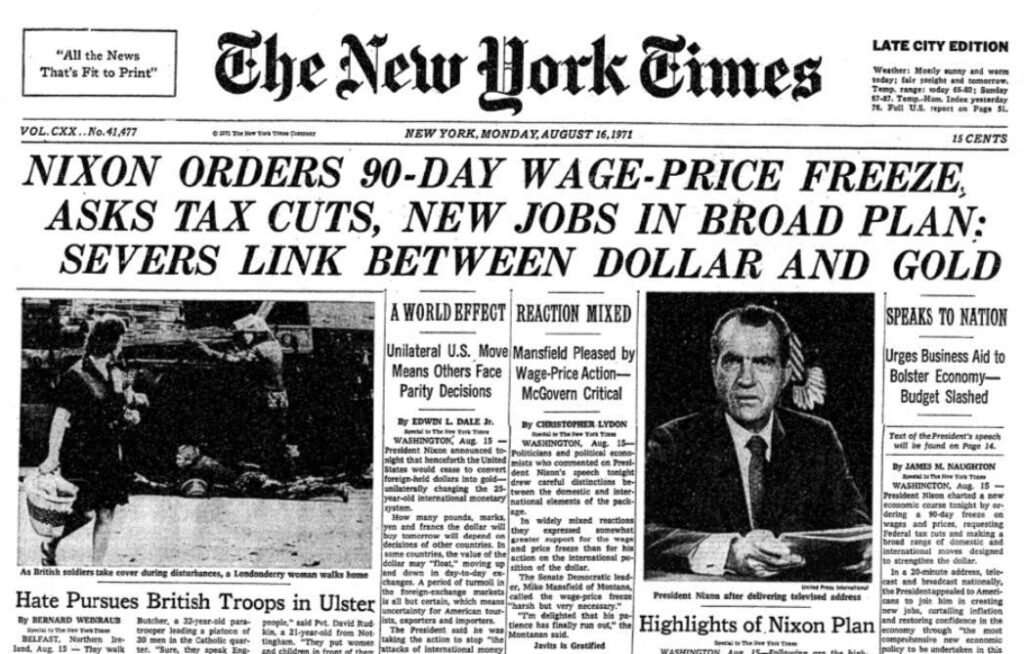
President Richard Nixon appeared on television with shocking news.
America would no longer convert dollars to gold.
He ended the dollar’s convertibility into gold in 1971 mainly to address multiple economic problems facing the U.S. At the time, rising inflation, growing trade deficits, and large amounts of U.S. dollars held overseas threatened the gold reserves needed to back the Bretton Woods System.
Foreign countries were demanding gold in exchange for their dollars, depleting U.S. reserves. To protect the dollar, curb inflation, and boost jobs, Nixon froze wages and prices, imposed import tariffs, and suspended gold convertibility.
This bold move was aimed at stabilizing the economy but ended the Bretton Woods fixed exchange rate system, ushering in floating currencies and a new economic era.
The Bretton Woods system shattered. This moment—forever known as the Nixon Shock—ended an era overnight.
Currencies began to “float,” their values now determined by market forces rather than fixed agreements. The golden anchor was gone. The world entered uncharted waters.
Why the Bretton Woods System Still Shapes Global Economics Today
Shift to Fiat Money
After 1971, currencies like the U.S. dollar became fiat money, meaning their value is based on government trust, not gold. People accept fiat money because they believe others will accept it in trade. This system gives governments flexibility to manage the economy but depends on public confidence in the currency issuer.
Floating Exchange Rates
Currencies now float on the market, with values changing daily based on supply and demand. This system is more flexible, letting currency prices adjust to economic conditions, but it also leads to more unpredictability compared to fixed exchange rates.
The IMF’s Vital Role in Crises
The IMF, created by Bretton Woods, still plays a key role in stabilizing the global economy by providing emergency funds and guidance during financial crises, such as the 2008 crash, helping reduce contagion and maintain confidence.
Monetary Backing: Past Lessons and Present Debates
Debates about what backs money today, including cryptocurrencies, echo the Bretton Woods focus on trust and stability. The gold standard’s inflexibility taught that backing money requires both trust and adaptability.
Lessons on Stability and Trust
Bretton Woods showed that stability needs flexibility; fixed rates alone cannot last. Trust between nations and institutions is essential, and no one country can control global finance forever. These lessons guide current policymakers in a complex global economy.
The Bottom Line
Bretton Woods was more than a conference. It was a moment when cooperation triumphed over chaos, when leaders chose stability over competition.
For over 25 years, it worked beautifully—then reality shifted, and it couldn’t adapt fast enough.
The world it created—with the dollar as king, floating currencies, and global financial institutions—is still the world we live in today.
So next time you hear about exchange rates, the Federal Reserve, or international trade, remember: it all traces back to those three weeks in 1944, when 44 countries gathered in a mountain hotel and decided to rebuild the world’s money together.