
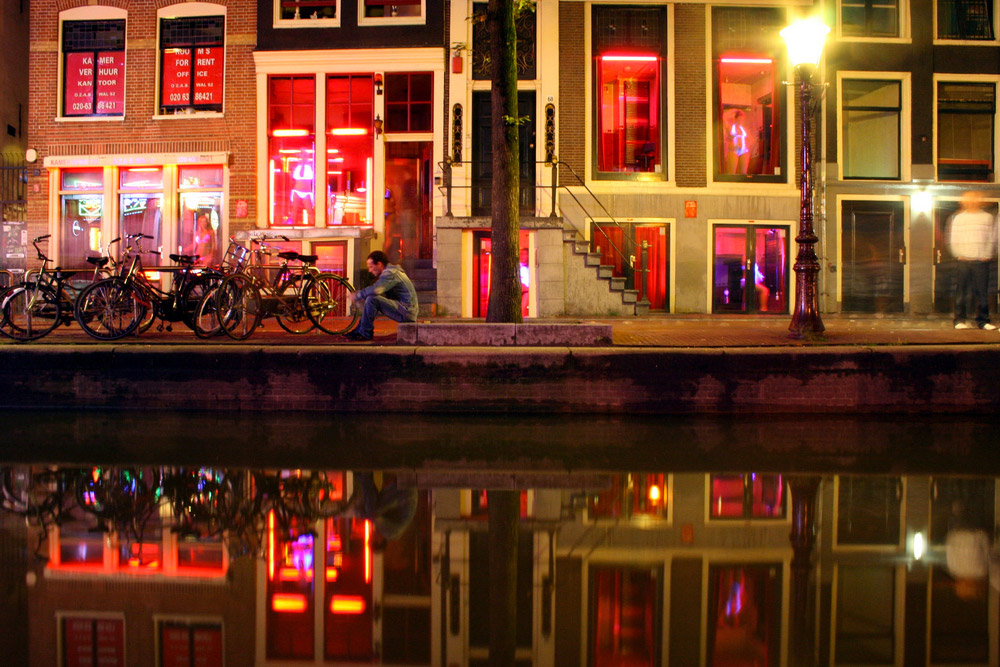
Behind the iconic crimson-lit windows of Amsterdam’s most famous neighborhood lies an economic reality that few outsiders fully grasp. While tourists snap photos and moral debates rage on, the Red Light District quietly generates revenue rivaling the Netherlands’ legendary cheese exports. This proves that sometimes the most controversial industries create the most compelling economic case studies.
The Numbers That Shock Even the Economists
Let’s talk money. Amsterdam’s Red Light District, known as De Wallen, doesn’t just contribute to the local economy; it powers it. With an annual economic impact of roughly €2.5 billion, this single neighborhood punches far above its weight in the Dutch economic landscape. To put that figure in perspective, it is comparable to entire traditional industries that the Netherlands has cultivated for centuries.
Approximately 3.1 million visitors navigate the district’s cobblestones each year, making it the Netherlands’ second most visited attraction. That is not a typo. This controversial quarter outdraws nearly every museum, tulip field, and windmill in the country. These millions of visitors don’t just gawk at windows; they eat at restaurants, drink at bars, shop at boutiques, and stay in hotels, creating a ripple effect throughout Amsterdam’s tourism infrastructure.
Beyond the Windows: An Entire Ecosystem
Here is where the economic story gets interesting. The Red Light District isn’t just about sex work. It’s a complex commercial ecosystem housing nearly 1,945 businesses. From financial services firms to cultural venues, from hospitality establishments to the famous cannabis coffee shops, this neighborhood functions as a fully integrated urban commercial center that happens to include legalized prostitution.
This diversity matters. It means that the district’s economic contribution extends far beyond what happens behind those red-lit windows. It’s woven into Amsterdam’s broader urban fabric, employing thousands across multiple sectors and generating tax revenue at every level.
The Entrepreneur Behind the Window
Since the Netherlands decriminalized prostitution in 2000, sex workers have operated as legitimate independent entrepreneurs. This legal status transforms them from shadow economy participants into taxpaying business owners, a shift with profound economic implications.
The earning potential can be substantial. On a typical night, sex workers earn between €200 and €600, with top performers in prime locations reaching €1,000 during peak periods. These figures suggest a lucrative profession, but the reality proves far more complex.
The High Cost of Doing Business
Running a sex work business in Amsterdam’s Red Light District comes with eye-watering operational expenses. Window rentals (the storefronts where workers showcase their services) cost between €90 and €150 for an eight-hour shift. That is not per week or per month; that’s every single shift.
Do the math: a worker earning €200 on a slow night must immediately hand over nearly half to landlords before considering any other expenses. This economic pressure forces many workers to serve multiple clients per shift just to break even, fundamentally shaping the business model.
Then there is the taxman. The Dutch government treats sex work income like any other earnings, subjecting it to income tax rates that can reach 52% for higher earners. Add a 19% value-added tax on services, and suddenly those impressive gross earnings shrink considerably. This formalized taxation represents a double-edged sword: it legitimizes the profession but also creates significant financial obligations.
The Price of Proximity: Property Values Tell a Story
Real estate patterns reveal how Amsterdam residents truly feel about living near the Red Light District. Properties more than one kilometer away command prices roughly 12% higher than comparable homes nearby, a difference of €40,000 to €50,000 on typical properties.
This “distance premium” exposes a paradox. While residents publicly support the district’s legalization and economic benefits, they will pay substantial premiums to avoid living close to it. The daily realities matter: late-night tourist noise, crowded streets, and lingering social stigma, even around legal activities.
Economists call this “revealed preference,” where spending behavior reveals true priorities. It’s not hypocrisy but natural tension between principle and proximity. The pattern also creates urban planning challenges, as depressed nearby property values risk pushing out residential communities in favor of tourist-focused development. Property owners near the district effectively subsidize Amsterdam’s tourism economy through lower valuations, highlighting how the economic benefits aren’t evenly distributed.
The Shadow Side: Externalities and Hidden Costs
No honest economic analysis can ignore the costs. Studies consistently document elevated rates of petty crime in and around the district, necessitating enhanced police presence and municipal resources. These public safety expenditures eat into the tax revenues generated, though calculating the precise net benefit remains challenging.
More troubling are the regulatory enforcement gaps. Despite legalization’s goals of protecting workers and eliminating criminal exploitation, unregistered sex workers continue operating illicitly, and trafficking risks persist. These realities suggest that legal frameworks alone cannot eliminate the sector’s darker elements. It’s a sobering reminder that economic policy must account for implementation challenges.
The Regulatory Tightrope: Balancing Progress and Protection
The Netherlands’ 2000 legalization was designed with clear objectives: protect sex worker rights, diminish criminal control, and integrate the sector into the taxed economy. Two decades later, the results are decidedly mixed.
On one hand, thousands of workers now operate with legal protections, health regulations, and access to courts. These are benefits unimaginable in criminalized systems. Tax revenues flow into public coffers. Police can focus on genuine exploitation rather than consensual transactions.
On the other hand, enforcement remains imperfect. The gap between regulatory intention and street-level reality persists. This tension between ideals and implementation will shape the district’s evolution for years to come.
The Bigger Picture: What Amsterdam’s Experiment Teaches Us
Perhaps the Red Light District’s most significant contribution isn’t measured in euros at all. It’s the evidence it provides that even society’s most controversial industries can, when properly regulated, deliver substantial economic benefits and employment opportunities.
This Dutch experiment challenges comfortable assumptions about morality and markets, legality and livelihood. It demonstrates that policy questions around sex work are not purely moral. They are profoundly economic, with real consequences for real people and real communities.
Amsterdam’s Red Light District will continue evolving, shaped by changing social expectations, legal responsibilities, and economic realities. Its success (or failure) will depend on navigating these complexities with transparency, adaptability, and genuine commitment to all stakeholders. In doing so, it remains not just an economic powerhouse, but a laboratory for how modern cities manage the intersection of commerce, culture, and controversy.
The red lights will keep glowing. The question is what kind of district (and what kind of economy) they illuminate.