For millennia, humanity has looked skyward with wonder. Ancient mariners navigated by stars, dreamers imagined lunar voyages, and visionaries like Tsiolkovsky calculated the physics of escaping Earth’s gravity. Yet for most of human history, space remained what it had always been: impossibly distant, prohibitively expensive, and accessible only to superpowers willing to pour billions into nationalist competitions.
Then SpaceX arrived, and everything changed.
What was once the exclusive domain of government agencies has transformed into a commercial frontier. The company founded by Elon Musk in 2002 did not just build better rockets. It rewrote the entire economic equation of space access.
Now, SpaceX is planning to go public in mid-to-late 2026 with a target valuation of around $1.5 trillion, potentially becoming the largest initial public offering in history. This isn’t merely a financial milestone; it’s a declaration that space has officially graduated from government program to investable asset class.
The Cost Revolution: How SpaceX Changed the Game
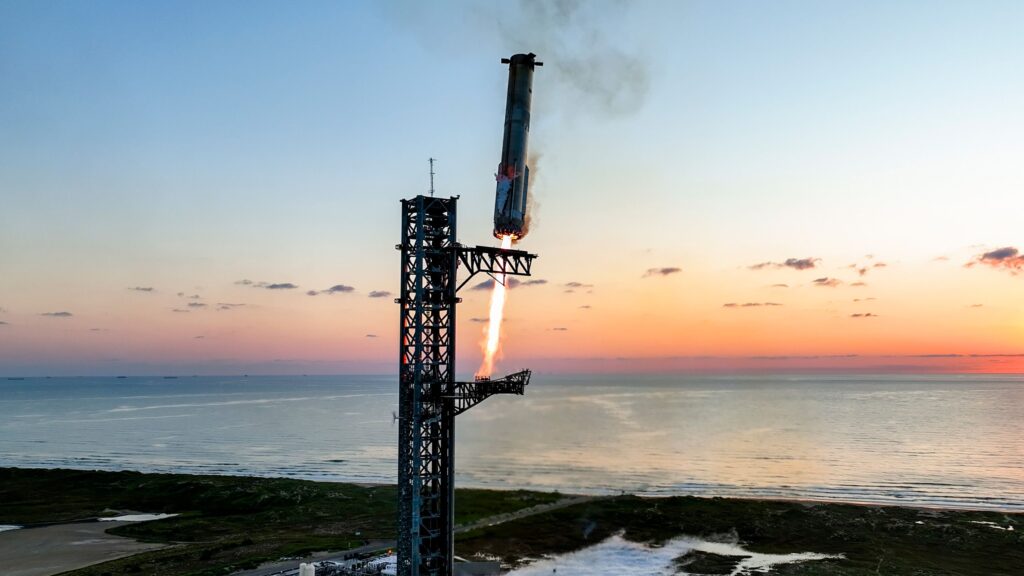
The story of SpaceX’s dominance begins with a simple but revolutionary question: What if rockets did not have to be thrown away after a single use? Traditional aerospace treated launch vehicles like disposable items, building new rockets for every mission at costs exceeding $100 million per flight. It was the equivalent of building a new airplane for every flight across the Atlantic.
SpaceX’s reusable Falcon 9 rocket shattered this paradigm. By developing sophisticated guidance systems, heat shields, and landing technology, the company proved that rockets could return to Earth intact and fly again. The result has been dramatic: SpaceX now controls over 60% of the global launch market, a stunning achievement driven by cost advantages that competitors simply cannot match.
The numbers tell the story. Reusing rocket stages can lower launch costs by 30 to 40%, transforming a $62 million Falcon 9 launch into a bargain that traditional providers cannot compete with. Some individual boosters have been reused more than 18 times, spreading development costs across multiple missions and creating an economic moat that grows wider with each successful landing.
But the true revolution was not just in the rockets themselves. It was in what those cost savings enabled. Suddenly, universities, startups, and small nations could afford to operate in space. The floodgates opened, and a new generation of space-based businesses became economically viable.
The $1.5 Trillion Question: Valuation and Scale
To understand the magnitude of SpaceX’s planned IPO, consider this: at $1.5 trillion, SpaceX would approach the market value that Saudi Aramco established during its record 2019 listing, which raised $29 billion. If SpaceX raises the projected $30 billion or more, it would eclipse every IPO in history, including tech giants like Alibaba and Meta during their market debuts.
This valuation rests on multiple revenue streams working in concert. The company is expected to produce about $15 billion in revenue in 2025, increasing to between $22 billion and $24 billion in 2026, with the majority coming from Starlink. The satellite internet service has become SpaceX’s financial engine, generating recurring subscription revenue that traditional launch services could never match.
Starlink’s growth trajectory is staggering. From 10,000 beta users in 2021, the constellation expanded to reach 8 million subscribers by November 2025. Revenue doubled in 2024, adding $8.18 billion, and analysts project continued explosive growth as the service expands into aviation, maritime, and direct-to-cell connectivity. This is not speculative technology. It’s a proven business with positive cash flow and an addressable market measured in billions of potential users.
Why Now? The Push for Public Markets
For years, Elon Musk resisted taking SpaceX public, preferring the freedom to pursue long-term goals without quarterly earnings pressure. The company conducted regular secondary share sales to provide employee liquidity while maintaining private status. So why go public now?
The answer lies in capital requirements that have grown beyond even SpaceX’s considerable internal resources. Starship, the fully reusable super-heavy-lift rocket under development, represents a technological leap that could slash the cost of reaching orbit by another order of magnitude. SpaceX aims to fund an “insane flight rate” for Starship, artificial intelligence data centers in space, and a base on the moon.
The space-based AI infrastructure alone could require tens of billions in capital. SpaceX expects to use some IPO funds to develop space-based data centers, including purchasing chips required to run them. Musk has called this an “underrated” business opportunity that could justify valuations rivaling the core launch and Starlink operations.
Government contracts are accelerating the timeline as well. SpaceX has secured a $5.9 billion Space Force contract and is positioned to receive approximately $2 billion for the Pentagon’s Golden Dome satellite program. These commitments demand infrastructure investments that public markets can fund more efficiently than private capital alone.
The Risks: Vision vs. Shareholder Expectations
Going public introduces tensions that have historically constrained aerospace innovation. Shareholders demand predictability, growth trajectories, and returns on timelines measured in quarters, not decades. Yet SpaceX’s most ambitious goals (Mars colonization, point-to-point Earth transport via rocket) may not generate meaningful revenue for years or decades.
Starlink itself presents valuation challenges. The service requires continuous satellite replacement, with SpaceX currently launching about 2,000 Starlink satellites each year, potentially increasing in 2025. This perpetual capital requirement means traditional metrics like price-to-earnings ratios may not capture the business’s true economics. Analysts must grapple with whether to value Starlink as a telecom utility, a technology growth story, or something entirely new.
At a $1.5 trillion IPO valuation, SpaceX would trade at roughly 63 to 68 times forward sales based on 2026 revenue projections. This is a multiple that demands extraordinary faith in future growth. Traditional aerospace companies trade at single-digit earnings multiples. Even high-growth tech companies rarely sustain such valuations long-term. The market will need to decide whether SpaceX deserves frontier technology pricing or something closer to conventional aerospace multiples.
Regulatory scrutiny will intensify as well. Public companies face heightened SEC oversight, mandatory financial disclosures, and analyst scrutiny that can punish companies for missing quarterly targets by pennies per share. For a company accustomed to operating with minimal public transparency, the adjustment could prove jarring.
The Musk Factor: Culture, Control, and Controversy
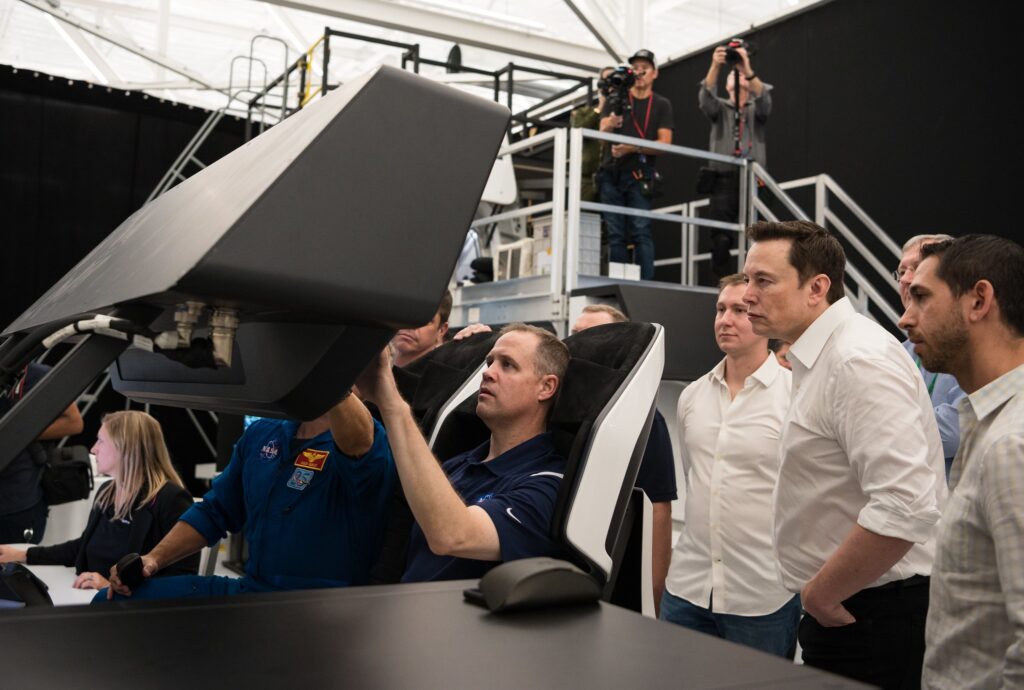
Elon Musk’s leadership style has been central to SpaceX’s success, and it may prove central to its challenges as a public company. The culture he has built prioritizes rapid iteration, accepts failure as a learning tool, and pushes engineers to attempt the “impossible” on compressed timelines. This approach has yielded extraordinary results but also spectacular explosions during test flights.
Public market investors tend to dislike explosions, even planned ones. When a Starship test results in a fireball, SpaceX engineers celebrate the data gathered. Wall Street analysts may write concerned research notes about execution risk and timeline slippage. Reconciling these worldviews will require either educating investors to think differently about aerospace development or constraining the very culture that made SpaceX successful.
Musk’s other ventures add complexity. Critics question Musk’s capacity to run two corporations valued at over $1 trillion simultaneously, given his leadership roles at Tesla, X (formerly Twitter), and other companies. Public investors may demand assurances about management bandwidth and succession planning that Musk has historically resisted providing.
Control structures will matter enormously. While unconfirmed, SpaceX could adopt dual-class shares that preserve Musk’s voting power regardless of economic ownership. This would protect against short-term market pressures but might also insulate management from accountability that public markets typically impose.
Conclusion: The Future of Space as a Public Venture
SpaceX’s journey from scrappy startup to potential trillion-dollar public company represents one of the most remarkable corporate transformations in history. The planned 2026 IPO is not just about raising capital. It’s about democratizing access to an industry that has delivered miraculous returns in the form of technologies we now take for granted.
But the real significance transcends spreadsheets and share prices. By taking humanity’s space ambitions public, SpaceX is making a profound statement: our future beyond Earth will not be funded by government agencies alone but by millions of investors betting their capital on an interplanetary future.
This is capitalism at its most audacious, using public markets to fund what previous generations could only dream about. Whether SpaceX succeeds at a $1.5 trillion valuation or something more modest, the IPO marks a turning point. Space is no longer the final frontier. It is the next market, ready for the scrutiny, capital, and ambition that only public investors can provide. The countdown has begun.