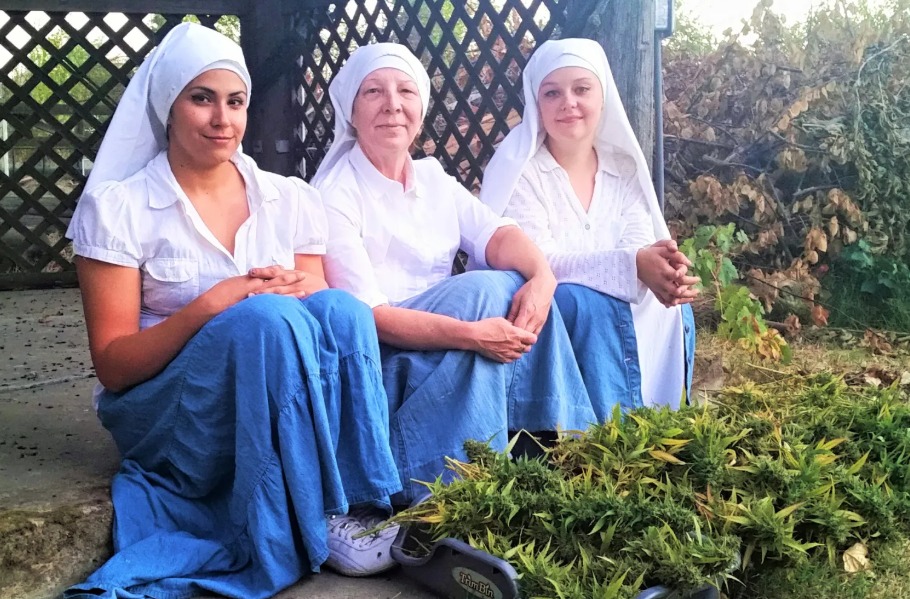
Women in traditional nun’s habits, tending rows of cannabis plants under the California sun. Mixing salves in a space they call “the Abbey.” Shipping CBD products worldwide. Generating over a million dollars a year in revenue.
No, this isn’t some fever dream or satirical sketch. This is the Sisters of the Valley, and they’re dead serious about their mission.
They are not Catholic. They do not answer to the Vatican. They worship no traditional god. But make no mistake: these are nuns with a calling. Their devotion? Healing through plants. Their sacrament? Cannabis. Their territory? California’s Central Valley, one of the poorest and most forgotten regions in America, where the soil is rich but opportunities are scarce.
In a place where drought cracks the earth and poverty runs deeper than the irrigation ditches, these women have built something extraordinary. A business. A movement. A revolution in nun’s clothing.
From Corner Office to Cannabis Field: One Woman’s Radical Reinvention
Sister Kate did not find religion. She found purpose.
After spending 15 years as a corporate consultant, helping companies navigate the choppy waters of deregulation from boardrooms around the globe, her life imploded. A devastating divorce left her broke, broken, and searching for something real. She landed in the Central Valley, not because it was glamorous (it decidedly wasn’t), but because the land was cheap and the need was desperate.
This is California’s forgotten region, where education lags, opportunities vanish, and hope feels like a luxury most cannot afford. But Sister Kate saw something else: potential. Not in tech startups or real estate schemes, but in the soil itself. In the ancient, healing power of plants.
When hemp deregulation opened new doors, she walked through and never looked back.
The Medicine at the Heart of the Movement: CBD Without the High
Here is what makes their work revolutionary: they are not growing marijuana. They are cultivating CBD-rich hemp, cannabis strains loaded with cannabidiol but containing virtually no THC. No psychoactive effects. No “high.” Just pure, concentrated healing.
CBD calms frayed nerves, eases chronic pain, and offers relief from the twin demons of anxiety and insomnia. For people suffering, and in the Central Valley many are, it’s nothing short of miraculous.
The sisters craft everything by hand: salves that soothe aching joints, tinctures that calm racing minds, oils that ease pain, and herbal teas that invite rest. Their flagship product? A CBD salve blended with coconut oil, vitamin E, and calendula. It costs them about $2.50 to make each jar. They sell it for $25. And people come back for more, again and again.
Every batch is made in small quantities, in sacred space, infused with intention and positive energy. This isn’t factory farming. This is alchemy.
Building a Million-Dollar Business: One Sacred Batch at a Time
The numbers tell a story of explosive, almost defiant growth.
Year one: Sister Kate did everything herself. Planting, harvesting, mixing, bottling, shipping. She pulled in $60,000 in sales. Enough to prove the concept, barely enough to survive.
Year two: Three more women joined the sisterhood. Sales skyrocketed to $750,000.
Year three: $1.1 million in revenue.
And here’s the kicker: they pay taxes on every penny. In their third year, they handed over $140,000 to the government on $1 million in sales. No offshore tax schemes. No creative accounting. Just straight-up legitimacy in an industry that operates in legal grey zones.
Their production model is decentralized and communal. Sisters live together on co-living farms, creating products in spaces they call “the Abbey,” places where the practical and the sacred blur together. Because their products qualify as hemp under UN guidelines, they ship internationally. They’ve even trained women around the world to start their own gardens, create their own medicine, build their own micro-abbeys.
This isn’t just a business. It’s a movement with a business model.
Medieval Inspiration for a Modern Rebellion: The Beguines Rise Again
Don’t call them Catholic nuns. They will correct you, politely but firmly.
The Sisters of the Valley draw their inspiration from the Beguines, medieval women who chose spiritual lives outside the church’s control. These women were healers, nurses, and teachers who lived together in communities, following lunar cycles and natural rhythms rather than papal decrees.
“We are activist nuns,” Sister Kate explains, “serving the people and the planet.”
Their rituals (prayer circles, moon ceremonies, collective living) honor Mother Earth, not the Church. Their habits symbolize devotion to healing, not hierarchy. They have created a new kind of sisterhood built on compassion, empowerment, and radical sustainability.
Religion, they believe, has caused more harm than good. So they’ve built something different, something ancient and utterly new at the same time.
Walking the Razor’s Edge: Survival in Hostile Territory
Here’s the brutal truth: what the Sisters do is illegal where they do it.
The Central Valley county has consistently voted against allowing any cannabis commerce. Local law enforcement watches them. They have been investigated. Products have been seized. Federal agents have tested their goods, looking for any trace of THC that would justify a raid.
The labs found nothing. Because there is nothing to find.
The sisters survive by emphasizing a crucial distinction: they’re in the hemp business, not the cannabis business. It’s a fine line, and they walk it every single day.
Banking presents another nightmare. Because cannabis remains federally prohibited, U.S. banks will not touch them. The solution? A British offshore company to handle transactions. They cannot get business insurance. They cannot secure mortgages. Their employees struggle to access basic benefits.
And yet they persist. They guard their credit card processing rights like sacred relics. They maintain their reputation for legitimacy. They refuse to disappear.
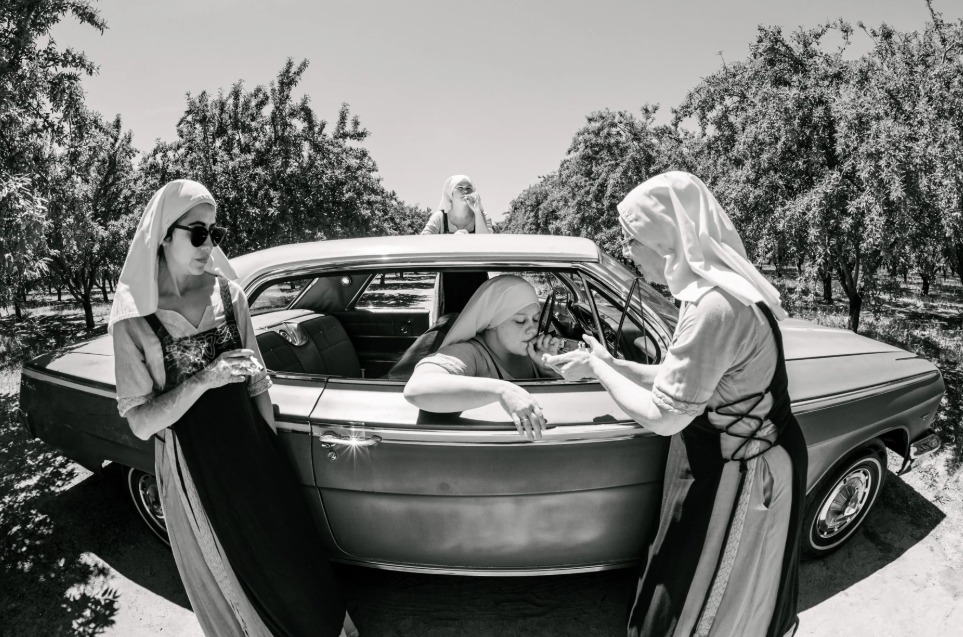
Turning Stigma into Strength: The Gospel of Green
The sisters are not interested in converting the conservatives who send them hate mail. They are not trying to win over the religious leaders who condemn them.
“We’re not your cup of tea?” they say. “Go away.”
Their audience is the 4/20 crowd, the liberal left, the marginalized and the suffering: anyone who feels failed by mainstream medicine and mainstream society. For these people, the Sisters of the Valley offer something radical: acceptance, healing, and hope.
They see cannabis as more than medicine. It’s a pathway to new, sustainable employment, a green economy to replace dying industries like coal and fossil fuels. Their model blends wellness, social enterprise, and activism into something that defies easy categorization.
They are breaking taboos. Challenging power structures. Creating space for healing outside the pharmaceutical-industrial complex.
The Sacred Mission: Planting Seeds for a Different Future
The Sisters of the Valley are not just selling CBD salves. They are selling a vision.
A world where plant-based medicine is normalized. Where women are economically empowered. Where communities heal themselves rather than waiting for corporations to save them. Where ancient wisdom and modern science work together instead of fighting for dominance.
They are defying both corporate and patriarchal structures, building something that operates by different rules, values different outcomes, and measures success in more than just profit.
As the cannabis industry explodes into a multi-billion-dollar juggernaut, the Sisters stand apart. They are proof that you don’t need venture capital, you don’t need to compromise your values, and you don’t need permission from the establishment to create meaningful change.
In California’s forgotten valley, where the land is harsh and hope is scarce, a group of women in nun’s habits is cultivating something precious: a future where healing, spirituality, and business can coexist without exploitation.
One CBD salve, one healed body, one calmed mind, one relieved soul, at a time.